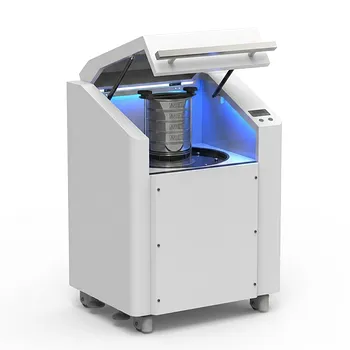
Why are high-precision test sieves utilized during the pretreatment of anthracite coal samples? Ensure ASTM Compliance.
Updated 4 months ago
High-precision test sieves are the essential tool for classifying anthracite coal into distinct particle size fractions during pretreatment. This precise classification is critical because coal's physical and chemical characteristics—such as flotation recovery, moisture content, and reaction kinetics—vary significantly depending on particle size. By isolating specific ranges, researchers ensure that experimental results are repeatable, comparable, and compliant with international standards.
Core Takeaway: High-precision sieving removes variables caused by size inconsistency, allowing for the accurate measurement of coal performance in industrial processes like flotation, leaching, and thermal analysis.
Optimizing Process Performance and Kinetics
Impact on Flotation Characteristics
High-precision sieves, typically ranging from 0.5mm to 0.053mm, are used to study how particle size influences flotation kinetics.
Different size fractions exhibit unique combustible recovery rates and kinetic constants. Accurately sorting these fractions allows engineers to optimize the flotation process for maximum efficiency.
Maximizing Reaction Efficiency
Refining coal samples to specific thresholds, such as sizes below 125 µm, significantly increases the specific surface area.
A higher surface area maximizes the gas-solid contact interface, which accelerates reaction kinetics during processes like dry carbonation or leaching. This ensures the highest possible efficiency in chemical or thermal sequestration.
Ensuring Analytical Accuracy and Standardization
Compliance with International Standards
Using precision mesh, such as 212-micron sieves, is the physical basis for ensuring that proximate analysis results are reliable.
Consistency in particle size distribution allows for repeatable measurements of moisture and ash content. This level of control is necessary to meet rigorous ASTM and international standards.
Reducing Interference in Advanced Imaging
Uniform particle size is a prerequisite for advanced analytical techniques including XRD (X-ray diffraction), SEM (scanning electron microscopy), and TGA (thermogravimetric analysis).
Standardizing the sample size eliminates interference from size variations, ensuring that the data reflects the material's properties rather than its physical dimensions. This leads to more reliable and comparable experimental datasets across different batches.
Evaluating Grinding and Material Quality
Determining Grinding Efficiency
Precision sieves with apertures like 250 microns are used to calculate the K-value, or grinding degree, of coal powder.
By measuring the mass ratio of coal that passes through the sieve, technicians can evaluate how electrical parameters—like voltage and discharge counts—impact the final fineness of the fuel. This is vital for optimizing the production of coal-water fuel raw materials.
Structural Reinforcement in Processing
In applications involving thermal treatment or briquetting, sieves identify the ratio of coarse particles.
A specific distribution of larger, needle-like particles can facilitate uniform heat transfer and provide necessary interlocking reinforcement during high-pressure forming. Precision sieving ensures the material meets these specific structural requirements.
Understanding the Trade-offs
Limitations of Sieve Accuracy
While high-precision sieves provide standardized results, they can be prone to blinding or clogging, especially when dealing with very fine coal dust or samples with high moisture content. This can lead to inaccurate mass distribution data if the sieves are not properly maintained or used with a vibratory shaker.
Particle Shape Bias
Standard sieves classify particles based on their smallest cross-section, which may not account for the volume of elongated or needle-like particles. This "shape bias" can occasionally skew results in processes where the total particle volume or length is more critical than the diameter.
How to Apply This to Your Project
Recommendations for Coal Pretreatment
Effective pretreatment requires selecting the right sieve parameters based on your end-use case.
- If your primary focus is flotation optimization: Use a nested stack of sieves between 0.5mm and 0.053mm to map the kinetic constants of each fraction.
- If your primary focus is chemical or thermal analysis: Utilize 75 µm to 125 µm sieves to maximize surface area and ensure sample uniformity for XRD or SEM.
- If your primary focus is industrial quality control: Implement 212-micron or 250-micron sieves to verify compliance with ASTM standards and calculate grinding efficiency (K-value).
By implementing high-precision sieving, you transform a raw, heterogeneous sample into a standardized technical material capable of yielding precise, scientific insights.
Summary Table:
| Application Area | Key Benefit | Typical Sieve Size/Range |
|---|---|---|
| Flotation Kinetics | Optimizes combustible recovery rates | 0.5mm - 0.053mm |
| Chemical Reaction | Maximizes gas-solid contact area | < 125 µm |
| Proximate Analysis | Ensures ASTM & international compliance | 212 µm |
| Grinding Efficiency | Calculates K-value & grinding degree | 250 µm |
| Advanced Imaging | Eliminates size interference for XRD/SEM | 75 µm - 125 µm |
Elevate Your Material Analysis with Precision Equipment
Achieving repeatable and standardized results in coal research requires more than just a sieve; it requires a complete sample preparation strategy. At [Brand Name], we provide comprehensive laboratory solutions for material science, specializing in high-performance powder processing and compaction equipment.
Our extensive product line is designed to streamline your workflow:
- Sieving & Classification: Vibratory and air-jet sieve shakers with high-precision test sieves.
- Grinding & Milling: Planetary ball mills, jet mills, and liquid nitrogen cryogenic grinders for ultra-fine powders.
- Sample Compaction: A full spectrum of hydraulic presses, including Cold/Warm Isostatic Presses (CIP/WIP), vacuum hot presses, and XRF pellet presses.
- Crushing & Mixing: Heavy-duty jaw crushers and advanced powder/defoaming mixers.
Whether you are optimizing flotation kinetics or preparing samples for XRD analysis, our equipment ensures the accuracy and reliability your research demands. Contact our experts today for a customized solution tailored to your laboratory's needs!
References
- Jovica Sokolović, Ivana Ilić. The effect of particle size on the flotation kinetics of raw and waste coal. DOI: 10.5937/imprc25279s
Mentioned Products
- Laboratory Vibratory Test Sieve Shaker for Precision Particle Size Analysis and Powder Grading
- 三维电磁微量振动筛分仪
- High Frequency Wet Three-Dimensional Vibrating Sieve Shaker for Dry and Wet Particle Size Analysis
- Laboratory Air Jet Sieving Machine for Fine Powder Particle Size Analysis and Deagglomeration
- Tapping Oscillating Sieve Shaker for Dry and Wet Particle Size Analysis
People Also Ask
- What role does a laboratory sieve shaker play in determining PDI? Achieve Precision in Biomass Quality Testing
- What are the functions of sieve shakers for coconut shell powder? Achieve Precise Particle Size & Quality Control.
- What function does a laboratory sieve shaker perform in the PSD analysis of residual soil? Ensure Precise Grading
- What is the role of a laboratory sieve shaker in the preparation of plantain peel adsorbents? Standardize Particle Size
- What is the function of a laboratory vibratory sieve shaker? Enhance Coal Particle Size Distribution (PSD) Analysis

Tech Team · PowderPreparation
Last updated on Jun 03, 2026
Related Products
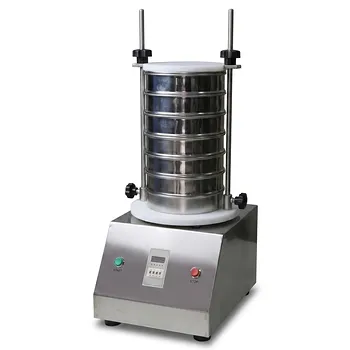
Laboratory Vibratory Test Sieve Shaker for Precision Particle Size Analysis and Powder Grading
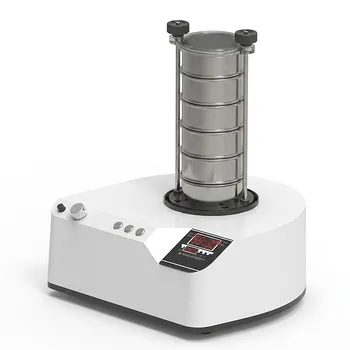
三维电磁微量振动筛分仪
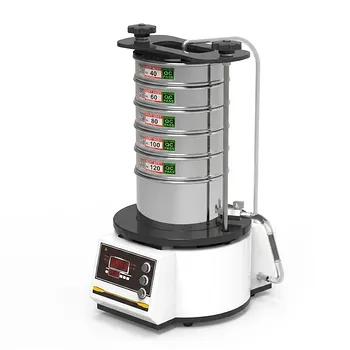
High Frequency Wet Three-Dimensional Vibrating Sieve Shaker for Dry and Wet Particle Size Analysis
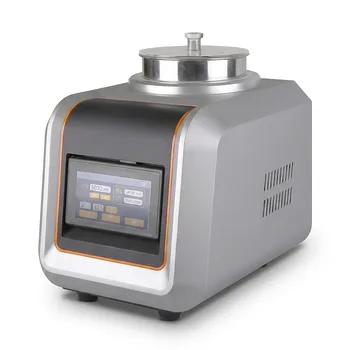
Laboratory Air Jet Sieving Machine for Fine Powder Particle Size Analysis and Deagglomeration
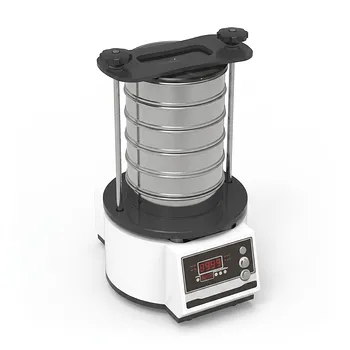
Tapping Oscillating Sieve Shaker for Dry and Wet Particle Size Analysis
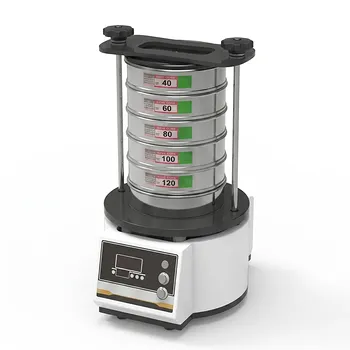
Dry Three Dimensional Vibratory Sieve Shaker
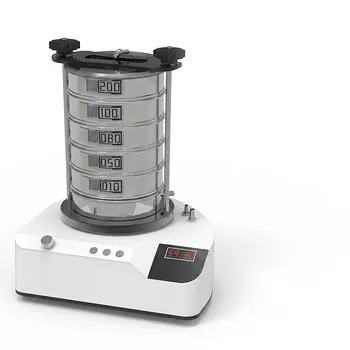
Heavy Duty Dry Three Dimensional Vibratory Sieve Shaker for Particle Separation
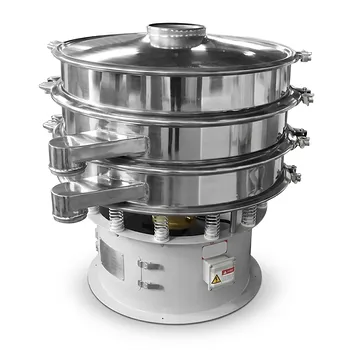
Three Dimensional Rotary Vibrating Sieve
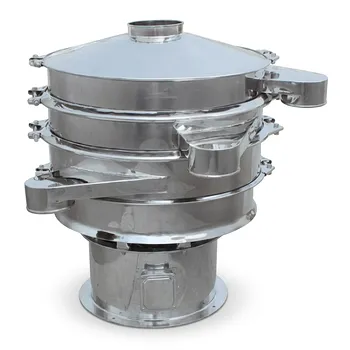
Stainless Steel Rotary Vibrating Sieve High Precision Circular Vibratory Separator Industrial Powder Grading Machine Multi Layer Sifting Equipment