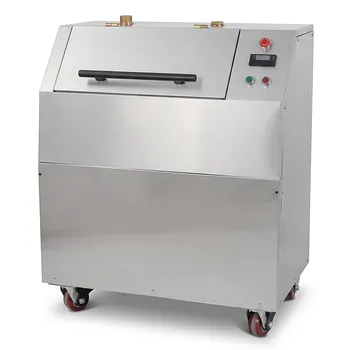
Why are high-precision test sieves and vibratory sieve shakers necessary for bean & grain powders? Achieve Consistency
Updated 5 months ago
Precise particle size control is the critical foundation for functional food powders. High-precision test sieves and vibratory sieve shakers are necessary because they ensure a uniform particle size distribution, which directly dictates the bulk density, water absorption capacity, and oil absorption capacity of sprouted mung bean and sorghum powders. By removing coarse particles and impurities, these tools enhance the texture and dispersion stability required for high-quality food applications.
Core Takeaway: Utilizing high-precision sieving equipment transforms raw ground pulses and grains into standardized technical ingredients. This process ensures that the powder’s physical behavior—such as how it absorbs liquids and flows through machinery—remains consistent across every batch.
Optimizing Functional and Physical Properties
The Impact on Absorption and Density
The particle size of sprouted mung bean and sorghum powders—often targeted at specific levels like 425 microns—is the primary driver of bulk density. Precise sieving ensures that the powder occupies a predictable volume, which is essential for accurate packaging and formulation. Furthermore, a uniform size distribution regulates the surface area available for water and oil absorption, ensuring the powder behaves consistently when mixed into recipes.
Improving Texture and Dispersion
Removing oversized particles and residues is vital for achieving a smooth mouthfeel and preventing grit in the final product. High-precision sieving eliminates large impurities and non-uniform fragments that can destabilize a mixture. This results in a composite powder with superior dispersion stability, meaning it will stay suspended in liquids rather than settling or clumping.
Enhancing Industrial Process Efficiency
Preventing Failures in Downstream Processing
For powders intended for twin-screw extrusion, maintaining a narrow particle size distribution is a technical necessity. Inconsistent sizes can lead to local uneven heating or physical flow blockages within the extruder. Precise sieving ensures the dough maintains stable rheological properties, which is critical for the repeatability of extruded snacks or pastas.
Ensuring Consistent Extraction and Synthesis
When these powders are used in extraction processes, such as hydrothermal extraction, particle size dictates the mass transfer rate. Large particles can slow down the release of active ingredients, leading to fluctuations in concentration. Vibratory shakers ensure that every batch has the same surface-area-to-volume ratio, thereby improving the batch-to-batch stability of the final extract.
Scientific Precision and Nutritional Consistency
Accuracy in Nutrient Profiling
Vibratory sieve shakers allow for the precise separation of fine flour from bran and seed coat residues. This classification is essential for the accurate determination of protein, fat, ash, and dietary fiber content. Without this uniformity, analytical results are difficult to reproduce, as different particle fractions often contain different concentrations of nutrients.
Impact on Digestive Performance
Research indicates that the glycemic index and resistant starch content of bean powders are closely linked to particle diameter. Using a vibratory shaker to classify ground powder into specific fractions (ranging from 150µm to 500µm) allows producers to control the rate at which the starch is digested. This precision is vital for products marketed with specific health claims regarding blood sugar management.
Understanding the Trade-offs
While high-precision sieving is essential for quality, it introduces specific operational challenges. Throughput versus precision is a constant balance; the more precise the mesh, the longer the sieving time required. Additionally, very fine powders (such as those passing through a 325 mesh) are prone to sieve blinding, where particles clog the openings and reduce efficiency.
Mechanical sieving also results in material loss, as a portion of the raw material (bran and larger husks) is removed. While this improves the quality of the "fine" fraction, it requires a secondary strategy for utilizing the "coarse" byproduct to maintain cost-effectiveness and minimize waste.
How to Apply This to Your Production
Choosing the right sieving parameters depends entirely on the intended application of your sprouted mung bean or sorghum powder.
- If your primary focus is mouthfeel and solubility: Utilize a high-precision vibratory shaker with a fine mesh (e.g., 250 µm to 425 µm) to eliminate all traces of grit and seed coat.
- If your primary focus is industrial extrusion or baking: Focus on achieving a narrow distribution range to prevent flow blockages and ensure even hydration in high-speed mixers.
- If your primary focus is nutritional labeling or R&D: Use standardized test sieves to separate the powder into distinct fractions to analyze how nutrient density varies with particle size.
Precise particle size classification is not merely a cleaning step, but a sophisticated calibration of the powder’s functional, nutritional, and industrial performance.
Summary Table:
| Key Impact Factor | With Precision Sieving | Benefit for Final Product |
|---|---|---|
| Particle Size | Uniform distribution | Consistent bulk density & flow |
| Functional Properties | Standardized surface area | Predictable water & oil absorption |
| Texture & Mouthfeel | Removal of grit/residues | Smooth texture & dispersion stability |
| Processing Efficiency | Narrow size range | Prevents extruder clogs & uneven heating |
| Nutritional Accuracy | Precise fraction separation | Reliable protein, fiber, & GI profiling |
Optimize Your Powder Processing with Industry-Leading Lab Solutions
Achieve ultimate consistency in your material science research with equipment designed for precision. We specialize in providing complete laboratory sample preparation solutions, focusing on advanced powder processing and compaction for researchers and manufacturers alike.
Our comprehensive product range includes:
- Sieving & Analysis: Vibratory and air-jet sieve shakers with a full range of high-precision test sieves and meshes.
- Advanced Milling: Planetary ball mills, jet mills, liquid nitrogen cryogenic grinders, and rotor mills.
- Hydraulic Pressing: Standard lab presses, XRF pellet presses, Cold/Warm Isostatic Presses (CIP/WIP), and vacuum hot presses.
- Mixing Technology: Specialized powder mixers and vacuum defoaming mixers.
Whether you are refining functional food powders or advanced technical ceramics, we provide the tools to ensure batch-to-batch stability and superior material performance.
Ready to elevate your production quality? Contact us today to find your perfect solution!
References
- Victor Edet Ntukidem, Sunday Edet Enidiok. Optimization of the Proximate Composition and Functional Properties of a Composite Flour Formulated from Date Fruit, Sprouted Mung Bean, and Malted Sorghum Using Response Surface Methodology. DOI: 10.54536/ajfst.v4i2.5552
Mentioned Products
- Vibratory Sieve Shaker Electromagnetic 3D Motion Powder Particle Size Analyzer for Dry and Wet Sieving
- Laboratory Dry and Wet Three Dimensional Vibratory Sieve Shaker for Particle Analysis
- Dry Three Dimensional Vibratory Sieve Shaker
- Stainless Steel Laboratory Vibratory Test Sieve Shaker
- Heavy Duty Dry Three Dimensional Vibratory Sieve Shaker for Particle Separation
People Also Ask
- How does a vibratory sieve shaker contribute to optimizing the performance of activated carbon? Enhance Adsorption Precision
- Why is a laboratory vibratory sieve shaker necessary for processing magnesium-based borate precursor powders? Boost Activity
- Why use a vibratory sieve shaker to verify coarse aggregate grading in rubberized concrete? Ensure Structural Integrity
- What function do vibratory sieve shakers and standard test sieves serve in the preparation of adsorbents? Key Guide
- What role does a vibratory sieve shaker play in the particle size analysis of ground corn products? Enhance QC Precision

Tech Team · PowderPreparation
Last updated on May 14, 2026
Related Products
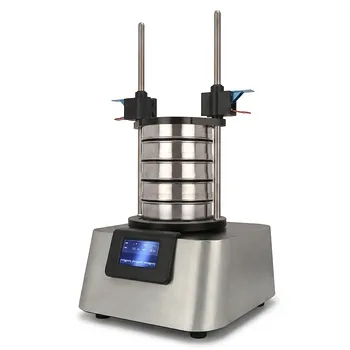
Vibratory Sieve Shaker Electromagnetic 3D Motion Powder Particle Size Analyzer for Dry and Wet Sieving
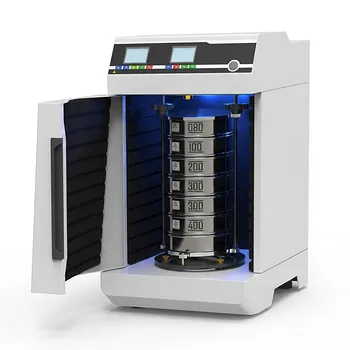
Laboratory Dry and Wet Three Dimensional Vibratory Sieve Shaker for Particle Analysis
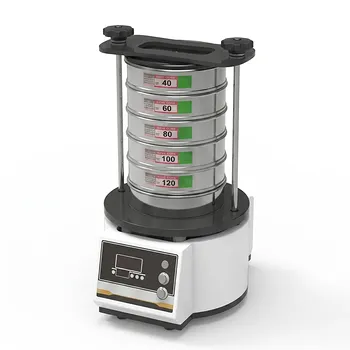
Dry Three Dimensional Vibratory Sieve Shaker
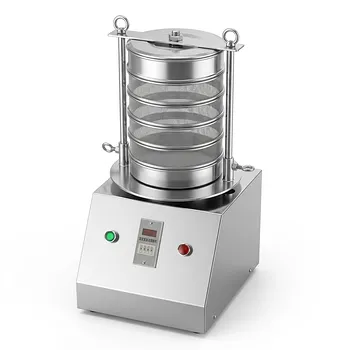
Stainless Steel Laboratory Vibratory Test Sieve Shaker
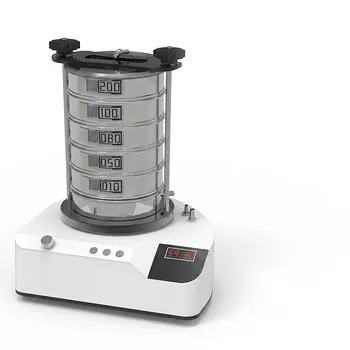
Heavy Duty Dry Three Dimensional Vibratory Sieve Shaker for Particle Separation
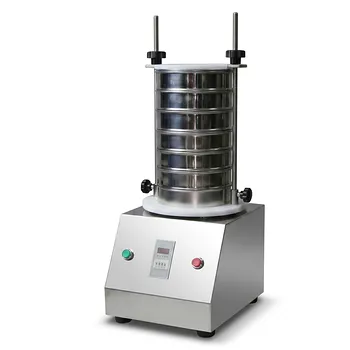
Small Laboratory Vibratory Sieve Shaker for Powder Gradation and Particle Size Analysis

Small Laboratory Vibrating Sieve Shaker for Precise Particle Size Analysis
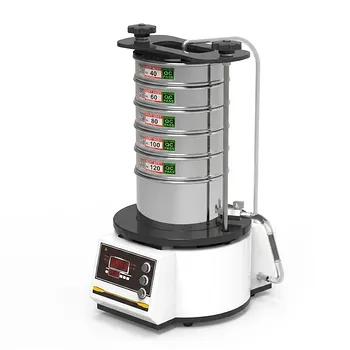
High Frequency Wet Three-Dimensional Vibrating Sieve Shaker for Dry and Wet Particle Size Analysis
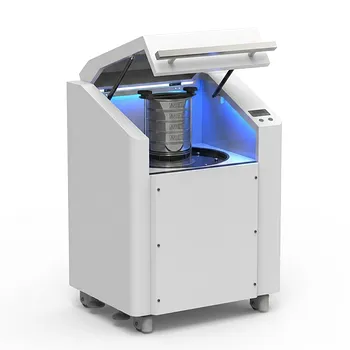
High Frequency Cabinet Type Three-Dimensional Rotary Vibrating Sieve Shaker for Dry Sieving and Particle Classification

Laboratory Vibratory Test Sieve Shaker for Precision Particle Size Analysis and Powder Grading
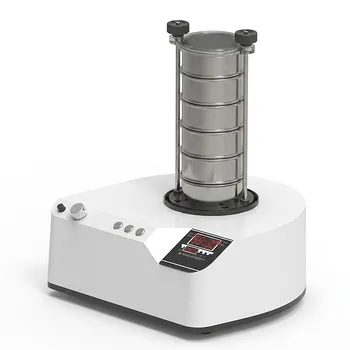
三维电磁微量振动筛分仪

Stainless Steel Rotary Vibrating Sieve High Precision Circular Vibratory Separator Industrial Powder Grading Machine Multi Layer Sifting Equipment
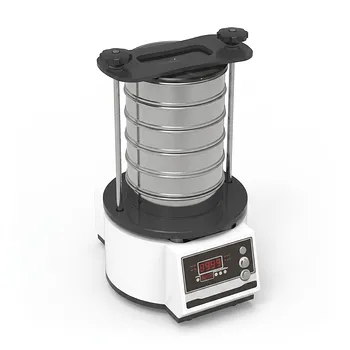
Tapping Oscillating Sieve Shaker for Dry and Wet Particle Size Analysis
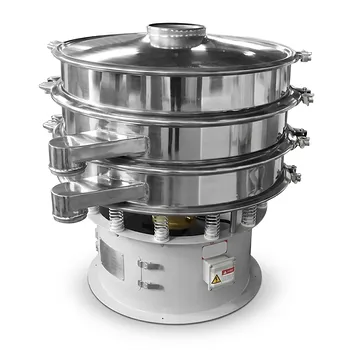
Three Dimensional Rotary Vibrating Sieve
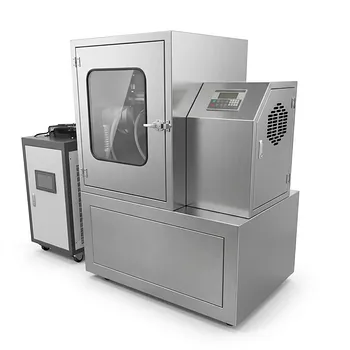
Vibratory Superfine Grinder for Ultra Fine Laboratory Powder Milling
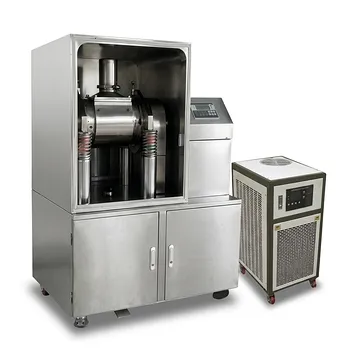
Small Vibrating Ultrafine Grinder for Traditional Chinese Medicine

Automatic Vibrating Powder Feeder for Laboratory Material Processing Precision Vibratory Hopper Feeder for Granular and Powder Material Handling Industrial Grade Vibrating Tray Feeder for Consistent Material Sample Preparation