Why are high-precision industrial presses required for MMC powder molding? Achieve uniform density and structural integrity.
Updated 4 months ago
High-precision industrial presses are the critical link between loose powder mixtures and high-performance metal matrix composites (MMCs).
By applying controlled, directional pressure through specialized dies, these machines induce plastic deformation and particle rearrangement to create a "green body." This stage is fundamental because it establishes the precise shape, density distribution, and internal microstructure required for the composite to survive subsequent thermal and chemical processing without failure.
Core Takeaway: High-precision presses are required to eliminate internal voids and ensure uniform density within the green body. This precision prevents cracking during heat treatment and provides the necessary microstructural foundation for the material to reach its full mechanical and thermal potential.
Achieving Structural Integrity and Geometric Stability
Eliminating Internal Porosity and Voids
Industrial presses provide the massive force—often ranging from 100 MPa to 2 GPa—required to eliminate the substantial air gaps found in loose powder. For ultra-fine powders, such as cryomilled titanium, this process can remove up to 40% pore volume, transforming a loose pile into a high-density preformed compact. Reducing these voids is the primary defense against internal defects that could compromise the final product's strength.
Ensuring Dimensional Precision
The use of high-strength precision metal molds ensures that the sample maintains its geometric stability during the pressing process. Because these molds are designed to withstand hundreds of megapascals without deforming, they guarantee that the green body meets exact dimensional specifications. This accuracy is vital for parts that require a high degree of surface finish or specific diameters with minimal tolerances.
Preventing Failure During Heat Treatment
Precise pressure control ensures that the density distribution within the green body is perfectly uniform. If density is inconsistent, the material will experience anisotropic shrinkage or cracking during high-temperature sintering or heat treatment. A high-precision press mitigates this risk by ensuring the particles are packed with equal tightness across the entire volume.
Engineering the Material Microstructure
Facilitating Particle Interlocking
High-pressure environments induce plastic deformation, causing loose powder particles to physically interlock. This mechanical bonding creates a green compact with enough strength to be handled or even machined before it is fully sintered. Without this initial interlocking, the "green" part would lack the physical integrity to withstand the forces generated during manufacturing.
Guiding Directional Alignment
In advanced composites, such as those using boron nitride nanosheets, precision hot presses are used to guide the alignment of reinforcements. By controlling the flow of the matrix as it melts, the press forces functional fillers into a directional alignment. This microstructural control is what allows engineers to maximize specific properties like thermal conductivity or electromagnetic coupling efficiency.
Optimizing Atomic Diffusion
The press increases the initial contact area between particles, which is essential for successful sintering. By forcing particles into closer proximity, the equipment establishes the physical foundation required for atomic diffusion. This allows the material to reach full densification faster and at lower temperatures during the final stages of production.
Understanding the Trade-offs
Tooling Wear vs. Pressure Requirements
While higher pressures generally lead to better densification, they also accelerate mold wear and potential plastic deformation of the tooling itself. Engineers must balance the need for high compaction force with the longevity of the high-precision steel molds to maintain cost-effectiveness.
Pressure Distribution and Stress Concentrations
If the press does not apply pressure with perfect axial alignment, it can lead to uneven stress distribution. This results in internal "shear planes" or weak spots that may not be visible in the green body but will manifest as catastrophic failures once the material undergoes thermal expansion during sintering.
Binder Management in Hot Pressing
In processes involving binders, the press must accurately time the application of pressure relative to the softening point of the binder. Applying pressure too early can trap air, while applying it too late may result in poor binder distribution. High-precision hot presses solve this by integrating thermal sensors with pressure regulators to maximize the discharge of internal air.
Making the Right Choice for Your Goal
How to Apply This to Your Project
Depending on the specific requirements of your metal matrix composite, the pressing strategy will vary significantly.
- If your primary focus is thermal management: Utilize a high-precision hot press to align functionalized nanosheets and minimize thermal resistance at the particle interfaces.
- If your primary focus is structural high-density parts: Prioritize high-pressure hydraulic equipment (up to 2 GPa) to eliminate pore volume and ensure the geometric stability of ultra-fine powders.
- If your primary focus is complex geometry: Ensure your press uses precision-ground steel molds to prevent uneven stress distribution and guarantee a high-quality surface finish.
- If your primary focus is high-volume sintering: Focus on pressure consistency to ensure uniform green body density, which prevents cracking and anisotropic shrinkage during the heating cycle.
The precision of the powder molding stage dictates the ultimate physical limits and reliability of the finished metal matrix composite.
Summary Table:
| Key Feature | Benefit for MMCs | Impact on Final Product |
|---|---|---|
| High Compaction Force | Eliminates internal voids and air gaps | Increases density and mechanical strength |
| Precise Pressure Control | Ensures uniform density distribution | Prevents cracking and shrinkage during sintering |
| Microstructural Alignment | Guides directional alignment of fillers | Optimizes thermal and electromagnetic properties |
| Precision Metal Molds | Maintains high geometric stability | Guarantees exact dimensions and surface finish |
Elevate Your Material Research with Precision Compaction Solutions
At [Brand Name], we provide complete laboratory sample preparation solutions tailored for material science. We specialize in high-performance powder processing and compaction equipment designed to meet the rigorous demands of metal matrix composite (MMC) development.
Our extensive product line includes:
- Advanced Hydraulic Presses: Cold/Warm Isostatic Presses (CIP/WIP), vacuum hot presses, and standard lab/XRF pellet presses for maximum densification.
- Powder Processing: Planetary ball mills, jet mills, and rotor mills to achieve ideal particle sizes.
- Mixing & Sifting: Powder mixers, defoaming mixers, and vibratory sieve shakers for uniform material distribution.
Whether you are aiming to eliminate internal porosity or engineer complex microstructures, our equipment ensures your "green bodies" are built for success. Contact our technical experts today to find the perfect solution for your powder molding requirements!
References
- Km. Pooja, Pallavi Chaudhary. Metal matrix composites: revolutionary materials for shaping the future. DOI: 10.1007/s43939-025-00226-6
Mentioned Products
- 6-Ton Small Single-Punch Tablet Press — Laboratory Powder & Granule Tableting Equipment / Tablet Forming Machine
- 5 Ton Single Punch Tablet Press Laboratory Small Batch Production
- Enhanced 9 Punch Rotary Tablet Press for Powder Compaction
- 6 Ton Variable Frequency Single Punch Tablet Press
- Ordinary Type Rotary Tablet Press for Pharmaceutical Chemical Food Electronic Industries
People Also Ask
- What is the function of a laboratory press in Cr-Ti alloy evaluation? Quantify Fracture Stress & Strength
- What is the function of a laboratory press in assessing the hydrophobic performance of modified vermiculite fillers?
- What is the core function of a laboratory press in the forming of ceramic filter element green bodies? Maximize Density.
- What is the function of a laboratory press in the preparation of ceramic feed rods? Master Density and Precision
- Why is vacuum sealing and flexible packaging necessary for Aluminum Titanate powders during CIP? Ensure Peak Density

Tech Team · PowderPreparation
Last updated on Jun 03, 2026
Related Products
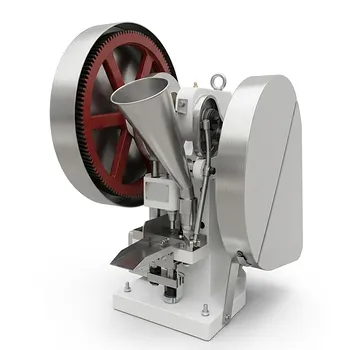
6-Ton Small Single-Punch Tablet Press — Laboratory Powder & Granule Tableting Equipment / Tablet Forming Machine
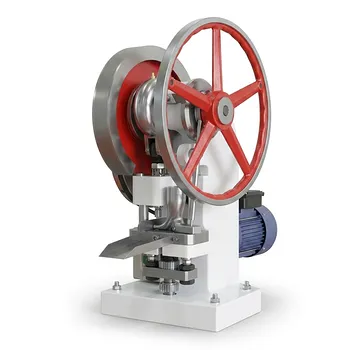
5 Ton Single Punch Tablet Press Laboratory Small Batch Production
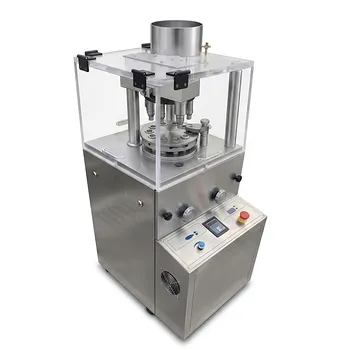
Enhanced 9 Punch Rotary Tablet Press for Powder Compaction
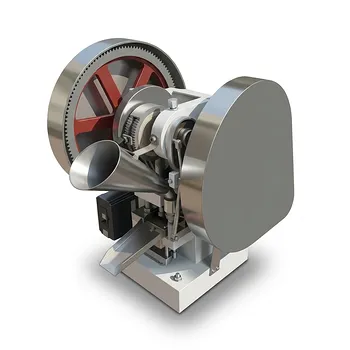
6 Ton Variable Frequency Single Punch Tablet Press
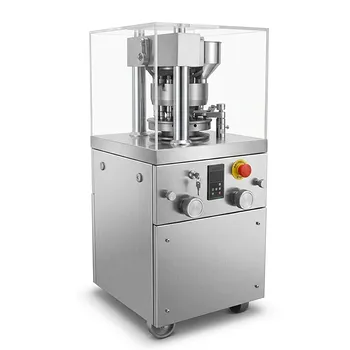
Ordinary Type Rotary Tablet Press for Pharmaceutical Chemical Food Electronic Industries
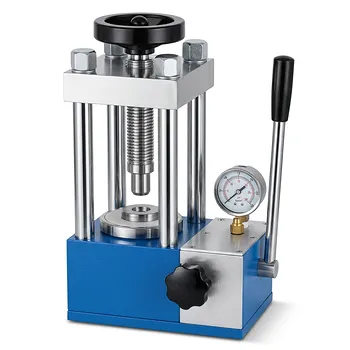
Manual Tablet Press with Dual Scale Pressure Gauge for Pharmaceutical Food Chemical Laboratory Sample Preparation
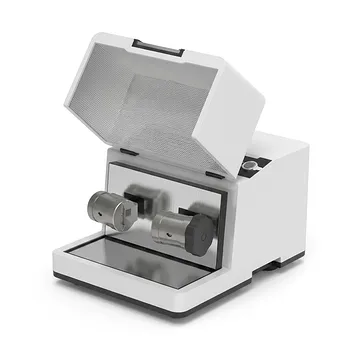
Heating Temperature Controlled High Energy Vibratory Ball Mill
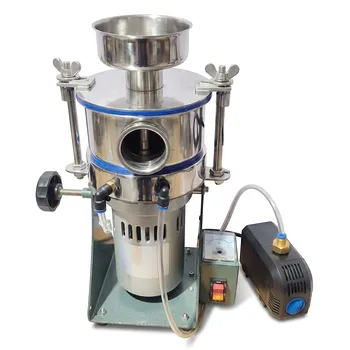
Water Cooled Airflow Ultra Fine Grinder for Low Temperature Material Processing
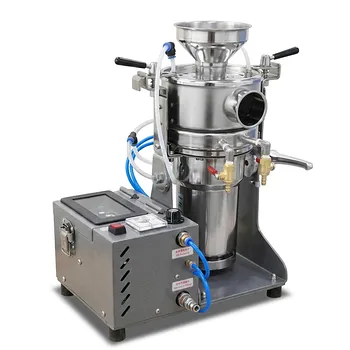
Water Cooled Pulse Jet Ultrafine Grinder