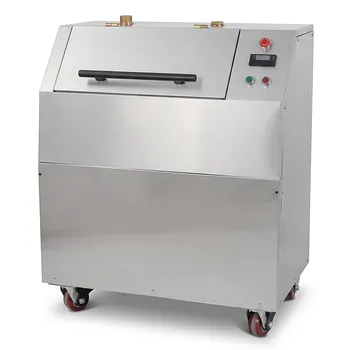
What technical advantages does the 3D motion of a vibratory sieve shaker provide during PVC recycling? Enhance PSD Purity
Updated 5 months ago
The technical advantage of 3D motion in a vibratory sieve shaker lies in its ability to simultaneously lift, rotate, and redistribute PVC particles across the mesh. This composite movement combines vertical throwing with horizontal circular motion, effectively breaking up fiber clumps and ensuring that every particle has maximum opportunity to pass through the sieve apertures.
By integrating vertical acceleration with horizontal distribution, 3D motion solves the critical challenge of fiber entanglement in PVC recycling. This mechanical synergy releases trapped microplastics and ensures a highly precise particle size distribution necessary for stable downstream extrusion.
The Mechanics of 3D Throwing Motion
Vertical Acceleration and Sample Lift
The vertical component of the 3D motion creates a throwing effect that periodically lifts the entire material bed off the sieve surface. This action prevents the mesh from blinding and ensures that particles are not simply sliding, but are actively bouncing to find an open aperture.
Horizontal Circular Distribution
While the material is in the air or rolling, a superimposed horizontal motion spreads the PVC powder evenly across the entire diameter of the sieve. This prevents material from accumulating in the center or at the edges, utilizing the full surface area of the equipment for maximum throughput.
Increased Contact Frequency
Because the particles are rolling and jumping rather than moving in a linear path, the contact frequency between the PVC microplastics and the mesh is significantly higher. This statistical increase in "presentation events" allows for much faster processing times compared to traditional 2D vibration.
Enhancing Material Purity and Particle Release
Breaking PET Fiber Entanglements
In PVC recycling, PET fibers often entangle to form clumps that trap valuable fine PVC particles. The high-frequency mechanical energy of 3D motion disrupts these bonds, effectively "shaking out" the trapped fines and improving the overall purity of the recycled output.
Precision in Particle Size Distribution (PSD)
3D vibratory shakers deliver a consistent and uniform mechanical force that manual or simple vibration methods cannot replicate. This precision is vital for generating accurate PSD curves, which help operators adjust crushing processes to prevent extruder clogging.
Real-Time Classification
Modern 3D shakers often utilize a dual-outlet design to perform continuous, real-time classification. Fine powder that meets specifications is immediately collected, while oversized material and separated fibers are redirected for re-grinding or recovery, streamlining the recycling loop.
Understanding the Trade-offs
Equipment Wear and Calibration
The high-frequency 3D motion exerts significant stress on the sieve frames and the mesh itself. Mechanical fatigue can occur over time, requiring regular inspection of the sieve tension to maintain separation accuracy.
Energy and Noise Considerations
Generating complex 3D movement requires more sophisticated power units than simple electromagnetic vibrators. This can result in higher energy consumption and increased noise levels in the facility, necessitating proper acoustic housing or dampening.
Material Sensitivity
While effective for PVC, extremely friable materials may degrade under the intense "throwing" action of 3D motion. Operators must carefully tune the vibration frequency (often around 80 Hz) to balance the need for separation with the risk of unwanted particle attrition.
Implementing 3D Sieving for PVC Quality
Making the Right Choice for Your Goal
To maximize the benefits of 3D vibratory motion in your PVC recycling workflow, consider your primary objective:
- If your primary focus is Maximum Product Purity: Utilize high-frequency 3D motion to specifically target and break up PET fiber clumps that contaminate the PVC stream.
- If your primary focus is Extruder Stability: Use the 3D shaker to perform rigorous PSD analysis, ensuring the bulk density of the feed remains consistent to prevent output fluctuations.
- If your primary focus is Processing Throughput: Optimize the horizontal circular motion to ensure the entire sieve surface area is utilized, preventing "dead zones" where material sits idle.
By mastering the multidimensional forces of 3D vibration, recyclers can transform contaminated waste into high-grade, production-ready PVC resin.
Summary Table:
| 3D Motion Feature | Mechanical Action | PVC Recycling Benefit |
|---|---|---|
| Vertical Acceleration | Throwing effect & sample lift | Prevents mesh blinding; releases trapped microplastics |
| Horizontal Distribution | Circular spreading | Maximizes throughput; utilizes full sieve surface area |
| Composite Movement | Rolling and jumping | Breaks PET fiber clumps; increases contact frequency |
| High-Frequency Vibration | Mechanical energy disruption | Ensures stable PSD for consistent downstream extrusion |
Optimize Your PVC Recycling & Material Processing
Elevate your material science research and production efficiency with our complete laboratory sample preparation solutions. We specialize in high-precision powder processing and compaction equipment designed to meet the most rigorous industrial standards.
From initial size reduction using our jaw/roll crushers, liquid nitrogen cryogenic grinders, and planetary ball/jet mills, to precise classification with our 3D vibratory and air-jet sieve shakers, we provide the tools necessary to ensure material purity and stable particle size distribution.
Beyond sieving, we offer a full spectrum of downstream solutions, including powder and defoaming mixers, as well as advanced hydraulic presses—ranging from Cold/Warm Isostatic Presses (CIP/WIP) to vacuum hot presses—for superior sample compaction.
Transform your waste into high-grade resin with professional-grade equipment. Contact our technical experts today to find your solution!
References
- Walid Chaouch, Slah Msahli. Development of a reliable and efficient combined grinding and separation process for PVC-coated fabric waste. DOI: 10.5802/crchim.258
Mentioned Products
- Vibratory Sieve Shaker Electromagnetic 3D Motion Powder Particle Size Analyzer for Dry and Wet Sieving
- Laboratory Dry and Wet Three Dimensional Vibratory Sieve Shaker for Particle Analysis
- Dry Three Dimensional Vibratory Sieve Shaker
- Stainless Steel Laboratory Vibratory Test Sieve Shaker
- Heavy Duty Dry Three Dimensional Vibratory Sieve Shaker for Particle Separation
People Also Ask
- How does a vibratory sieve shaker contribute to optimizing the performance of activated carbon? Enhance Adsorption Precision
- Why is a laboratory vibratory sieve shaker necessary for processing magnesium-based borate precursor powders? Boost Activity
- Why use a vibratory sieve shaker to verify coarse aggregate grading in rubberized concrete? Ensure Structural Integrity
- What function do vibratory sieve shakers and standard test sieves serve in the preparation of adsorbents? Key Guide
- What role does a vibratory sieve shaker play in the particle size analysis of ground corn products? Enhance QC Precision

Tech Team · PowderPreparation
Last updated on May 14, 2026
Related Products
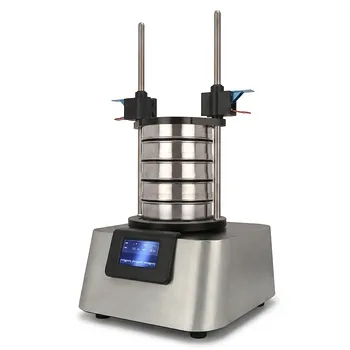
Vibratory Sieve Shaker Electromagnetic 3D Motion Powder Particle Size Analyzer for Dry and Wet Sieving
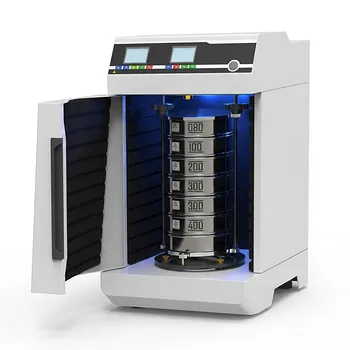
Laboratory Dry and Wet Three Dimensional Vibratory Sieve Shaker for Particle Analysis
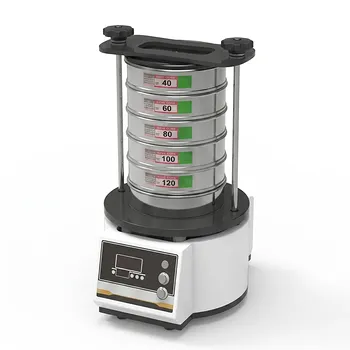
Dry Three Dimensional Vibratory Sieve Shaker
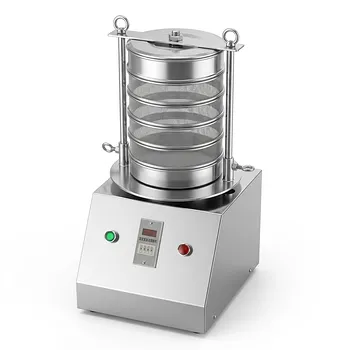
Stainless Steel Laboratory Vibratory Test Sieve Shaker
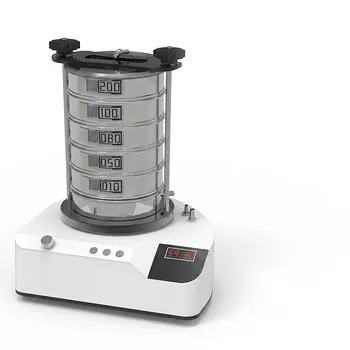
Heavy Duty Dry Three Dimensional Vibratory Sieve Shaker for Particle Separation
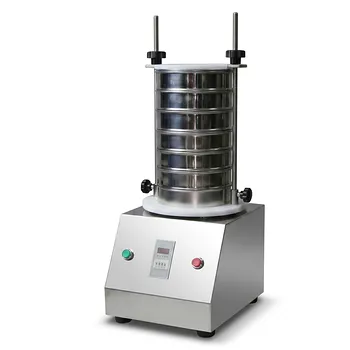
Small Laboratory Vibratory Sieve Shaker for Powder Gradation and Particle Size Analysis
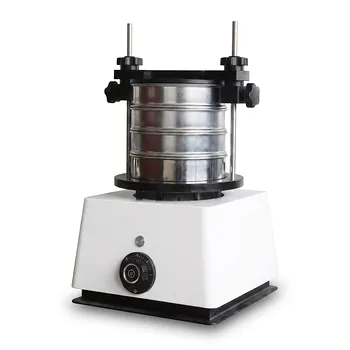
Small Laboratory Vibrating Sieve Shaker for Precise Particle Size Analysis
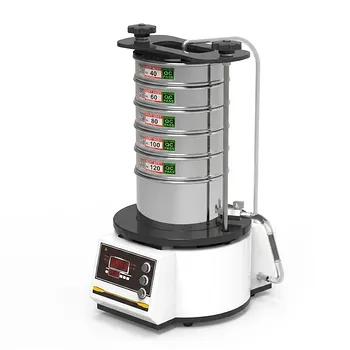
High Frequency Wet Three-Dimensional Vibrating Sieve Shaker for Dry and Wet Particle Size Analysis
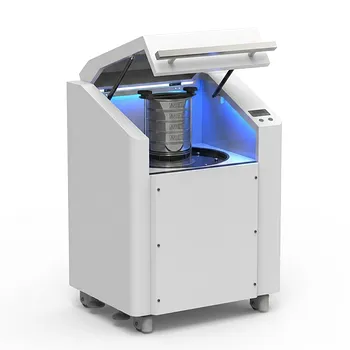
High Frequency Cabinet Type Three-Dimensional Rotary Vibrating Sieve Shaker for Dry Sieving and Particle Classification
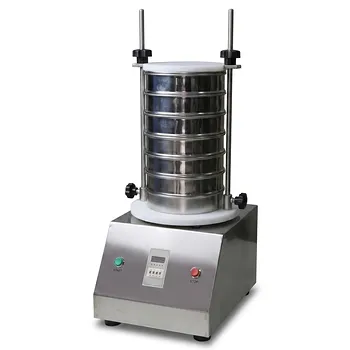
Laboratory Vibratory Test Sieve Shaker for Precision Particle Size Analysis and Powder Grading
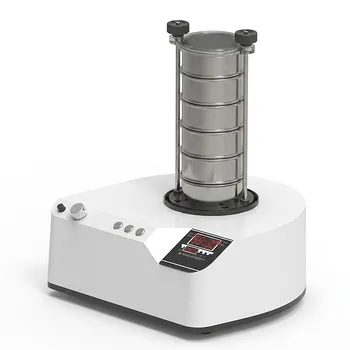
三维电磁微量振动筛分仪
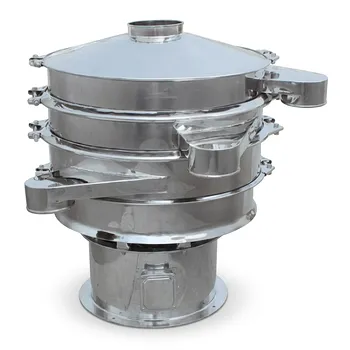
Stainless Steel Rotary Vibrating Sieve High Precision Circular Vibratory Separator Industrial Powder Grading Machine Multi Layer Sifting Equipment
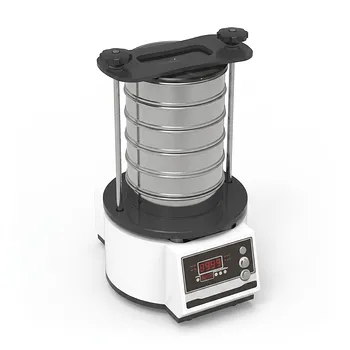
Tapping Oscillating Sieve Shaker for Dry and Wet Particle Size Analysis
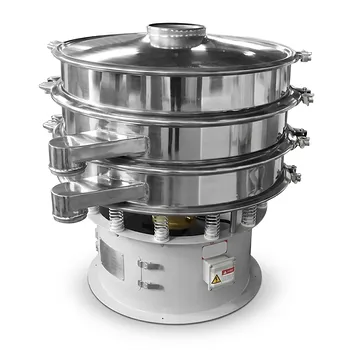
Three Dimensional Rotary Vibrating Sieve
Vibratory Superfine Grinder for Ultra Fine Laboratory Powder Milling
Small Vibrating Ultrafine Grinder for Traditional Chinese Medicine
Automatic Vibrating Powder Feeder for Laboratory Material Processing Precision Vibratory Hopper Feeder for Granular and Powder Material Handling Industrial Grade Vibrating Tray Feeder for Consistent Material Sample Preparation