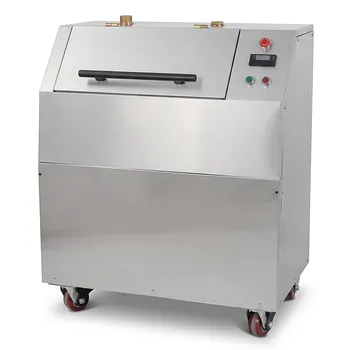
What technical advantages do mechanical vibratory sieve shakers offer? Enhance Precision & Consistency in Lab Testing
Updated 4 months ago
Precision and consistency are the hallmarks of modern soil mechanics. Mechanical vibratory sieve shakers utilize standardized frequency and multi-dimensional movement to ensure particles are uniformly separated across precision sieves. Unlike manual methods, these machines provide the rigorous control necessary for accurate classification of complex materials like high plasticity clay.
Mechanical vibratory sieve shakers replace the inconsistency of human effort with standardized, high-frequency energy. This ensures that every sample is subjected to identical conditions, resulting in objective, reproducible data that is critical for engineering classifications and fractal analysis.
Achieving Technical Precision in Particle Separation
Three-Dimensional Vibration and Particle Movement
Mechanical shakers generate three-dimensional vibrations that cause soil particles to jump and rotate across the sieve surface. This multi-dimensional movement ensures that particles have multiple opportunities to present their smallest dimensions to the mesh apertures. This is far more effective than the linear or random motion typical of manual sieving.
Constant Frequency and Amplitude
The power unit of a vibratory shaker maintains a constant frequency and amplitude throughout the testing process. This stability ensures that the energy applied to the soil sample remains uniform from start to finish. In contrast, manual sieving is prone to fluctuations in force, leading to uneven particle distribution.
Eliminating Random Operator Errors
By automating the agitation process, mechanical shakers eliminate the random errors associated with human fatigue and technique. Standardized vibrations ensure that the sieving process is no longer dependent on the physical strength or consistency of the lab technician. This shift creates a more objective environment for particle size distribution analysis.
Enhancing Data Integrity and Reproducibility
Precise Time Control and Standardization
Mechanical shakers are equipped with timers that allow for a precise, regulated timeframe for every test. This ensures that every sample of clay or silt is processed for the exact same duration, satisfying strict laboratory standards. Repeatability is significantly higher when the "human variable" of timing is removed.
Accurate Classification of Complex Soils
For specific soil types like high plasticity clay or A-7-5 classification soils, precision is non-negotiable. Vibratory shakers provide the stable energy required to accurately describe the particle size distribution of these challenging materials. This data forms a reliable foundation for calculating the fractal dimension of the soil.
Prevention of Sieve Clogging
Clays and lateritic soils are notoriously prone to stacking or clogging the sieve mesh. The high-frequency vibration and impact intensity of mechanical shakers keep particles in motion, preventing them from blinding the mesh. This ensures a continuous flow of material through the various sieve levels.
Understanding Technical Trade-offs
Equipment Maintenance and Calibration
While mechanical shakers increase accuracy, they require regular calibration and maintenance to ensure the vibration intensity remains within spec. Unlike a simple handheld sieve, these are precision instruments with electrical and mechanical components that can wear over time. Failure to maintain the equipment can lead to a drift in results.
Limitations with Highly Cohesive Fines
Even with high-frequency vibration, extremely cohesive or "sticky" clays may still require wet sieving techniques. While a vibratory shaker is superior for dry separation, it cannot always overcome the molecular bonds of moisture-heavy clay on its own. Engineers must determine if a mechanical dry shake is sufficient for their specific moisture content.
Capital Investment and Noise
The transition from manual to mechanical sieving involves a higher initial capital expenditure and a dedicated power source. Additionally, the high-frequency agitation and tapping actions generate significant noise in a laboratory setting. This necessitates proper placement and, in some cases, sound-dampening enclosures.
Selecting the Right Sieving Strategy
To choose the best method for your laboratory, consider your primary objective for the analysis:
- If your primary focus is High Reproducibility: Utilize a mechanical vibratory shaker to ensure that tests conducted by different operators yield comparable, standardized results.
- If your primary focus is Throughput and Efficiency: Implement an automatic shaker to significantly reduce labor time and allow technicians to perform other tasks during the sieving cycle.
- If your primary focus is Precise Soil Classification: Rely on the constant frequency of a mechanical unit to achieve the accurate cumulative mass data required for identifying high plasticity clays.
- If your primary focus is Basic Field Screening: Manual sieving may remain a viable, low-cost option for rough estimations where high-level precision and standardization are not required.
The shift from manual to mechanical sieving is a transition from subjective estimation to standardized engineering precision.
Summary Table:
| Feature | Mechanical Vibratory Shaker | Manual Sieving |
|---|---|---|
| Movement Type | 3D high-frequency vibration | Linear or random motion |
| Consistency | Standardized and automated | Highly operator-dependent |
| Precision | High; repeatable data output | Low; prone to human error |
| Efficiency | Fast; allows multi-tasking | Labor-intensive and slow |
| Sieve Clogging | Minimized via high-impact energy | High risk with cohesive clays |
Elevate Your Laboratory Precision with Our Expert Solutions
At [Brand Name], we provide complete laboratory sample preparation solutions for material science, specializing in high-performance powder processing and compaction equipment. Whether you are conducting particle size distribution analysis or preparing advanced materials, our extensive product line is designed to meet the most rigorous standards.
Our offerings include:
- Sieve Shakers: Vibratory and air-jet models with precision test sieves and meshes.
- Milling & Grinding: Planetary ball mills, jet mills, disc mills, and cryogenic grinders.
- Crushing: Jaw and roll crushers for primary processing.
- Hydraulic Presses: A full spectrum of Cold/Warm Isostatic Presses (CIP/WIP), XRF pellet presses, and vacuum hot presses.
- Mixing: High-efficiency powder and defoaming mixers.
Don't let manual inconsistencies compromise your research. Contact us today to discuss how our specialized equipment can streamline your workflow and ensure objective, reproducible results for your material science applications!
References
- Damilola A. Ogundare, Ayodeji Theophilus Akinbuluma. Predictive Modelling and Functional Group of Clay Soil Treated with Steel Slag and Calcium Carbide Residue. DOI: 10.4314/njtd.v21i3.2715
Mentioned Products
- Vibratory Sieve Shaker Electromagnetic 3D Motion Powder Particle Size Analyzer for Dry and Wet Sieving
- Laboratory Dry and Wet Three Dimensional Vibratory Sieve Shaker for Particle Analysis
- Small Laboratory Vibratory Sieve Shaker for Powder Gradation and Particle Size Analysis
- Heavy Duty Dry Three Dimensional Vibratory Sieve Shaker for Particle Separation
- Stainless Steel Laboratory Vibratory Test Sieve Shaker
People Also Ask
- How does a vibratory sieve shaker contribute to optimizing the performance of activated carbon? Enhance Adsorption Precision
- Why is a laboratory vibratory sieve shaker necessary for processing magnesium-based borate precursor powders? Boost Activity
- Why use a vibratory sieve shaker to verify coarse aggregate grading in rubberized concrete? Ensure Structural Integrity
- What function do vibratory sieve shakers and standard test sieves serve in the preparation of adsorbents? Key Guide
- What role does a vibratory sieve shaker play in the particle size analysis of ground corn products? Enhance QC Precision

Tech Team · PowderPreparation
Last updated on Jun 03, 2026
Related Products
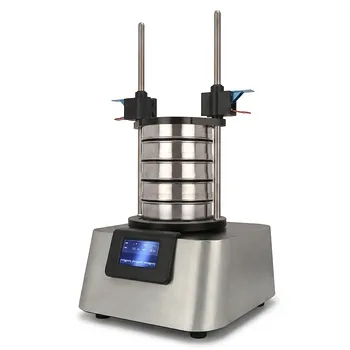
Vibratory Sieve Shaker Electromagnetic 3D Motion Powder Particle Size Analyzer for Dry and Wet Sieving
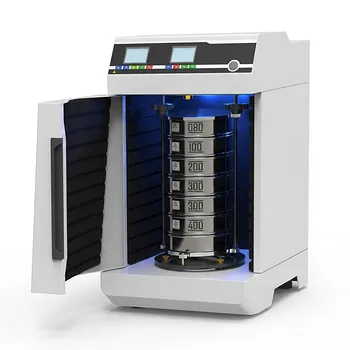
Laboratory Dry and Wet Three Dimensional Vibratory Sieve Shaker for Particle Analysis
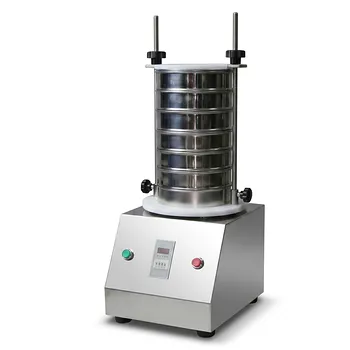
Small Laboratory Vibratory Sieve Shaker for Powder Gradation and Particle Size Analysis

Heavy Duty Dry Three Dimensional Vibratory Sieve Shaker for Particle Separation
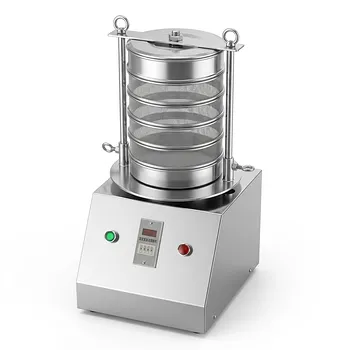
Stainless Steel Laboratory Vibratory Test Sieve Shaker

Dry Three Dimensional Vibratory Sieve Shaker
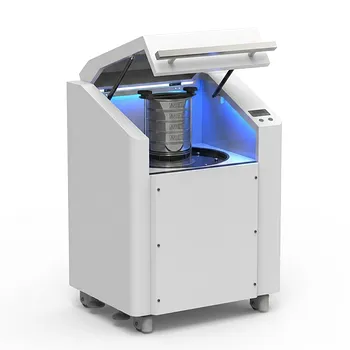
High Frequency Cabinet Type Three-Dimensional Rotary Vibrating Sieve Shaker for Dry Sieving and Particle Classification
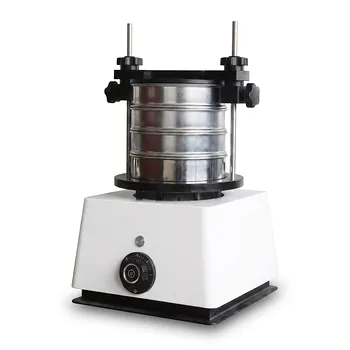
Small Laboratory Vibrating Sieve Shaker for Precise Particle Size Analysis

Laboratory Vibratory Test Sieve Shaker for Precision Particle Size Analysis and Powder Grading
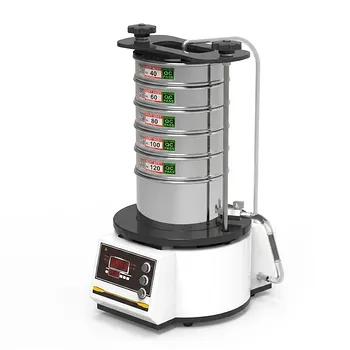
High Frequency Wet Three-Dimensional Vibrating Sieve Shaker for Dry and Wet Particle Size Analysis
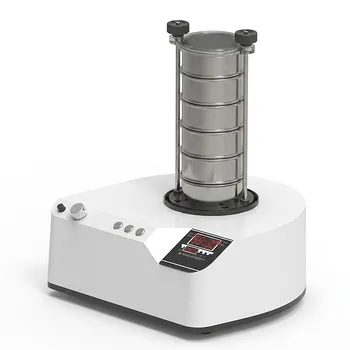
三维电磁微量振动筛分仪
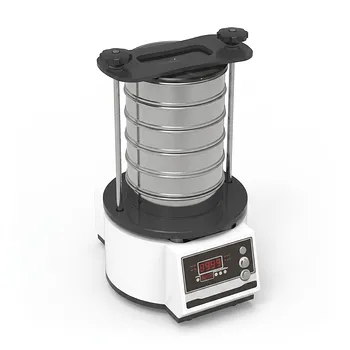
Tapping Oscillating Sieve Shaker for Dry and Wet Particle Size Analysis

Stainless Steel Rotary Vibrating Sieve High Precision Circular Vibratory Separator Industrial Powder Grading Machine Multi Layer Sifting Equipment
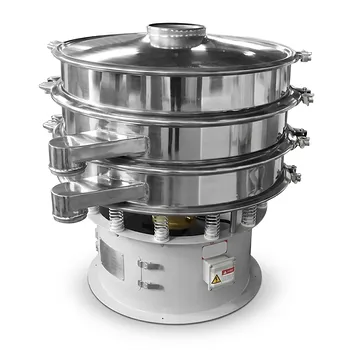
Three Dimensional Rotary Vibrating Sieve
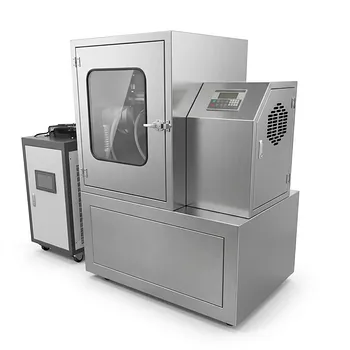
Vibratory Superfine Grinder for Ultra Fine Laboratory Powder Milling
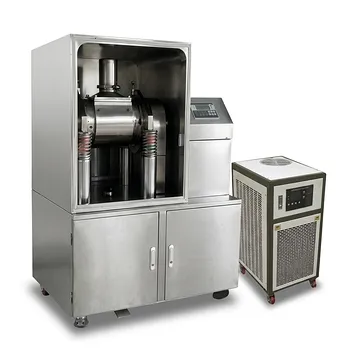
Small Vibrating Ultrafine Grinder for Traditional Chinese Medicine
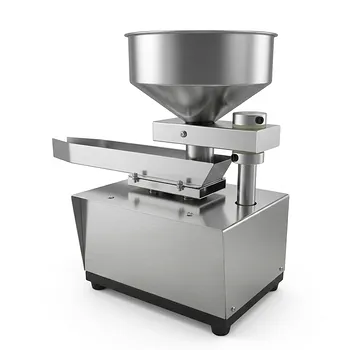
Automatic Vibrating Powder Feeder for Laboratory Material Processing Precision Vibratory Hopper Feeder for Granular and Powder Material Handling Industrial Grade Vibrating Tray Feeder for Consistent Material Sample Preparation