What role does the hot pressing process play in the consolidation of microcrystalline boron carbide ceramics? Maximize Hardness
Updated 4 months ago
The hot pressing process is the critical mechanism used to achieve full densification in boron carbide (B4C) ceramics by simultaneously applying high temperature and axial pressure. This dual-action approach overcomes the material's inherent resistance to sintering, resulting in ultra-hard, microcrystalline substrates with near-theoretical density and a highly uniform microstructure.
Core Takeaway: Hot pressing bypasses the low self-diffusion limitations of boron carbide's covalent bonds by using mechanical pressure to force particle rearrangement and plastic flow. This allows for the creation of dense, fine-grained ceramics at lower temperatures than pressureless sintering, ensuring maximum hardness and structural integrity.
Overcoming the Inherent Challenges of Boron Carbide
The Sintering Difficulty of Covalent Bonds
Boron carbide is characterized by extremely strong covalent bonding, which results in a very low self-diffusion coefficient. This chemical nature makes it nearly impossible to achieve full densification through traditional pressureless sintering without adding excessive sintering aids that can degrade material properties.
Reducing the Sintering Temperature
Hot pressing equipment allows the material to reach full density at temperatures significantly lower—often by 150–200 °C—than atmospheric sintering. For example, high-pressure systems can achieve complete consolidation at approximately 1800 °C by inducing non-stoichiometry at grain boundaries, which breaks the original chemical equilibrium and facilitates movement.
The Mechanics of Hot Press Consolidation
Simultaneous Thermal and Mechanical Energy
The process works by applying uniaxial mechanical pressure (often reaching 80 MPa or higher) at the same time as thermal energy. This combination provides the necessary driving force to overcome the surface energy barriers that typically prevent powder particles from fusing together.
Plastic Flow and Particle Rearrangement
Under the influence of high pressure, the powder particles undergo plastic flow and diffusion rearrangement. The mechanical force physically pushes the particles into a tighter packing arrangement, while the heat accelerates grain boundary diffusion to fill the remaining microscopic voids.
Elimination of Internal Porosity
By forcing the air and gaps out of the powder compact, hot pressing routinely achieves 98–99.5% theoretical density. This near-zero porosity is essential for the material's mechanical strength and is a prerequisite for advanced applications like brazing or ballistic protection.
Impact on Microstructure and Performance
Achieving Microcrystalline Refinement
Because the process operates at lower temperatures and over shorter durations than conventional sintering, it effectively limits grain growth. This results in a microcrystalline structure where grain sizes remain small (often around 1 μm), preventing the grain coarsening that typically weakens ceramic materials.
Enhancing Mechanical Strength and Hardness
The refined grain size and high density directly translate to a 30–50% increase in flexural strength and hardness compared to pressureless methods. This makes the resulting ceramic an ideal candidate for lightweight personal protective armor and high-quality experimental samples used to study deformation mechanisms under extreme pressure.
Understanding the Trade-offs
Geometry and Scalability Limitations
While hot pressing produces superior material properties, it is generally limited to simple geometries like plates, disks, or cylinders due to the nature of uniaxial pressing. Creating complex, near-net-shape components is significantly more difficult than with other forming methods.
Process Costs and Throughput
The requirement for specialized high-pressure equipment and durable die materials (often graphite) increases production costs. Additionally, hot pressing is typically a batch process, which may result in lower throughput compared to continuous sintering methods used for less demanding ceramics.
How to Apply This to Your Project
When deciding whether to utilize hot pressing for boron carbide consolidation, consider your primary performance metrics and budget constraints.
- If your primary focus is Maximum Hardness and Ballistic Resistance: Hot pressing is the definitive choice, as it ensures the near-theoretical density and fine grain size required for impact resistance.
- If your primary focus is Research on Deformation Mechanisms: Utilize hot-pressed samples to ensure a uniform microstructure that provides a reliable baseline for extreme pressure experiments.
- If your primary focus is Cost-Effective Mass Production of Complex Shapes: You may need to explore pressureless sintering with additives, though you must accept a trade-off in final material density and hardness.
Hot pressing remains the gold standard for producing the high-integrity microcrystalline boron carbide necessary for the world’s most demanding technical applications.
Summary Table:
| Feature | Hot Pressing Advantage | Impact on B4C Ceramics |
|---|---|---|
| Densification | 98–99.5% Theoretical Density | Maximizes ballistic resistance and structural integrity. |
| Temperature | 150–200 °C lower than sintering | Limits grain growth, maintaining a microcrystalline structure. |
| Driving Force | Simultaneous Heat & Axial Pressure | Overcomes covalent bond resistance via plastic flow. |
| Mechanicals | 30–50% Higher Flexural Strength | Produces ultra-hard substrates for extreme applications. |
Elevate Your Material Performance with Precision Hot Pressing Solutions
Achieving near-theoretical density and a refined microcrystalline structure requires precision control over thermal and mechanical energy. At our core, we provide complete laboratory sample preparation solutions for material science, specializing in advanced powder processing and compaction equipment.
Our extensive product range is designed to meet the rigorous demands of boron carbide consolidation and other technical ceramics:
- Advanced Pressing: A full spectrum of hydraulic presses, including Hot Presses, Vacuum Hot Presses, Cold/Warm Isostatic Presses (CIP/WIP), and XRF pellet presses.
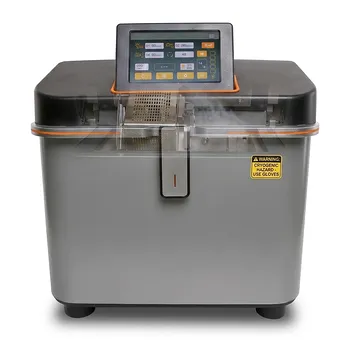
- Powder Processing: High-efficiency crushers (jaw/roll), liquid nitrogen cryogenic grinders, and various mills (planetary ball, jet, sand/bead, disc, rotor).
- Analysis & Mixing: Vibratory and air-jet sieve shakers, alongside specialized powder and defoaming mixers.
Whether you are conducting research on deformation mechanisms or manufacturing high-strength armor components, our equipment provides the reliability and precision you need. Contact us today to discuss how our solutions can optimize your ceramic consolidation process!
References
- Kolan Madhav Reddy, Mingwei Chen. Atomic structure of amorphous shear bands in boron carbide. DOI: 10.1038/ncomms3483
Mentioned Products
- 6-Ton Small Single-Punch Tablet Press — Laboratory Powder & Granule Tableting Equipment / Tablet Forming Machine
- 5 Ton Single Punch Tablet Press Laboratory Small Batch Production
- Enhanced 9 Punch Rotary Tablet Press for Powder Compaction
- 6 Ton Variable Frequency Single Punch Tablet Press
- Ordinary Type Rotary Tablet Press for Pharmaceutical Chemical Food Electronic Industries
People Also Ask
- What is the function of a laboratory press in Cr-Ti alloy evaluation? Quantify Fracture Stress & Strength
- What is the function of a laboratory press in assessing the hydrophobic performance of modified vermiculite fillers?
- What is the core function of a laboratory press in the forming of ceramic filter element green bodies? Maximize Density.
- What is the function of a laboratory press in the preparation of ceramic feed rods? Master Density and Precision
- Why is vacuum sealing and flexible packaging necessary for Aluminum Titanate powders during CIP? Ensure Peak Density

Tech Team · PowderPreparation
Last updated on Jun 03, 2026
Related Products
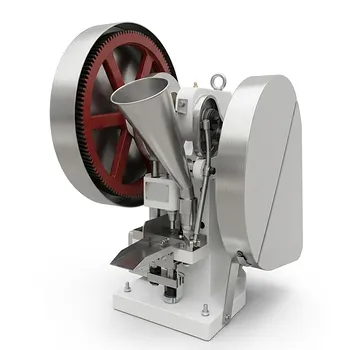
6-Ton Small Single-Punch Tablet Press — Laboratory Powder & Granule Tableting Equipment / Tablet Forming Machine
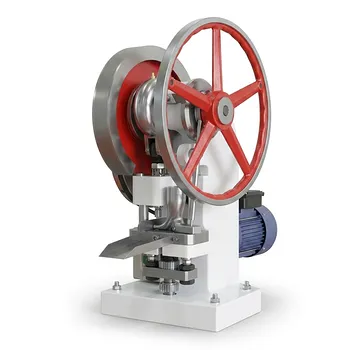
5 Ton Single Punch Tablet Press Laboratory Small Batch Production
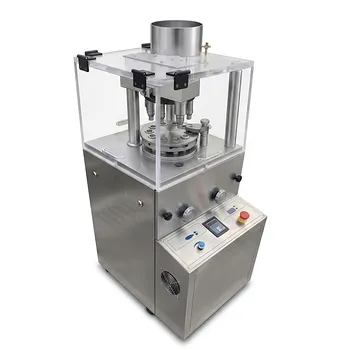
Enhanced 9 Punch Rotary Tablet Press for Powder Compaction
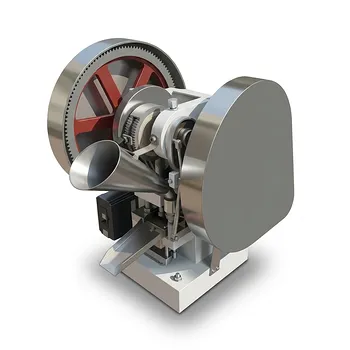
6 Ton Variable Frequency Single Punch Tablet Press
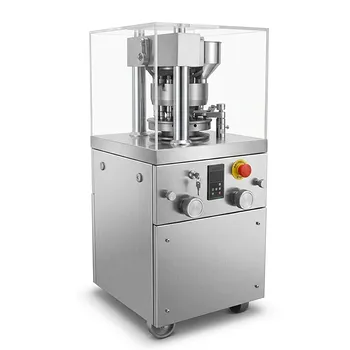
Ordinary Type Rotary Tablet Press for Pharmaceutical Chemical Food Electronic Industries
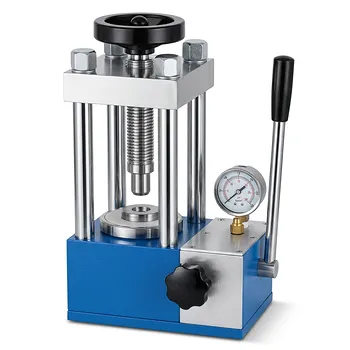
Manual Tablet Press with Dual Scale Pressure Gauge for Pharmaceutical Food Chemical Laboratory Sample Preparation
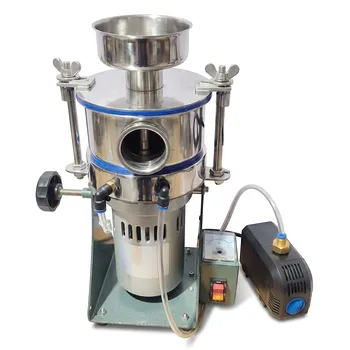
Water Cooled Airflow Ultra Fine Grinder for Low Temperature Material Processing
Heating Temperature Controlled High Energy Vibratory Ball Mill
Water Cooled Pulse Jet Ultrafine Grinder