What role does ball milling play in Si3N4/BN ceramics? Achieving Homogeneity for Fibrous Monolithic Structures
Updated 4 months ago
The ball milling process is the critical homogenization step that transforms raw powders into a high-quality slurry suitable for the wet spinning of silicon nitride fibers. It utilizes intense mechanical force to de-agglomerate silicon nitride and boron nitride particles, ensuring a molecular-level distribution of sintering additives and binders. This uniformity is the fundamental prerequisite for achieving the structural integrity and anisotropic properties required in fibrous monolithic ceramics.
Ball milling serves as both a particle size refiner and a high-energy mixing mechanism that ensures a perfectly uniform distribution of components within the ceramic matrix. By eliminating agglomerates and increasing powder reactivity, it provides the stable rheological foundation necessary for high-quality fiber production and dense sintering.
Achieving Chemical and Physical Homogeneity
Breaking Down Powder Agglomerates
Raw ceramic powders naturally form agglomerates due to van der Waals forces, which can create structural defects in the final ceramic. Ball milling uses mechanical impact and shear forces to break these clusters apart, ensuring that the silicon nitride and boron nitride particles are individually dispersed.
Achieving Molecular-Level Distribution
For Si3N4/BN ceramics, the process thoroughly integrates sintering additives such as yttria (Y2O3) and alumina (Al2O3) into the mixture. This high-energy mixing ensures that these additives are distributed at a molecular level, which is essential for forming a uniform liquid phase during the subsequent sintering stage.
Integrating the Liquid Medium and Binders
In the preparation of slurry for fibrous monolithics, ball milling effectively blends the powders with a sodium alginate solution. This step is vital for creating a consistent suspension where the binder is perfectly integrated, providing the necessary strength and flexibility for the fibers during the wet spinning process.
Enhancing Sintering Kinetics and Microstructure
Increasing Powder Reactivity
By reducing the average particle size—often from several micrometers down to the nanometer scale—ball milling significantly increases the specific surface area of the raw materials. This higher surface area increases the chemical reactivity of the powder, which facilitates faster and more complete densification during sintering.
Foundation for Anisotropic Structures
Fibrous monolithic ceramics rely on a specific arrangement of Si3N4 and BN phases to achieve their unique fracture toughness. Ball milling ensures a uniform mixture of micron-sized boron nitride platelets and nano-sized silicon nitride powders, providing the physical foundation for the deliberate construction of an anisotropic microstructure.
Ensuring Stable Rheology for Wet Spinning
The quality of silicon nitride fibers depends heavily on the slurry stability. Ball milling optimizes the particle size distribution, which prevents premature settling and ensures the slurry maintains a consistent viscosity, directly impacting the uniformity and diameter of the spun fibers.
Understanding the Trade-offs
Milling Duration vs. Contamination Risk
While extending milling time (for example, from one week to two weeks) can refine particle size and improve uniformity, it increases the risk of media wear. Debris from the grinding balls (such as silica or alumina) can enter the mixture, potentially altering the chemical composition and degrading the high-temperature performance of the ceramic.
Energy Input vs. Slurry Viscosity
High-energy ball milling, such as using planetary mills, excels at refining particles but can also generate significant heat. This heat can alter the properties of organic binders like sodium alginate, potentially leading to unpredictable changes in slurry rheology that can complicate the wet spinning process.
How to Apply This to Your Project
Making the Right Choice for Your Goal
Effective raw material preparation requires balancing processing speed with the desired material characteristics.
- If your primary focus is maximizing fiber strength: Prioritize de-agglomeration and the molecular-level distribution of binders to ensure the slurry is free of structural defects before wet spinning.
- If your primary focus is high thermal conductivity or densification: Focus on high-energy ball milling to achieve nano-scale additive distribution and increased powder reactivity for the sintering stage.
- If your primary focus is cost-efficiency and purity: Optimize milling duration and select high-hardness grinding media to minimize contamination while achieving the minimum necessary particle refinement.
Mastering the ball milling stage ensures that the transition from raw powder to structured fiber is seamless, predictable, and technically sound.
Summary Table:
| Key Milling Function | Impact on Si3N4/BN Ceramics | Benefit to Final Product |
|---|---|---|
| De-agglomeration | Breaks clusters via impact & shear | Eliminates structural defects |
| Additive Mixing | Molecular-level distribution of Y2O3/Al2O3 | Uniform liquid phase during sintering |
| Size Reduction | Increases specific surface area | Enhanced powder reactivity & densification |
| Binder Integration | Homogeneous sodium alginate blending | Stable slurry rheology for wet spinning |
| Microstructure Control | Uniformly mixes BN platelets | Foundation for anisotropic properties |
Elevate Your Material Research with Precision Powder Processing
Achieving the perfect Si3N4/BN ceramic structure starts with superior sample preparation. At [Your Brand Name], we provide complete laboratory solutions tailored for material science professionals. From refining raw powders to final compaction, our equipment ensures the chemical and physical homogeneity your project demands.
Our Specialized Product Range Includes:
- Advanced Milling: Planetary ball mills, jet mills, and cryogenic grinders for nano-scale refinement.
- Expert Mixing: High-performance powder mixers and defoaming mixers for stable slurries.
- Precision Pressing: A full spectrum of hydraulic presses, including Cold/Warm Isostatic Presses (CIP/WIP), vacuum hot presses, and XRF pellet presses.
- Sieving & Preparation: Vibratory sieve shakers and high-durability crushers for consistent feedstock.
Whether you are a researcher aiming for maximum fiber strength or a manufacturer seeking cost-efficient purity, our technical team is ready to support your workflow.
Contact us today to optimize your lab's performance!
References
- Qingqing Chen, Guobing Ying. Thermal Shock Behavior of Si3N4/BN Fibrous Monolithic Ceramics. DOI: 10.3390/ma16196377
Mentioned Products
- Heavy Duty Horizontal Planetary Ball Mill for Efficient Industrial Grinding and Sample Preparation
- Vertical Semi Circular Planetary Ball Mill for Laboratory Precision Grinding
- Vertical Production Planetary Ball Mill for High Throughput Powder Processing
- Vertical Square Planetary Ball Mill for Laboratory Sample Preparation and Nanoscale Grinding
- High Energy Planetary Ball Mill for Nano Scale Grinding and Mechanical Alloying
People Also Ask
- Why grind lime-pozzolan specimens for TG/DTA for 3 mins? Master sample prep for high-precision thermal analysis.
- What is the role of a planetary ball mill in the mechanical activation of ZTA powder? Boost Sintering Performance
- What is the function of a planetary ball mill in wollastonite ceramic prep? Achieve Molecular Homogenization & Reactivity
- How does a planetary ball mill contribute to the homogenization of trace elements? Achieve Sub-Micron Uniformity
- What is the function of a high-performance planetary ball mill in AMZ laminates? Master Ceramic Homogenization.

Tech Team · PowderPreparation
Last updated on Jun 03, 2026
Related Products
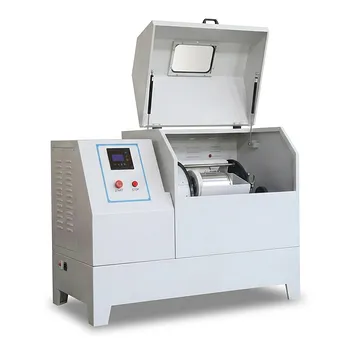
Heavy Duty Horizontal Planetary Ball Mill for Efficient Industrial Grinding and Sample Preparation
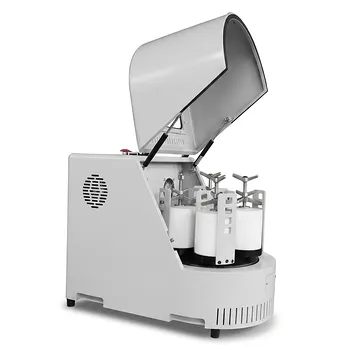
Vertical Semi Circular Planetary Ball Mill for Laboratory Precision Grinding
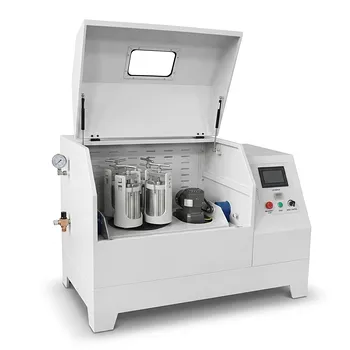
Vertical Production Planetary Ball Mill for High Throughput Powder Processing
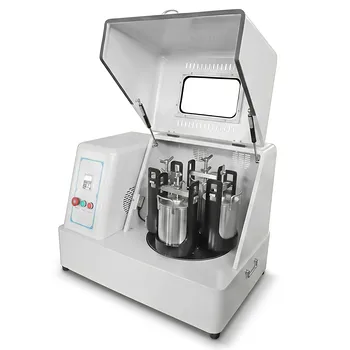
Vertical Square Planetary Ball Mill for Laboratory Sample Preparation and Nanoscale Grinding
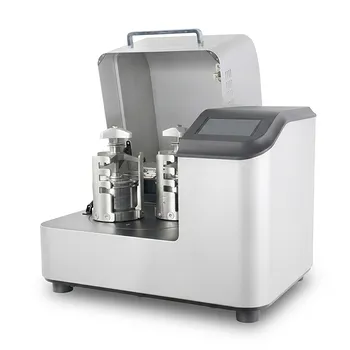
High Energy Planetary Ball Mill for Nano Scale Grinding and Mechanical Alloying
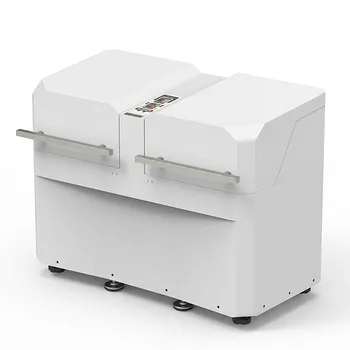
Dual Station Planetary Ball Mill 24L
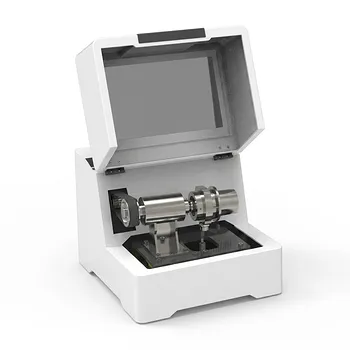
Single Tank High Energy Vibratory Ball Mill for Laboratory Grinding and Mixing
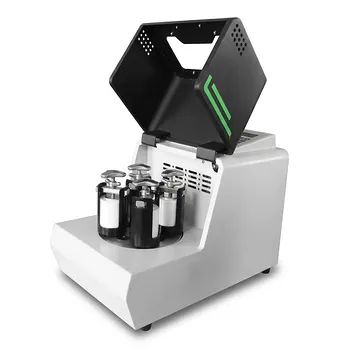
Miniature Planetary Ball Mill with Vacuum Grinding and High Efficiency for Laboratory Sample Preparation
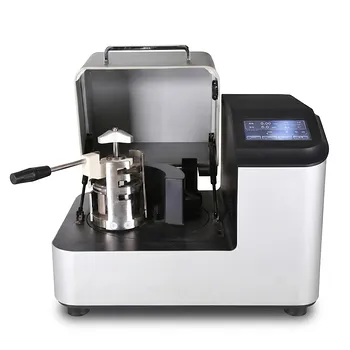
High Energy Laboratory Planetary Ball Mill for Nano Grinding and Material Science Sample Preparation
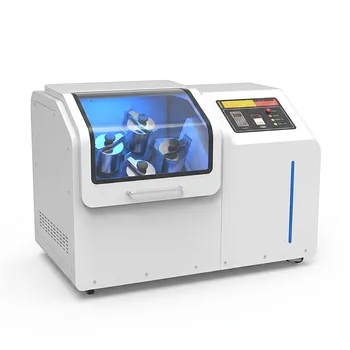
High Energy Omnidirectional Planetary Ball Mill 16L
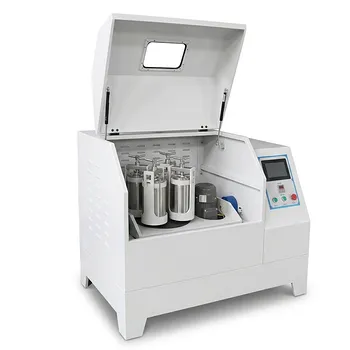
360° Rotating Omnidirectional Laboratory Planetary Ball Mill for Homogeneous Ultra-Fine Grinding and Mixing
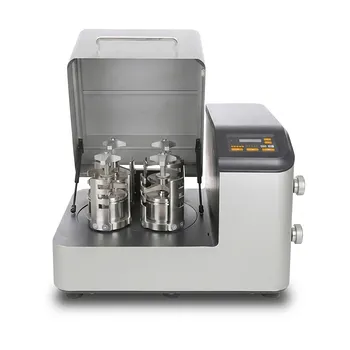
High Energy Planetary Ball Mill for Nano Scale Grinding and Colloidal Mixing in Material Science Research
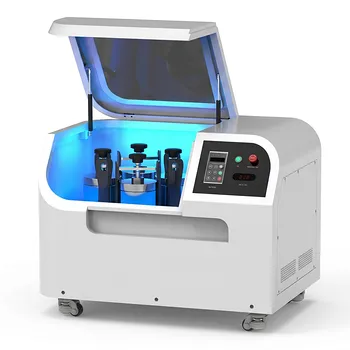
Planetary Ball Mill 12L
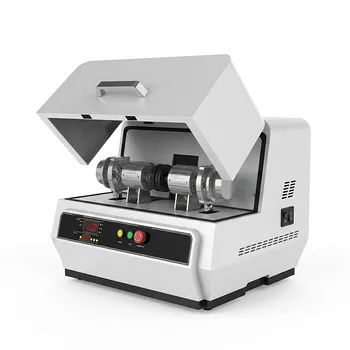
Dual Jar High Energy Vibratory Ball Mill
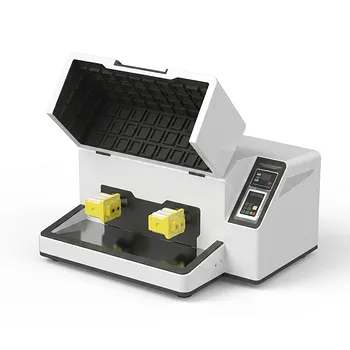
Multi-Platform Nanoscale High-Energy Vibratory Ball Mill
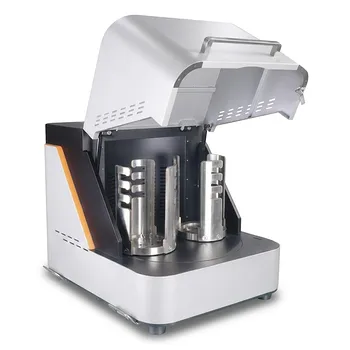
High Energy Laboratory Planetary Ball Mill for Nano Grinding and Colloidal Mixing of Hard and Brittle Materials
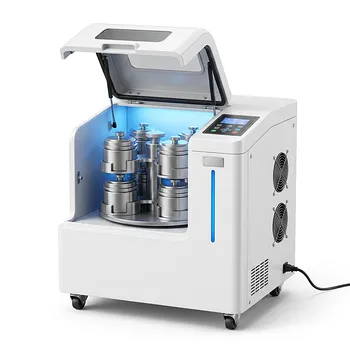
High Energy Omnidirectional Planetary Ball Mill 20L

Nano High Energy Vibratory Ball Mill for Laboratory Sample Preparation
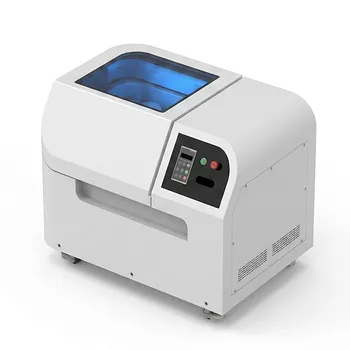
8L Planetary Ball Mill for Laboratory Grinding and Sample Preparation