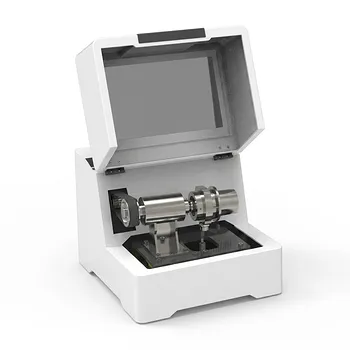
What role does high-energy milling play in ceramic powder prep? Optimize Nano-Refinement & Sintering Efficiency
Updated 5 months ago
High-energy milling equipment serves as the primary catalyst for transforming coarse raw materials into ultra-fine, highly reactive ceramic powders. By applying intense mechanical forces, these mills reduce particle sizes to the sub-micron or nanometer scale while ensuring an atomic-level distribution of multiple components. This process fundamentally alters the powder's physical properties, creating the necessary chemical potential difference required for high-density sintering at reduced temperatures.
High-energy milling is not merely a size-reduction step; it is a sophisticated method of "mechanical activation" that increases surface energy and ensures microscopic homogeneity. This foundation is critical for producing advanced ceramics with consistent microstructures and superior thermal or electrochemical properties.
Achieving Ultra-Fine Particle Refinement
Transitioning to the Nanoscale
High-energy planetary ball mills and stirred mills utilize high-frequency impact, shear, and attrition forces to break down materials. This process can rapidly refine raw powders from hundreds of micrometers down to nanometer scales (under 100 nm).
Expanding Specific Surface Area
As particle size decreases, the specific surface area of the powder increases exponentially. This expansion provides a larger interface for chemical reactions and physical interactions during the subsequent stages of ceramic fabrication.
Controlling Particle Size Distribution
Precision in milling allows for a controlled particle size distribution, which is a prerequisite for stable colloidal processing. A uniform distribution ensures that the final "green body" (unfired ceramic) has a consistent density before it ever enters the kiln.
Enhancing Sintering and Reactivity
Increasing the Sintering Driving Force
The massive surface area generated by high-energy milling increases the surface reactivity and the sintering driving force. In technical terms, the high surface energy creates a steep chemical potential difference, which compels the atoms to migrate and fill voids more aggressively.
Lowering Densification Temperatures
Because the powders are highly reactive, grain rearrangement and densification occur much more easily. This allows manufacturers to achieve high-density ceramics at significantly lower temperatures, saving energy and preventing unwanted grain growth.
Facilitating Solid-State Reactions
For complex materials like perovskite solid solutions or Reaction Bonded Aluminum Oxide (RBAO), high-energy milling ensures that different phases are in constant, intimate contact. This proximity reduces the distance atoms must travel, thereby accelerating chemical reaction rates.
Ensuring Microscopic Homogeneity
Atomic-Level Uniform Distribution
High-energy equipment ensures that multiple components—such as metal oxides, carbides, and carbon materials—are mixed uniformly at a microscopic scale. This prevents "clustering" of ingredients that could lead to structural weak points.
Reducing Interfacial Defects
By achieving a homogeneous mixture of the matrix and coating components, milling minimizes interfacial defects like microscopic gaps. This is essential for optimizing thermal stress management and ensuring consistent performance in electrochemical sensors.
Consistency in the Final Microstructure
The uniform distribution achieved during milling translates directly to a homogeneous final microstructure. This consistency is the key to producing ceramics with predictable mechanical, electrical, and thermal properties.
Understanding the Trade-offs
Media Contamination
The high-intensity impact of the milling process inevitably leads to wear and tear on the grinding balls and the mill lining. This can introduce small amounts of impurities (contamination) into the ceramic powder, which may alter the final material's purity or performance.
Particle Agglomeration
While high-energy milling creates very small particles, the high surface energy can cause these particles to clump together (agglomerate). If not managed with proper surfactants or milling aids, these clusters can create pores and defects in the final ceramic product.
High Energy Consumption
Planetary and stirred mills require significant power to generate the necessary rotational speeds and impact forces. For large-scale production, the cost of energy and the heat generated during the process must be carefully balanced against the desired powder quality.
Strategic Implementation for Your Project
How to Apply This to Your Goal
The selection of milling parameters should be dictated by the specific requirements of your final ceramic application.
- If your primary focus is Maximum Density: Use high-energy planetary milling to maximize surface energy and the sintering driving force, ensuring the particles are refined to the nanometer scale.
- If your primary focus is Material Purity: Opt for stirred mills with high-purity linings (such as zirconia or alumina) and carefully matched grinding media to minimize contamination.
- If your primary focus is Complex Multi-component Alloys: Extend the milling duration at moderate speeds to ensure atomic-level mixing and prevent phase separation during the sintering process.
High-energy milling is the essential bridge between raw inorganic materials and the sophisticated, high-performance ceramics required for modern industrial applications.
Summary Table:
| Key Role | Impact on Ceramic Performance | Recommended Equipment |
|---|---|---|
| Nano-Refinement | Transitions powders to <100nm for higher density | Planetary Ball Mills |
| Mechanical Activation | Increases surface energy & lowers sintering temps | High-Energy Stirred Mills |
| Atomic Homogeneity | Eliminates interfacial defects & structural weak points | Powder & Defoaming Mixers |
| Reaction Acceleration | Speeds up solid-state chemical reaction rates | Jet / Rotor Mills |
Elevate Your Ceramic Research with Precision Powder Solutions
Achieving superior ceramic properties starts with the perfect powder. At Our Laboratory Solutions, we specialize in the complete sample preparation workflow for material science. Whether you need planetary ball mills, jet mills, or stirred mills for nano-scale refinement, or powder mixers for flawless homogeneity, we provide the industrial-grade precision your project demands.
To achieve maximum density, pair your refined powders with our full spectrum of hydraulic presses, including Cold/Warm Isostatic Presses (CIP/WIP), vacuum hot presses, and XRF pellet presses.
Ready to optimize your powder processing? Contact our technical experts today to find the ideal equipment for your high-performance material goals!
References
- D. Kolář. Chemical research needed to improve high-temperature processing of advanced ceramic materials (Technical report). DOI: 10.1351/pac200072081425
Mentioned Products
- Vertical Semi Circular Planetary Ball Mill for Laboratory Precision Grinding
- High Energy Planetary Ball Mill for Nano Scale Grinding and Mechanical Alloying
- Vertical Production Planetary Ball Mill for High Throughput Powder Processing
- Heavy Duty Horizontal Planetary Ball Mill for Efficient Industrial Grinding and Sample Preparation
- 360° Rotating Omnidirectional Laboratory Planetary Ball Mill for Homogeneous Ultra-Fine Grinding and Mixing
People Also Ask
- What role does a planetary ball mill play in the synthesis of Li6PS5Cl (LPSCl)? Unlock High Ionic Conductivity
- Why is a planetary ball mill essential for SiBCN-rGO wet-spinning? Achieve Superior Dispersion and Spinnability
- Why is an intermittent grinding process required for perovskites in a planetary ball mill? Ensure Stability & Purity
- Why is a planetary ball mill required for PET micronization? Ensure Accurate Chemical Analysis of Reprocessed PET
- How does mechanized planetary ball milling compare to manual agate grinding? Optimize sulfide standard material precision.

Tech Team · PowderPreparation
Last updated on May 14, 2026
Related Products
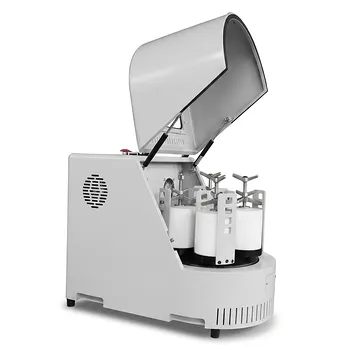
Vertical Semi Circular Planetary Ball Mill for Laboratory Precision Grinding
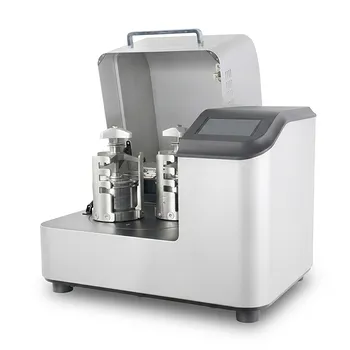
High Energy Planetary Ball Mill for Nano Scale Grinding and Mechanical Alloying
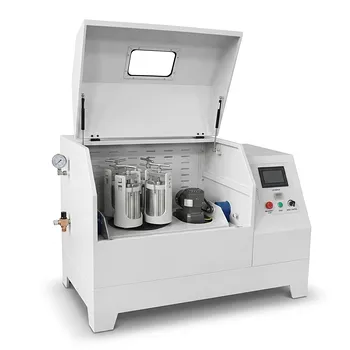
Vertical Production Planetary Ball Mill for High Throughput Powder Processing
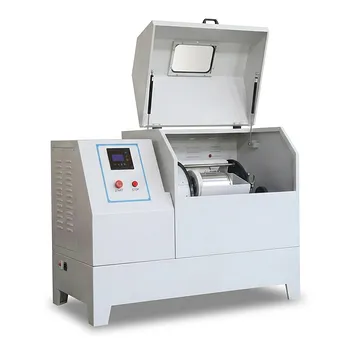
Heavy Duty Horizontal Planetary Ball Mill for Efficient Industrial Grinding and Sample Preparation
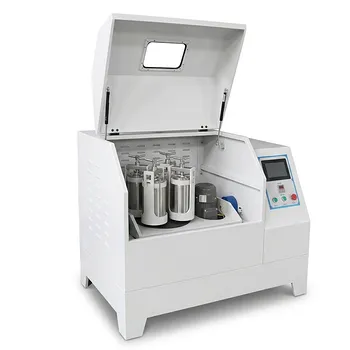
360° Rotating Omnidirectional Laboratory Planetary Ball Mill for Homogeneous Ultra-Fine Grinding and Mixing
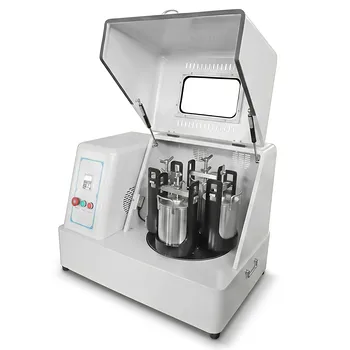
Vertical Square Planetary Ball Mill for Laboratory Sample Preparation and Nanoscale Grinding
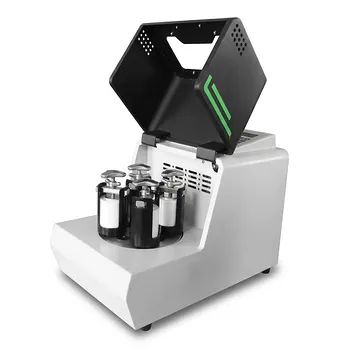
Miniature Planetary Ball Mill with Vacuum Grinding and High Efficiency for Laboratory Sample Preparation
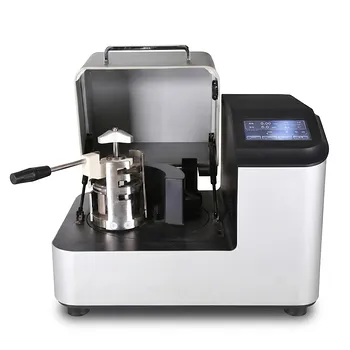
High Energy Laboratory Planetary Ball Mill for Nano Grinding and Material Science Sample Preparation
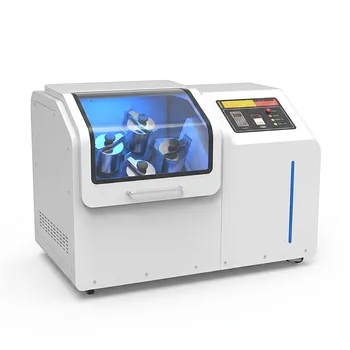
High Energy Omnidirectional Planetary Ball Mill 16L
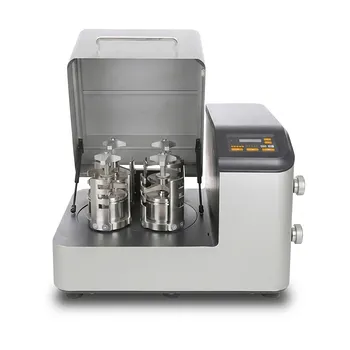
High Energy Planetary Ball Mill for Nano Scale Grinding and Colloidal Mixing in Material Science Research
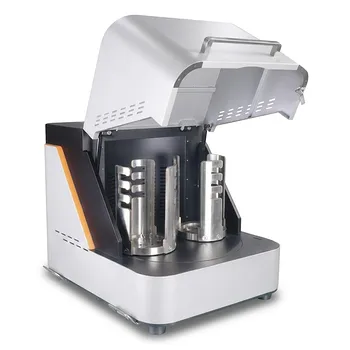
High Energy Laboratory Planetary Ball Mill for Nano Grinding and Colloidal Mixing of Hard and Brittle Materials
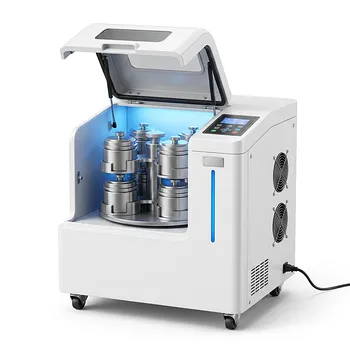
High Energy Omnidirectional Planetary Ball Mill 20L
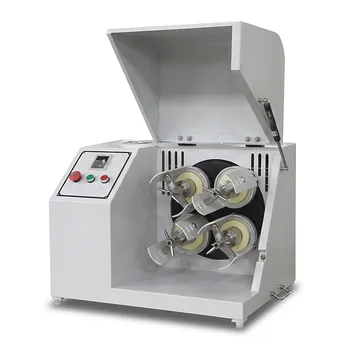
Horizontal Light Duty Planetary Ball Mill for Laboratory Sample Preparation

8L Planetary Ball Mill for Laboratory Grinding and Sample Preparation
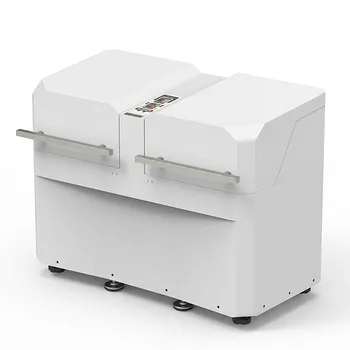
Dual Station Planetary Ball Mill 24L
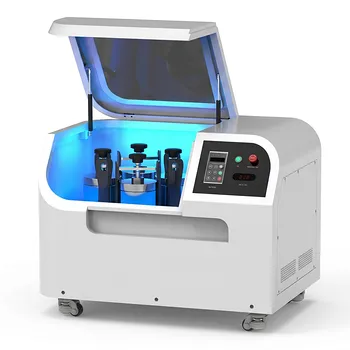
Planetary Ball Mill 12L

Nano High Energy Vibratory Ball Mill for Laboratory Sample Preparation

Multi-Platform Nanoscale High-Energy Vibratory Ball Mill

High Energy Hybrid Vibratory Ball Mill for Grinding Mixing and Cell Disruption