What role does an industrial vibratory sieve shaker play in the evaluation of wood shredding performance? Guide
Updated 4 months ago
The industrial vibratory sieve shaker is the primary tool for quantifying the efficiency and precision of wood shredding equipment. By utilizing a three-dimensional throwing motion, the device classifies shredded material into distinct size fractions across multiple mesh layers. This process provides the empirical data required to evaluate particle size distribution (PSD), determine processing accuracy, and ensure the final output meets strict industrial specifications.
An industrial vibratory sieve shaker transforms raw shredded wood into measurable data, allowing operators to verify shredder calibration, predict the mechanical properties of downstream products, and ensure compliance with safety and quality standards.
Quantifying Shredding Precision and Throughput
Determining Particle Size Distribution (PSD)
The shaker uses continuous mechanical excitation to rearrange shredded wood particles across a series of stacked, standard analytical sieves. This process continues until the material reaches a constant weight, providing the reliable physical data needed to calculate the cumulative PSD and the median particle size (x50).
Evaluating Shredder Calibration and Efficiency
By calculating the proportions of different size fractions, engineers can quantitatively assess the processing precision of a shredder. This data is critical for determining if a machine is operating at its intended throughput and for calculating the uniformity and curvature coefficients of the shredded output.
Comparing Grinding and Milling Processes
Vibratory sieving serves as an optimization tool to measure how different grinding methods, such as dry versus wet milling, affect particle refinement. It allows for a direct comparison of the degree of refinement achieved, helping facilities choose the most efficient processing technology for their specific wood source.
Predicting Downstream Material Performance
Ensuring Structural Uniformity in Wood Panels
In the production of particleboard and fiberboard, the sieve shaker identifies and removes oversized coarse material and excessively fine dust. This control over particle size ensures internal structural uniformity, which directly dictates the board density gradient and final mechanical-mechanical performance.
Optimizing Chemical and Resin Usage
The shaker helps identify the proportion of fine particles produced from various wood sources, which is vital for predicting resin dosage. Because finer particles have a higher surface area, an accurate sieve analysis prevents the under-saturation or over-consumption of bonding agents during manufacturing.
Assessing Pellet Durability and Storage Safety
For the biofuel industry, vibratory sieves are used to test the mechanical durability of wood pellets by measuring dust content and mass retention after friction tests. This evaluation is the industry standard for determining how well pellets will resist breakage during high-volume transportation and storage.
Understanding Technical Trade-offs and Limitations
The Impact of Material Moisture
High moisture content in shredded wood can cause particles to clump or adhere to the sieve mesh, leading to inaccurate grading. To ensure precision, samples often require pre-drying or the use of specialized "wet sieving" techniques to prevent blinding of the finer apertures.
Shape-Induced Measurement Errors
Wood fibers are often elongated rather than spherical, which can lead to "needle-effect" errors where a long particle passes through a small mesh vertically. While 3D vibratory motion minimizes this, it is a known limitation that requires careful interpretation of results when dealing with highly fibrous species.
Time Requirements for Constant Weight
Achieving a true representative sample requires sieving until a constant weight is reached on each fraction. Shortening the vibration duration to save time often results in incomplete separation, which can lead to an overestimation of coarse particles and flawed quality control data.
Optimizing Your Evaluation Strategy
Applying Sieve Analysis to Your Operational Goals
- If your primary focus is wood-based panel manufacturing: Prioritize the identification of fine particle proportions (e.g., 212–500 µm) to optimize resin consumption and mechanical bonding.
- If your primary focus is biofuel production: Use the shaker to conduct post-friction durability tests to ensure pellets meet international standards for dust content and structural integrity.
- If your primary focus is industrial safety and risk management: Utilize fine-mesh sieving (90–150 µm) to establish the relationship between dust size and minimum ignition temperatures to prevent mill explosions.
- If your primary focus is equipment maintenance and R&D: Analyze the uniformity coefficient of the output to determine when shredder blades require sharpening or recalibration.
Accurate vibratory sieve analysis transforms inconsistent shredded output into a predictable, high-value industrial resource.
Summary Table:
| Evaluation Goal | Key Measurement | Industrial Value |
|---|---|---|
| Precision Control | Particle Size Distribution (PSD) | Verifies shredder calibration & efficiency |
| Panel Production | Fine/Coarse Fraction Ratio | Optimizes resin dosage & board density |
| Biofuel Quality | Mass Retention/Dust Content | Ensures pellet durability & transport safety |
| Safety & R&D | Uniformity Coefficient | Prevents mill explosions & guides maintenance |
Precision Laboratory Solutions for Wood & Material Science
Accurate wood shredding evaluation is critical for quality control and operational efficiency. We provide complete laboratory sample preparation solutions for material science, specializing in powder processing and compaction equipment. Our extensive lines include vibratory and air-jet sieve shakers with various test sieves, crushers (jaw/roll), and a wide range of mills (planetary ball, jet, sand/bead, disc, rotor), as well as liquid nitrogen cryogenic grinders for heat-sensitive fiber analysis.
Furthermore, we manufacture a full spectrum of hydraulic presses, including Cold/Warm Isostatic Presses (CIP/WIP), standard lab presses, and vacuum hot presses, helping you achieve consistent structural uniformity and density in your wood-based material research. Whether you are optimizing resin dosage for panels or assessing biofuel pellet durability, our specialized equipment is designed to deliver empirical precision for your target applications.
Ready to enhance your lab's efficiency? Contact our technical team today to find the perfect equipment for your wood processing needs!
References
- L. Popa, A. Pruteanu. EXPERIMENTAL RESEARCH REGARDING THE ACHIEVEMENT OF AN EQUIPMENT DESIGNED FOR CHOPPING WOODY WASTE. DOI: 10.35633/inmateh-68-75
Mentioned Products
- Vibratory Sieve Shaker Electromagnetic 3D Motion Powder Particle Size Analyzer for Dry and Wet Sieving
- Stainless Steel Laboratory Vibratory Test Sieve Shaker
- Heavy Duty Dry Three Dimensional Vibratory Sieve Shaker for Particle Separation
- Laboratory Dry and Wet Three Dimensional Vibratory Sieve Shaker for Particle Analysis
- Dry Three Dimensional Vibratory Sieve Shaker
People Also Ask
- How does a vibratory sieve shaker contribute to optimizing the performance of activated carbon? Enhance Adsorption Precision
- Why is a laboratory vibratory sieve shaker necessary for processing magnesium-based borate precursor powders? Boost Activity
- Why use a vibratory sieve shaker to verify coarse aggregate grading in rubberized concrete? Ensure Structural Integrity
- What function do vibratory sieve shakers and standard test sieves serve in the preparation of adsorbents? Key Guide
- What role does a vibratory sieve shaker play in the particle size analysis of ground corn products? Enhance QC Precision

Tech Team · PowderPreparation
Last updated on Jun 03, 2026
Related Products
Vibratory Sieve Shaker Electromagnetic 3D Motion Powder Particle Size Analyzer for Dry and Wet Sieving
Stainless Steel Laboratory Vibratory Test Sieve Shaker
Heavy Duty Dry Three Dimensional Vibratory Sieve Shaker for Particle Separation
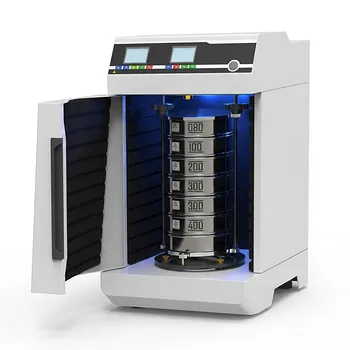
Laboratory Dry and Wet Three Dimensional Vibratory Sieve Shaker for Particle Analysis
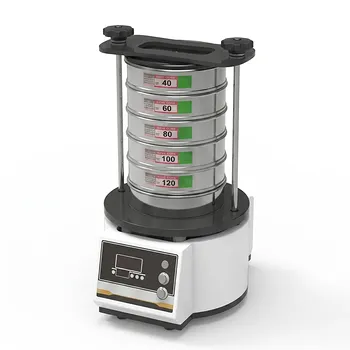
Dry Three Dimensional Vibratory Sieve Shaker
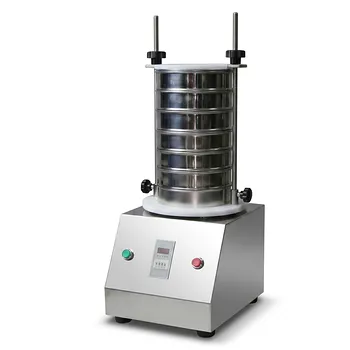
Small Laboratory Vibratory Sieve Shaker for Powder Gradation and Particle Size Analysis
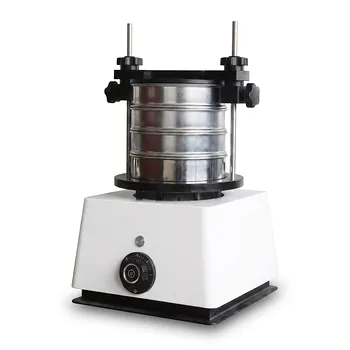
Small Laboratory Vibrating Sieve Shaker for Precise Particle Size Analysis
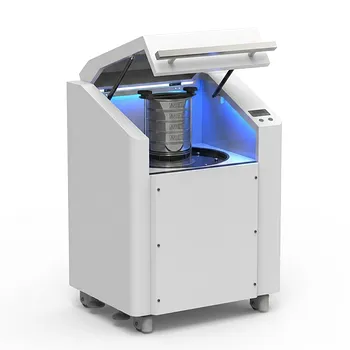
High Frequency Cabinet Type Three-Dimensional Rotary Vibrating Sieve Shaker for Dry Sieving and Particle Classification
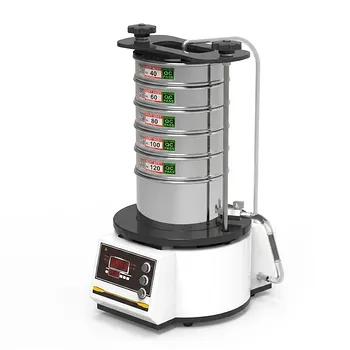
High Frequency Wet Three-Dimensional Vibrating Sieve Shaker for Dry and Wet Particle Size Analysis
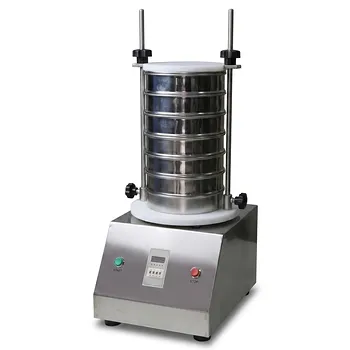
Laboratory Vibratory Test Sieve Shaker for Precision Particle Size Analysis and Powder Grading
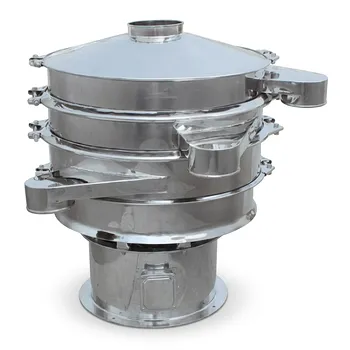
Stainless Steel Rotary Vibrating Sieve High Precision Circular Vibratory Separator Industrial Powder Grading Machine Multi Layer Sifting Equipment
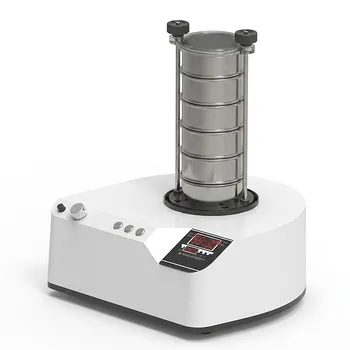
三维电磁微量振动筛分仪
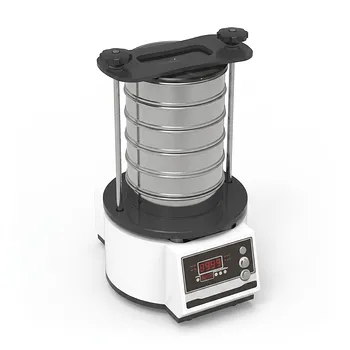
Tapping Oscillating Sieve Shaker for Dry and Wet Particle Size Analysis
Automatic Vibrating Powder Feeder for Laboratory Material Processing Precision Vibratory Hopper Feeder for Granular and Powder Material Handling Industrial Grade Vibrating Tray Feeder for Consistent Material Sample Preparation
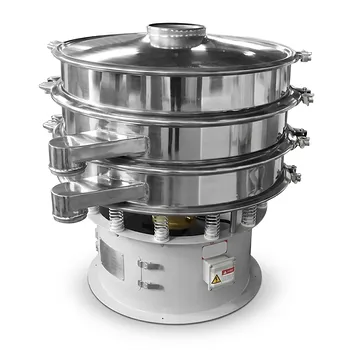
Three Dimensional Rotary Vibrating Sieve
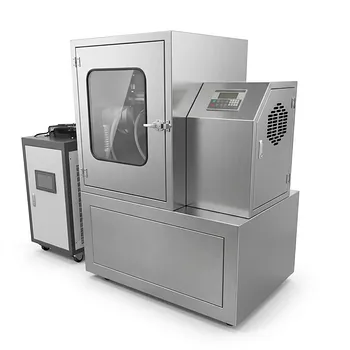
Vibratory Superfine Grinder for Ultra Fine Laboratory Powder Milling
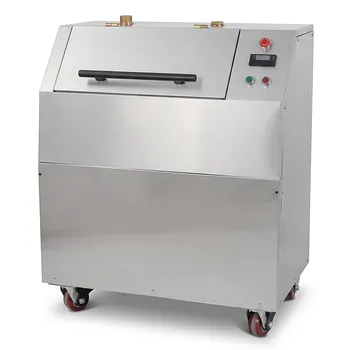
Vibratory Disc Mill for Rapid Fine Grinding and High Throughput Sample Preparation of Hard and Brittle Materials
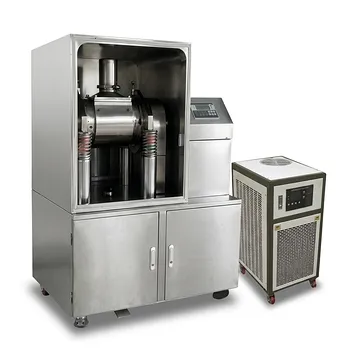
Small Vibrating Ultrafine Grinder for Traditional Chinese Medicine