What role does an industrial mechanical mixer play when blending coconut shell powder with polyester resin? Expert Guide
Updated 4 months ago
The industrial mechanical mixer is the critical engine of homogenization in composite manufacturing. By applying constant shear forces, the mixer ensures that coconut shell powder is perfectly dispersed within the polyester resin matrix, eliminating the structural weaknesses caused by particle clumping.
Core Takeaway: Mechanical mixing transforms a simple mixture into a high-performance composite by breaking down powder agglomerates and ensuring that reinforcement particles and chemical curing agents are distributed uniformly throughout the resin.
The Mechanics of Material Dispersion
Breaking Particle Agglomerates
The primary role of the mixer is to apply continuous shear forces to the mixture. These forces are essential for breaking up powder agglomerates, which naturally occur when fine coconut shell particles are introduced to a viscous liquid. By isolating individual particles, the mixer ensures that every grain of powder is fully "wetted" and integrated into the polyester resin matrix.
Achieving Isotropic Distribution
A mechanical mixer, often operating at a preset speed such as 150 rpm, creates a consistent flow pattern. This movement prevents particle settling, ensuring that the coconut shell powder remains suspended rather than sinking to the bottom. The result is an isotropic distribution, meaning the final material exhibits uniform physical properties in all directions.
Optimization of the Curing Process
Dispersing Catalysts and Accelerators
Beyond the powder itself, the mixer is responsible for the even diffusion of curing initiators (like MEKP) and accelerators. If these chemicals are not perfectly distributed, the composite will experience uneven curing kinetics, leading to "hot spots" or soft, under-cured areas. Mechanical precision ensures a dense material structure where the chemical reaction occurs at a synchronized rate across the entire volume.
Controlling Material Gradation
While industrial crushers handle the initial particle size, the mixer maintains the gradation stability during the blending phase. Consistent stirring ensures that different particle sizes remain mixed rather than segregating by weight or density. This stability is what allows biomass fillers like coconut shells to effectively replace traditional aggregates without sacrificing structural performance.
Understanding the Trade-offs
The Risk of Air Entrainment
One of the primary challenges of high-speed mechanical mixing is the introduction of micro-bubbles into the resin. If the mixing speed is too high or the blade design is inefficient, air becomes trapped, leading to voids in the final composite that can cause premature failure. Manufacturers must balance the need for high shear with the risk of creating a porous material.
Heat Generation and Viscosity
Extended mixing durations can generate frictional heat, which may inadvertently lower the resin's viscosity. While lower viscosity helps with initial powder wetting, excessive heat can trigger premature gelation of the polyester resin. This requires careful monitoring of mixing times and speeds to ensure the material remains workable until it is poured into the mold.
How to Optimize Your Mixing Strategy
Applying This to Your Production
- If your primary focus is maximum structural strength: Prioritize a mixer that provides high shear at a controlled speed to ensure zero agglomeration and a defect-free matrix.
- If your primary focus is aesthetic uniformity: Ensure the mixer reaches all "dead zones" in the container to prevent color or texture variations caused by localized powder concentration.
- If your primary focus is rapid production cycling: Use a precision-timed mixing sequence to perfectly disperse catalysts, ensuring a predictable and fast curing window.
Effective mechanical mixing is the foundation of turning raw biomass waste into a reliable, high-value engineering material.
Summary Table:
| Function | Key Mechanism | Benefit to Final Composite |
|---|---|---|
| Homogenization | Continuous shear forces | Eliminates structural weaknesses and clumping. |
| Isotropic Distribution | Constant flow patterns | Ensures uniform physical properties in all directions. |
| Curing Optimization | Even catalyst dispersion | Prevents "hot spots" and ensures synchronized hardening. |
| Gradation Stability | Controlled stirring | Maintains consistent particle density and material integrity. |
| Viscosity Control | Managed mixing speed | Optimizes powder wetting while preventing premature gelation. |
Elevate Your Material Homogenization with Our Precision Equipment
Turning biomass waste into high-value engineering materials requires more than just mixing—it requires precision. At our core, we provide complete laboratory sample preparation solutions for material science, specializing in the very equipment needed to master powder processing and resin blending.
From industrial-grade mixers and defoaming mixers that ensure void-free composites to jaw/roll crushers and planetary ball mills for perfect coconut shell particle gradation, we have the tools to optimize your production. We also offer a full spectrum of hydraulic presses, including Cold/Warm Isostatic Presses (CIP/WIP) and vacuum hot presses, to help you achieve maximum structural performance in your final material.
Ready to optimize your mixing strategy?
Contact our experts today to find the perfect equipment for your material research and production needs.
References
- Fauzan Fauzan, Iqbal Iqbal. Kaji Eksperimental Kekuatan Tarik dan Kekuatan Impak Komposit Serbuk Sabut Kelapa-Polyster. DOI: 10.22236/metalik.v1i2.9765
Mentioned Products
- Industrial Double Cone Mixer for Powder Blending and Homogeneous Mixing
- Dual Cup Vacuum Centrifugal Mixer Planetary Paste Defoaming Machine Industrial Material Processor
- High Speed Vacuum Planetary Centrifugal Mixer and Defoamer for Industrial Paste Processing
- Industrial Vacuum Kneader for High-Viscosity Silicone, Rubber, and Compound Mixing
- Industrial Planetary Centrifugal Vacuum Defoaming Mixer for High Viscosity Paste and Advanced Material Science
People Also Ask
- How does a double cone mixer contribute to the blending and lubrication stages of tablet production? Expert Insights
- What is the primary function of industrial powder mixers in SLS 3D printing of tablets? Ensure Homogeneity & Accuracy
- What is the necessity of using industrial powder mixers for multi-component inoculants? Achieve Homogeneity & Precision
- What is the function of an industrial powder mixer in NiTiZn preparation? Achieve Homogeneity for 3D Printing
- What is the necessity of using industrial powder mixers? Achieve Perfect Homogeneity in Graphite-Copper Composites

Tech Team · PowderPreparation
Last updated on Jun 03, 2026
Related Products
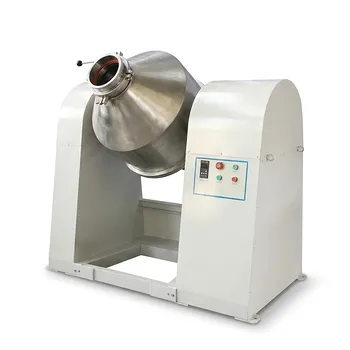
Industrial Double Cone Mixer for Powder Blending and Homogeneous Mixing
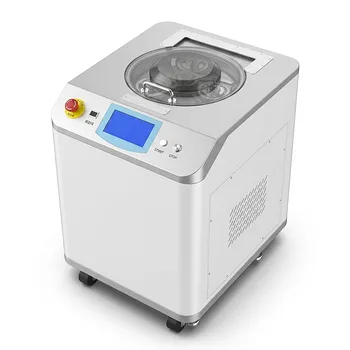
Dual Cup Vacuum Centrifugal Mixer Planetary Paste Defoaming Machine Industrial Material Processor
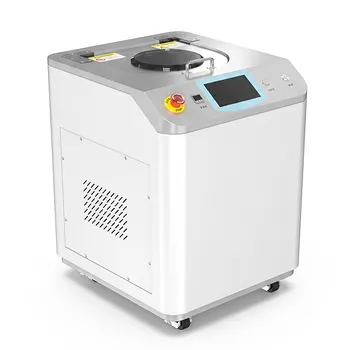
High Speed Vacuum Planetary Centrifugal Mixer and Defoamer for Industrial Paste Processing
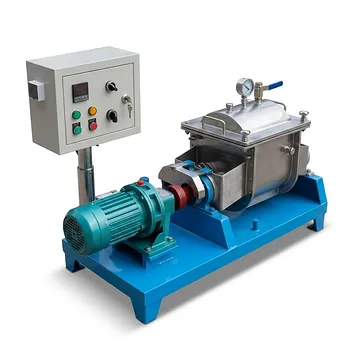
Industrial Vacuum Kneader for High-Viscosity Silicone, Rubber, and Compound Mixing
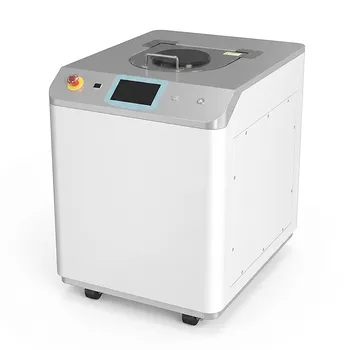
Industrial Planetary Centrifugal Vacuum Defoaming Mixer for High Viscosity Paste and Advanced Material Science
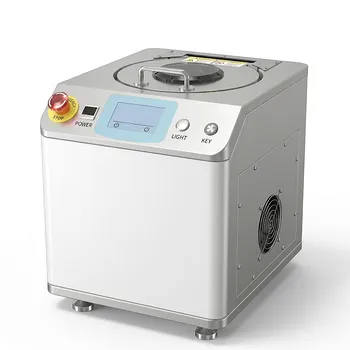
High Efficiency Vacuum Planetary Centrifugal Mixer and Defoaming Machine for Industrial Material Research and Precise Laboratory Powder Dispersion
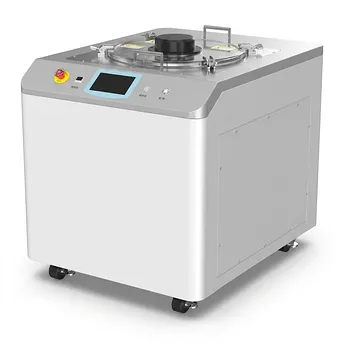
Industrial Planetary Centrifugal Vacuum Defoaming Mixer for High Viscosity Paste and Powder Homogenization
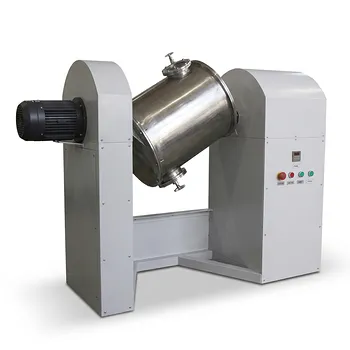
Inclined Mixer for Homogeneous Powder Blending and Grinding
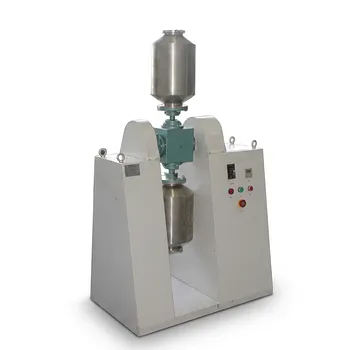
Multi Dimensional Universal Mixer for High Uniformity Powder Blending
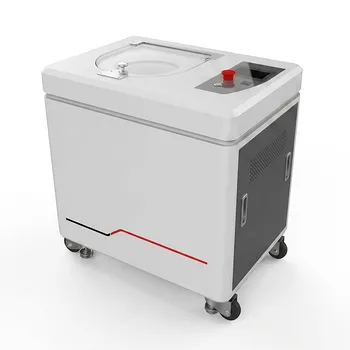
非介入式材料均质机真空脱泡行星搅拌高粘度混合设备
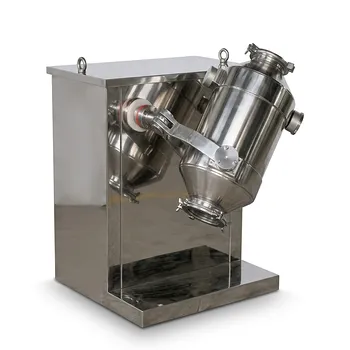
Three-Dimensional Motion Mixer for Laboratory Powder and Granule Blending
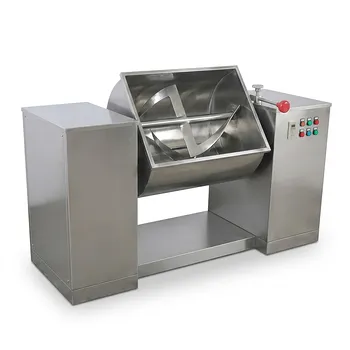
Horizontal Trough Mixer for Uniform Powder and Paste Blending
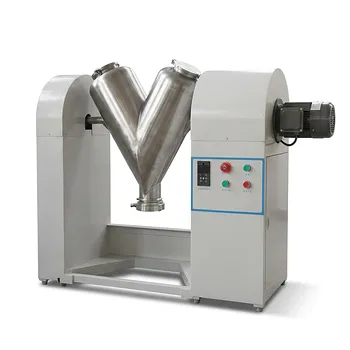
V-Type Powder Mixer for Uniform Blending of Dry Powders and Granules
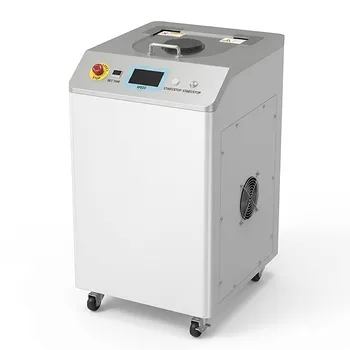
High Viscosity Planetary Centrifugal Vacuum Mixer for Material Defoaming and Uniform Mixing
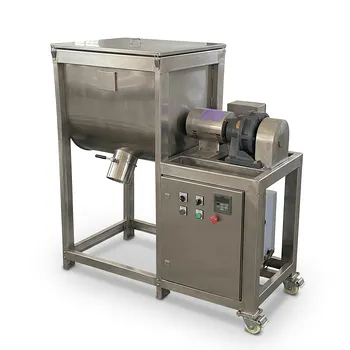
Horizontal Ribbon Mixer for Dry Powder and Slurry Blending
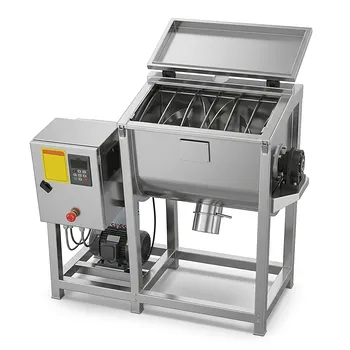
Horizontal Ribbon Mixer for Uniform Powder and Slurry Mixing
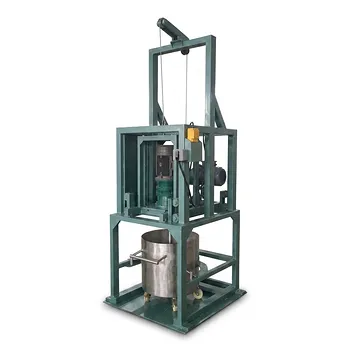
High-Speed Simple Disperser for Efficient Mixing, Dispersion, and Emulsification
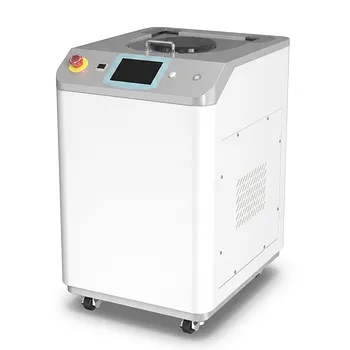
High Viscosity Planetary Centrifugal Mixing and Vacuum Defoaming Machine for Laboratory Material Preparation
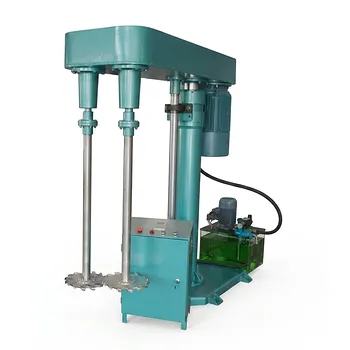
Hydraulic Double Shaft Disperser for High Viscosity Liquid Mixing and Dispersion