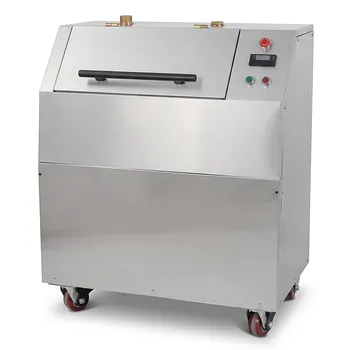
What role does a vibratory sieve shaker play in RCC aggregate analysis? Achieve maximum density and structural strength.
Updated 4 months ago
The vibratory sieve shaker serves as the precision instrument required to determine the particle size distribution of both fine and coarse aggregates in Roller Compacted Concrete (RCC). By mechanically separating sand and crushed stone through a stack of standard test sieves, engineers can accurately map the gradation of raw materials. This data is the fundamental prerequisite for optimizing the aggregate skeleton to achieve the high density and structural durability required for RCC pavements.
Core Takeaway: The primary role of a vibratory sieve shaker is to provide the empirical data needed to optimize aggregate packing density. By achieving a continuous grain-size distribution, producers can minimize void space, reduce the volume of expensive cement paste required, and ensure the concrete reaches its target compressive strength.
The Mechanics of Aggregate Gradation
Precision Mechanical Separation
The vibratory shaker uses controlled high-frequency oscillations to ensure that every aggregate particle has multiple opportunities to pass through the sieve apertures. This process physically separates raw materials—ranging from 1-inch stone down to 200-mesh fines—into distinct size fractions.
Quantitative Data Collection
By weighing the material retained on each level, technicians calculate the cumulative percentage passing at various increments. This quantitative profile allows for the calculation of the fineness modulus and uniformity coefficient, which are the essential metrics for evaluating aggregate quality.
Verification of Continuous Grading
A shaker allows engineers to verify that the aggregate mix follows a continuous grading curve rather than a gap-graded one. Ensuring a smooth transition between particle sizes is critical for RCC, as it prevents segregation during the mechanical rolling and compaction process.
Optimizing Mixture Performance
Achieving Maximum Packing Density
The deep need for sieve analysis lies in minimizing porosity within the aggregate skeleton. When particles are sized to fit perfectly into the gaps between larger stones, the resulting "interlocking" effect creates a naturally dense structure that requires less binder to fill.
Reducing Cementitious Requirements
Because the vibratory shaker helps identify the most efficient particle arrangement, it directly informs the reduction of the required cement content. A well-graded aggregate skeleton provides the necessary structural stability, allowing the cement paste to act primarily as a glue rather than a filler for large voids.
Enhancing Compressive Strength
Precise gradation analysis ensures the material can reach specific strength targets, such as fc' 20 MPa. By controlling the distribution of fine and coarse aggregates, the shaker ensures the final pavement structure possesses the durability to withstand heavy mechanical loads.
Understanding the Trade-offs and Pitfalls
Equipment Wear and Sieve Blinding
Continuous use of vibratory shakers can lead to sieve blinding, where particles become lodged in the mesh and distort the results. If the mesh is not regularly cleaned or if the vibration amplitude is incorrectly set, the resulting gradation data will be inaccurate, leading to a flawed mix design.
Sample Representative Limits
A common pitfall is using a sample size that is too small to be representative of the entire aggregate stockpile. While the shaker is highly precise, its output is only as reliable as the sampling technique used to collect the material from the field.
Mechanical Degradation
Excessively long vibration cycles can cause particle attrition, where softer aggregates rub against each other and break down into smaller pieces during the test. This creates a "false" reading of fines that does not exist in the actual stockpile, potentially leading to an over-engineered and more expensive mix.
How to Apply This to Your Project
Making the Right Choice for Your Goal
- If your primary focus is Cost Optimization: Use the sieve shaker results to find the "sweet spot" of packing density that allows you to minimize cement volume without sacrificing stability.
- If your primary focus is Structural Longevity: Prioritize achieving a continuous grading curve that meets international standards like DIN 4187-8 to ensure the pavement resists cracking and segregation.
- If your primary focus is Quality Control: Implement standardized vibration intervals and regular sieve calibrations to maintain the consistency of your fineness modulus across different batches.
Mastering the use of vibratory sieve shakers transforms aggregate selection from a game of estimation into a precise science of structural optimization.
Summary Table:
| Key Role in RCC Analysis | Impact on Material Performance |
|---|---|
| Particle Size Mapping | Creates a continuous grading curve to prevent material segregation. |
| Density Optimization | Maximizes aggregate packing, reducing the volume of expensive cement paste. |
| Quality Verification | Ensures aggregates meet standards like DIN 4187-8 for high compressive strength. |
| Quantitative Metrics | Provides fineness modulus and uniformity data for precise mix designs. |
Precision Lab Equipment for Superior Material Performance
Ready to optimize your Roller Compacted Concrete (RCC) mix design? Contact us today to discover how our high-precision vibratory and air-jet sieve shakers, combined with our standard test sieves, can transform your aggregate analysis.
As specialists in material science sample preparation, we provide complete powder processing and compaction solutions. Our extensive range includes:
- Size Reduction: Jaw/roll crushers, cryogenic grinders, and various mills (planetary ball, jet, rotor).
- Sieving & Mixing: Advanced sieve shakers and high-performance powder/defoaming mixers.
- Compaction: A full spectrum of hydraulic presses, including Cold/Warm Isostatic Presses (CIP/WIP), vacuum hot presses, and XRF pellet presses.
Whether you are looking to reduce material costs or achieve specific durability targets, our equipment delivers the precision and reliability your lab demands. Let our experts help you find the perfect solution—reach out now!
References
- S. Hendriyanto. Kajian Karakteristik Mekanik Roller Compacted Concrete (Rcc) Sebagai Bahan Perkerasan Jalan. DOI: 10.23960/snip.v1i1.135
Mentioned Products
- Vibratory Sieve Shaker Electromagnetic 3D Motion Powder Particle Size Analyzer for Dry and Wet Sieving
- Laboratory Dry and Wet Three Dimensional Vibratory Sieve Shaker for Particle Analysis
- Dry Three Dimensional Vibratory Sieve Shaker
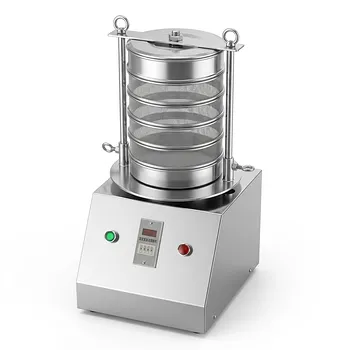
- Stainless Steel Laboratory Vibratory Test Sieve Shaker
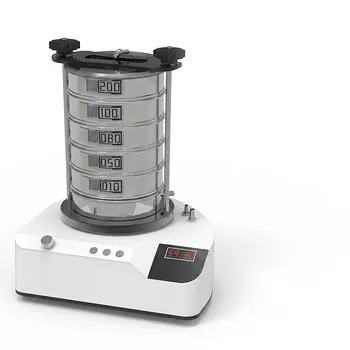
- Heavy Duty Dry Three Dimensional Vibratory Sieve Shaker for Particle Separation
People Also Ask
- How does a vibratory sieve shaker contribute to optimizing the performance of activated carbon? Enhance Adsorption Precision
- Why is a laboratory vibratory sieve shaker necessary for processing magnesium-based borate precursor powders? Boost Activity
- Why use a vibratory sieve shaker to verify coarse aggregate grading in rubberized concrete? Ensure Structural Integrity
- What function do vibratory sieve shakers and standard test sieves serve in the preparation of adsorbents? Key Guide
- What role does a vibratory sieve shaker play in the particle size analysis of ground corn products? Enhance QC Precision

Tech Team · PowderPreparation
Last updated on Jun 03, 2026
Related Products
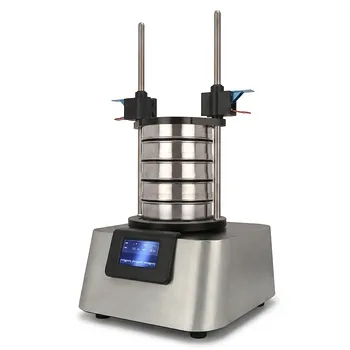
Vibratory Sieve Shaker Electromagnetic 3D Motion Powder Particle Size Analyzer for Dry and Wet Sieving
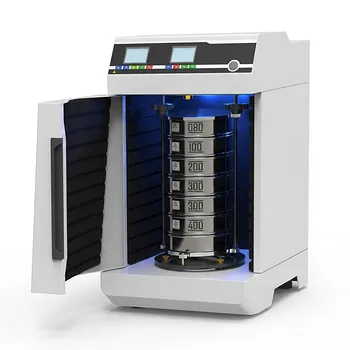
Laboratory Dry and Wet Three Dimensional Vibratory Sieve Shaker for Particle Analysis
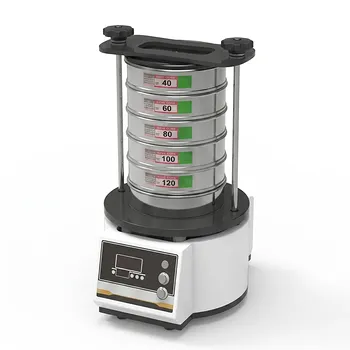
Dry Three Dimensional Vibratory Sieve Shaker
Stainless Steel Laboratory Vibratory Test Sieve Shaker
Heavy Duty Dry Three Dimensional Vibratory Sieve Shaker for Particle Separation
Small Laboratory Vibratory Sieve Shaker for Powder Gradation and Particle Size Analysis
Small Laboratory Vibrating Sieve Shaker for Precise Particle Size Analysis
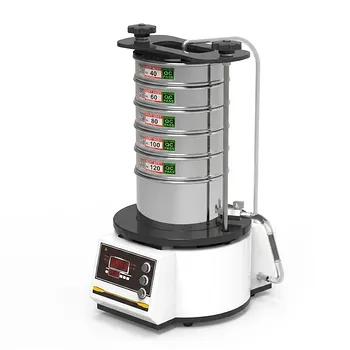
High Frequency Wet Three-Dimensional Vibrating Sieve Shaker for Dry and Wet Particle Size Analysis
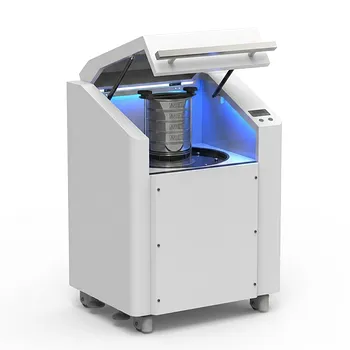
High Frequency Cabinet Type Three-Dimensional Rotary Vibrating Sieve Shaker for Dry Sieving and Particle Classification
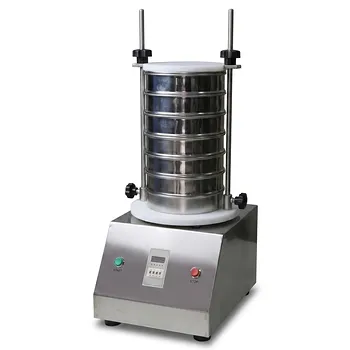
Laboratory Vibratory Test Sieve Shaker for Precision Particle Size Analysis and Powder Grading
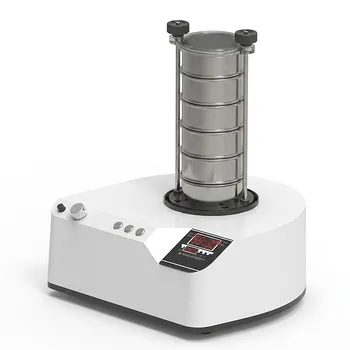
三维电磁微量振动筛分仪
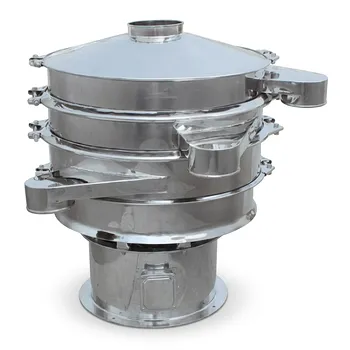
Stainless Steel Rotary Vibrating Sieve High Precision Circular Vibratory Separator Industrial Powder Grading Machine Multi Layer Sifting Equipment
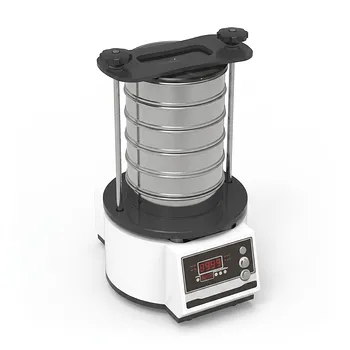
Tapping Oscillating Sieve Shaker for Dry and Wet Particle Size Analysis
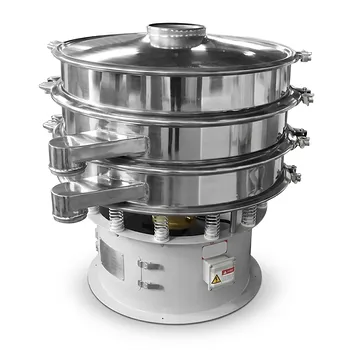
Three Dimensional Rotary Vibrating Sieve
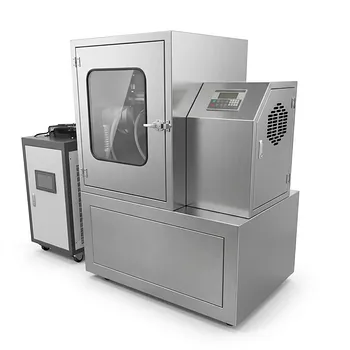
Vibratory Superfine Grinder for Ultra Fine Laboratory Powder Milling
Small Vibrating Ultrafine Grinder for Traditional Chinese Medicine
Automatic Vibrating Powder Feeder for Laboratory Material Processing Precision Vibratory Hopper Feeder for Granular and Powder Material Handling Industrial Grade Vibrating Tray Feeder for Consistent Material Sample Preparation