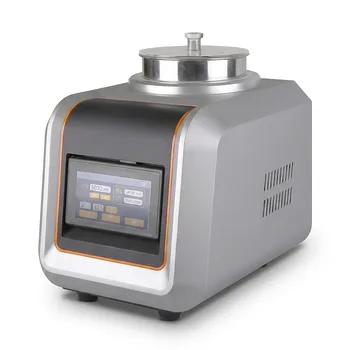
What is the role of a high-precision vibratory sieve shaker in mycelium-based composites? Boost Substrate Quality.
Updated 4 months ago
In the preparation of mycelium-based composites, a high-precision vibratory sieve shaker is the primary tool for grading biomass substrates to ensure absolute particle size uniformity. By utilizing specific mesh apertures, the equipment removes coarse particles (typically those larger than 2mm) and secondary agglomerates from raw materials like sawdust or pulverized fibers. This precise classification is essential for creating a consistent medium that supports even fungal colonization and high-quality mechanical performance in the final cured product.
The core role of a vibratory sieve shaker is to standardize the substrate architecture, which directly dictates the efficiency of mycelium growth and the structural density of the resulting composite. Without this grading, the material is prone to unpredictable mechanical failure and uneven biological development.
Optimizing Biological and Structural Foundations
Enhancing Mycelium Growth Consistency
A uniform particle size distribution ensures that air permeability and moisture content remain consistent throughout the substrate. When the biomass is graded precisely, the mycelium can colonize the material at a predictable rate, preventing "patchy" growth. This uniformity is critical for large-scale production where environmental control must be exact.
Improving Microscopic Structural Density
During the manufacturing phase, particularly when hot pressing is involved, uniform particles pack together more efficiently. A sieve shaker ensures that the substrate lacks oversized "islands" that could disrupt the matrix. This leads to a higher packing density, which significantly improves the internal bond strength of the boards.
Ensuring Predictability in Complex Geometries
For advanced applications like auxetic structures or 3D-printed filaments, substrate uniformity is a prerequisite. By removing particles that could clog nozzles or cause fluctuations in filament diameter, the vibratory sieve shaker ensures the mechanical response of the molded part is stable. This allows engineers to predict how the composite will behave under stress.
Maximizing Mechanical Performance
Eliminating Stress Concentration Points
Large, non-representative particles within a fine matrix act as stress concentrators, where cracks are likely to initiate. By using a vibratory shaker to enforce a strict upper limit on particle size (such as 125 µm or 2 mm, depending on the application), manufacturers prevent these localized weak points. This results in a material with much higher tensile and flexural strength.
Controlling Surface Roughness and Aesthetics
The fineness of the substrate directly influences the surface finish of the hardened composite. Finer, sieved powders yield a smoother surface, which is often necessary for consumer-facing products or waterproof applications. Precise grading allows manufacturers to hit specific fineness modulus targets required for various product tiers.
Understanding the Trade-offs
Balancing Porosity and Strength
While finer particles increase density and strength, they can also reduce porosity, which may hinder mycelium growth if the substrate becomes too "compacted" to allow gas exchange. Choosing the wrong mesh size can inadvertently create a substrate that is too dense for the fungus to penetrate effectively.
Material Waste and Processing Time
Achieving extreme precision requires more time in the vibratory cycle and can lead to significant material loss if the raw biomass has a wide size distribution. Manufacturers must balance the need for high-precision grading with the economic realities of production throughput and raw material utilization.
How to Apply This to Your Project
Before selecting your sieving parameters, identify the primary performance requirement of your mycelium composite.
- If your primary focus is Maximum Structural Strength: Use the sieve shaker to remove all particles larger than 2mm to ensure a dense, high-strength matrix after hot pressing.
- If your primary focus is 3D Printing or Extrusion: Utilize fine mesh sizes (e.g., 63μm to 125μm) to eliminate secondary agglomerates that could clog equipment or cause filament diameter fluctuations.
- If your primary focus is Rapid Mycelium Colonization: Focus on a mid-range particle distribution that maintains high air permeability while still removing oversized debris that slows down fungal penetration.
By mastering the substrate grading process, you transform a raw organic byproduct into a high-performance engineering material with predictable physical properties.
Summary Table:
| Key Role | Impact on Mycelium Composites | Technical Focus |
|---|---|---|
| Particle Size Grading | Ensures uniform fungal colonization and consistent growth rates. | Mesh aperture selection (e.g., <2mm) |
| Structural Density | Enhances packing efficiency for higher internal bond strength. | Fine powder distribution |
| Stress Mitigation | Eliminates large particles that act as localized stress concentrators. | Strict upper-limit sizing |
| Surface Engineering | Controls the final product's roughness and aesthetic finish. | Fineness modulus control |
| Processing Stability | Prevents clogging in advanced 3D printing or extrusion workflows. | Removal of secondary agglomerates |
Elevate Your Mycelium Material Research with Precision Engineering
Are you looking to transform raw organic byproducts into high-performance engineering materials? [Your Brand Name] provides complete laboratory sample preparation solutions specifically tailored for material science.
We specialize in high-precision equipment essential for every stage of mycelium-based composite development:
- Substrate Preparation: Our vibratory and air-jet sieve shakers ensure absolute particle uniformity, while our crushers and mills (planetary ball, jet, and rotor mills) provide perfect size reduction for any biomass.
- Mixing & Inoculation: Achieve a perfectly homogeneous substrate with our advanced powder and defoaming mixers.
- Compaction & Curing: Finalize your composite with our industrial-grade hydraulic presses, including Hot Presses, Vacuum Hot Presses, and Cold/Warm Isostatic Presses (CIP/WIP) for maximum structural density.
Don't let unpredictable substrate quality hinder your innovation. Contact our experts today to find the ideal equipment configuration for your lab and ensure your sustainable materials meet the highest mechanical standards.
References
- Xin Ying Chan, Manoj Gupta. Mechanical properties of dense mycelium-bound composites under accelerated tropical weathering conditions. DOI: 10.1038/s41598-021-01598-4
Mentioned Products
- Vibratory Sieve Shaker Electromagnetic 3D Motion Powder Particle Size Analyzer for Dry and Wet Sieving
- Laboratory Dry and Wet Three Dimensional Vibratory Sieve Shaker for Particle Analysis
- Stainless Steel Laboratory Vibratory Test Sieve Shaker
- Heavy Duty Dry Three Dimensional Vibratory Sieve Shaker for Particle Separation
- Dry Three Dimensional Vibratory Sieve Shaker
People Also Ask
- How does a vibratory sieve shaker contribute to optimizing the performance of activated carbon? Enhance Adsorption Precision
- Why is a laboratory vibratory sieve shaker necessary for processing magnesium-based borate precursor powders? Boost Activity
- Why use a vibratory sieve shaker to verify coarse aggregate grading in rubberized concrete? Ensure Structural Integrity
- What function do vibratory sieve shakers and standard test sieves serve in the preparation of adsorbents? Key Guide
- What role does a vibratory sieve shaker play in the particle size analysis of ground corn products? Enhance QC Precision

Tech Team · PowderPreparation
Last updated on Jun 03, 2026
Related Products
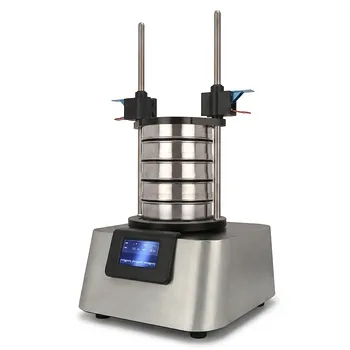
Vibratory Sieve Shaker Electromagnetic 3D Motion Powder Particle Size Analyzer for Dry and Wet Sieving
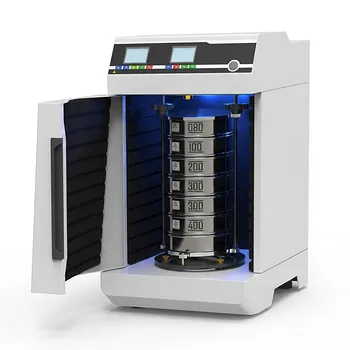
Laboratory Dry and Wet Three Dimensional Vibratory Sieve Shaker for Particle Analysis
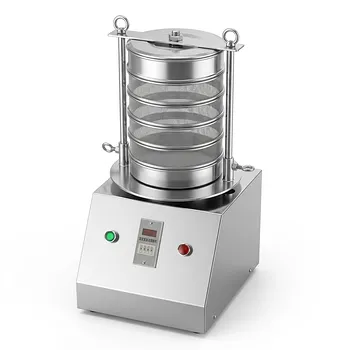
Stainless Steel Laboratory Vibratory Test Sieve Shaker
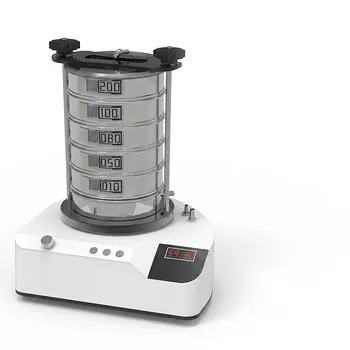
Heavy Duty Dry Three Dimensional Vibratory Sieve Shaker for Particle Separation
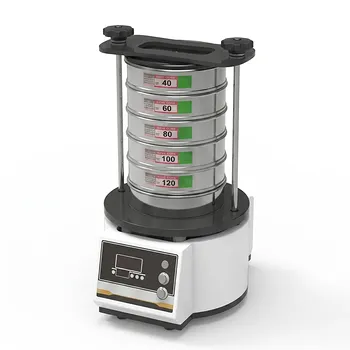
Dry Three Dimensional Vibratory Sieve Shaker
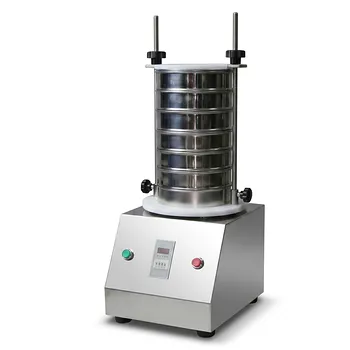
Small Laboratory Vibratory Sieve Shaker for Powder Gradation and Particle Size Analysis
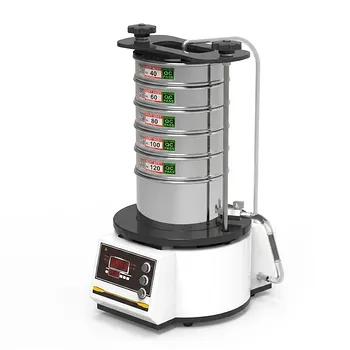
High Frequency Wet Three-Dimensional Vibrating Sieve Shaker for Dry and Wet Particle Size Analysis
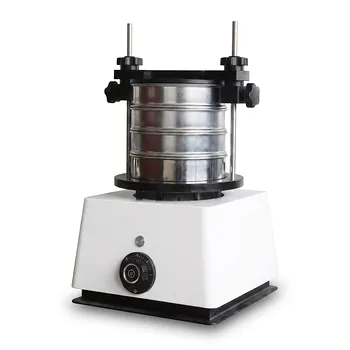
Small Laboratory Vibrating Sieve Shaker for Precise Particle Size Analysis
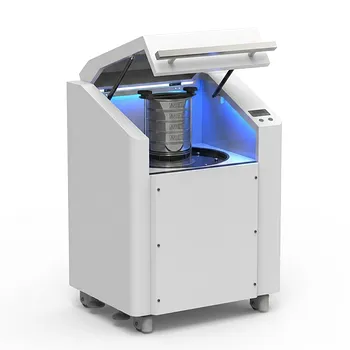
High Frequency Cabinet Type Three-Dimensional Rotary Vibrating Sieve Shaker for Dry Sieving and Particle Classification
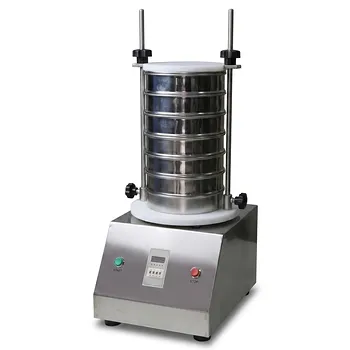
Laboratory Vibratory Test Sieve Shaker for Precision Particle Size Analysis and Powder Grading
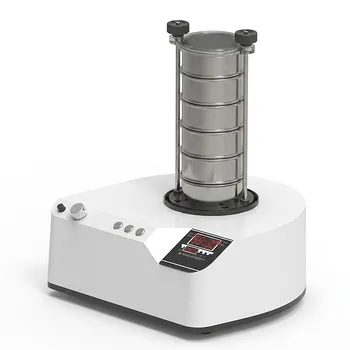
三维电磁微量振动筛分仪
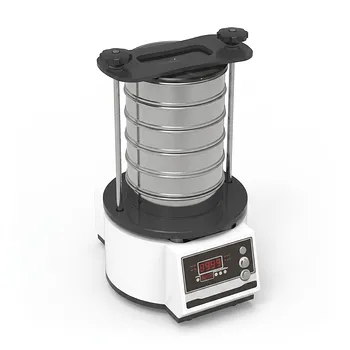
Tapping Oscillating Sieve Shaker for Dry and Wet Particle Size Analysis
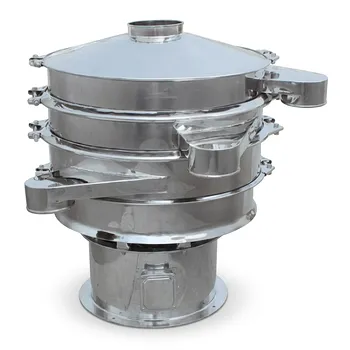
Stainless Steel Rotary Vibrating Sieve High Precision Circular Vibratory Separator Industrial Powder Grading Machine Multi Layer Sifting Equipment
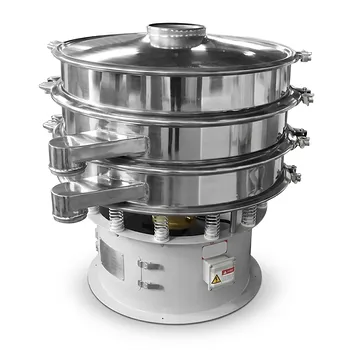
Three Dimensional Rotary Vibrating Sieve
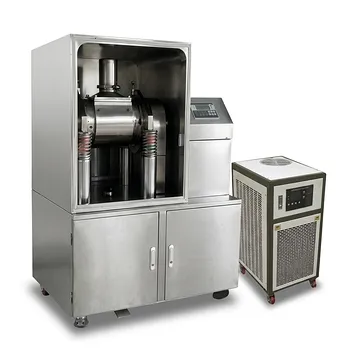
Small Vibrating Ultrafine Grinder for Traditional Chinese Medicine
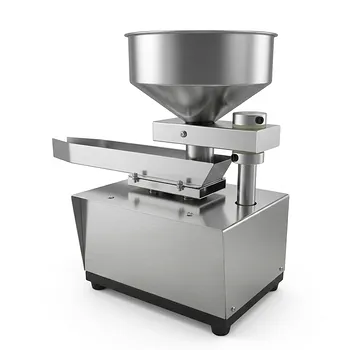
Automatic Vibrating Powder Feeder for Laboratory Material Processing Precision Vibratory Hopper Feeder for Granular and Powder Material Handling Industrial Grade Vibrating Tray Feeder for Consistent Material Sample Preparation
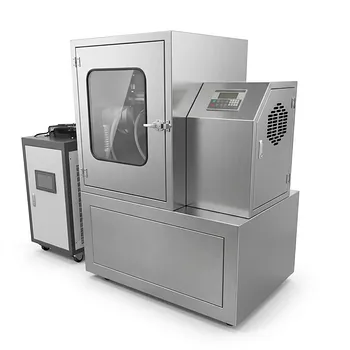
Vibratory Superfine Grinder for Ultra Fine Laboratory Powder Milling
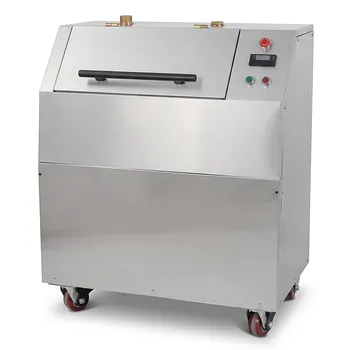
Vibratory Disc Mill for Rapid Fine Grinding and High Throughput Sample Preparation of Hard and Brittle Materials