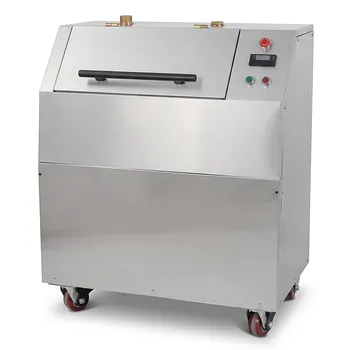
What role does a vibratory sieve shaker play in MBM analysis? Enhance Nutrient Bioavailability & Quality Control
Updated 4 months ago
Precise particle size classification. The vibratory sieve shaker serves as the primary instrument for grading Meat and Bone Meal (MBM) into distinct size ranges using mechanical vibration across standardized mesh screens. This classification is critical for determining the material's specific surface area, which directly dictates the rate at which proteases can penetrate the particles and degrade internal proteins.
Core Takeaway: By establishing a controlled particle size distribution, the vibratory sieve shaker enables processors to optimize the nutritional bioavailability of MBM and ensure consistent physical performance during downstream granulation or compaction.
The Mechanics of Particle Stratification
Standardized Aperture Separation
The shaker utilizes a vertical stack of standard test sieves with decreasing aperture sizes, often ranging from 3.15 mm down to 50 μm. This arrangement allows for the simultaneous separation of a single MBM sample into multiple fractions, such as large, medium, and small particles.
Constant Vibration and Amplitude
To ensure repeatable results, the device applies a constant vibration amplitude and specific duration to the sieve stack. This mechanical energy overcomes inter-particle friction, forcing the MBM particles to find apertures that match their geometric dimensions.
Quantitative Size Distribution
The process yields a quantitative analysis of the meal, allowing technicians to calculate the percentage of the sample that falls within specific ranges. This data is essential for validating that the majority of the product meets the "ideal range" required for its intended application.
Evaluating Biochemical Reactivity
Surface Area and Protease Diffusion
The most critical role of the sieve shaker in MBM analysis is evaluating the relationship between particle size and surface area. Smaller particles possess a higher surface-area-to-volume ratio, which is the primary driver for chemical and biological reactivity.
Accelerating Protein Degradation
Precise grading confirms that smaller particle sizes facilitate faster protease penetration. By reducing the distance enzymes must travel to reach internal proteins, processors can ensure more efficient and rapid protein degradation during digestion or industrial processing.
Optimizing Nutrient Bioavailability
Because the sieve shaker defines these size boundaries, it allows researchers to predict the diffusion rate of enzymes. This ensures that the final MBM product is optimized for maximum nutrient absorption when used in animal feed or biological applications.
Impact on Physical Processing and Granulation
Packing Density and Binding Strength
Beyond biology, the sieve shaker assesses how MBM will behave during manufacturing. The proportion of fine particles (specifically those below 0.5 mm) directly influences the packing density and the ultimate binding strength of the meal when it is formed into granules.
Determining Mean Granule Size (MGS)
The equipment is used to calculate the Mean Granule Size (MGS), a vital metric for evaluating how binders affect powder agglomeration. This measurement provides the physical parameters necessary for stable tableting and compaction processes.
Process Stability and Reproducibility
By quantifying the Span value (the width of the distribution), process engineers can evaluate the stability of the production line. A narrow distribution indicates a highly reproducible process, ensuring that the final product grain size consistently falls within preset limits.
Understanding Technical Limitations and Pitfalls
Sieve Blinding and Fat Content
Meat and Bone Meal often contains residual fats which can lead to sieve blinding, where particles clog the mesh openings. If the vibration amplitude is not correctly calibrated, these fats can cause particles to stick together, resulting in an inaccurate overestimation of particle size.
Material Stratification Errors
If the vibration duration is too short, the sample may not fully stratify, leaving fine particles trapped in the upper, coarser sieves. Conversely, excessive vibration duration can lead to particle attrition, where the mechanical force breaks the MBM into smaller pieces than they were originally, skewing the data.
Limitations of Geometric Grading
It is important to remember that sieving measures the second-smallest dimension of a particle. For irregularly shaped MBM fragments, the sieve shaker provides a geometric classification that may not fully account for particle length or aerodynamic behavior.
How to Apply This to Your Project
Recommendations for MBM Analysis
- If your primary focus is nutritional bioavailability: Use the sieve shaker to isolate particles in the 75-150 μm range, as these provide the optimal surface area for rapid protease penetration and protein degradation.
- If your primary focus is granulation and pelleting: Prioritize the quantification of fine particles below 0.5 mm to ensure sufficient packing density and high binding strength in the final granule.
- If your primary focus is quality control and consistency: Monitor the Span value and Mean Granule Size (MGS) across different production batches to ensure the stability and reproducibility of your milling process.
Accurate particle size control via vibratory sieving is the fundamental bridge between raw MBM characteristics and predictable biological or industrial performance.
Summary Table:
| Analysis Aspect | Key Metric | Impact on MBM Quality |
|---|---|---|
| Particle Classification | Size Distribution | Determines surface area for enzyme (protease) penetration. |
| Nutritional Value | Surface-Area-to-Volume | Smaller particles accelerate protein degradation and absorption. |
| Physical Processing | Mean Granule Size (MGS) | Influences packing density and binding strength during pelleting. |
| Process Stability | Span Value | Measures production reproducibility and batch-to-batch consistency. |
| Sample Integrity | Vibration Amplitude | Prevents sieve blinding and minimizes particle attrition. |
Optimize Your Material Analysis with Precision Equipment
Are you looking to enhance the accuracy of your Meat and Bone Meal (MBM) analysis or streamline your powder processing workflow? Precision results start with superior sample preparation.
Our Brand provides complete laboratory sample preparation solutions for material science, specializing in high-performance powder processing and compaction equipment. Whether you are conducting nutritional research or industrial quality control, our extensive product lines are designed to meet your most rigorous standards:
- Size Reduction: Jaw and roll crushers, liquid nitrogen cryogenic grinders, and high-efficiency mills (planetary ball, jet, sand/bead, disc, rotor).
- Particle Characterization: Professional vibratory and air-jet sieve shakers with a full range of standardized test sieves.
- Mixing & Compaction: Advanced powder and defoaming mixers, plus a full spectrum of hydraulic presses, including Cold/Warm Isostatic Presses (CIP/WIP), XRF pellet presses, and vacuum hot presses.
Ready to elevate your lab's efficiency and product quality?
Contact our experts today for a tailored solution that fits your specific material requirements!
References
- Brian A. Coll, William N. Marmer. Diffusion of Protease into Meat & Bone Meal for Solubility Improvement and Potential Inactivation of the BSE Prion. DOI: 10.1371/journal.pone.0000245
Mentioned Products
- Vibratory Sieve Shaker Electromagnetic 3D Motion Powder Particle Size Analyzer for Dry and Wet Sieving
- Laboratory Dry and Wet Three Dimensional Vibratory Sieve Shaker for Particle Analysis
- Dry Three Dimensional Vibratory Sieve Shaker
- Stainless Steel Laboratory Vibratory Test Sieve Shaker
- Heavy Duty Dry Three Dimensional Vibratory Sieve Shaker for Particle Separation
People Also Ask
- How does a vibratory sieve shaker contribute to optimizing the performance of activated carbon? Enhance Adsorption Precision
- Why is a laboratory vibratory sieve shaker necessary for processing magnesium-based borate precursor powders? Boost Activity
- Why use a vibratory sieve shaker to verify coarse aggregate grading in rubberized concrete? Ensure Structural Integrity
- What function do vibratory sieve shakers and standard test sieves serve in the preparation of adsorbents? Key Guide
- What role does a vibratory sieve shaker play in the particle size analysis of ground corn products? Enhance QC Precision

Tech Team · PowderPreparation
Last updated on Jun 03, 2026
Related Products
Vibratory Sieve Shaker Electromagnetic 3D Motion Powder Particle Size Analyzer for Dry and Wet Sieving
Laboratory Dry and Wet Three Dimensional Vibratory Sieve Shaker for Particle Analysis
Dry Three Dimensional Vibratory Sieve Shaker
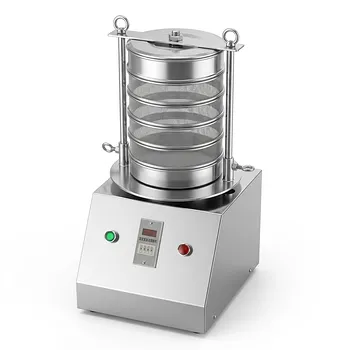
Stainless Steel Laboratory Vibratory Test Sieve Shaker
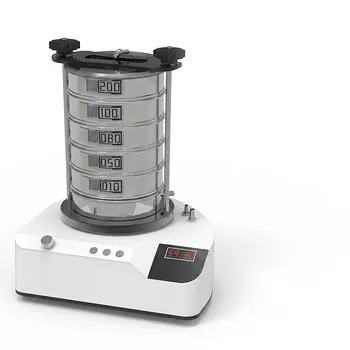
Heavy Duty Dry Three Dimensional Vibratory Sieve Shaker for Particle Separation
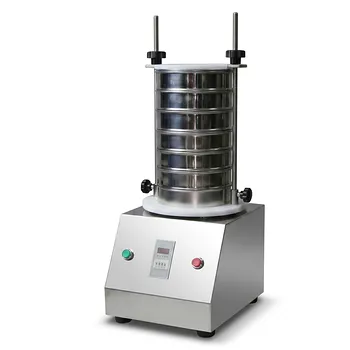
Small Laboratory Vibratory Sieve Shaker for Powder Gradation and Particle Size Analysis
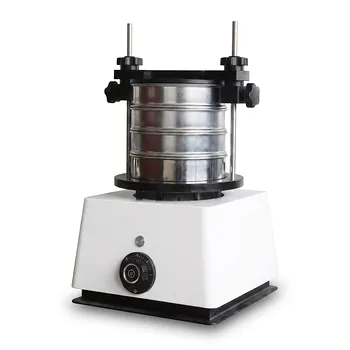
Small Laboratory Vibrating Sieve Shaker for Precise Particle Size Analysis
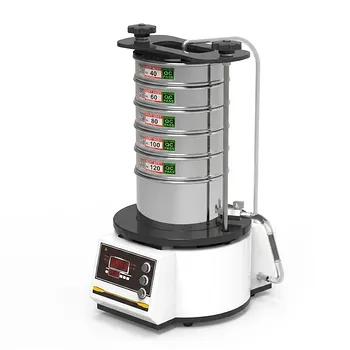
High Frequency Wet Three-Dimensional Vibrating Sieve Shaker for Dry and Wet Particle Size Analysis
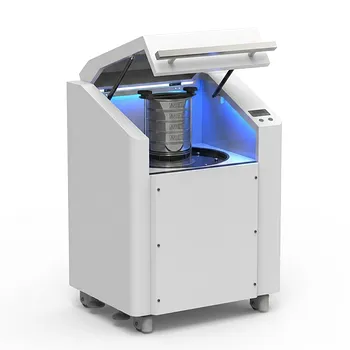
High Frequency Cabinet Type Three-Dimensional Rotary Vibrating Sieve Shaker for Dry Sieving and Particle Classification
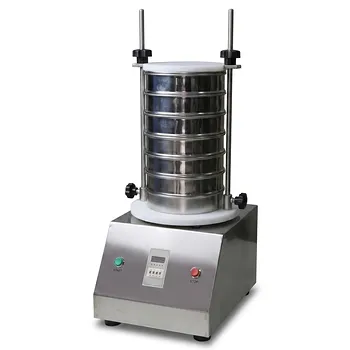
Laboratory Vibratory Test Sieve Shaker for Precision Particle Size Analysis and Powder Grading
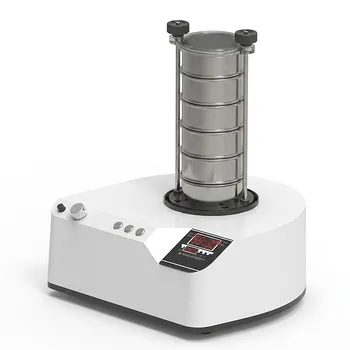
三维电磁微量振动筛分仪
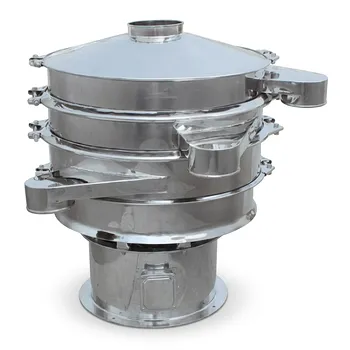
Stainless Steel Rotary Vibrating Sieve High Precision Circular Vibratory Separator Industrial Powder Grading Machine Multi Layer Sifting Equipment
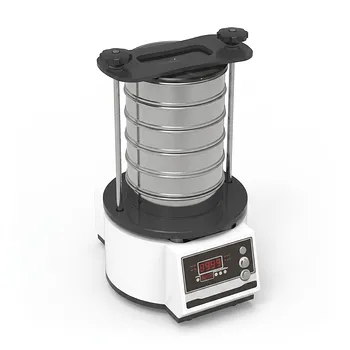
Tapping Oscillating Sieve Shaker for Dry and Wet Particle Size Analysis
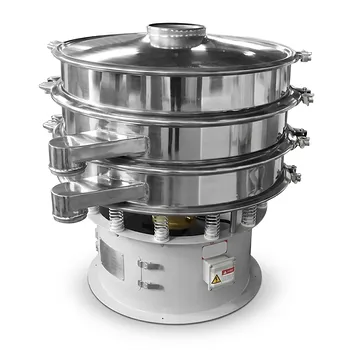
Three Dimensional Rotary Vibrating Sieve
Vibratory Superfine Grinder for Ultra Fine Laboratory Powder Milling
Small Vibrating Ultrafine Grinder for Traditional Chinese Medicine
Automatic Vibrating Powder Feeder for Laboratory Material Processing Precision Vibratory Hopper Feeder for Granular and Powder Material Handling Industrial Grade Vibrating Tray Feeder for Consistent Material Sample Preparation