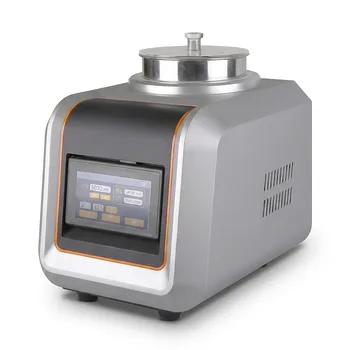
What role does a vibratory sieve shaker with controlled acceleration play in screening explosives? Ensure Precise Grading
Updated 5 months ago
The vibratory sieve shaker with controlled acceleration serves as the definitive tool for ensuring the particle size distribution of ammonium nitrate remains precise, repeatable, and safe. By providing constant and adjustable mechanical vibration energy (the g-value), this equipment allows for the high-accuracy grading necessary to predict and control the detonation performance of ammonal explosives. It acts as the bridge between raw chemical production and the standardized materials required for high-sensitivity energy applications.
Controlled acceleration ensures that the mechanical energy applied to explosive components is both consistent and reproducible, allowing for precise particle grading while preventing material breakage or "blinding" that could skew critical safety and performance data.
The Critical Link Between Particle Size and Detonation
Achieving Precise Physical Classification
Ammonium nitrate particles must be categorized across multiple standard test sieves to ensure they meet specific diameter requirements. Controlled acceleration allows the operator to set a constant vibration intensity that remains stable regardless of the sample load on the sieves.
This precision is vital because even minor fluctuations in particle dimensions can lead to inconsistent chemical reactions during use. High-accuracy grading is the primary requirement for any study involving the detonation performance of industrial or military-grade explosives.
Impact on Ammonal Explosive Performance
In the context of ammonal explosives, the size of the ammonium nitrate granules directly dictates the surface area available for the reaction. Adjustable g-values allow researchers to isolate specific size fractions, ranging from 850 μm down to 250 μm, to determine the ideal formulation for peak energy release.
Without this level of control, the explosive mixture may suffer from poor flowability or unpredictable reaction rates. Consistent vibration energy ensures that the data used to calculate the detonation rate is based on a truly representative sample.
Engineering Advantages of G-Value Control
Mitigating Sieve Blinding and Clogging
One of the primary challenges in screening fine granules is "blinding," where particles become lodged in the sieve mesh. Standardized 3D throwing action—often found in electromagnetic vibratory shakers—forces particles to rotate and bounce vertically, effectively clearing the apertures.
This movement is especially critical for materials that may be electrostatic or prone to agglomeration. By maintaining a controlled acceleration, the shaker prevents the "matting" effect that typically leads to inaccurate weight measurements and failed batches.
Preventing Material Breakage and Attrition
Ammonium nitrate granules can be brittle; excessive or uncontrolled mechanical force can cause "attrition," where particles break down into finer dust during the test. G-value control allows the user to find the "sweet spot" where separation is efficient but the physical integrity of the granules is preserved.
If the granules break during screening, the resulting data will falsely report a higher percentage of "fines" than actually exists in the production line. This would lead to incorrect conclusions regarding the efficiency of the granulation process.
Data-Driven Process Optimization
Evaluating Granulation and Sizing Efficiency
Manufacturers use vibratory shakers to monitor the consistency of their production orifices and cooling towers. By measuring the percentage of granules that meet specific standards (such as the 2mm standard), they can assess if the equipment is operating within tolerance.
Data obtained from these tests allows for the calculation of the uniformity index (Iθ). This index provides an objective basis for adjusting production speed or temperature to ensure a more uniform product.
Integrating with Advanced Analytical Methods
In many laboratory settings, vibratory sieving is used for coarse fractions (2 mm to 32 mm) while laser analyzers handle the sub-micron range. The data from the mechanical classification is mathematically combined with laser data to create a full-range particle size distribution curve.
This hybrid approach is essential for assessing the reaction contact area in subsequent metallurgical or chemical processing. It ensures that the material will flow correctly and react completely when triggered.
Understanding the Trade-offs
Mechanical Stress vs. Separation Speed
Higher g-values lead to faster separation and reduced testing time, but they significantly increase the risk of particle breakage. Finding the balance requires a calibrated approach where the vibration frequency is matched to the density and fragility of the specific ammonium nitrate grade.
Equipment Wear and Calibration
Controlled acceleration units require regular calibration to ensure the internal sensors are accurately reporting the g-force. While these units provide superior data, they are more complex than basic fixed-speed shakers and may require more intensive preventative maintenance to ensure long-term accuracy.
How to Apply This to Your Process
Making the Right Choice for Your Goal
- If your primary focus is detonation research: Use a shaker with precise g-value control to isolate narrow particle size fractions (e.g., 250–500 μm) to ensure reproducible explosive performance tests.
- If your primary focus is manufacturing quality control: Utilize the uniformity index (Iθ) derived from sieving data to optimize your granulation parameters and reduce the volume of rejected material.
- If your primary focus is handling agglomerated or wet materials: Implement a shaker with 3D throwing action and wet-sieving capabilities to prevent mesh blinding and ensure accurate grading of suspensions.
- If your primary focus is full-range distribution mapping: Combine the physical weight data from vibratory sieving with laser diffraction results to capture the complete profile of materials larger than 2 mm.
By mastering the acceleration of the sieving process, you ensure that ammonium nitrate is not just a raw chemical, but a precisely engineered component ready for safe and effective deployment.
Summary Table:
| Key Feature | Functional Benefit | Impact on Explosive Components |
|---|---|---|
| Controlled G-Value | Maintains constant vibration energy regardless of sample load | Ensures repeatable particle distribution for detonation data |
| 3D Throwing Action | Rotates and bounces particles vertically across the mesh | Prevents sieve blinding and ensures high-accuracy grading |
| Adjustable Intensity | Minimizes mechanical stress and material attrition | Preserves the physical integrity of brittle ammonium nitrate granules |
| Uniformity Index (Iθ) | Provides objective data for granulation monitoring | Optimizes production processes and reduces material waste |
Optimize Your Explosive Material Analysis with Precision Equipment
Ensuring the safety and performance of energetic materials requires absolute precision in particle size analysis. At our facility, we provide complete laboratory sample preparation solutions for material science, specializing in high-performance powder processing and compaction equipment.
Whether you are grading sensitive components or preparing samples for chemical analysis, our extensive product lines support your mission-critical workflows:
- Particle Size Analysis: Advanced vibratory and air-jet sieve shakers with a full range of test sieves and meshes.
- Milling & Grinding: Planetary ball mills, jet mills, and liquid nitrogen cryogenic grinders for ultrafine results.
- Sample Compaction: A full spectrum of hydraulic presses, including Cold/Warm Isostatic Presses (CIP/WIP), standard lab presses, and XRF pellet presses.
- Mixing: High-efficiency powder mixers and vacuum defoaming mixers.
Ready to enhance your lab's accuracy and safety? Contact our technical experts today to discuss how our specialized equipment can streamline your material testing and production processes.
References
- Józef Paszula, Sebastian Kazubek. Influence of ammonium nitrate(V) grain size on the detonation parameters of ammonals. DOI: 10.22211/matwys/0206
Mentioned Products
- Vibratory Sieve Shaker Electromagnetic 3D Motion Powder Particle Size Analyzer for Dry and Wet Sieving
- Laboratory Dry and Wet Three Dimensional Vibratory Sieve Shaker for Particle Analysis
- Stainless Steel Laboratory Vibratory Test Sieve Shaker
- Heavy Duty Dry Three Dimensional Vibratory Sieve Shaker for Particle Separation
- Dry Three Dimensional Vibratory Sieve Shaker
People Also Ask
- How does a vibratory sieve shaker contribute to optimizing the performance of activated carbon? Enhance Adsorption Precision
- Why is a laboratory vibratory sieve shaker necessary for processing magnesium-based borate precursor powders? Boost Activity
- Why use a vibratory sieve shaker to verify coarse aggregate grading in rubberized concrete? Ensure Structural Integrity
- What function do vibratory sieve shakers and standard test sieves serve in the preparation of adsorbents? Key Guide
- What role does a vibratory sieve shaker play in the particle size analysis of ground corn products? Enhance QC Precision

Tech Team · PowderPreparation
Last updated on May 14, 2026
Related Products
Vibratory Sieve Shaker Electromagnetic 3D Motion Powder Particle Size Analyzer for Dry and Wet Sieving
Laboratory Dry and Wet Three Dimensional Vibratory Sieve Shaker for Particle Analysis
Stainless Steel Laboratory Vibratory Test Sieve Shaker
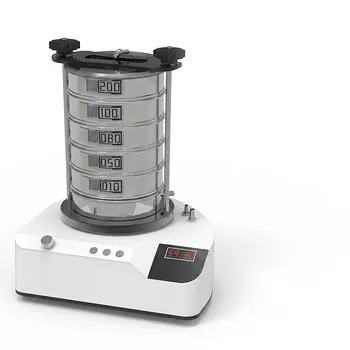
Heavy Duty Dry Three Dimensional Vibratory Sieve Shaker for Particle Separation
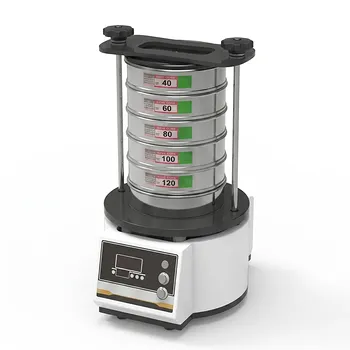
Dry Three Dimensional Vibratory Sieve Shaker
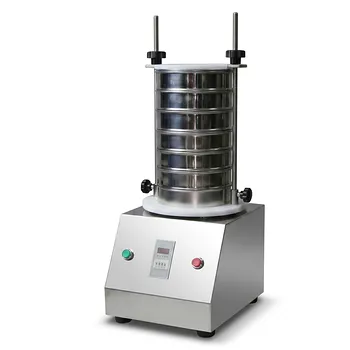
Small Laboratory Vibratory Sieve Shaker for Powder Gradation and Particle Size Analysis
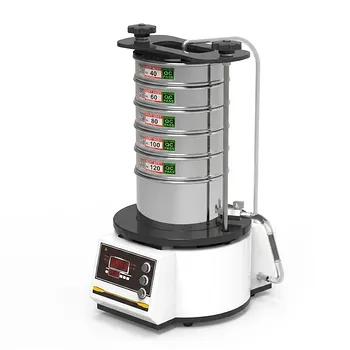
High Frequency Wet Three-Dimensional Vibrating Sieve Shaker for Dry and Wet Particle Size Analysis
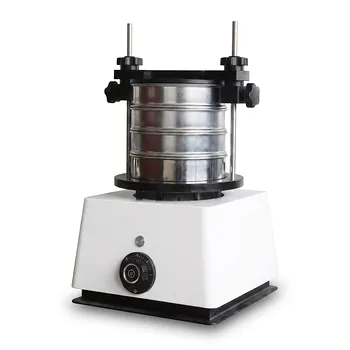
Small Laboratory Vibrating Sieve Shaker for Precise Particle Size Analysis
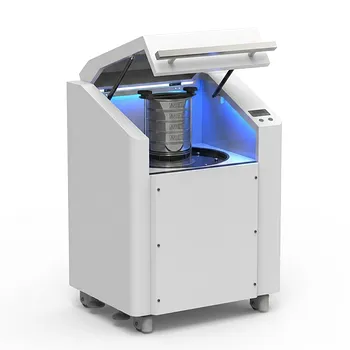
High Frequency Cabinet Type Three-Dimensional Rotary Vibrating Sieve Shaker for Dry Sieving and Particle Classification
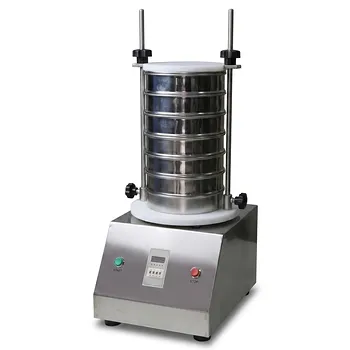
Laboratory Vibratory Test Sieve Shaker for Precision Particle Size Analysis and Powder Grading
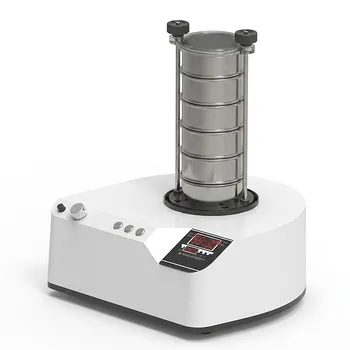
三维电磁微量振动筛分仪
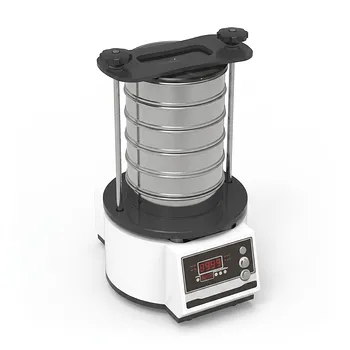
Tapping Oscillating Sieve Shaker for Dry and Wet Particle Size Analysis
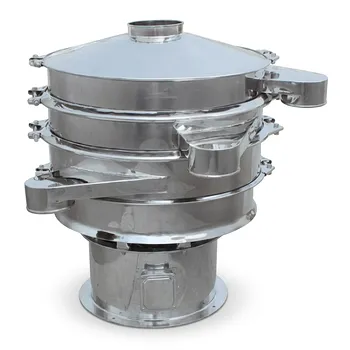
Stainless Steel Rotary Vibrating Sieve High Precision Circular Vibratory Separator Industrial Powder Grading Machine Multi Layer Sifting Equipment
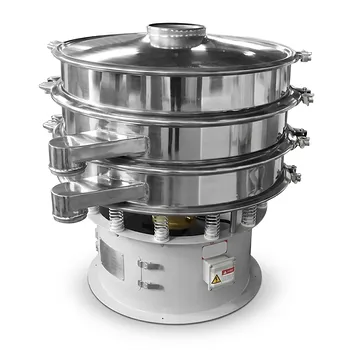
Three Dimensional Rotary Vibrating Sieve
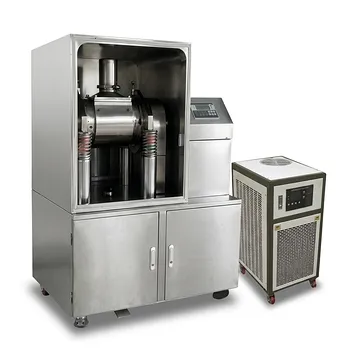
Small Vibrating Ultrafine Grinder for Traditional Chinese Medicine
Automatic Vibrating Powder Feeder for Laboratory Material Processing Precision Vibratory Hopper Feeder for Granular and Powder Material Handling Industrial Grade Vibrating Tray Feeder for Consistent Material Sample Preparation
Vibratory Superfine Grinder for Ultra Fine Laboratory Powder Milling
Vibratory Disc Mill for Rapid Fine Grinding and High Throughput Sample Preparation of Hard and Brittle Materials