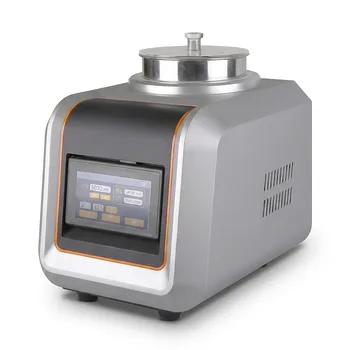
What role does a vibratory sieve shaker play in the pre-treatment stage of calcium carbonate raw materials? Key Role
Updated 4 months ago
The vibratory sieve shaker acts as the critical gatekeeper in calcium carbonate pre-treatment. It performs preliminary dry or wet grading by removing large particle aggregates and coarse contaminants through controlled mechanical vibration. This process ensures the raw material falls within a specific size range—typically less than 45 micrometers—to provide a uniform physical foundation for subsequent precision processing and hydraulic classification.
The core role of a vibratory sieve shaker is to standardize the raw material's physical profile. By eliminating oversized particles and breaking down agglomerates, the equipment ensures the efficiency of downstream refining stages and the ultimate homogeneity of the final calcium carbonate product.
Standardizing the Raw Material Profile
Preliminary Grading and Aggregate Removal
The shaker uses specific amplitudes and durations to separate particles that do not meet size requirements. Its primary task is to remove large particle aggregates that could disrupt the consistency of the raw material batch. This ensures that the material entering the next stage is already narrowed down to a workable micro-range.
Facilitating Agglomerate Breakdown
In the preparation of high-purity materials, the mechanical energy of the shaker helps force powder through fine mesh apertures. This action effectively breaks up powder agglomerations that naturally form during storage or transport. By de-clumping the material, the shaker establishes a consistent physical state necessary for high-precision applications.
Establishing a Uniform Feed Base
The screening process is designed to obtain a feed material within a precise range, such as less than 45 micrometers. This uniformity is vital for subsequent precision grading in hydraulic classification systems. Without this preliminary step, downstream equipment would face inconsistent loads and reduced separation efficiency.
Impact on Downstream Process Efficiency
Optimizing Hydraulic Classification
By providing a pre-sorted material base, the vibratory shaker reduces the burden on hydraulic classification systems. These secondary systems can then focus on fine-tuning particle distributions rather than managing large, unexpected debris. This sequential approach maximizes the throughput of the entire production line.
Ensuring Mixing and Homogenization Uniformity
Uniform particle sizes are the physical foundation for mixing kinetics and uniformity. In applications where calcium carbonate is used as a reference material or drug substance, precise grading minimizes weight variation and ensures the active components are distributed evenly. Consistent sizing prevents the "segregation effect" often seen in non-uniform powders.
Enhancing Thermal and Chemical Reactivity
In processes like carbon capture or chemical activation, particle size directly influences gas-solid contact efficiency and heat transfer. The shaker ensures that particles remain within optimal ranges (e.g., 350–900 μm for fluidization). This allows for synchronous chemical reactions and stable pneumatic conveying within the processing system.
Understanding the Trade-offs
Mechanical Wear and Sieve Blinding
High-intensity vibration causes natural wear on the test sieves, which can eventually lead to aperture distortion and inaccurate grading. Furthermore, fine powders—especially when processed wet—can cause sieve blinding, where particles lodge in the mesh and reduce throughput. Regular maintenance and the use of anti-blinding accessories are often required.
Sensitivity to Material Moisture
The effectiveness of dry sieving is highly dependent on the moisture content of the calcium carbonate raw material. Excess moisture increases particle cohesion, leading to false aggregates that the shaker may not be able to break. In these instances, a transition to wet sieving is necessary, which adds complexity to the subsequent drying stages of the process.
How to Apply This to Your Process
Making the Right Choice for Your Goal
To maximize the utility of a vibratory sieve shaker, the configuration must align with the specific requirements of the final application.
- If your primary focus is high-purity reference materials: Utilize high-frequency mechanical vibration with fine mesh apertures to prioritize the removal of micro-impurities and the breakdown of all agglomerates.
- If your primary focus is industrial-scale throughput: Focus on setting specific amplitudes for wet preliminary grading to rapidly remove oversized aggregates before hydraulic classification.
- If your primary focus is chemical reactivity (e.g., carbon capture): Use the shaker to strictly maintain a specific size range (e.g., 350–900 μm) to ensure stable fluidization and gas-solid contact.
By meticulously controlling the particle size at the pre-treatment stage, you ensure the technical integrity and performance of the calcium carbonate in all subsequent industrial or laboratory applications.
Summary Table:
| Stage | Function of Vibratory Sieve Shaker | Strategic Benefit |
|---|---|---|
| Screening | Removes large aggregates and coarse contaminants | Protects downstream classification equipment |
| De-clumping | Breaks up powder agglomerations via vibration | Ensures uniformity for high-purity applications |
| Grading | Establishes a uniform feed base (e.g., <45μm) | Optimizes mixing kinetics and reactivity |
| Conditioning | Controls particle size for fluidization | Maximizes thermal and chemical efficiency |
Elevate Your Powder Processing with Precision Solutions
Optimizing the pre-treatment of calcium carbonate is essential for achieving superior material performance. We provide complete laboratory sample preparation solutions tailored to meet the rigorous demands of material science. Our expert-grade equipment ensures your raw materials are perfectly conditioned for any application.
Our extensive product line includes:
- Precision Grading: Vibratory and air-jet sieve shakers with a full range of test sieves and meshes.
- Advanced Milling: Jaw/roll crushers, liquid nitrogen cryogenic grinders, and high-efficiency mills (planetary ball, jet, sand/bead, disc, and rotor).
- Homogenization: High-performance powder mixers and defoaming mixers.
- Compaction & Pressing: A full spectrum of hydraulic presses, including Cold/Warm Isostatic Presses (CIP/WIP), XRF pellet presses, and vacuum hot presses.
Whether you are refining chemical reactivity or producing high-purity reference materials, our specialists are here to help you select the ideal configuration for your workflow.
Contact our expert team today to find your solution!
References
- H. F. Aly, Ahmed I. Abd‐Elhamid. Hydraulic classifier system for fractionation of nano CaCO3 particles. DOI: 10.1007/s13204-014-0328-z
Mentioned Products
- Vibratory Sieve Shaker Electromagnetic 3D Motion Powder Particle Size Analyzer for Dry and Wet Sieving
- Laboratory Dry and Wet Three Dimensional Vibratory Sieve Shaker for Particle Analysis
- Stainless Steel Laboratory Vibratory Test Sieve Shaker
- Heavy Duty Dry Three Dimensional Vibratory Sieve Shaker for Particle Separation
- Dry Three Dimensional Vibratory Sieve Shaker
People Also Ask
- How does a vibratory sieve shaker contribute to optimizing the performance of activated carbon? Enhance Adsorption Precision
- Why is a laboratory vibratory sieve shaker necessary for processing magnesium-based borate precursor powders? Boost Activity
- Why use a vibratory sieve shaker to verify coarse aggregate grading in rubberized concrete? Ensure Structural Integrity
- What function do vibratory sieve shakers and standard test sieves serve in the preparation of adsorbents? Key Guide
- What role does a vibratory sieve shaker play in the particle size analysis of ground corn products? Enhance QC Precision

Tech Team · PowderPreparation
Last updated on Jun 03, 2026
Related Products
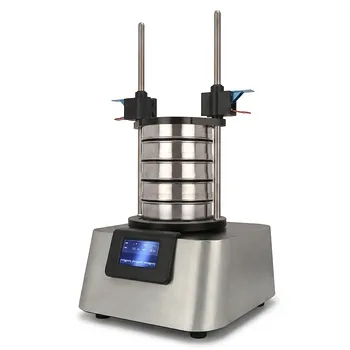
Vibratory Sieve Shaker Electromagnetic 3D Motion Powder Particle Size Analyzer for Dry and Wet Sieving
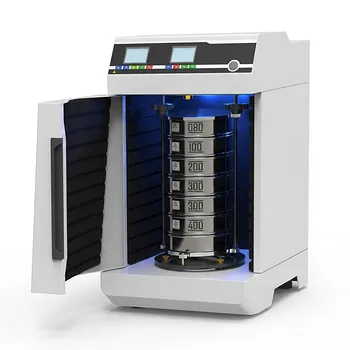
Laboratory Dry and Wet Three Dimensional Vibratory Sieve Shaker for Particle Analysis
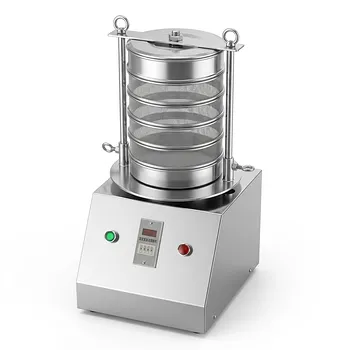
Stainless Steel Laboratory Vibratory Test Sieve Shaker
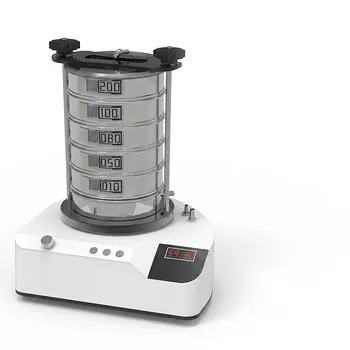
Heavy Duty Dry Three Dimensional Vibratory Sieve Shaker for Particle Separation
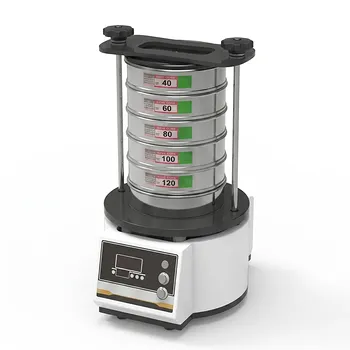
Dry Three Dimensional Vibratory Sieve Shaker
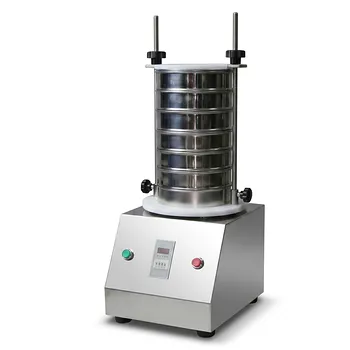
Small Laboratory Vibratory Sieve Shaker for Powder Gradation and Particle Size Analysis
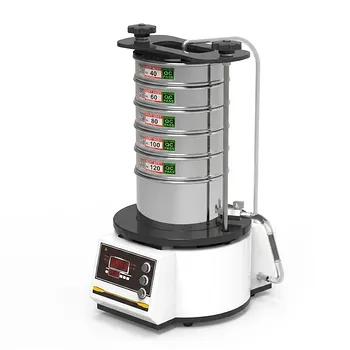
High Frequency Wet Three-Dimensional Vibrating Sieve Shaker for Dry and Wet Particle Size Analysis
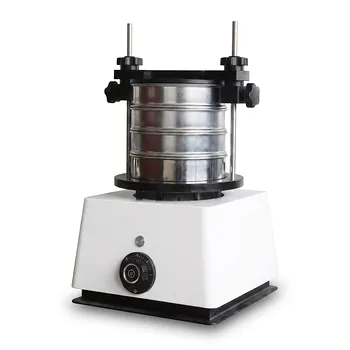
Small Laboratory Vibrating Sieve Shaker for Precise Particle Size Analysis
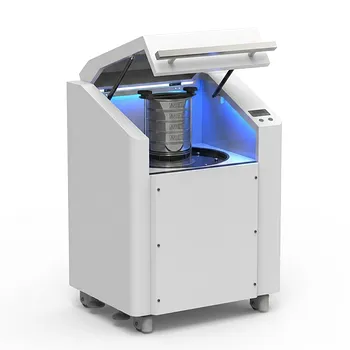
High Frequency Cabinet Type Three-Dimensional Rotary Vibrating Sieve Shaker for Dry Sieving and Particle Classification
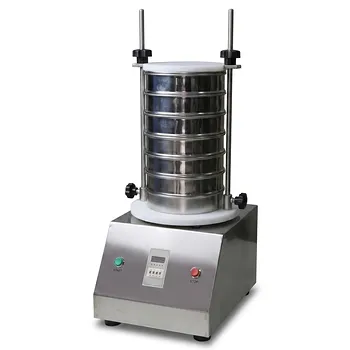
Laboratory Vibratory Test Sieve Shaker for Precision Particle Size Analysis and Powder Grading
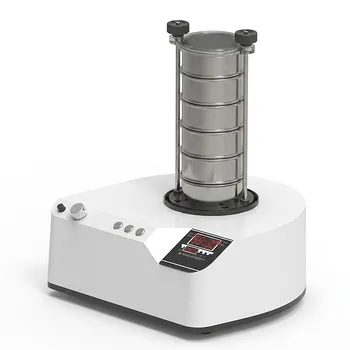
三维电磁微量振动筛分仪
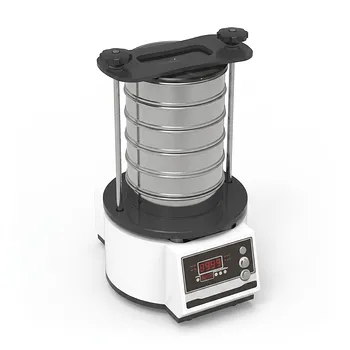
Tapping Oscillating Sieve Shaker for Dry and Wet Particle Size Analysis
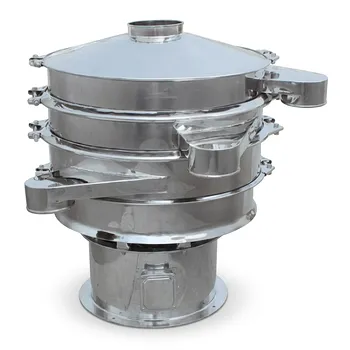
Stainless Steel Rotary Vibrating Sieve High Precision Circular Vibratory Separator Industrial Powder Grading Machine Multi Layer Sifting Equipment
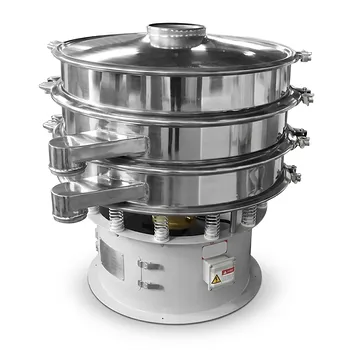
Three Dimensional Rotary Vibrating Sieve
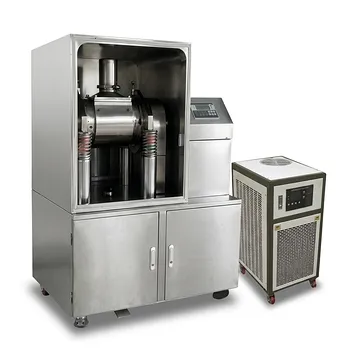
Small Vibrating Ultrafine Grinder for Traditional Chinese Medicine
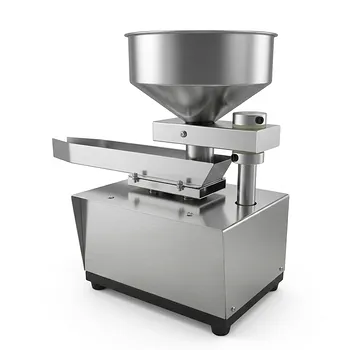
Automatic Vibrating Powder Feeder for Laboratory Material Processing Precision Vibratory Hopper Feeder for Granular and Powder Material Handling Industrial Grade Vibrating Tray Feeder for Consistent Material Sample Preparation
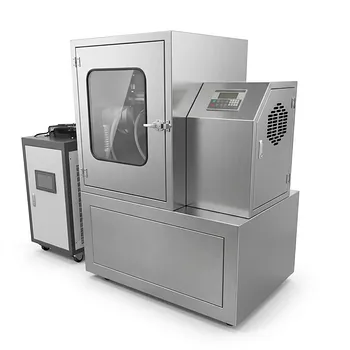
Vibratory Superfine Grinder for Ultra Fine Laboratory Powder Milling
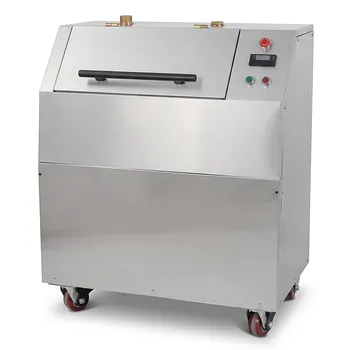
Vibratory Disc Mill for Rapid Fine Grinding and High Throughput Sample Preparation of Hard and Brittle Materials