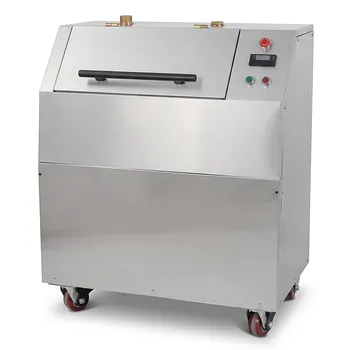
What role does a vibratory sieve shaker play in the particle size distribution analysis of MCC? Ensure Lab Precision.
Updated 5 months ago
The vibratory sieve shaker serves as the primary mechanical instrument for the physical classification and quantitative analysis of microcrystalline cellulose (MCC) particles. By applying standardized vibration to a stack of graduated test sieves, it separates raw Cochlospermum planchonii-derived powder into distinct size fractions, enabling the calculation of mean particle size and the generation of frequency distribution curves.
Core Takeaway: The vibratory sieve shaker transforms raw MCC powder into categorized data, providing the essential metrics—such as flowability and particle uniformity—required to determine if the material is suitable for industrial tablet manufacturing.
Mechanical Classification and Data Generation
Physical Separation via Graduated Meshes
The shaker utilizes a series of standard test sieves arranged in descending order of aperture size. As the device vibrates at set amplitudes and durations, particles pass through the mesh until they reach a sieve with an opening smaller than their diameter.
Quantifying Mass Distribution
By weighing the amount of MCC retained on each layer, researchers calculate the powder mass percentages for specific ranges. This data is used to derive critical indices, including the fineness modulus, the curvature coefficient, and the uniformity coefficient.
Determining Statistical Markers (D10, D50, D90)
The process allows for the precise identification of D-values, which represent the particle size diameters at the 10%, 50%, and 90% cumulative points. These markers are the industry standard for evaluating how different drying processes or extraction methods affect the physical properties of the Cochlospermum planchonii cellulose.
Impact on Manufacturing and Material Performance
Predicting Flowability and Filling
Particle size distribution directly influences how well the powder flows into die cavities during tablet manufacturing. A well-defined distribution, verified by the sieve shaker, ensures consistent filling performance and reduces weight variation in the final product.
Influence on Tensile Strength
Separating MCC into distinct grades (such as 25–75 μm or 75–125 μm) allows researchers to evaluate how specific granule sizes contribute to the tensile strength of a tablet. This classification is vital for ensuring the final dosage form can withstand mechanical stress without crumbling.
Kinetic and Wetting Analysis
The shaker ensures a consistent range of porous media particle sizes for subsequent wetting experiments. This data is essential for modeling capillary absorption kinetics, which dictates how quickly the MCC will absorb moisture or disintegrate in a liquid environment.
Understanding the Trade-offs and Limitations
The Risk of Mesh Blinding
When analyzing fine organic powders like MCC, particles can become lodged in the sieve openings, a phenomenon known as blinding. This leads to inaccurate weight measurements and requires careful maintenance and the use of de-blinding aids like specialized balls or brushes.
Duration and Amplitude Sensitivity
The accuracy of the analysis is highly dependent on the vibration settings. If the amplitude is too high, particles may bounce excessively or even break; if the duration is too short, the separation will be incomplete, leading to a "false" distribution curve.
Static Electricity Interference
Microcrystalline cellulose is prone to electrostatic charging, especially in dry environments. This can cause fine particles to cling to the sieves or to each other, necessitating the use of anti-static agents or controlled humidity to ensure the particles pass through the meshes freely.
Applying This Analysis to Your Project
Recommendations for Material Characterization
- If your primary focus is tablet structural integrity: Utilize the shaker to isolate finer fractions (below 100 μm), as these often contribute more significantly to the bonding and tensile strength of the compact.
- If your primary focus is high-speed manufacturing flow: Prioritize the calculation of the uniformity coefficient to ensure a narrow particle size distribution, which minimizes "bridging" in the hopper.
- If your primary focus is extraction efficiency evaluation: Use the shaker to compare the D50 values of powders produced by different drying methods to identify which process yields the most consistent material.
Precise vibratory sieving is the definitive step in validating Cochlospermum planchonii microcrystalline cellulose as a viable pharmaceutical excipient.
Summary Table:
| Analysis Phase | Key Metric / Metric Goal | Impact on Material Performance |
|---|---|---|
| Classification | D10, D50, D90 Values | Determines particle size uniformity and grade |
| Quantification | Mass Percentage / Fineness Modulus | Predicts powder flowability and hopper filling |
| Characterization | Granule Size Separation (μm) | Influences tablet tensile strength and integrity |
| Kinetics | Porous Media Size | Dictates capillary absorption and disintegration |
Elevate Your Material Characterization with Professional Lab Solutions
Are you looking to optimize the performance of microcrystalline cellulose or other advanced powders? Our team provides complete laboratory sample preparation solutions tailored for material science and pharmaceutical research. We specialize in high-precision powder processing and compaction equipment designed to deliver repeatable, industry-standard results.
Our Comprehensive Product Range Includes:
- Sieving & Mixing: Advanced vibratory and air-jet sieve shakers, test sieves, powder mixers, and defoaming mixers.
- Milling & Grinding: Planetary ball mills, jet mills, cryogenic grinders, and jaw/roll crushers.
- Compaction Excellence: A full spectrum of hydraulic presses, including Cold/Warm Isostatic Presses (CIP/WIP), vacuum hot presses, and XRF pellet presses.
Whether you are isolating specific fractions for tablet integrity or calculating D-values for extraction efficiency, we have the tools to support your workflow. Contact us today to discuss your specific application and let our experts help you find the perfect solution for your lab!
References
- F O Ohwoavworhua, Tiwalade A. Adelakun. Some Physical Characteristics of Microcrystalline Cellulose Obtained from Raw Cotton of <i>Cochlospermum planchonii</i>. DOI: 10.4314/tjpr.v4i2.14626
Mentioned Products
- Vibratory Sieve Shaker Electromagnetic 3D Motion Powder Particle Size Analyzer for Dry and Wet Sieving
- Laboratory Dry and Wet Three Dimensional Vibratory Sieve Shaker for Particle Analysis
- Dry Three Dimensional Vibratory Sieve Shaker
- Stainless Steel Laboratory Vibratory Test Sieve Shaker
- Heavy Duty Dry Three Dimensional Vibratory Sieve Shaker for Particle Separation
People Also Ask
- How does a vibratory sieve shaker contribute to optimizing the performance of activated carbon? Enhance Adsorption Precision
- Why is a laboratory vibratory sieve shaker necessary for processing magnesium-based borate precursor powders? Boost Activity
- Why use a vibratory sieve shaker to verify coarse aggregate grading in rubberized concrete? Ensure Structural Integrity
- What function do vibratory sieve shakers and standard test sieves serve in the preparation of adsorbents? Key Guide
- What role does a vibratory sieve shaker play in the particle size analysis of ground corn products? Enhance QC Precision

Tech Team · PowderPreparation
Last updated on May 14, 2026
Related Products
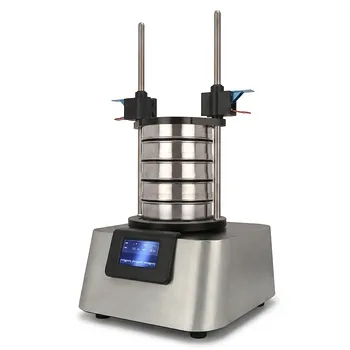
Vibratory Sieve Shaker Electromagnetic 3D Motion Powder Particle Size Analyzer for Dry and Wet Sieving

Laboratory Dry and Wet Three Dimensional Vibratory Sieve Shaker for Particle Analysis

Dry Three Dimensional Vibratory Sieve Shaker
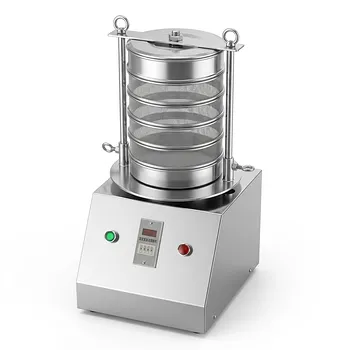
Stainless Steel Laboratory Vibratory Test Sieve Shaker

Heavy Duty Dry Three Dimensional Vibratory Sieve Shaker for Particle Separation

Small Laboratory Vibratory Sieve Shaker for Powder Gradation and Particle Size Analysis

Small Laboratory Vibrating Sieve Shaker for Precise Particle Size Analysis
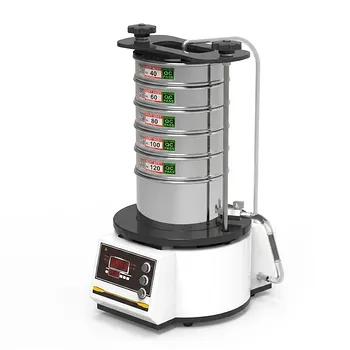
High Frequency Wet Three-Dimensional Vibrating Sieve Shaker for Dry and Wet Particle Size Analysis
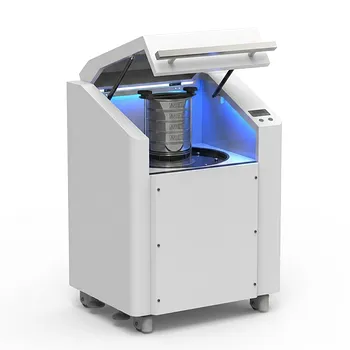
High Frequency Cabinet Type Three-Dimensional Rotary Vibrating Sieve Shaker for Dry Sieving and Particle Classification

Laboratory Vibratory Test Sieve Shaker for Precision Particle Size Analysis and Powder Grading

三维电磁微量振动筛分仪

Stainless Steel Rotary Vibrating Sieve High Precision Circular Vibratory Separator Industrial Powder Grading Machine Multi Layer Sifting Equipment

Tapping Oscillating Sieve Shaker for Dry and Wet Particle Size Analysis

Three Dimensional Rotary Vibrating Sieve
Vibratory Superfine Grinder for Ultra Fine Laboratory Powder Milling
Small Vibrating Ultrafine Grinder for Traditional Chinese Medicine
Automatic Vibrating Powder Feeder for Laboratory Material Processing Precision Vibratory Hopper Feeder for Granular and Powder Material Handling Industrial Grade Vibrating Tray Feeder for Consistent Material Sample Preparation