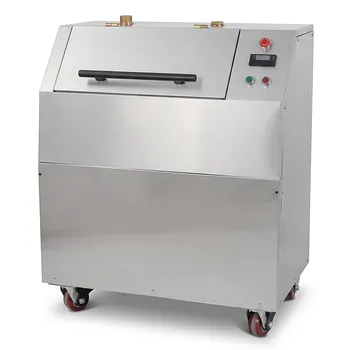
What role does a vibratory sieve shaker play in the evaluation of soil physical stability? Key to Accurate Gradation
Updated 4 months ago
A vibratory sieve shaker is the primary tool for standardizing soil samples to evaluate their physical and structural integrity. It enables the precise extraction of soil aggregates within specific ranges—such as the 1 to 2 mm fraction—which is a mandatory pretreatment step for assessing water stability and ensuring experimental results are comparable across different studies.
The vibratory sieve shaker acts as the technical foundation for soil stability analysis by transforming raw, heterogeneous soil into standardized data. By providing consistent mechanical vibration, it allows researchers to accurately classify soil gradation, determine stability coefficients, and predict how the soil will respond to engineering loads or chemical stabilizers.
Standardizing Soil Aggregate Extraction
The Pretreatment Phase for Stability Testing
In soil aggregate studies, the shaker is used to isolate specific particle size ranges from air-dried samples. This pretreatment ensures uniformity, allowing technicians to conduct water stability tests on a consistent baseline, which is critical for understanding how soil structures resist erosion or collapse.
Enhancing Experimental Repeatability
By using standardized vibration frequencies and durations, the equipment eliminates the human error associated with manual screening. This consistency is vital for high-precision environmental sampling, ensuring that gradation analysis remains reliable across different batches and laboratories.
Three-Dimensional Particle Agitation
Modern vibratory shakers utilize high-frequency 3D vibration to ensure soil particles jump sufficiently on the mesh. This movement prevents particles from simply sliding over apertures, ensuring they pass through the correct sieve size and providing a more accurate representation of the soil's physical makeup.
Analyzing Particle Size Distribution (PSD) for Engineering
Determining Gradation Coefficients
The shaker facilitates the calculation of the Uniformity Coefficient (Cu) and the Curvature Coefficient (Cc). These metrics are essential for engineers to judge whether a soil grade is suitable for stabilization design or if it will be prone to excessive compressibility under pressure.
Soil Classification and Standards
Technicians use the passing rate data from a stack of sieves to classify soil according to AASHTO or other engineering standards. Identifying the percentage of fine particles (those passing through a No. 200 sieve) is a prerequisite for determining if a soil is "well-graded" or "gap-graded."
Predicting Pore Structure for Grouting
Understanding the particle size distribution, specifically the D15 value, allows for the estimation of soil pore sizes. This data is critical for grouting applications, as it ensures that cement slurry or other stabilizers can penetrate the soil structure uniformly without being blocked by overly tight pores.
Assessing Stability for Soil Modification
Optimizing Stabilizer Mixing Ratios
When modifying soil with additives like lime, bagasse ash, or fly ash, the shaker determines the initial silt and clay content. This precise grading allows technicians to calculate the optimal mixing ratios needed to achieve the desired physical stability in the final mixture.
Identifying Fine Particle Content
The ability to accurately quantify the "fines" in a sample is essential for assessing soil compressibility. High concentrations of very fine particles often indicate a soil that is less physically stable and more susceptible to volume changes when moisture levels fluctuate.
Understanding the Trade-offs
The Risk of Particle Degradation
Prolonged vibration at high intensities can lead to abrasive degradation, where soil aggregates break down into smaller pieces during the test itself. This can result in a "fines" reading that is artificially high, potentially leading to incorrect stability assessments.
Managing Sieve Blinding
In soils with high moisture or clay content, particles can clog the sieve apertures, a phenomenon known as blinding. If not managed through proper amplitude settings or the use of sieve aids, blinding will lead to inaccurate grading and an overestimation of coarse particle sizes.
How to Apply This to Your Project
Making the Right Choice for Your Goal
To get the most accurate stability data, your approach to sieve shaking should align with your specific technical objective.
- If your primary focus is aggregate stability research: Use the shaker to strictly isolate the 1-2 mm fraction to ensure your subsequent water-stability tests are standardized and reproducible.
- If your primary focus is roadbed or subgrade engineering: Focus on generating a complete particle size distribution curve to calculate Cu and Cc coefficients for AASHTO classification.
- If your primary focus is chemical soil modification: Use the shaker to precisely determine the silt and clay passing rates to calculate the exact dosage of stabilizers like lime or fly ash.
By leveraging the precision of a vibratory sieve shaker, you move from guesswork to a data-driven understanding of soil behavior and structural reliability.
Summary Table:
| Application Area | Primary Function | Technical Benefit |
|---|---|---|
| Pretreatment | Isolates specific fractions (e.g., 1-2 mm) | Ensures experimental repeatability and baseline uniformity. |
| PSD Analysis | Calculates Cu and Cc coefficients | Predicts soil compressibility and engineering suitability. |
| Soil Modification | Quantifies silt and clay content | Optimizes mixing ratios for stabilizers like lime or fly ash. |
| 3D Agitation | High-frequency particle jumping | Prevents blinding and ensures accurate size representation. |
Precision Sample Preparation for Material Science
Accurate soil stability analysis begins with standardized sample preparation. At [Your Brand Name], we provide complete laboratory sample preparation solutions for material science, specializing in high-performance powder processing and compaction equipment.
Our extensive product lines are designed to meet the most rigorous research standards:
- Sieving & Milling: Vibratory and air-jet sieve shakers, planetary ball mills, jet mills, and disc/rotor mills for precise particle size control.
- Crushing: Durable jaw and roll crushers for primary sample reduction.
- Mixing: High-efficiency powder mixers and defoaming mixers to ensure uniform modification.
- Compaction: A full spectrum of hydraulic presses, including Cold/Warm Isostatic Presses (CIP/WIP), XRF pellet presses, and vacuum hot presses for material characterization.
Ready to enhance your lab's data integrity and experimental efficiency? Contact our technical experts today to find the ideal solution tailored to your engineering and research needs.
References
- Mykola Kochiieru, Simona Pranaitienė. Long-term contrasting tillage in Cambisol: effect on water-stable aggregates, macropore network and soil chemical properties. DOI: 10.31545/intagr/156632
Mentioned Products
- Vibratory Sieve Shaker Electromagnetic 3D Motion Powder Particle Size Analyzer for Dry and Wet Sieving
- Laboratory Dry and Wet Three Dimensional Vibratory Sieve Shaker for Particle Analysis
- Dry Three Dimensional Vibratory Sieve Shaker
- Stainless Steel Laboratory Vibratory Test Sieve Shaker
- Heavy Duty Dry Three Dimensional Vibratory Sieve Shaker for Particle Separation
People Also Ask
- How does a vibratory sieve shaker contribute to optimizing the performance of activated carbon? Enhance Adsorption Precision
- Why is a laboratory vibratory sieve shaker necessary for processing magnesium-based borate precursor powders? Boost Activity
- Why use a vibratory sieve shaker to verify coarse aggregate grading in rubberized concrete? Ensure Structural Integrity
- What function do vibratory sieve shakers and standard test sieves serve in the preparation of adsorbents? Key Guide
- What role does a vibratory sieve shaker play in the particle size analysis of ground corn products? Enhance QC Precision

Tech Team · PowderPreparation
Last updated on Jun 03, 2026
Related Products
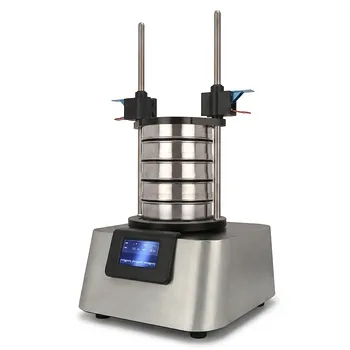
Vibratory Sieve Shaker Electromagnetic 3D Motion Powder Particle Size Analyzer for Dry and Wet Sieving
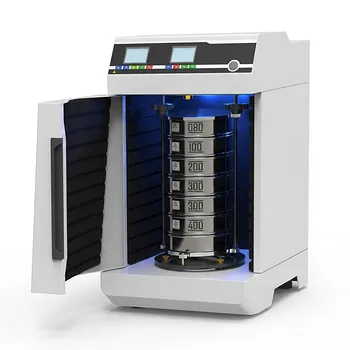
Laboratory Dry and Wet Three Dimensional Vibratory Sieve Shaker for Particle Analysis
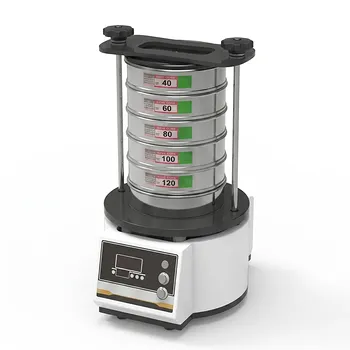
Dry Three Dimensional Vibratory Sieve Shaker
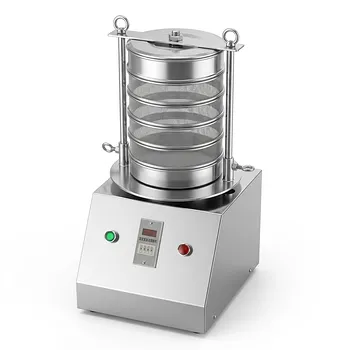
Stainless Steel Laboratory Vibratory Test Sieve Shaker
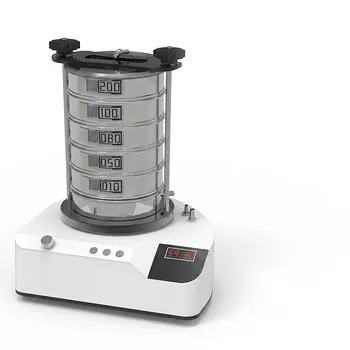
Heavy Duty Dry Three Dimensional Vibratory Sieve Shaker for Particle Separation
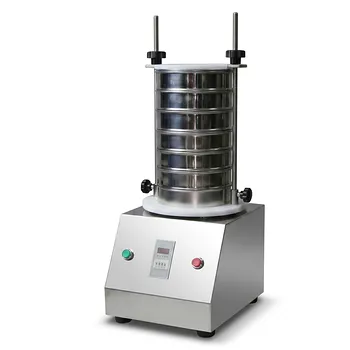
Small Laboratory Vibratory Sieve Shaker for Powder Gradation and Particle Size Analysis
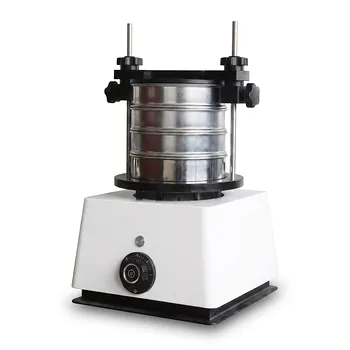
Small Laboratory Vibrating Sieve Shaker for Precise Particle Size Analysis
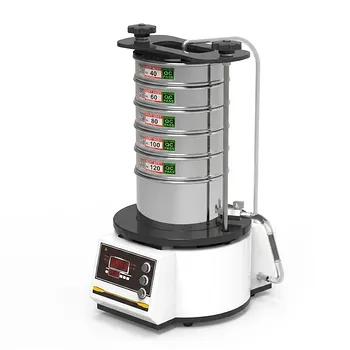
High Frequency Wet Three-Dimensional Vibrating Sieve Shaker for Dry and Wet Particle Size Analysis
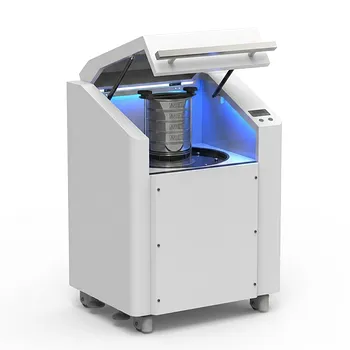
High Frequency Cabinet Type Three-Dimensional Rotary Vibrating Sieve Shaker for Dry Sieving and Particle Classification
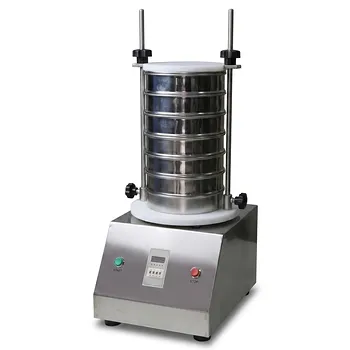
Laboratory Vibratory Test Sieve Shaker for Precision Particle Size Analysis and Powder Grading
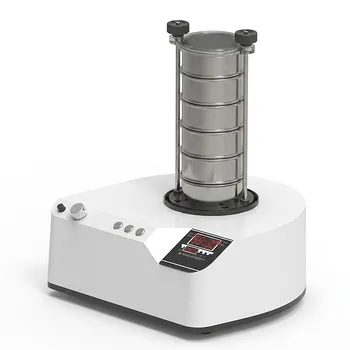
三维电磁微量振动筛分仪
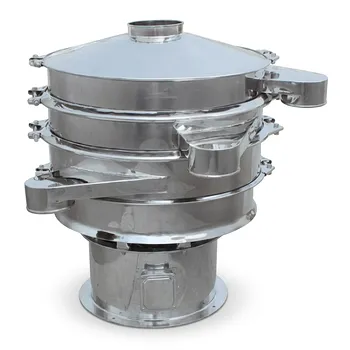
Stainless Steel Rotary Vibrating Sieve High Precision Circular Vibratory Separator Industrial Powder Grading Machine Multi Layer Sifting Equipment
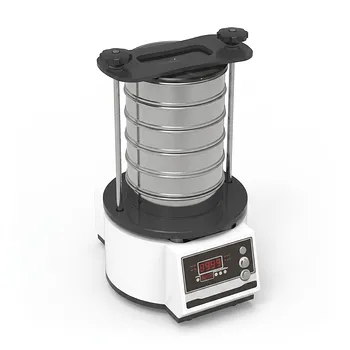
Tapping Oscillating Sieve Shaker for Dry and Wet Particle Size Analysis
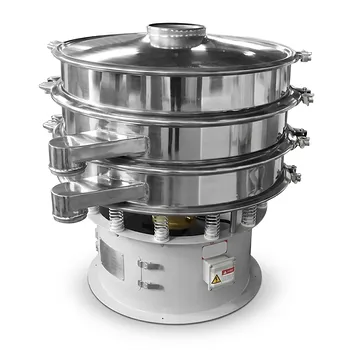
Three Dimensional Rotary Vibrating Sieve
Vibratory Superfine Grinder for Ultra Fine Laboratory Powder Milling
Small Vibrating Ultrafine Grinder for Traditional Chinese Medicine
Automatic Vibrating Powder Feeder for Laboratory Material Processing Precision Vibratory Hopper Feeder for Granular and Powder Material Handling Industrial Grade Vibrating Tray Feeder for Consistent Material Sample Preparation