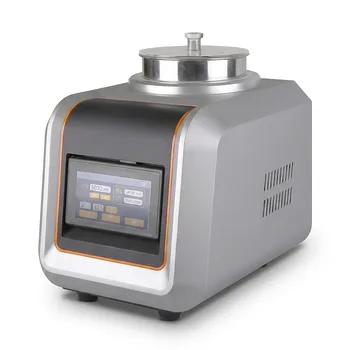
What role does a vibratory sieve shaker play in P80 assessment? Master Particle Size Analysis for Quartz & Marble
Updated 4 months ago
A vibratory sieve shaker is the definitive tool for the final classification of quartz-marble particles once they have reached grinding equilibrium. It utilizes high-frequency mechanical vibration to drive the ground material through a vertical stack of precision test sieves, enabling the exact determination of the P80 value. This value represents the aperture size through which 80% of the material passes, serving as a foundational metric for process optimization.
The vibratory sieve shaker transforms a raw ground sample into a repeatable data set by ensuring complete particle stratification across multiple mesh layers. This precise classification is essential for calculating the material work index and establishing the regression models needed to predict industrial grinding performance.
Achieving Precise P80 Determination
The Mechanics of High-Frequency Vibration
The shaker applies a consistent vibration amplitude and duration to distribute the powder sample across a series of standard mesh screens. This high-frequency motion ensures that individual particles have sufficient contact with the sieve apertures to pass through if they are smaller than the mesh size.
The process typically operates for 5 to 10 minutes until the sample mass on each sieve reaches a constant state. This automated classification provides the quantitative data required to calculate the mass percentage of each particle size fraction accurately.
Identifying the Grinding Equilibrium
In quartz-marble processing, the sieve shaker is used specifically once the material has reached a stable grinding state. This ensures that the resulting P80 measurement is a true reflection of the material's resistance to breakage under specific conditions.
By analyzing the weight of the material retained on each layer, technicians can plot an accurate grading curve. This curve is the primary source for determining the exact micron level where 80% of the cumulative mass is accounted for.
The Link Between P80 and Operational Efficiency
Calculating the Material Work Index
The P80 value derived from the vibratory sieve shaker is a critical variable in calculating the Bond Work Index. This index quantifies the energy required to reduce the quartz-marble from a specific feed size to a targeted product size.
Without the precision of a vibratory shaker, inaccuracies in the P80 value would lead to flawed energy calculations. This could result in significant industrial inefficiencies or the improper sizing of full-scale grinding equipment.
Modeling for Deterministic Regression
Data from the sieve shaker allows engineers to establish deterministic non-linear regression models. these models are used to predict how quartz-marble will behave under varying mechanical stresses and different grinding durations.
By providing a repeatable and standardized measurement of particle width, the shaker ensures that these mathematical models are grounded in empirical reality. This level of detail is vital for maintaining quality control and material consistency in large-scale production.
Understanding the Trade-offs
Mechanical Wear and Sieve Blinding
While highly effective, vibratory shakers are subject to sieve blinding, where near-sized particles become wedged in the mesh apertures. This can lead to false readings of the P80 value if the equipment is not maintained or if the sieving duration is insufficient.
Sample Size and Processing Time
There is a strict limit on the volume of material a shaker can process at one time to prevent overloading the screens. Overloading inhibits the stratification process, meaning the shaker may require multiple runs to achieve a representative analysis of a large batch of quartz-marble.
How to Apply This to Your Project
Making the Right Choice for Your Goal
To maximize the accuracy of your particle size distribution analysis, consider the following recommendations based on your specific objectives:
- If your primary focus is energy efficiency modeling: Use the shaker to identify the P80 immediately following grinding equilibrium to ensure your Work Index calculations are based on stable data.
- If your primary focus is quality control for fine powders: Optimize the vibration amplitude to ensure that particles in the 75-150 μm range are fully stratified without causing excessive mechanical wear on the mesh.
- If your primary focus is research and development: Utilize the shaker data to build non-linear regression models that correlate grinding time with specific shifts in the P80 value.
The vibratory sieve shaker remains the industry standard for bridging the gap between raw mechanical grinding and the precise mathematical modeling of material behavior.
Summary Table:
| Key Aspect | Role of Vibratory Sieve Shaker in P80 Analysis |
|---|---|
| Core Function | High-frequency mechanical stratification of ground particles |
| Primary Metric | Determination of P80 (80% cumulative passing size) |
| Process Timing | Operates for 5–10 minutes until grinding equilibrium |
| Analytical Goal | Building regression models and calculating Bond Work Index |
| Critical Success Factor | Prevents sieve blinding through optimized vibration amplitude |
Precision Lab Solutions for Material Science & Powder Processing
Accurate P80 determination is critical for industrial scaling and energy efficiency. We provide complete laboratory sample preparation solutions tailored for material science, specializing in high-performance powder processing and compaction equipment.
Our extensive product line includes:
- Sieving & Classification: Advanced vibratory and air-jet sieve shakers with a full range of precision test sieves.
- Grinding & Milling: Planetary ball mills, jet mills, and cryogenic grinders for reaching grinding equilibrium.
- Crushing: Durable jaw and roll crushers for initial material reduction.
- Sample Compaction: A full spectrum of hydraulic presses, including Cold/Warm Isostatic Presses (CIP/WIP), vacuum hot presses, and XRF pellet presses.
Whether you are refining quartz-marble processing or developing new materials, our equipment ensures repeatable data and superior quality control. Contact our technical experts today to optimize your laboratory workflow!
References
- Sebastián Pérez, Pamela Jara. Comparison of Statistical versus Stochastic Models for Work Index Determination in Quartz-Marble Mixtures. DOI: 10.37190/msc212810
Mentioned Products
- Vibratory Sieve Shaker Electromagnetic 3D Motion Powder Particle Size Analyzer for Dry and Wet Sieving
- Laboratory Dry and Wet Three Dimensional Vibratory Sieve Shaker for Particle Analysis
- Stainless Steel Laboratory Vibratory Test Sieve Shaker
- Heavy Duty Dry Three Dimensional Vibratory Sieve Shaker for Particle Separation
- Dry Three Dimensional Vibratory Sieve Shaker
People Also Ask
- How does a vibratory sieve shaker contribute to optimizing the performance of activated carbon? Enhance Adsorption Precision
- Why is a laboratory vibratory sieve shaker necessary for processing magnesium-based borate precursor powders? Boost Activity
- Why use a vibratory sieve shaker to verify coarse aggregate grading in rubberized concrete? Ensure Structural Integrity
- What function do vibratory sieve shakers and standard test sieves serve in the preparation of adsorbents? Key Guide
- What role does a vibratory sieve shaker play in the particle size analysis of ground corn products? Enhance QC Precision

Tech Team · PowderPreparation
Last updated on May 14, 2026
Related Products
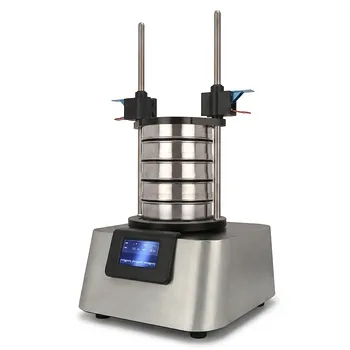
Vibratory Sieve Shaker Electromagnetic 3D Motion Powder Particle Size Analyzer for Dry and Wet Sieving
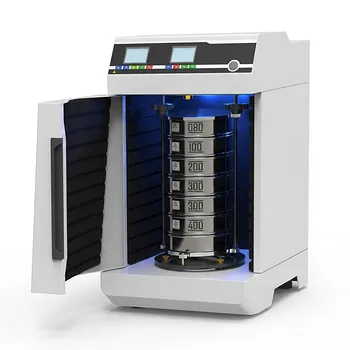
Laboratory Dry and Wet Three Dimensional Vibratory Sieve Shaker for Particle Analysis
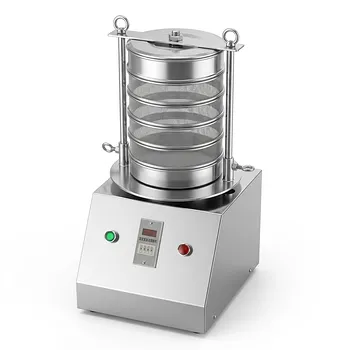
Stainless Steel Laboratory Vibratory Test Sieve Shaker

Heavy Duty Dry Three Dimensional Vibratory Sieve Shaker for Particle Separation
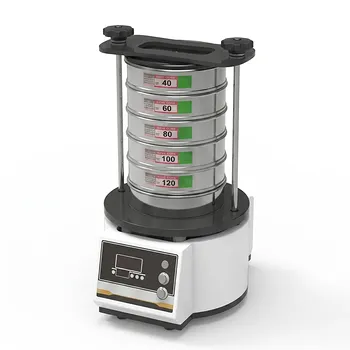
Dry Three Dimensional Vibratory Sieve Shaker
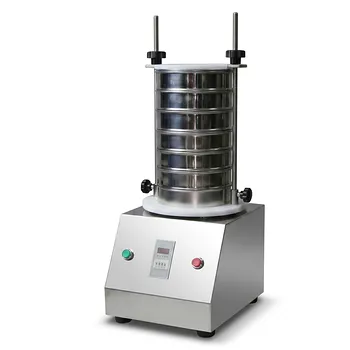
Small Laboratory Vibratory Sieve Shaker for Powder Gradation and Particle Size Analysis
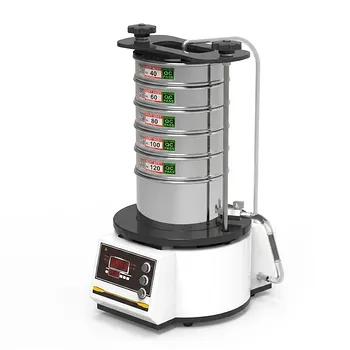
High Frequency Wet Three-Dimensional Vibrating Sieve Shaker for Dry and Wet Particle Size Analysis

Small Laboratory Vibrating Sieve Shaker for Precise Particle Size Analysis
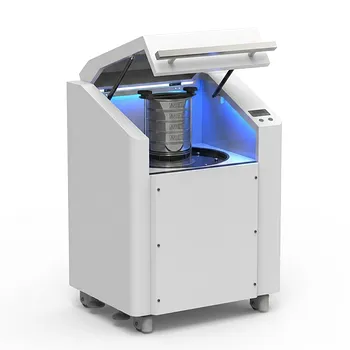
High Frequency Cabinet Type Three-Dimensional Rotary Vibrating Sieve Shaker for Dry Sieving and Particle Classification

Laboratory Vibratory Test Sieve Shaker for Precision Particle Size Analysis and Powder Grading
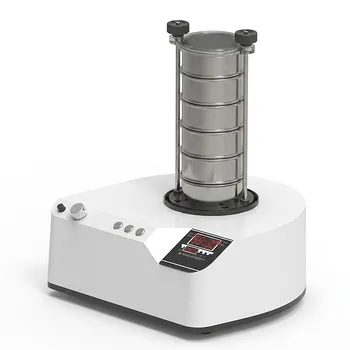
三维电磁微量振动筛分仪
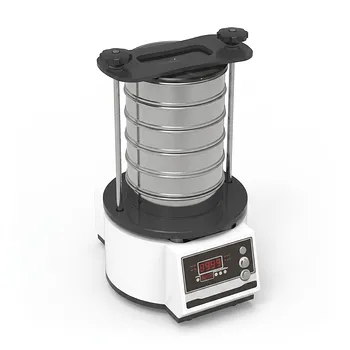
Tapping Oscillating Sieve Shaker for Dry and Wet Particle Size Analysis

Stainless Steel Rotary Vibrating Sieve High Precision Circular Vibratory Separator Industrial Powder Grading Machine Multi Layer Sifting Equipment

Three Dimensional Rotary Vibrating Sieve
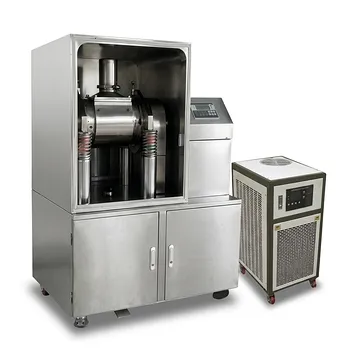
Small Vibrating Ultrafine Grinder for Traditional Chinese Medicine
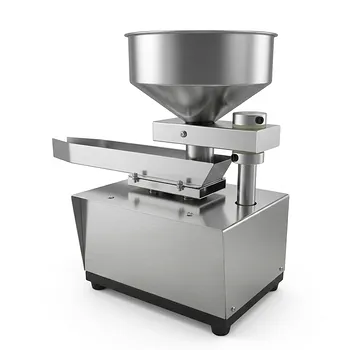
Automatic Vibrating Powder Feeder for Laboratory Material Processing Precision Vibratory Hopper Feeder for Granular and Powder Material Handling Industrial Grade Vibrating Tray Feeder for Consistent Material Sample Preparation
Vibratory Superfine Grinder for Ultra Fine Laboratory Powder Milling
Vibratory Disc Mill for Rapid Fine Grinding and High Throughput Sample Preparation of Hard and Brittle Materials