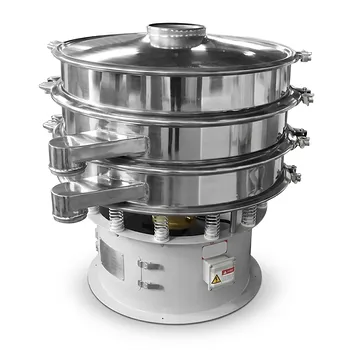
What role does a tap sieve shaker play in the rolling tumble sieving (RTS) process for alumina powder? Enhance Granule Quality
Updated 5 months ago
In the Rolling Tumble Sieving (RTS) process, the tap sieve shaker acts as a mechanical reactor that facilitates the granulation of alumina powder. By providing a composite motion of rotation and rhythmic tapping, the shaker creates a dynamic environment where raw powder and milling balls interact to form dense, regularly shaped granules.
The tap sieve shaker serves as the mechanical engine of the RTS process, transforming fine alumina powder into high-strength granules through controlled particle collision and adhesion. This automated approach ensures superior structural uniformity and repeatability compared to traditional manual sieving methods.
The Mechanics of Composite Motion in RTS
The Synergistic Effect of Rotation and Tapping
The tap sieve shaker is unique because it does not rely on simple vibration; instead, it provides a composite movement. The rotation ensures the alumina powder and milling balls are in constant motion, while the tapping action provides the necessary impact energy to drive the granulation process.
Creating a Granulation Environment
Within the sieve, this mechanical force facilitates particle collision and adhesion. As the raw alumina powder rolls and interacts with the milling balls, the particles begin to layer and compact, essentially building the granules from the ground up through a "rolling" action.
Standardizing Mechanical Force
Unlike manual methods, a mechanical shaker provides a standardized frequency and force. This consistency is vital for ensuring that every batch of alumina powder is subjected to the same energy levels, leading to a predictable and reliable output.
Transforming Powder into High-Performance Granules
Enhancing Mechanical Strength
One of the primary roles of the tap sieve shaker in RTS is to produce granules with higher mechanical strength. The repeated tapping and rolling compress the powder more effectively than manual methods, resulting in granules that can withstand subsequent handling and processing without breaking down.
Achieving Regular Particle Shapes
The rolling action inherent in the RTS process encourages the formation of regular, spherical shapes. This is a significant improvement over the irregular clusters often formed during manual sieving, which can lead to poor flowability and uneven packing in ceramic molds.
Impact on Downstream Processing
By producing uniform granules, the tap sieve shaker indirectly optimizes the flowability and packing uniformity of the powder. This is a critical prerequisite for producing defect-free alumina ceramic green bodies, as it ensures the mold is filled consistently.
Understanding the Trade-offs
Mechanical Wear and Equipment Fatigue
The constant tapping and high-impact nature of the RTS process can lead to significant wear and tear on the sieves. Because the process often involves milling balls to facilitate granulation, the mesh and the shaker's mechanical components require regular inspection to prevent contamination or equipment failure.
Risk of Over-Granulation
If the duration or intensity of the shaking is not carefully controlled, there is a risk of over-granulation. This can result in granules that are too large or too dense, which may not melt or bond correctly during high-temperature treatments like plasma spheroidization or sintering.
Energy Consumption vs. Precision
While the tap sieve shaker is highly effective for granulation, it is often more energy-intensive than simple vibratory shakers used for basic grading. Users must balance the need for the superior granule quality provided by RTS against the higher operational costs and noise levels associated with tapping mechanisms.
How to Apply This to Your Alumina Processing
To achieve the best results with alumina powder, your use of a tap sieve shaker should be aligned with your specific production requirements.
- If your primary focus is improving ceramic density: Utilize the RTS process with a tap sieve shaker to produce high-strength, spherical granules that will pack uniformly during mold filling.
- If your primary focus is precision particle grading: Consider using a standard vibratory sieve shaker for initial sizing to isolate specific fractions (e.g., smaller than 25 microns) before moving to the granulation or treatment stage.
- If your primary focus is process repeatability: Transition from manual sieving to an automated tap shaker to eliminate human error and ensure that every batch meets the same morphological standards.
By mastering the mechanical role of the tap sieve shaker, you can transform raw alumina powder into a high-performance material ready for advanced ceramic manufacturing.
Summary Table:
| Key Feature | Function in RTS Process | Benefit for Alumina Powder |
|---|---|---|
| Composite Motion | Combines rotation with rhythmic tapping | Drives particle collision and adhesion |
| Standardized Force | Maintains consistent mechanical energy | Ensures batch-to-batch repeatability |
| Rolling Action | Facilitates particle layering and growth | Produces regular, spherical granule shapes |
| Mechanical Impact | Compresses powder against milling balls | Increases mechanical strength of granules |
| Automated Control | Replaces manual sieving methods | Eliminates human error and enhances safety |
Elevate Your Powder Processing Precision
Achieving the perfect granule morphology is critical for high-performance ceramics. We provide complete laboratory sample preparation solutions for material science, specializing in advanced powder processing and compaction equipment.
From refining raw materials with our planetary ball mills, jet mills, and cryogenic grinders to achieving perfect particle distribution with our vibratory and air-jet sieve shakers, we support every step of your workflow. Our expertise extends to final compaction, offering a full spectrum of hydraulic presses, including Cold/Warm Isostatic Presses (CIP/WIP), vacuum hot presses, and XRF pellet presses, to ensure your materials reach maximum density and uniformity.
Ready to optimize your alumina granulation or ceramic production?
Contact our technical team today to find the ideal equipment configuration for your laboratory needs.
References
- Naoki Kondo, Mikinori Hotta. Preparation and characterization of alumina granules via tumbling and agitation granulation. DOI: 10.2109/jcersj2.25139
Mentioned Products
- Tapping Oscillating Sieve Shaker for Dry and Wet Particle Size Analysis
- Stainless Steel Laboratory Vibratory Test Sieve Shaker
- Small Laboratory Vibrating Sieve Shaker for Precise Particle Size Analysis
- Vibratory Sieve Shaker Electromagnetic 3D Motion Powder Particle Size Analyzer for Dry and Wet Sieving
- Small Laboratory Vibratory Sieve Shaker for Powder Gradation and Particle Size Analysis
People Also Ask
- Why is a sieve shaker with a tapping function used for hard materials? Prevent blinding and ensure precision analysis.
- Why is a standard sieve shaker essential for CBA powders in geopolymers? Enhance Reactivity & Material Strength
- Why are standard metal sieves and sieve shakers necessary for 5-aminotetrazole mixtures? Optimize Thermal & Kinetic Data
- How do high-precision sieve shakers and powder mixers facilitate material circularity in metal PBF? Optimize AM Cycles
- Why Use Sieve Shakers for Gangue Slurry Experiments? Optimize Particle Grading for Superior Results

Tech Team · PowderPreparation
Last updated on May 14, 2026
Related Products
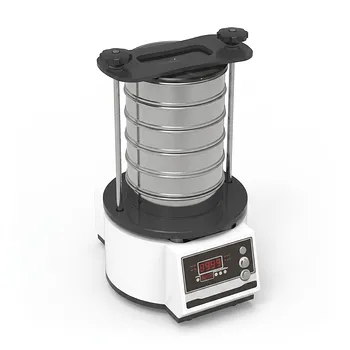
Tapping Oscillating Sieve Shaker for Dry and Wet Particle Size Analysis
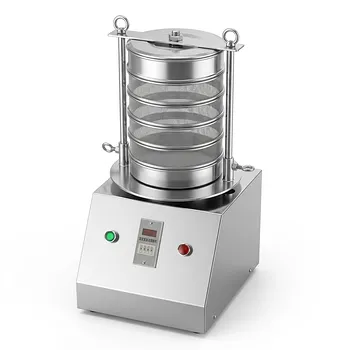
Stainless Steel Laboratory Vibratory Test Sieve Shaker
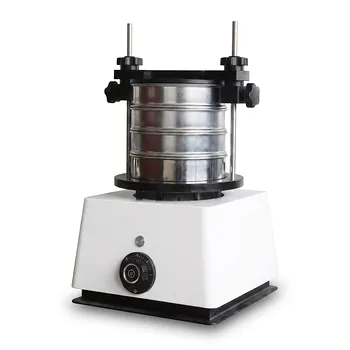
Small Laboratory Vibrating Sieve Shaker for Precise Particle Size Analysis
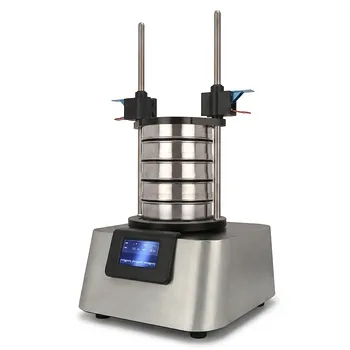
Vibratory Sieve Shaker Electromagnetic 3D Motion Powder Particle Size Analyzer for Dry and Wet Sieving
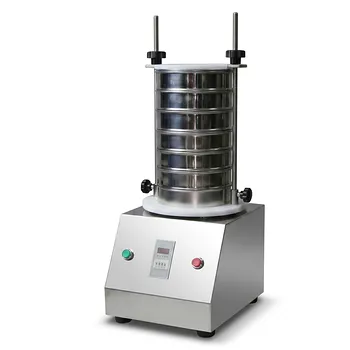
Small Laboratory Vibratory Sieve Shaker for Powder Gradation and Particle Size Analysis
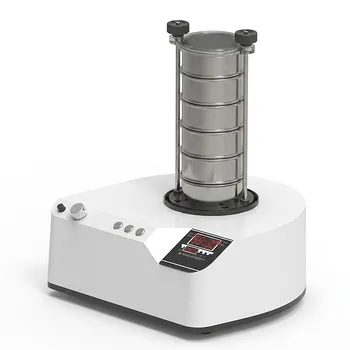
三维电磁微量振动筛分仪

Laboratory Vibratory Test Sieve Shaker for Precision Particle Size Analysis and Powder Grading
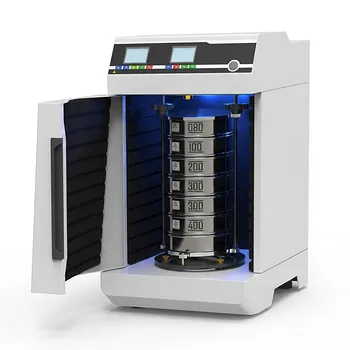
Laboratory Dry and Wet Three Dimensional Vibratory Sieve Shaker for Particle Analysis

Dry Three Dimensional Vibratory Sieve Shaker

Heavy Duty Dry Three Dimensional Vibratory Sieve Shaker for Particle Separation
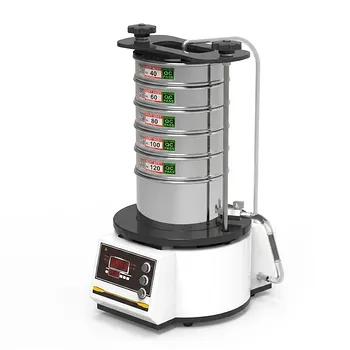
High Frequency Wet Three-Dimensional Vibrating Sieve Shaker for Dry and Wet Particle Size Analysis
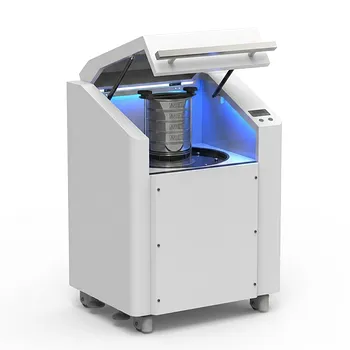
High Frequency Cabinet Type Three-Dimensional Rotary Vibrating Sieve Shaker for Dry Sieving and Particle Classification

Stainless Steel Rotary Vibrating Sieve High Precision Circular Vibratory Separator Industrial Powder Grading Machine Multi Layer Sifting Equipment
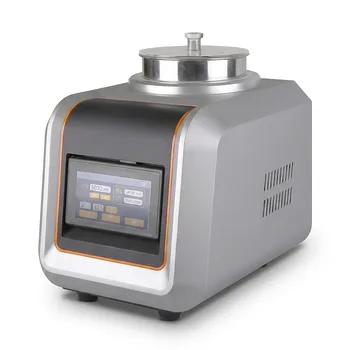
Laboratory Air Jet Sieving Machine for Fine Powder Particle Size Analysis and Deagglomeration