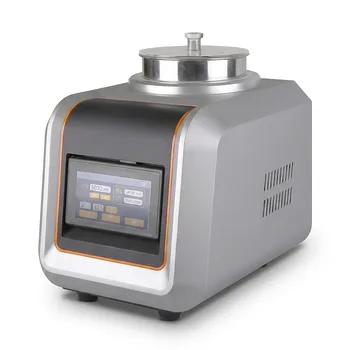
Why is a sieve shaker with a tapping function used for hard materials? Prevent blinding and ensure precision analysis.
Updated 4 months ago
The integration of a tapping mechanism into a sieve shaker is essential for hard and abrasive materials because it prevents mesh "blinding." By combining horizontal circular motion with vertical mechanical impacts, the shaker ensures that sharp, high-hardness particles do not become lodged in the sieve apertures. This dual-action approach maintains the accuracy of particle size distribution data across the 0–2000 μm range.
To achieve reliable particle size analysis for abrasive materials like White Fused Alumina, standard vibration is often insufficient. The tapping function provides the necessary energy to clear clogged apertures and stratify particles, ensuring that every grain has the opportunity to pass through the correct mesh size.
Overcoming the Limitations of Pure Vibration
The Mechanics of the Tapping Action
A tap-type sieve shaker utilizes a unique combination of horizontal circular motion and vertical impact at a fixed frequency. While the horizontal motion moves particles across the sieve surface, the vertical "tap" provides a mechanical shock that dislodges particles trapped in the mesh.
Managing High-Hardness and Abrasive Characteristics
Materials like White Fused Alumina or Mullite are extremely hard and often have irregular, sharp geometries. These particles are prone to "bridging" or jamming within the sieve openings, a problem that traditional vibratory shakers cannot always solve.
Stratification of Dense and Irregular Loads
The tapping motion aids in the stratification of the material bed, ensuring that finer particles migrate toward the bottom of the sample layer. This movement allows the particles to engage with the mesh openings more frequently, which is critical for obtaining precise grain size composition data.
Ensuring Data Integrity and Process Efficiency
Eliminating Mesh Blinding and Clogging
Mesh blinding occurs when particles slightly larger than the aperture become wedged in the screen, effectively reducing the available sieving area. The periodic tapping force clears these obstructions instantly, allowing the analysis to continue without interruption or manual cleaning.
Reducing Analysis Time and Human Error
Compared to manual sieving, mechanical tapping shakers provide a constant and controllable power output. This ensures that the classification process is repeatable and independent of the operator, significantly improving experimental efficiency and data consistency.
Protecting Lightweight and Fragile Fractions
For materials that may also contain lightweight or irregularly shaped components, such as expanded perlite, tapping provides the energy needed for passage without the need for prolonged vibration cycles. This shorter processing time helps prevent the physical degradation of fragile particles during the test.
Understanding the Trade-offs
Mechanical Wear and Noise
The primary drawback of tapping sieve shakers is the noise level generated by the mechanical impact mechanism, which is significantly higher than that of electromagnetic vibratory shakers. Additionally, the constant mechanical shock can lead to faster wear on the sieve frames and the machine's internal components over time.
Potential for Particle Attrition
While effective for hard materials, the vertical impact may be too aggressive for very soft or highly friable materials. In these cases, the tapping force could cause particle attrition, where the particles break down into smaller fragments during the test, leading to skewed results that suggest a finer distribution than actually exists.
How to Apply This to Your Project
Selecting the Right Equipment
Choosing the correct sieving method depends entirely on the physical characteristics of your sample and your requirements for data repeatability.
- If your primary focus is High-Hardness Materials (e.g., Alumina): Use a shaker with both horizontal motion and a tapping function to ensure apertures remain clear throughout the cycle.
- If your primary focus is Lightweight or Irregular Particles: Utilize a vibratory shaker with a tapping mechanism to provide the extra energy needed to force "low-mass" particles through the mesh.
- If your primary focus is Noise Reduction in a Lab: Consider an electromagnetic shaker with high-amplitude vertical vibration, though be aware it may be less effective at clearing blinded meshes than a mechanical tapper.
- If your primary focus is Soil Aggregate Research: Use a mechanical tapping shaker to simulate the specific mechanical frequencies required for standardized soil grading and breakdown.
The addition of a tapping function transforms the sieving process from a simple vibration into a dynamic classification system capable of handling the most challenging industrial materials.
Summary Table:
| Feature | Tapping Function Impact | Benefit for Abrasive Materials |
|---|---|---|
| Mechanism | Dual-action (Horizontal + Vertical Impact) | Clears particles lodged in mesh (blinding) |
| Stratification | High-energy mechanical shock | Forces fine particles through dense material beds |
| Repeatability | Constant, controllable power output | Eliminates human error and improves data consistency |
| Efficiency | Faster particle passage | Significantly reduces analysis time for irregular grains |
| Best Used For | Materials like Alumina and Mullite | Maintains mesh integrity for 0–2000 μm range |
Optimize Your Sample Preparation with Laboratory Precision
Accurate particle size analysis starts with the right equipment. At [Your Brand Name], we provide complete laboratory sample preparation solutions tailored for material science. Whether you are dealing with abrasive powders or require high-pressure compaction, our specialized equipment ensures consistency and reliability.
Our extensive product line includes:
- Sieve Shakers & Meshes: Vibratory and air-jet shakers, including mechanical tapping models and high-quality test sieves.
- Powder Processing: Advanced mills (planetary ball, jet, rotor), crushers (jaw/roll), and cryogenic grinders.
- Mixing Solutions: High-performance powder mixers and vacuum defoaming mixers.
- Hydraulic Presses: A full spectrum of Cold/Warm Isostatic Presses (CIP/WIP), XRF pellet presses, and vacuum hot presses.
Ready to enhance your lab's efficiency? Contact us today to discuss how our powder processing and compaction equipment can meet your specific project requirements.
References
- László Tamás, Ádám Rácz. Material Bed Compression Experiments and the Examination of the Bulk Density of the Product. DOI: 10.33030/geosciences.2022.15.110
Mentioned Products
- Tapping Oscillating Sieve Shaker for Dry and Wet Particle Size Analysis
- Small Laboratory Vibrating Sieve Shaker for Precise Particle Size Analysis
- Vibratory Sieve Shaker Electromagnetic 3D Motion Powder Particle Size Analyzer for Dry and Wet Sieving
- Stainless Steel Laboratory Vibratory Test Sieve Shaker
- Small Laboratory Vibratory Sieve Shaker for Powder Gradation and Particle Size Analysis
People Also Ask
- What role does a tap sieve shaker play in the rolling tumble sieving (RTS) process for alumina powder? Enhance Granule Quality
- Why is a standard sieve shaker essential for CBA powders in geopolymers? Enhance Reactivity & Material Strength
- Why are standard metal sieves and sieve shakers necessary for 5-aminotetrazole mixtures? Optimize Thermal & Kinetic Data
- How do high-precision sieve shakers and powder mixers facilitate material circularity in metal PBF? Optimize AM Cycles
- Why Use Sieve Shakers for Gangue Slurry Experiments? Optimize Particle Grading for Superior Results

Tech Team · PowderPreparation
Last updated on Jun 03, 2026
Related Products
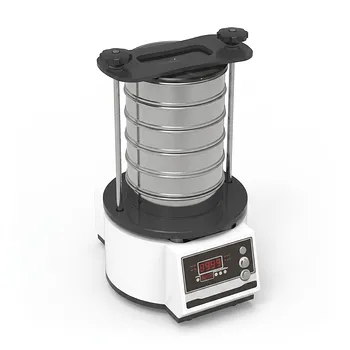
Tapping Oscillating Sieve Shaker for Dry and Wet Particle Size Analysis

Small Laboratory Vibrating Sieve Shaker for Precise Particle Size Analysis
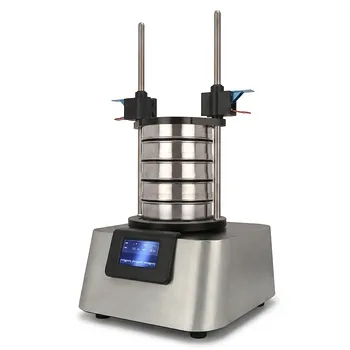
Vibratory Sieve Shaker Electromagnetic 3D Motion Powder Particle Size Analyzer for Dry and Wet Sieving
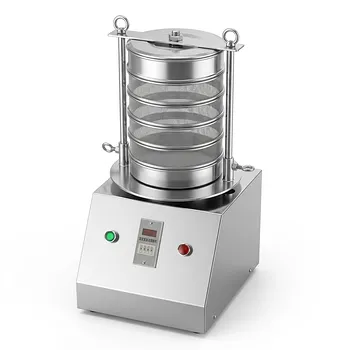
Stainless Steel Laboratory Vibratory Test Sieve Shaker
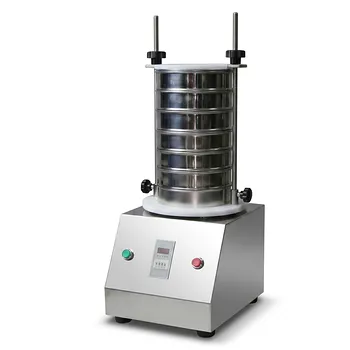
Small Laboratory Vibratory Sieve Shaker for Powder Gradation and Particle Size Analysis
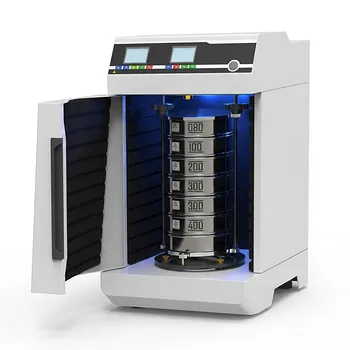
Laboratory Dry and Wet Three Dimensional Vibratory Sieve Shaker for Particle Analysis
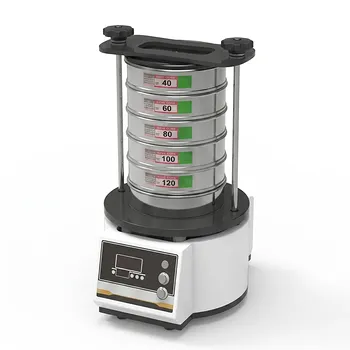
Dry Three Dimensional Vibratory Sieve Shaker

Laboratory Vibratory Test Sieve Shaker for Precision Particle Size Analysis and Powder Grading

Heavy Duty Dry Three Dimensional Vibratory Sieve Shaker for Particle Separation
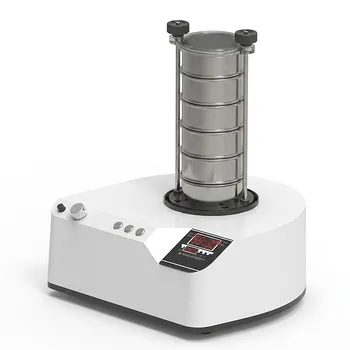
三维电磁微量振动筛分仪
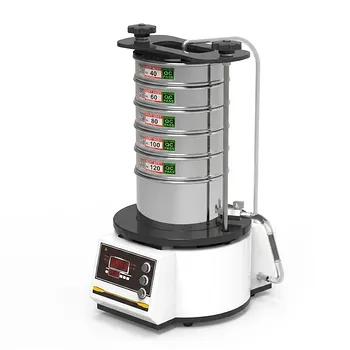
High Frequency Wet Three-Dimensional Vibrating Sieve Shaker for Dry and Wet Particle Size Analysis
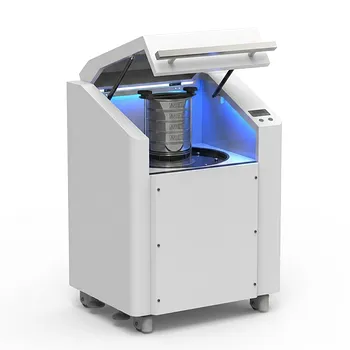
High Frequency Cabinet Type Three-Dimensional Rotary Vibrating Sieve Shaker for Dry Sieving and Particle Classification

Stainless Steel Rotary Vibrating Sieve High Precision Circular Vibratory Separator Industrial Powder Grading Machine Multi Layer Sifting Equipment

Three Dimensional Rotary Vibrating Sieve