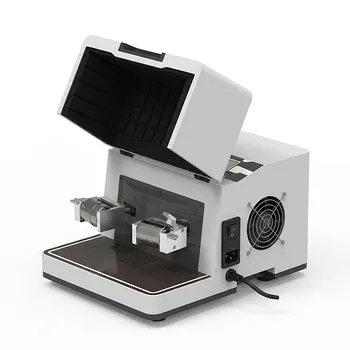
What role does a planetary ball mill play in the solid-state reaction of rare-earth doped BFO ceramic targets? Key Insights
Updated 5 months ago
In the synthesis of rare-earth doped bismuth ferrite (Bismuth Ferrite, BFO) ceramic targets, the planetary ball mill serves as the primary driver for homogenization and mechanical activation. By utilizing high-speed centrifugal and impact forces, the mill refines raw oxide powders into a highly uniform, microscopic mixture. This process ensures that bismuth, iron, and rare-earth oxides are in intimate contact at the atomic level, which is critical for forming a pure phase during subsequent high-temperature reactions.
The planetary ball mill is the fundamental tool for overcoming the physical limitations of solid-state diffusion. By maximizing surface area and ensuring stoichiometric uniformity, it transforms raw oxides into a reactive precursor that allows for successful rare-earth lattice substitution and high-density target fabrication.
Achieving Atomic-Level Homogeneity
Overcoming Multi-Component Diffusion Barriers
Solid-state reactions rely on the physical contact between different oxide powders, such as bismuth oxide, iron oxide, and various rare-earth dopants. Planetary ball milling ensures that these multi-component materials are distributed uniformly throughout the mixture rather than remaining in isolated clusters.
This deep mixing prevents the formation of secondary phases or "pockets" of unreacted material during calcination. Without this degree of homogeneity, the resulting BFO ceramic would suffer from chemical imbalances and inconsistent electromagnetic properties.
The Role of Surface Area in Reaction Kinetics
High-speed rotation generates significant energy that physically crushes particles, drastically increasing the specific surface area of the raw powders. This refinement reduces the diffusion distance that ions must travel to react with one another.
Smaller particle sizes translate to higher chemical reactivity, allowing the solid-state reaction to proceed more efficiently. This provides the optimal kinetic conditions required for the raw materials to transform into the desired ceramic phase.
Mechanical Activation and Lattice Substitution
Promoting Rare-Earth Ion Incorporation
Rare-earth dopants, such as Holmium or Cerium, must be integrated into the BFO crystal lattice to modify its properties. The high-energy shear forces produced by a planetary ball mill provide mechanical activation that encourages these ions to occupy specific lattice sites.
For high-concentration doping, this mechanical energy is essential for promoting a complete solid solution reaction. This ensures that the rare-earth elements are not merely sitting at the grain boundaries but are chemically bonded within the perovskite structure.
Reducing Synthesis Temperature Requirements
By providing mechanical energy upfront, the milling process reduces the thermal energy required during the subsequent calcination stage. The increased reaction activity of the refined particles allows the formation of the BFO phase at lower temperatures.
This is particularly important for bismuth-based ceramics, as bismuth oxide is highly volatile. Lowering the reaction temperature helps maintain the stoichiometric balance by minimizing bismuth loss through evaporation.
Understanding the Trade-offs
Risk of Media Contamination
The high-energy environment required to refine powders can lead to the wear and tear of the grinding media (such as zirconia balls) and the mill jar. These microscopic fragments can introduce impurities into the BFO target, potentially degrading its ferroelectric performance.
Over-Milling and Amorphization
While refinement is beneficial, excessive milling can lead to the unwanted amorphization of the powders or the accumulation of excessive internal strain. If the milling duration is not carefully controlled, it can negatively impact the grain growth and density of the final ceramic target.
Thermal Management During Milling
The friction and impact within a planetary ball mill generate significant heat, which can cause certain oxides to clump or even react prematurely. Using a wet mixing process with a solvent like ethanol is often necessary to dissipate heat and ensure a finer, more uniform slurry.
Optimizing the Milling Process for BFO Targets
Making the Right Choice for Your Goal
- If your primary focus is Phase Purity: Ensure long-duration, high-speed milling to achieve an atomic-level distribution that prevents the formation of secondary impurity phases.
- If your primary focus is High-Concentration Doping: Utilize high-energy mechanical activation to force larger rare-earth ions into the bismuth ferrite lattice sites.
- If your primary focus is Target Density: Focus on maximizing particle size refinement during milling to create a high-surface-area precursor that facilitates rapid densification during sintering.
Mastering the planetary ball milling stage is the most critical step in ensuring the chemical and structural integrity of advanced rare-earth doped BFO ceramic targets.
Summary Table:
| Key Role | Impact on BFO Synthesis |
|---|---|
| Homogenization | Ensures atomic-level mixing to prevent secondary phases and chemical imbalances. |
| Surface Area Increase | Refines particles to boost reaction kinetics and ionic diffusion. |
| Mechanical Activation | Provides energy for successful rare-earth ion substitution into the crystal lattice. |
| Thermal Management | Lowers required calcination temperatures, minimizing volatile bismuth loss. |
Achieve Superior Phase Purity in Your Advanced Material Research
Producing high-quality rare-earth doped BFO ceramic targets requires precision at every stage—from initial homogenization to final compaction. At Laboratory Sample Preparation Solutions, we specialize in providing material scientists with the high-performance equipment needed for complex powder processing and high-density target fabrication.
Our extensive product line is engineered to meet the rigorous demands of solid-state synthesis:
- Advanced Milling: Planetary ball mills, jet mills, and cryogenic grinders for ultra-fine particle refinement.
- Precision Mixing: Powder and defoaming mixers to ensure chemical uniformity.
- High-Pressure Compaction: A full spectrum of hydraulic presses, including Cold/Warm Isostatic Presses (CIP/WIP), vacuum hot presses, and XRF pellet presses.
Whether you are optimizing lattice substitution or seeking to improve target density, our expert solutions help you overcome diffusion barriers and enhance reaction kinetics. Contact us today to find the perfect equipment for your lab!
References
- Ming‐Wei Chu, Wei Sea Chang. Coupled Ferroelectric–Photoelectrochemical in Water Reduction Over BiFeO <sub>3</sub> Thin Film Heterostructure Modulated by Rare‐Earth Doping. DOI: 10.1002/adfm.202516031
Mentioned Products
- Planetary Ball Mill 12L
- 8L Planetary Ball Mill for Laboratory Grinding and Sample Preparation
- Horizontal Light Duty Planetary Ball Mill for Laboratory Sample Preparation
- Vertical Square Planetary Ball Mill for Laboratory Sample Preparation and Nanoscale Grinding
- Miniature Planetary Ball Mill with Vacuum Grinding and High Efficiency for Laboratory Sample Preparation
People Also Ask
- What is the core function of a planetary ball mill in Mn3AlC synthesis? Master Mechanical Activation for Magnetic Powders
- What is the role of a planetary ball mill in MCP powder preparation? Optimize Reactivity & 3D Printing Performance
- Why is an industrial-grade planetary ball mill used for precursor treatment? Optimize Cation Disorder in ZnSiP2 Anodes
- What is the function of a planetary ball mill in Cu-ODS? Essential for Mechanical Alloying & Nano-Oxide Dispersion
- Why is a planetary ball mill required for the preparation of AZ91D-Ni-GNPs composite powders? High-Energy Alloying Guide

Tech Team · PowderPreparation
Last updated on May 14, 2026
Related Products
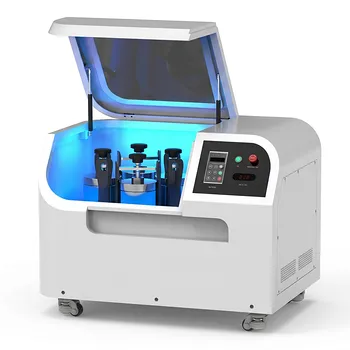
Planetary Ball Mill 12L

8L Planetary Ball Mill for Laboratory Grinding and Sample Preparation
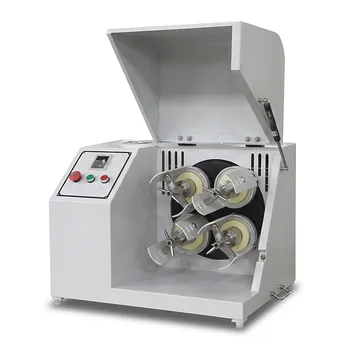
Horizontal Light Duty Planetary Ball Mill for Laboratory Sample Preparation
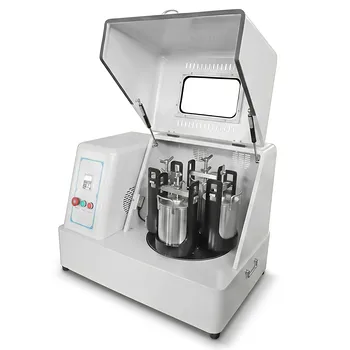
Vertical Square Planetary Ball Mill for Laboratory Sample Preparation and Nanoscale Grinding
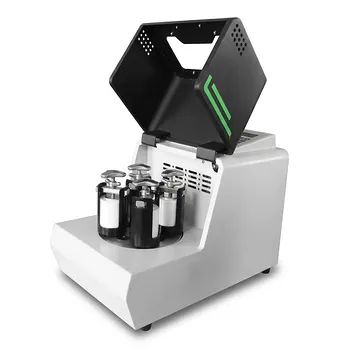
Miniature Planetary Ball Mill with Vacuum Grinding and High Efficiency for Laboratory Sample Preparation
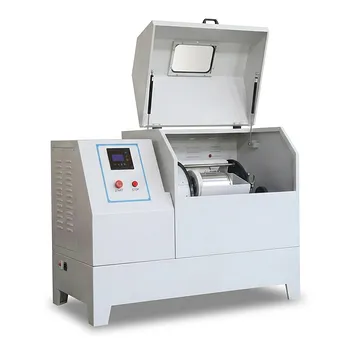
Heavy Duty Horizontal Planetary Ball Mill for Efficient Industrial Grinding and Sample Preparation
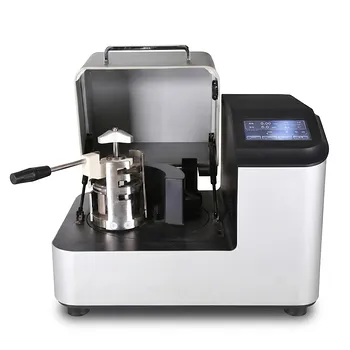
High Energy Laboratory Planetary Ball Mill for Nano Grinding and Material Science Sample Preparation
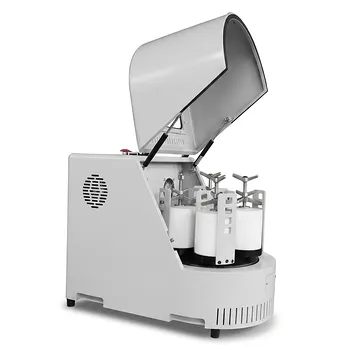
Vertical Semi Circular Planetary Ball Mill for Laboratory Precision Grinding
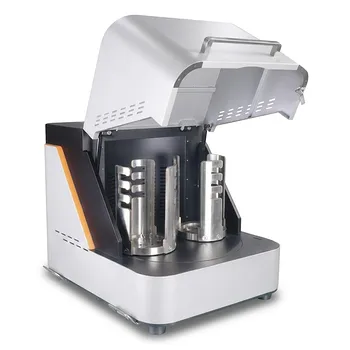
High Energy Laboratory Planetary Ball Mill for Nano Grinding and Colloidal Mixing of Hard and Brittle Materials
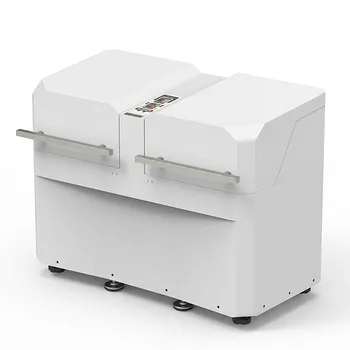
Dual Station Planetary Ball Mill 24L
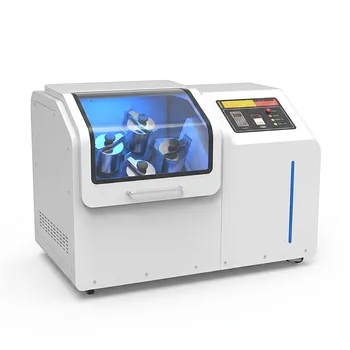
High Energy Omnidirectional Planetary Ball Mill 16L
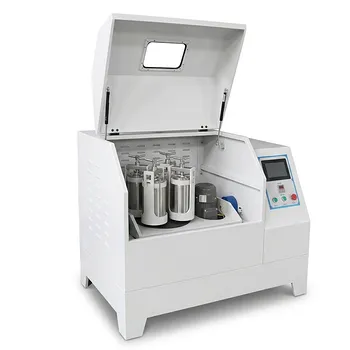
360° Rotating Omnidirectional Laboratory Planetary Ball Mill for Homogeneous Ultra-Fine Grinding and Mixing
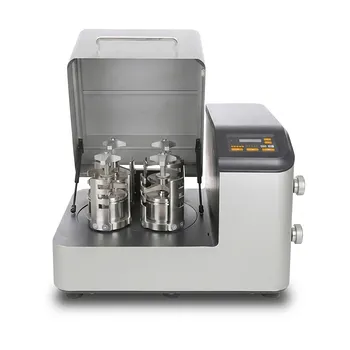
High Energy Planetary Ball Mill for Nano Scale Grinding and Colloidal Mixing in Material Science Research
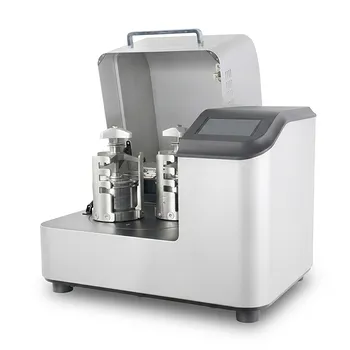
High Energy Planetary Ball Mill for Nano Scale Grinding and Mechanical Alloying
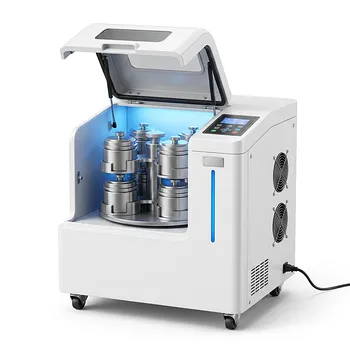
High Energy Omnidirectional Planetary Ball Mill 20L
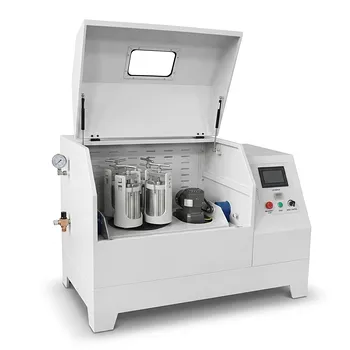
Vertical Production Planetary Ball Mill for High Throughput Powder Processing
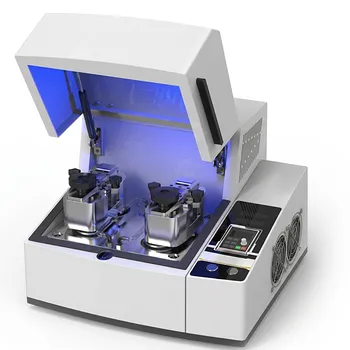
Laboratory Nano High Energy Ball Mill Ultrafine Grinding Mechanical Alloying

Nano High Energy Vibratory Ball Mill for Laboratory Sample Preparation
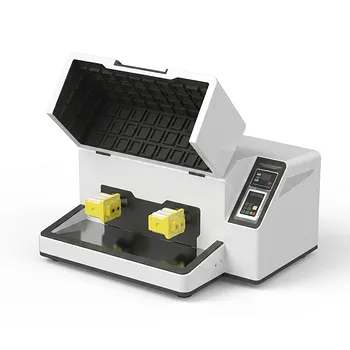
Multi-Platform Nanoscale High-Energy Vibratory Ball Mill