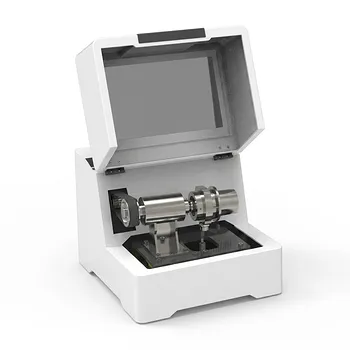
What role does a planetary ball mill play in lead-zinc slag XRD sample preparation? Ensure High-Precision Analysis
Updated 3 months ago
The planetary ball mill is the definitive tool for micronization, reducing lead-zinc metallurgical slag to ultra-fine powders smaller than 63 microns. This process is essential because it ensures sample homogeneity and eliminates the scattering effects that large particles exert on analytical radiation, thereby securing the accuracy of characterization results.
In sample preparation, the planetary ball mill transforms heterogeneous slag into a standardized, ultra-fine powder. This physical transformation is the prerequisite for reliable phase identification in XRD and precise elemental quantification in chemical analysis.
Achieving Analytical Precision through Micronization
Eliminating Particle Size Effects in XRD
X-ray diffraction requires a randomly oriented, fine-grained powder to produce accurate diffraction patterns. By pulverizing slag into particles smaller than 63 microns, the planetary ball mill prevents large grains from causing "preferred orientation" or intense scattering.
This level of fineness ensures that the X-ray beam interacts with a representative number of crystal planes. Without this step, the resulting XRD peaks would be distorted, leading to incorrect phase identification of the lead-zinc minerals.
Ensuring Chemical Homogeneity
Chemical analysis requires a sample that is perfectly representative of the bulk material. The high-speed rotation of the mill creates intense impact energy and friction, which thoroughly mixes the slag components at a near-molecular level.
This homogenization eliminates "nugget effects" where certain elements might be concentrated in specific large grains. Consequently, any sub-sample taken for analysis will accurately reflect the total elemental composition of the slag.
Enhancing Material Reactivity and Purity
Increasing Surface Area for Chemical Attack
Many chemical analysis methods, such as acid digestion, rely on the solubility of the sample. The mill significantly increases the specific surface area of the slag by breaking it down into micron-level powders.
This increased surface area maximizes the contact points for chemical reagents, speeding up reaction times and ensuring complete dissolution. This is particularly important for slag, which can often be chemically inert or trapped within glassy matrices.
Maintaining Sample Purity
To achieve high-purity samples for geochemical analysis, planetary ball mills allow for the use of specialized grinding jars and balls (such as tungsten carbide or zirconia). These materials are chosen to minimize the introduction of metal impurities.
By selecting the correct grinding media, researchers can prevent cross-contamination that would otherwise skew the results of trace element detection. This ensures that the lead and zinc concentrations measured are inherent to the slag and not a byproduct of the equipment.
Understanding the Trade-offs
The Risk of Excessive Heat
High-energy milling generates significant thermal energy, which can potentially alter the sample's state. In some metallurgical slags, excessive heat may cause amorphous phases to crystallize or volatile elements to be lost, potentially skewing XRD results.
Contamination vs. Durability
While harder grinding media prevent wear, they can be brittle or prohibitively expensive. Users must balance the need for extreme purity with the mechanical limitations and costs of specialized materials like agate or sintered corundum.
How to Apply This to Your Project
To ensure your lead-zinc slag preparation meets the highest analytical standards, tailor your milling strategy to your specific data requirements.
- If your primary focus is Phase Identification (XRD): Prioritize reaching a particle size of <63 microns to ensure a smooth, reproducible diffraction pattern and avoid intensity fluctuations.
- If your primary focus is Elemental Quantification (XRF/ICP): Focus on homogenization and the use of contamination-free grinding media to ensure the measured chemical signature is truly representative of the bulk slag.
- If your primary focus is Reactivity or Recovery Studies: Utilize longer milling times to maximize specific surface area and promote the monomeric liberation of valuable metals from the inert slag matrix.
The planetary ball mill is not merely a grinder, but a precision instrument that bridges the gap between raw metallurgical waste and high-fidelity analytical data.
Summary Table:
| Process Function | Impact on Analysis | Primary Technical Goal |
|---|---|---|
| Micronization (<63μm) | Eliminates peak distortion and scattering | Precise XRD phase identification |
| Homogenization | Prevents "nugget effects" in samples | Reliable elemental quantification |
| Surface Expansion | Maximizes contact for chemical reagents | Faster and complete acid digestion |
| Purity Control | Prevents cross-contamination via media choice | High-fidelity trace element detection |
Optimize Your Metallurgical Research with Precision Preparation
Achieve the ultimate accuracy in lead-zinc slag characterization by choosing the right sample preparation tools. Contact us today to discuss your specific application and receive a tailored equipment recommendation!
We provide complete laboratory sample preparation solutions for material science, specializing in advanced powder processing and compaction equipment. Our extensive product lines include:
- Milling & Grinding: High-energy planetary ball mills, jet mills, crushers (jaw/roll), and liquid nitrogen cryogenic grinders.
- Sieving & Mixing: Vibratory/air-jet sieve shakers and high-efficiency powder or defoaming mixers.
- Compaction Solutions: A full spectrum of hydraulic presses, including Cold/Warm Isostatic Presses (CIP/WIP), XRF pellet presses, and vacuum hot presses.
Let our expertise in material processing enhance your lab's efficiency and data reliability.
References
- Dragan Radulović, Branislav Ivošević. Reapplication Potential of Historic Pb–Zn Slag with Regard to Zero Waste Principles. DOI: 10.3390/su16020720
Mentioned Products
- Vertical Semi Circular Planetary Ball Mill for Laboratory Precision Grinding
- High Energy Planetary Ball Mill for Nano Scale Grinding and Mechanical Alloying
- Vertical Production Planetary Ball Mill for High Throughput Powder Processing
- Heavy Duty Horizontal Planetary Ball Mill for Efficient Industrial Grinding and Sample Preparation
- 360° Rotating Omnidirectional Laboratory Planetary Ball Mill for Homogeneous Ultra-Fine Grinding and Mixing
People Also Ask
- What role does a planetary ball mill play in the synthesis of Li6PS5Cl (LPSCl)? Unlock High Ionic Conductivity
- Why is a planetary ball mill essential for SiBCN-rGO wet-spinning? Achieve Superior Dispersion and Spinnability
- Why is an intermittent grinding process required for perovskites in a planetary ball mill? Ensure Stability & Purity
- Why is a planetary ball mill required for PET micronization? Ensure Accurate Chemical Analysis of Reprocessed PET
- How does mechanized planetary ball milling compare to manual agate grinding? Optimize sulfide standard material precision.

Tech Team · PowderPreparation
Last updated on Jun 03, 2026
Related Products
Vertical Semi Circular Planetary Ball Mill for Laboratory Precision Grinding

High Energy Planetary Ball Mill for Nano Scale Grinding and Mechanical Alloying

Vertical Production Planetary Ball Mill for High Throughput Powder Processing

Heavy Duty Horizontal Planetary Ball Mill for Efficient Industrial Grinding and Sample Preparation

360° Rotating Omnidirectional Laboratory Planetary Ball Mill for Homogeneous Ultra-Fine Grinding and Mixing

Vertical Square Planetary Ball Mill for Laboratory Sample Preparation and Nanoscale Grinding

Miniature Planetary Ball Mill with Vacuum Grinding and High Efficiency for Laboratory Sample Preparation

High Energy Laboratory Planetary Ball Mill for Nano Grinding and Material Science Sample Preparation

High Energy Omnidirectional Planetary Ball Mill 16L
High Energy Planetary Ball Mill for Nano Scale Grinding and Colloidal Mixing in Material Science Research
High Energy Laboratory Planetary Ball Mill for Nano Grinding and Colloidal Mixing of Hard and Brittle Materials
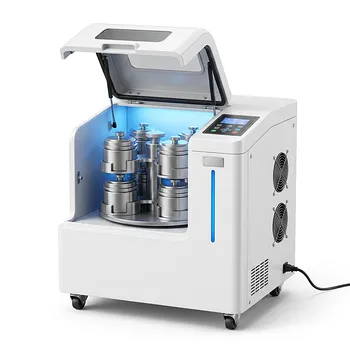
High Energy Omnidirectional Planetary Ball Mill 20L
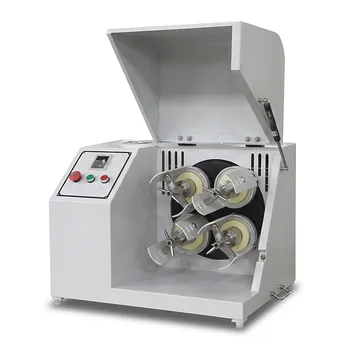
Horizontal Light Duty Planetary Ball Mill for Laboratory Sample Preparation

8L Planetary Ball Mill for Laboratory Grinding and Sample Preparation
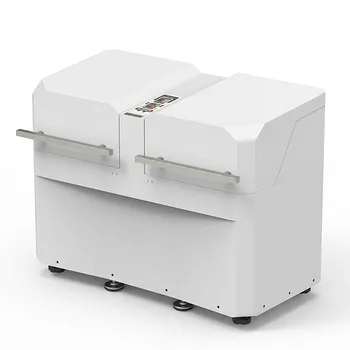
Dual Station Planetary Ball Mill 24L
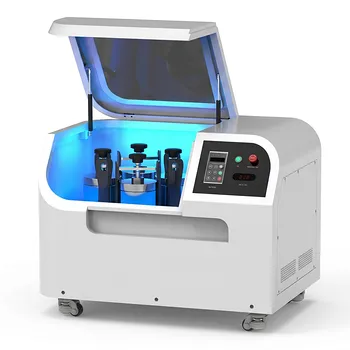
Planetary Ball Mill 12L

Nano High Energy Vibratory Ball Mill for Laboratory Sample Preparation
Multi-Platform Nanoscale High-Energy Vibratory Ball Mill
High Energy Hybrid Vibratory Ball Mill for Grinding Mixing and Cell Disruption