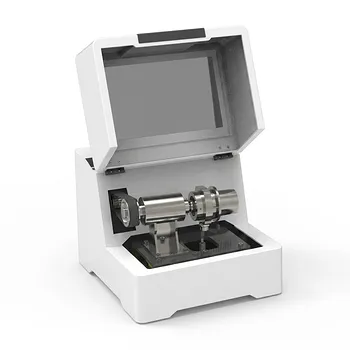
What role does a planetary ball mill play in the raw material pretreatment? Drive Nanonization & High Reactivity.
Updated 4 months ago
A planetary ball mill is the primary engine for nanonization and homogenization in material science. By utilizing high-frequency impact and shear forces, this device reduces raw materials to micron or nanometer scales while simultaneously increasing their specific surface area. This pretreatment creates highly active precursors that are essential for the synthesis of high-performance materials and the induction of mechanochemical reactions.
The core role of a planetary ball mill is to transform inert raw materials into highly reactive, uniform powders by maximizing surface area and promoting atomic-level mixing. This process ensures that subsequent synthesis steps, such as sintering or polymerization, occur with greater efficiency and consistency.
Physical Transformation and Particle Refinement
Achieving Ultra-Fine Particle Sizes
The planetary ball mill uses the combined action of grinding jar rotation and revolution to generate extreme kinetic energy. This energy rapidly pulverizes materials—ranging from coal to limestone—into a specific range of 60-80 mesh or even down to the nanometer scale.
Increasing Specific Surface Area
As particles are crushed, their total surface area expands exponentially relative to their volume. This increased surface area provides more active sites for chemical reactions, which is vital for processes like the solid-state reaction in cement manufacturing.
Breaking Down Particle Agglomerates
In the preparation of composites, the intense shear forces effectively disperse raw materials (such as titanium dioxide) into solvents. This dissociation prevents "clumping" and ensures a uniform distribution before the material undergoes further coating or polymerization.
Chemical and Structural Activation
Inducing Mechanochemical Reactions
Beyond simple grinding, the high-energy environment can trigger mechanochemical reactions during the pretreatment stage. This creates high-activity precursors that allow for chemical transformations to occur at lower temperatures or faster rates than traditional methods.
Atomic-Level Uniform Mixing
Planetary mills facilitate mechanical alloying, where multi-component materials are blended at the atomic scale. This eliminates compositional segregation, ensuring that the final product has a homogenous structure throughout.
Disrupting Crystalline Surface Structures
For materials like coal gangue or industrial waste, the mill is used to disrupt dense surface structures. This physical "damage" facilitates the release of internal components, such as aluminosilicates, which are necessary for geopolymerization.
Understanding the Trade-offs
Risk of Material Contamination
The primary downside of high-energy milling is the potential for contamination from the grinding media. As the balls and jars wear down, small amounts of their material (e.g., zirconia or stainless steel) can integrate into the sample, potentially altering experimental results.
Thermal Management Challenges
The friction generated during high-frequency rotation produces significant heat. If not managed through intermittent milling or cooling systems, this heat can cause unwanted phase changes or the degradation of heat-sensitive raw materials.
Energy Density vs. Material Yield
While planetary mills are highly effective, they are energy-intensive for processing large volumes of material. Researchers must balance the duration of milling with the desired fineness to avoid "over-milling," which can lead to particle re-agglomeration.
Optimizing Pretreatment for Your Research Goals
How to Apply This to Your Project
To achieve the best results in your material science research, tailor your ball milling parameters to your specific outcome.
- If your primary focus is Nanotechnology: Use high-speed rotation and small-diameter grinding media to maximize the frequency of impacts for rapid nanonization.
- If your primary focus is Chemical Synthesis: Prioritize long-duration mechanical alloying to ensure atomic-level mixing and the creation of highly active precursors.
- If your primary focus is Statistical Reliability: Ensure consistent milling times and speeds to produce representative powders for Weibull distribution or other reliability analyses.
- If your primary focus is Structural Engineering: Focus on disrupting the surface morphology of coarse materials to enhance their reactivity in binders or geopolymers.
The strategic use of a planetary ball mill transforms raw, bulk matter into a precision-engineered precursor, setting the stage for all subsequent material breakthroughs.
Summary Table:
| Feature | Impact on Raw Material | Research Benefit |
|---|---|---|
| High-Energy Impact | Particle size reduction to nanometer scale | Enhanced sintering & reactivity |
| Shear Force | Dispersion of agglomerates | Uniform composite distribution |
| Surface Expansion | Exponential increase in specific surface area | Faster chemical reaction rates |
| Mechanical Alloying | Atomic-level homogenization | Elimination of compositional segregation |
| Structural Damage | Disruption of crystalline surfaces | Activation of inert industrial precursors |
Optimize Your Material Synthesis with Precision Pretreatment
Ready to achieve nanometer-scale precision and atomic-level uniformity in your research? Contact us today to find the perfect equipment for your laboratory needs.
At [Your Brand Name], we provide complete laboratory sample preparation solutions for material science. Our expertise lies in advanced powder processing and compaction, offering a full suite of tools including:
- Size Reduction: Jaw/roll crushers, liquid nitrogen cryogenic grinders, and high-energy mills (planetary ball, jet, sand/bead, disc, rotor).
- Classification & Mixing: Vibratory/air-jet sieve shakers and high-efficiency powder/defoaming mixers.
- Advanced Compaction: A comprehensive range of hydraulic presses, including Cold/Warm Isostatic Presses (CIP/WIP), vacuum hot presses, and XRF pellet presses.
Whether you are working on nanotechnology or structural engineering, our specialized equipment ensures consistent, high-purity results for every experiment. Let’s build the future of material science together.
References
- Albin Conde Reis, Mohammadhosein Safari. Revisiting the Importance of Sulfur Electrode‐Current‐Collector Interface in Lithium‐Sulfur Batteries. DOI: 10.1002/batt.202300286
Mentioned Products
- Vertical Semi Circular Planetary Ball Mill for Laboratory Precision Grinding
- High Energy Planetary Ball Mill for Nano Scale Grinding and Mechanical Alloying
- Vertical Production Planetary Ball Mill for High Throughput Powder Processing
- Heavy Duty Horizontal Planetary Ball Mill for Efficient Industrial Grinding and Sample Preparation
- 360° Rotating Omnidirectional Laboratory Planetary Ball Mill for Homogeneous Ultra-Fine Grinding and Mixing
People Also Ask
- What role does a planetary ball mill play in the synthesis of Li6PS5Cl (LPSCl)? Unlock High Ionic Conductivity
- Why is a planetary ball mill essential for SiBCN-rGO wet-spinning? Achieve Superior Dispersion and Spinnability
- Why is an intermittent grinding process required for perovskites in a planetary ball mill? Ensure Stability & Purity
- Why is a planetary ball mill required for PET micronization? Ensure Accurate Chemical Analysis of Reprocessed PET
- How does mechanized planetary ball milling compare to manual agate grinding? Optimize sulfide standard material precision.

Tech Team · PowderPreparation
Last updated on May 14, 2026
Related Products
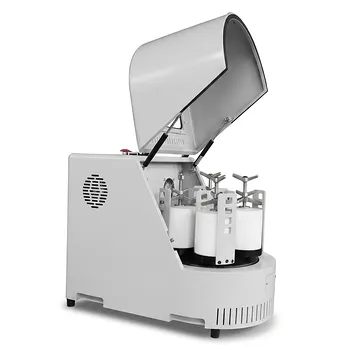
Vertical Semi Circular Planetary Ball Mill for Laboratory Precision Grinding

High Energy Planetary Ball Mill for Nano Scale Grinding and Mechanical Alloying

Vertical Production Planetary Ball Mill for High Throughput Powder Processing

Heavy Duty Horizontal Planetary Ball Mill for Efficient Industrial Grinding and Sample Preparation

360° Rotating Omnidirectional Laboratory Planetary Ball Mill for Homogeneous Ultra-Fine Grinding and Mixing

Vertical Square Planetary Ball Mill for Laboratory Sample Preparation and Nanoscale Grinding

Miniature Planetary Ball Mill with Vacuum Grinding and High Efficiency for Laboratory Sample Preparation

High Energy Laboratory Planetary Ball Mill for Nano Grinding and Material Science Sample Preparation

High Energy Omnidirectional Planetary Ball Mill 16L
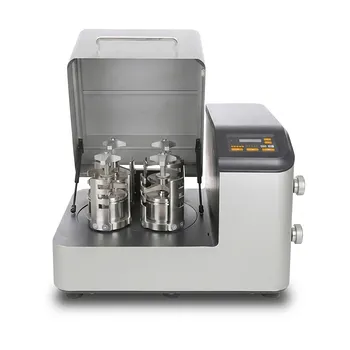
High Energy Planetary Ball Mill for Nano Scale Grinding and Colloidal Mixing in Material Science Research
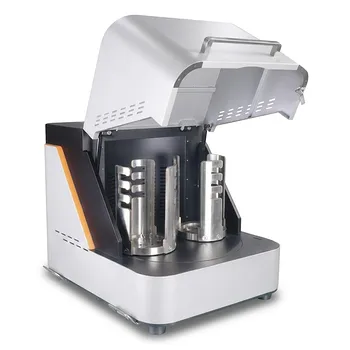
High Energy Laboratory Planetary Ball Mill for Nano Grinding and Colloidal Mixing of Hard and Brittle Materials
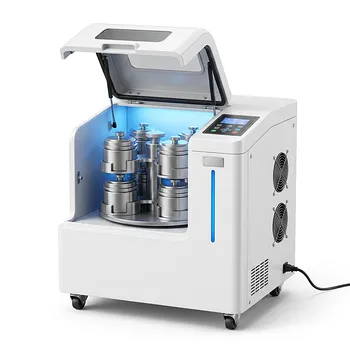
High Energy Omnidirectional Planetary Ball Mill 20L
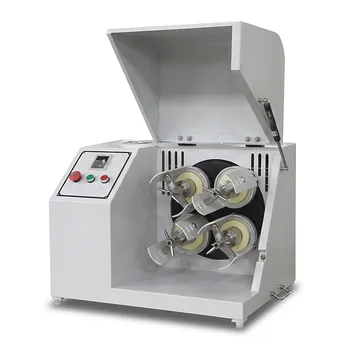
Horizontal Light Duty Planetary Ball Mill for Laboratory Sample Preparation

8L Planetary Ball Mill for Laboratory Grinding and Sample Preparation

Dual Station Planetary Ball Mill 24L
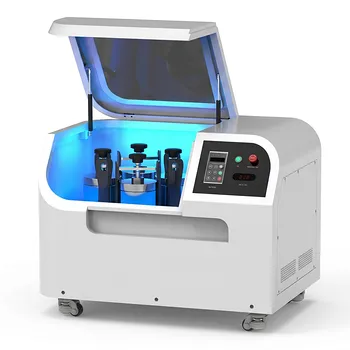
Planetary Ball Mill 12L

Nano High Energy Vibratory Ball Mill for Laboratory Sample Preparation

Multi-Platform Nanoscale High-Energy Vibratory Ball Mill

High Energy Hybrid Vibratory Ball Mill for Grinding Mixing and Cell Disruption