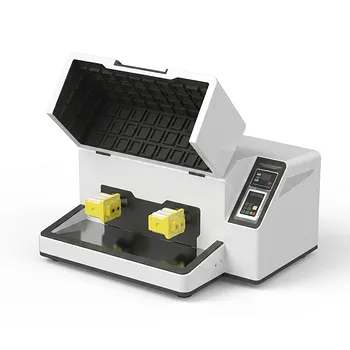
What role does a planetary ball mill play in zirconia-based composite ceramic powders? Key to Micro-Scale Homogenization
Updated 5 months ago
The planetary ball mill is the primary vehicle for high-energy mechanical alloying and micro-scale homogenization in zirconia composite preparation. By utilizing high-speed rotation to generate intense centrifugal, impact, and shear forces, it reduces raw materials to the micron level while ensuring a uniform distribution of secondary phases. This process is critical for eliminating agglomerates and creating the reactive, homogeneous foundation necessary for successful sintering.
Core Takeaway: The planetary ball mill serves as more than just a grinder; it is a high-energy reactor that activates powders through mechanical stress, ensuring that zirconia and its additives are mixed at a molecular level to produce a dense, high-performance ceramic microstructure.
Achieving Micro-Scale Homogenization
Uniform Phase Distribution
In zirconia-based composites, the planetary ball mill facilitates the thorough mixing of different powder specifications, such as 3Y-TZP and 12Ce-TZP. This ensures that the various stabilizers and reinforcing phases are distributed evenly throughout the matrix at a microscopic scale. Without this level of precision, the final material may suffer from compositional segregation, leading to structural weaknesses.
Elimination of Agglomerates
Original powders often contain large agglomerates that can lead to pores and defects during the sintering process. The mill utilizes high-frequency impact and shearing forces to break down these clusters, establishing a uniform particle size distribution. This refinement is essential for forming a homogeneous microstructure that can support stable self-healing and decomposition functions in the finished ceramic.
Enhancing Chemical Reactivity and Activation
Mechanical Activation of Powders
High-speed rotation doesn't just reduce size; it introduces lattice defects and increases the specific surface area of the powders. In systems like Magnesium Oxide-Zirconia (MgO-ZrO2), this mechanical activation significantly enhances the chemical activity of the raw materials. This heightened energy state lowers the barrier for high-temperature sintering and promotes densification.
Facilitating Solid-State Reactions
The deep mixing achieved in a planetary ball mill ensures high reactivity for subsequent chemical processes. For instance, in Mullite-Zirconia composites, the uniformity of the milled powder is critical for promoting the decomposition of zircon and the formation of the mullite phase. This ensures that the solid-state reactions occur predictably and completely during the reaction sintering stage.
Preserving Material Purity and Integrity
Prevention of Contamination
To maintain the electrical and mechanical properties of zirconia, avoiding metallic impurities is paramount. By using high-hardness zirconia grinding media, the planetary ball mill minimizes wear-induced contamination. This preserves the purity of the composite, which is especially vital for ceramics used in electronic or high-precision industrial applications.
Versatility Across Mediums
Planetary ball milling is highly effective in both wet and dry environments, allowing for the use of mediums like isopropanol or ethanol. This flexibility is crucial when mixing zirconia with sensitive components like Aluminum Nitride (AlN) or polymers like polylactic acid (PLA). Proper medium selection prevents oxidation and ensures the uniform distribution of ceramic particles within polymer matrices for advanced manufacturing.
Understanding the Trade-offs and Limitations
Heat Generation and Thermal Stress
The high energy required for mechanical alloying generates significant heat within the milling jars. Excessive temperatures can lead to unwanted phase transformations or the degradation of organic additives and solvents. Effective milling strategies often require intermittent cooling cycles or specialized jar designs to manage this thermal energy.
Media Wear and Scalability
While zirconia media is wear-resistant, it is not immortal; prolonged high-energy milling will eventually result in some media loss. Furthermore, the high energy density of planetary mills makes them excellent for laboratory and small-batch production, but scaling these exact dynamics to industrial volumes can be technically challenging and energy-intensive.
Making the Right Choice for Your Goal
To achieve the best results with a planetary ball mill, tailor your parameters to the specific requirements of your composite material.
- If your primary focus is Maximum Density: Prioritize longer milling times at moderate speeds to ensure the total elimination of agglomerates and a narrow particle size distribution.
- If your primary focus is Chemical Homogeneity: Utilize high-speed, high-energy settings to introduce lattice defects and maximize the surface area for solid-state reactions.
- If your primary focus is High Purity: Always match the grinding media to the matrix material (e.g., zirconia balls for zirconia powder) and use high-purity solvents to prevent metallic or organic contamination.
By mastering the mechanical forces of the planetary ball mill, engineers can precisely control the precursor environment, ensuring the production of zirconia composites with superior structural and functional reliability.
Summary Table:
| Key Role | Mechanical Action | Impact on Final Ceramic |
|---|---|---|
| Homogenization | Uniformly distributes stabilizers (e.g., 3Y-TZP) | Eliminates compositional segregation and weak spots |
| De-agglomeration | High-frequency impact breaks clusters | Reduces pores/defects for a dense microstructure |
| Mechanical Activation | Increases surface area and lattice defects | Lowers sintering temperature and promotes densification |
| Purity Control | Use of zirconia media and specific mediums | Preserves electrical and high-precision properties |
Elevate Your Ceramic Research with Precision Engineering
Achieving the perfect zirconia-based composite requires more than just grinding—it requires controlled mechanical activation and high-purity processing. At [Brand Name], we provide complete laboratory sample preparation solutions for material science, specializing in advanced powder processing and compaction equipment.
Our extensive product line is designed to support every stage of your ceramic workflow:
- Powder Processing: High-energy planetary ball mills, jet mills, disc mills, and rotor mills for micron-level refinement.
- Classification & Mixing: Vibratory/air-jet sieve shakers, powder mixers, and defoaming mixers to ensure particle uniformity.
- Advanced Compaction: A full spectrum of hydraulic presses, including Cold/Warm Isostatic Presses (CIP/WIP), vacuum hot presses, and XRF pellet presses for maximum material densification.
Whether you are working on 3Y-TZP or complex MgO-ZrO2 systems, our expertise ensures your powders are reactive, homogeneous, and ready for high-performance sintering.
Ready to optimize your lab's efficiency? Contact us today for a tailored solution!
References
- Arife Yurdakul, Hilmi Yurdakul. Highly tough and hard zirconia-based composites derived from 3Y-TZP and 12ce-tzp powders by co-doping approach. DOI: 10.2298/sos250129012y
Mentioned Products
- Vertical Production Planetary Ball Mill for High Throughput Powder Processing
- Planetary Ball Mill 12L
- 360° Rotating Omnidirectional Laboratory Planetary Ball Mill for Homogeneous Ultra-Fine Grinding and Mixing
- 8L Planetary Ball Mill for Laboratory Grinding and Sample Preparation
- Heavy Duty Horizontal Planetary Ball Mill for Efficient Industrial Grinding and Sample Preparation
People Also Ask
- What is the function of a high-performance planetary ball mill in AMZ laminates? Master Ceramic Homogenization.
- What is the role of a planetary ball mill in Al–Si3N4 nanocomposite prep? Achieve Uniform Homogenization
- What is the function of a planetary ball mill in lanthanum hexaaluminate synthesis? Master Micron-Level Homogenization
- What role does a planetary ball mill play in the synthesis of Er-doped PMN-PT ceramics? Enhancing Homogeneity & Purity
- What are the advantages of using a planetary ball mill for the fine grinding of barium silicate glass powder? Peak Results

Tech Team · PowderPreparation
Last updated on May 14, 2026
Related Products
Vertical Production Planetary Ball Mill for High Throughput Powder Processing
Planetary Ball Mill 12L
360° Rotating Omnidirectional Laboratory Planetary Ball Mill for Homogeneous Ultra-Fine Grinding and Mixing
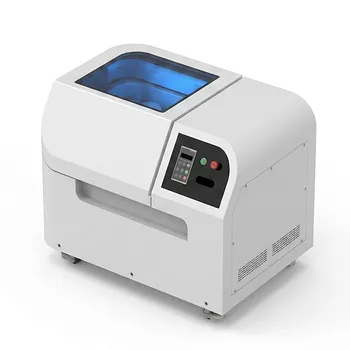
8L Planetary Ball Mill for Laboratory Grinding and Sample Preparation
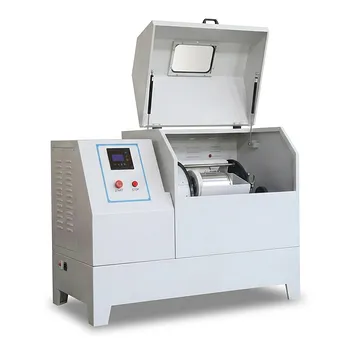
Heavy Duty Horizontal Planetary Ball Mill for Efficient Industrial Grinding and Sample Preparation

Vertical Square Planetary Ball Mill for Laboratory Sample Preparation and Nanoscale Grinding
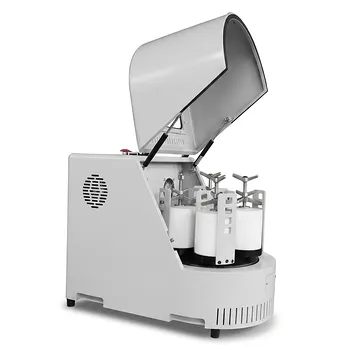
Vertical Semi Circular Planetary Ball Mill for Laboratory Precision Grinding
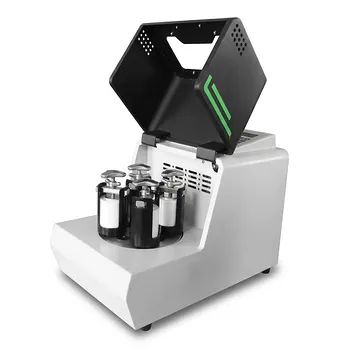
Miniature Planetary Ball Mill with Vacuum Grinding and High Efficiency for Laboratory Sample Preparation
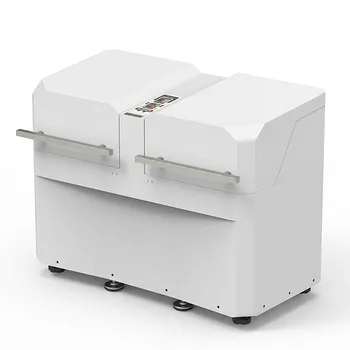
Dual Station Planetary Ball Mill 24L
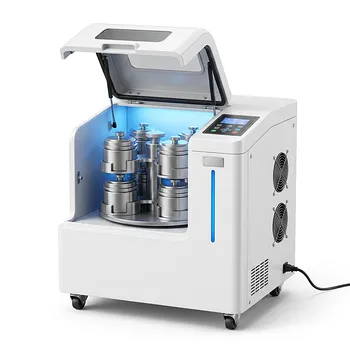
High Energy Omnidirectional Planetary Ball Mill 20L

High Energy Omnidirectional Planetary Ball Mill 16L
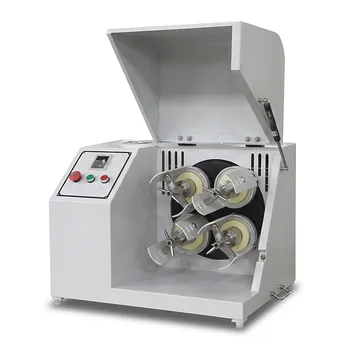
Horizontal Light Duty Planetary Ball Mill for Laboratory Sample Preparation
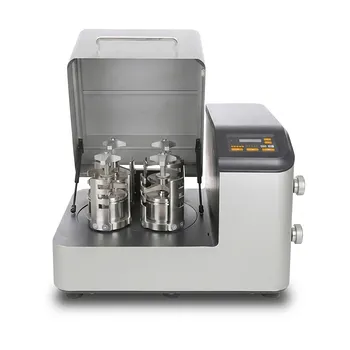
High Energy Planetary Ball Mill for Nano Scale Grinding and Colloidal Mixing in Material Science Research
High Energy Laboratory Planetary Ball Mill for Nano Grinding and Colloidal Mixing of Hard and Brittle Materials
High Energy Planetary Ball Mill for Nano Scale Grinding and Mechanical Alloying

High Energy Laboratory Planetary Ball Mill for Nano Grinding and Material Science Sample Preparation

Single Tank High Energy Vibratory Ball Mill for Laboratory Grinding and Mixing
High Energy Hybrid Vibratory Ball Mill for Grinding Mixing and Cell Disruption
Vertical Nano Bead Mill for Ceramic Materials with Permanent Magnet Motor and High Efficiency Grinding