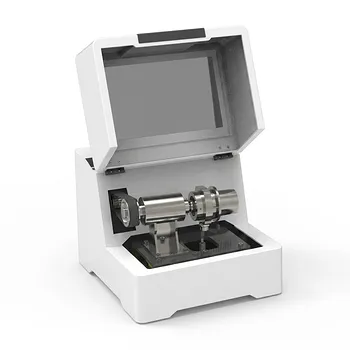
What role does a planetary ball mill play in the preparation of YSZ composite powders? Achieve Superior Homogeneity
Updated 4 months ago
The planetary ball mill is the critical engine for achieving microscopic homogeneity in Yttria-Stabilized Zirconia (YSZ) composite powders. By utilizing high-speed rotation to generate intense centrifugal, impact, and shear forces, it facilitates the uniform mixing of YSZ with alloys (such as CoNiCrAlY) or other ceramics (such as Al2O3). This ensures that the final composite maintains a consistent distribution of components, which is vital for the integrity of thermal spray coatings and the performance of sintered ceramics.
Core Takeaway: The planetary ball mill transforms raw material mixtures into highly reactive, homogenous composite powders by combining mechanical refinement with molecular-level dispersion. It is essential for eliminating agglomerates and ensuring that stabilizers are uniformly integrated into the zirconia lattice.
The Mechanics of Homogenization and Dispersion
Achieving Microscopic Component Distribution
The primary role of the planetary ball mill is to ensure that YSZ and secondary phases, such as CoNiCrAlY alloys or Al2O3 ceramics, are mixed at a molecular or microscopic level. This level of precision is necessary to maintain the continuity and consistency of the component distribution during high-stakes applications like thermal spray deposition.
Eliminating Large Agglomerates
Raw ceramic powders often contain clusters or agglomerates that can lead to defects in the final material. The high-energy impact forces within the mill effectively break down these agglomerates, establishing a foundation for a uniform microstructure and a rational phase distribution in the finished composite.
Preserving Powder Morphology
In specific applications like thermal spraying, the shape of the powder is as important as its chemistry. A planetary ball mill can be tuned to achieve thorough mixing over several hours while maintaining the original spherical morphology of the powders, ensuring they remain flowable and effective for deposition.
Enhancing Reactivity and Sintering Foundations
Increasing Specific Surface Area
By rapidly reducing particle sizes to the sub-micron or micron level, the milling process significantly increases the specific surface area of the powder. This heightened surface area increases the reaction activity, which is a prerequisite for achieving high-density materials during the subsequent sintering process.
Atomic-Level Dopant Integration
For electrolyte materials, the mill ensures an atomic-level uniform distribution of dopant ions (like Yttrium) within the crystal lattice. This deep integration is essential for forming a stable crystal structure that can facilitate efficient ion transport in solid oxide fuel cells.
Mechanical Activation of Powders
The high-energy grinding does more than just resize particles; it introduces mechanical activation and lattice distortions. These physical changes lower the energy barriers for phase transformations, allowing complex composite oxide structures to form more readily during thermal annealing.
Understanding the Trade-offs
Media Wear and Contamination Risk
While the process is highly effective, the friction between the grinding media and the powder can introduce impurities. To mitigate this, experts use high-hardness zirconia grinding media, which prevents metallic contamination and preserves the electrical performance of the YSZ.
Heat Generation and Phase Stability
The intense energy of a planetary mill generates significant heat, which can sometimes trigger unintended phase changes in sensitive materials. Controlled rotation speeds and milling intervals are often required to balance the need for high-energy impact with the thermal stability of the composite.
Processing Time vs. Energy Consumption
Achieving sub-micron refinement requires significant energy input and extended processing times. Manufacturers must optimize the milling duration to ensure complete homogenization without over-processing, which can lead to excessive particle flattening or media degradation.
Strategic Recommendations for Powder Preparation
How to Apply This to Your Project
Success in preparing YSZ composites depends on aligning your milling parameters with your final application goals.
- If your primary focus is Thermal Spray Coatings: Prioritize maintaining the spherical morphology of the powders by using moderate speeds and optimized milling durations to ensure flowability.
- If your primary focus is Solid Oxide Electrolytes: Focus on atomic-level homogenization and particle refinement to ensure high ionic conductivity and dense sintering.
- If your primary focus is Structural Zirconia Ceramics: Emphasize the elimination of agglomerates and the introduction of mechanical activation to improve the fracture toughness and density of the final component.
By mastering the high-energy dynamics of the planetary ball mill, you ensure that your YSZ composite powders possess the chemical uniformity and physical reactivity required for high-performance engineering applications.
Summary Table:
| Key Role | Impact on YSZ Composite | Primary Benefit |
|---|---|---|
| Homogenization | Molecular-level mixing of YSZ & alloys | Ensures coating integrity |
| De-agglomeration | Breaks down ceramic clusters | Eliminates structural defects |
| Size Reduction | Sub-micron particle refinement | Increases sintering reactivity |
| Activation | Introduces lattice distortions | Lowers phase change energy |
Elevate Your Material Research with Precision Powder Processing
Achieving the perfect Yttria-Stabilized Zirconia (YSZ) composite requires more than just mixing—it requires the high-energy precision of professional-grade equipment. At our company, we provide complete laboratory sample preparation solutions for material science, specializing in advanced powder processing and compaction equipment.
Our extensive product line is designed to support every stage of your workflow:
- Milling & Grinding: High-energy planetary ball mills, jet mills, and cryogenic grinders for sub-micron refinement.
- Preparation: Industrial-grade crushers (jaw/roll) and precision sieve shakers (vibratory/air-jet).
- Mixing: High-efficiency powder mixers and vacuum defoaming mixers for air-free homogeneity.
- Compaction: A full spectrum of hydraulic presses, including Cold/Warm Isostatic Presses (CIP/WIP), XRF pellet presses, and vacuum hot presses for high-density sintering.
Whether you are developing thermal spray coatings or solid oxide fuel cells, our equipment ensures your materials achieve the chemical uniformity and structural integrity required for high-performance engineering.
Contact our technical experts today to find the ideal solution for your laboratory!
References
- Subhasisa Nath, Jyotsna Dutta Majumdar. Thermophysical behavior of thermal sprayed yttria stabilized zirconia based composite coatings. DOI: 10.1016/j.ceramint.2017.05.170
Mentioned Products
- Vertical Semi Circular Planetary Ball Mill for Laboratory Precision Grinding
- High Energy Planetary Ball Mill for Nano Scale Grinding and Mechanical Alloying
- Vertical Production Planetary Ball Mill for High Throughput Powder Processing
- Heavy Duty Horizontal Planetary Ball Mill for Efficient Industrial Grinding and Sample Preparation
- 360° Rotating Omnidirectional Laboratory Planetary Ball Mill for Homogeneous Ultra-Fine Grinding and Mixing
People Also Ask
- What role does a planetary ball mill play in the synthesis of Li6PS5Cl (LPSCl)? Unlock High Ionic Conductivity
- Why is a planetary ball mill essential for SiBCN-rGO wet-spinning? Achieve Superior Dispersion and Spinnability
- Why is an intermittent grinding process required for perovskites in a planetary ball mill? Ensure Stability & Purity
- Why is a planetary ball mill required for PET micronization? Ensure Accurate Chemical Analysis of Reprocessed PET
- How does mechanized planetary ball milling compare to manual agate grinding? Optimize sulfide standard material precision.

Tech Team · PowderPreparation
Last updated on May 14, 2026
Related Products
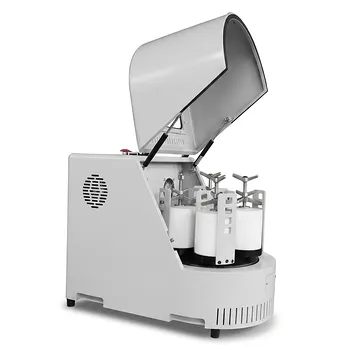
Vertical Semi Circular Planetary Ball Mill for Laboratory Precision Grinding
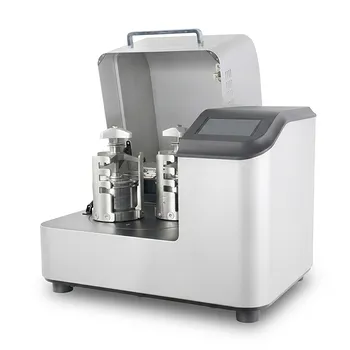
High Energy Planetary Ball Mill for Nano Scale Grinding and Mechanical Alloying

Vertical Production Planetary Ball Mill for High Throughput Powder Processing
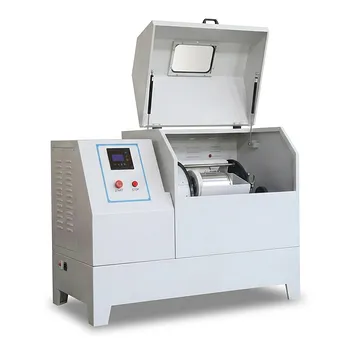
Heavy Duty Horizontal Planetary Ball Mill for Efficient Industrial Grinding and Sample Preparation

360° Rotating Omnidirectional Laboratory Planetary Ball Mill for Homogeneous Ultra-Fine Grinding and Mixing
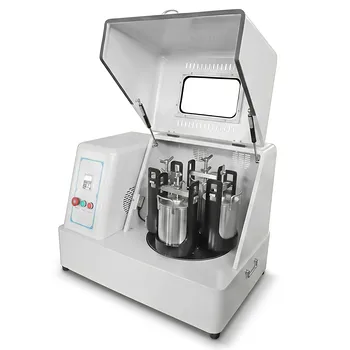
Vertical Square Planetary Ball Mill for Laboratory Sample Preparation and Nanoscale Grinding
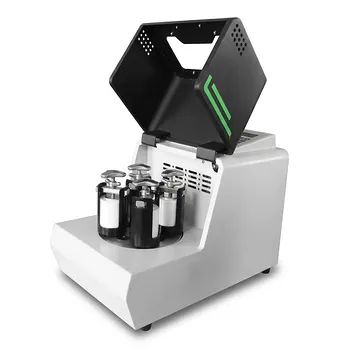
Miniature Planetary Ball Mill with Vacuum Grinding and High Efficiency for Laboratory Sample Preparation

High Energy Laboratory Planetary Ball Mill for Nano Grinding and Material Science Sample Preparation
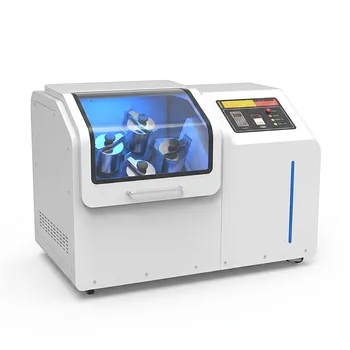
High Energy Omnidirectional Planetary Ball Mill 16L
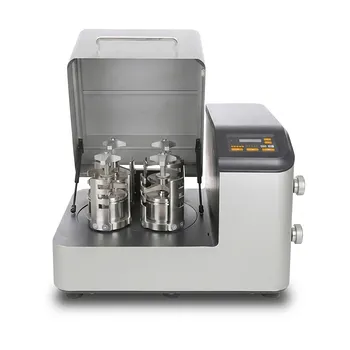
High Energy Planetary Ball Mill for Nano Scale Grinding and Colloidal Mixing in Material Science Research
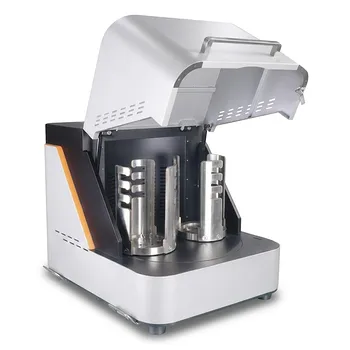
High Energy Laboratory Planetary Ball Mill for Nano Grinding and Colloidal Mixing of Hard and Brittle Materials
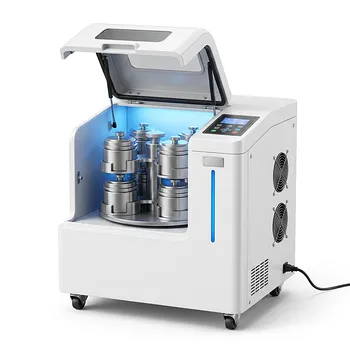
High Energy Omnidirectional Planetary Ball Mill 20L
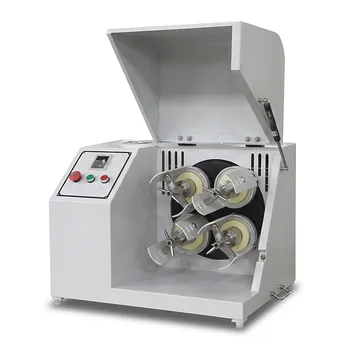
Horizontal Light Duty Planetary Ball Mill for Laboratory Sample Preparation
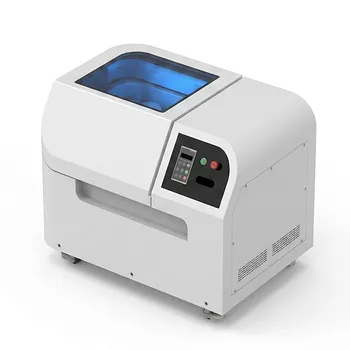
8L Planetary Ball Mill for Laboratory Grinding and Sample Preparation
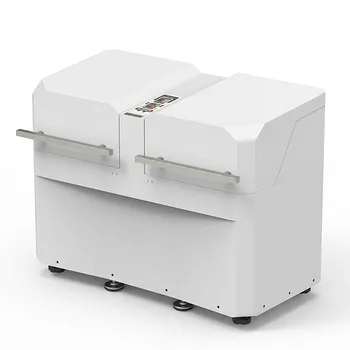
Dual Station Planetary Ball Mill 24L
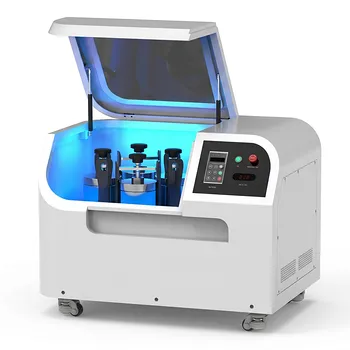
Planetary Ball Mill 12L

Nano High Energy Vibratory Ball Mill for Laboratory Sample Preparation
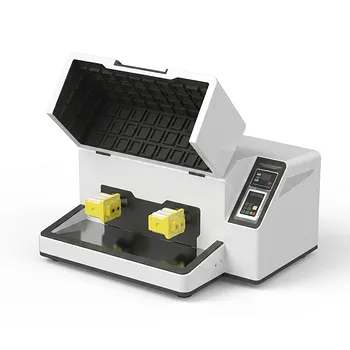
Multi-Platform Nanoscale High-Energy Vibratory Ball Mill
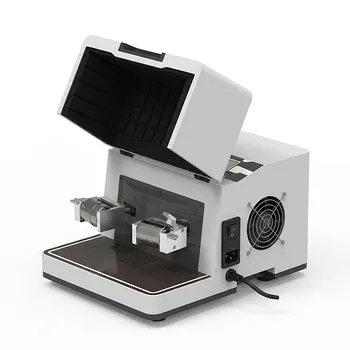
High Energy Hybrid Vibratory Ball Mill for Grinding Mixing and Cell Disruption