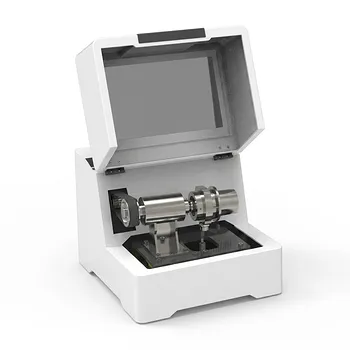
What role does a planetary ball mill play in the preparation of OCN precursors? Unlock Superior Catalyst Homogeneity.
Updated 4 months ago
The planetary ball mill serves as a high-energy reactor that achieves the precise molecular-level mixing and mechanical activation required for oxygen-doped graphitic carbon nitride (OCN) precursors. By utilizing intense shear and impact forces, the equipment transforms raw urea and cyanuric acid into a highly homogeneous mixture, ensuring that oxygen atoms are uniformly integrated into the carbon nitride lattice during subsequent thermal processing.
Core Takeaway: The planetary ball mill is the critical link between raw chemical precursors and a high-performance catalyst, providing the mechanical activation and molecular homogeneity necessary to optimize the electronic structure of the final OCN product.
The Mechanism of Mechanical Activation
High-Energy Impact and Shear
The planetary ball mill operates through high-speed rotation, generating intense centrifugal and impact forces between the grinding media and the precursors. This process goes beyond simple stirring; it provides the kinetic energy required to break down particle aggregates and induce mechanical activation in urea and cyanuric acid.
Reducing Kinetic Barriers
By refining the precursor powders at a microscopic scale, the milling process significantly increases the surface area and contact points between the reactants. This intimate contact effectively lowers the kinetic barriers for the solid-state reactions that occur during the later stages of synthesis.
Achieving Molecular-Level Homogeneity
Uniform Distribution of Oxygen Sources
In OCN synthesis, oxygen must be incorporated evenly into the graphitic carbon nitride lattice to avoid localized defects or inconsistent performance. The planetary ball mill ensures that cyanuric acid is distributed with molecular-level precision throughout the urea matrix, acting as a reliable oxygen carrier.
Establishing the Foundation for Polycondensation
The thoroughness of this mixing phase directly dictates the success of the thermal polycondensation stage. When precursors are mixed with this degree of uniformity, the resulting OCN catalyst carrier possesses a consistent electronic structure across its entire surface.
Understanding the Trade-offs
Heat Generation and Material Stability
While high-energy milling is effective, the friction generated can lead to significant temperature increases within the milling jar. If not managed through intermittent cooling cycles, this heat may cause premature decomposition or melting of volatile precursors like urea.
Potential for Media Contamination
The intense mechanical action of the balls can lead to wear and tear of the milling media, potentially introducing impurities (such as zirconia or stainless steel) into the precursor. These contaminants can act as unintended dopants, altering the catalytic properties of the final oxygen-doped graphitic carbon nitride.
How to Apply This to Your Synthesis Project
Making the Right Choice for Your Goal
To maximize the effectiveness of your planetary ball mill during OCN preparation, tailor your parameters based on your specific research or production requirements.
- If your primary focus is Maximum Catalytic Activity: Prioritize higher milling speeds and longer durations to ensure the most thorough molecular mixing and oxygen distribution.
- If your primary focus is Phase Purity: Use lower speeds or specialized grinding media (such as agate or alumina) to minimize the risk of metallic contamination from the equipment.
- If your primary focus is Structural Integrity: Implement "rest periods" or interval milling to prevent heat buildup from altering the chemical structure of the urea precursor.
By precisely controlling the mechanical energy delivered during the milling stage, you can systematically engineer the electronic properties of oxygen-doped graphitic carbon nitride for superior performance.
Summary Table:
| Key Role | Synthesis Mechanism | Impact on OCN Quality |
|---|---|---|
| Mechanical Activation | High-energy impact and shear forces | Lowers kinetic barriers for solid-state reactions. |
| Molecular Mixing | Homogeneous urea/cyanuric acid distribution | Ensures uniform oxygen doping and electronic structure. |
| Kinetic Control | Particle size reduction & surface area increase | Accelerates thermal polycondensation efficiency. |
| Process Optimization | Precision milling parameters & cooling cycles | Prevents precursor degradation and minimizes contamination. |
Elevate Your Material Synthesis with KINTEK
Achieving the perfect electronic structure in oxygen-doped graphitic carbon nitride requires precision from the very first step. At KINTEK, we provide complete laboratory sample preparation solutions tailored for material science researchers and industrial manufacturers.
Our specialized planetary ball mills deliver the exact mechanical activation and molecular homogeneity needed for high-performance precursors. Beyond milling, our extensive line includes:
- Powder Processing: Jet mills, disc mills, rotor mills, and high-shear mixers.
- Compaction Solutions: Cold/Warm Isostatic Presses (CIP/WIP), vacuum hot presses, and XRF pellet presses.
- Classification: Vibratory and air-jet sieve shakers for precise particle size control.
Ready to optimize your OCN synthesis or powder processing workflow? Contact our technical experts today to find the ideal equipment configuration for your lab.
References
- Ying Zeng, Ziwei Wang. Oxygen Doping Enables Tailored Built‐In Electric Fields in FeOCl/g‐C<sub>3</sub>N<sub>4</sub> Heterojunctions for Enhanced Peroxymonosulfate Activation. DOI: 10.1002/adfm.202423664
Mentioned Products
- Vertical Semi Circular Planetary Ball Mill for Laboratory Precision Grinding
- High Energy Planetary Ball Mill for Nano Scale Grinding and Mechanical Alloying
- Vertical Production Planetary Ball Mill for High Throughput Powder Processing
- Heavy Duty Horizontal Planetary Ball Mill for Efficient Industrial Grinding and Sample Preparation
- 360° Rotating Omnidirectional Laboratory Planetary Ball Mill for Homogeneous Ultra-Fine Grinding and Mixing
People Also Ask
- What role does a planetary ball mill play in the synthesis of Li6PS5Cl (LPSCl)? Unlock High Ionic Conductivity
- Why is a planetary ball mill essential for SiBCN-rGO wet-spinning? Achieve Superior Dispersion and Spinnability
- Why is an intermittent grinding process required for perovskites in a planetary ball mill? Ensure Stability & Purity
- Why is a planetary ball mill required for PET micronization? Ensure Accurate Chemical Analysis of Reprocessed PET
- How does mechanized planetary ball milling compare to manual agate grinding? Optimize sulfide standard material precision.

Tech Team · PowderPreparation
Last updated on Jun 03, 2026
Related Products
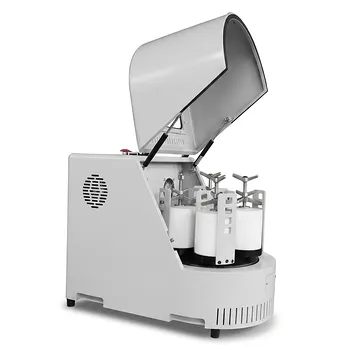
Vertical Semi Circular Planetary Ball Mill for Laboratory Precision Grinding

High Energy Planetary Ball Mill for Nano Scale Grinding and Mechanical Alloying
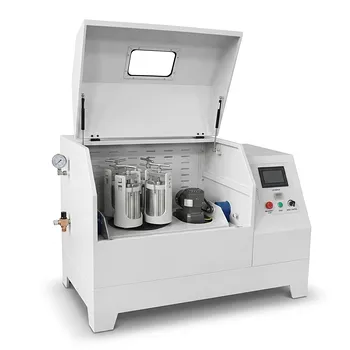
Vertical Production Planetary Ball Mill for High Throughput Powder Processing
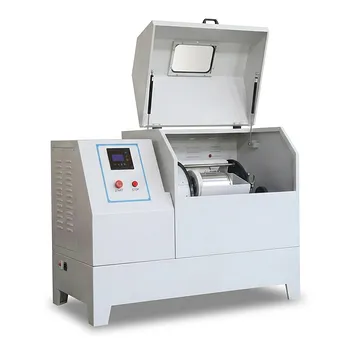
Heavy Duty Horizontal Planetary Ball Mill for Efficient Industrial Grinding and Sample Preparation
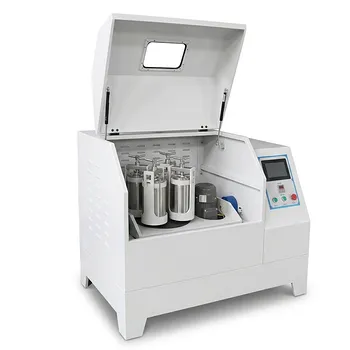
360° Rotating Omnidirectional Laboratory Planetary Ball Mill for Homogeneous Ultra-Fine Grinding and Mixing
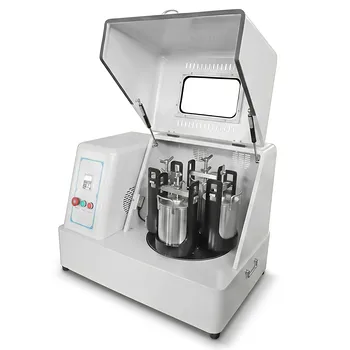
Vertical Square Planetary Ball Mill for Laboratory Sample Preparation and Nanoscale Grinding
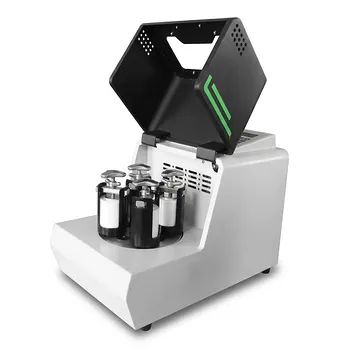
Miniature Planetary Ball Mill with Vacuum Grinding and High Efficiency for Laboratory Sample Preparation

High Energy Laboratory Planetary Ball Mill for Nano Grinding and Material Science Sample Preparation
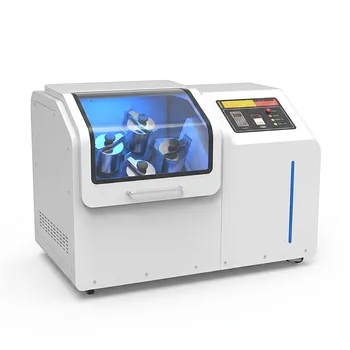
High Energy Omnidirectional Planetary Ball Mill 16L
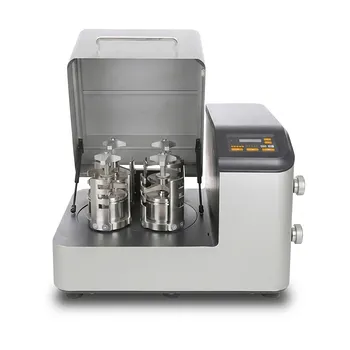
High Energy Planetary Ball Mill for Nano Scale Grinding and Colloidal Mixing in Material Science Research
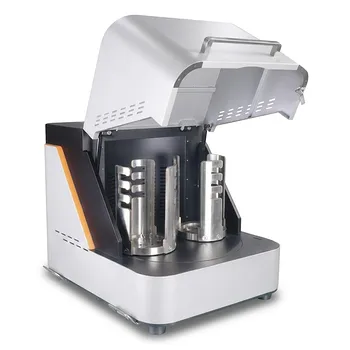
High Energy Laboratory Planetary Ball Mill for Nano Grinding and Colloidal Mixing of Hard and Brittle Materials
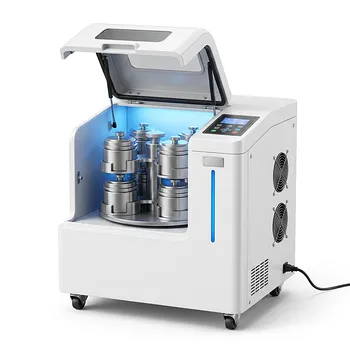
High Energy Omnidirectional Planetary Ball Mill 20L
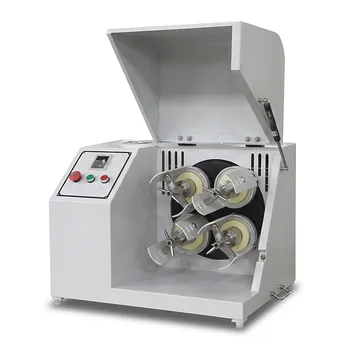
Horizontal Light Duty Planetary Ball Mill for Laboratory Sample Preparation

8L Planetary Ball Mill for Laboratory Grinding and Sample Preparation
Dual Station Planetary Ball Mill 24L
Planetary Ball Mill 12L

Nano High Energy Vibratory Ball Mill for Laboratory Sample Preparation

Multi-Platform Nanoscale High-Energy Vibratory Ball Mill

High Energy Hybrid Vibratory Ball Mill for Grinding Mixing and Cell Disruption