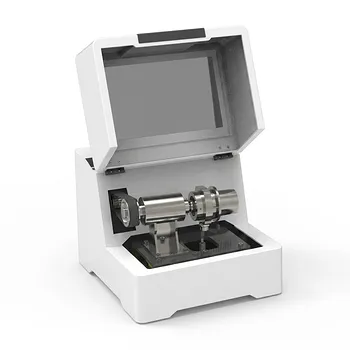
What role does a planetary ball mill play in the preparation of nickel and alumina composite powders? Key Benefits
Updated 3 months ago
The planetary ball mill acts as the primary energetic driver for achieving physical and chemical homogeneity in nickel and alumina composite powders. By leveraging high-speed rotation to generate intense impact and shear forces, the equipment induces significant plastic deformation in the metallic nickel phase while simultaneously refining and dispersing the ceramic alumina particles into a uniform mixture.
The core role of a planetary ball mill is to provide a high-energy environment that facilitates mechanical alloying, prevents component segregation, and ensures a refined initial microstructure. This process is essential for suppressing abnormal grain growth and achieving stable performance during subsequent sintering or casting.
Driving Microstructural Evolution through High-Energy Impact
Induction of Plastic Deformation
The planetary ball mill generates powerful centrifugal forces that cause high-frequency impacts between the grinding balls and the powder. These forces cause significant plastic deformation of the metallic nickel powder, which is more ductile than the ceramic alumina.
Dislocation Generation and Energy Transfer
Within short grinding periods, the mill induces dislocation generation and localized deformation within the particles. This provides the necessary physical energy environment to study the initial stages of microstructure evolution in the composite.
Mechanical Alloying and Layering
In more intensive processes, the repeated cycles of cold welding (microwelding) and fragmentation transform the components. This mechanical action can refine the raw powders into a layered structure at the micro-nanoscale.
Ensuring Compositional Uniformity and Dispersion
Breaking Down Powder Agglomerates
Raw micron-sized powders often suffer from van der Waals forces that cause clumping. The intense shear forces of the mill effectively break down powder agglomerates, ensuring each particle is individually addressed.
Preventing Component Segregation
Nickel and alumina have different densities, which typically leads to settling or "layering" during mixing. The high-frequency rotation of the planetary mill creates a highly uniform physical distribution, preventing segregation and ensuring a consistent composition throughout the batch.
Facilitating Wet and Dry Mixing
The mill is versatile enough to handle wet ball milling in solvents like distilled water with dispersants. This creates high-quality initial suspensions or slurries, ensuring ceramic particles are distributed within the matrix at a molecular level.
Enhancing Sintering and Final Material Properties
Increasing Particle Reactivity
By reducing the average particle size—often down to approximately 5 microns or less—the mill significantly increases the surface area of the powders. This increased contact area between the nickel and alumina phases is a prerequisite for efficient sintering.
Suppressing Abnormal Grain Growth
A high degree of uniformity in the initial powder is critical for the subsequent thermal processing. By ensuring a homogeneous distribution of alumina within the nickel, the mill helps suppress abnormal grain growth, leading to a consistent final microstructure.
Preparing Stable Suspensions for Casting
When used for gel centrifugal casting, the mill ensures that the physical uniformity of the slurry is high. This provides a high-quality initial suspension that is vital for the integrity of the final cast part.
Understanding the Trade-offs and Limitations
Potential for Media Contamination
The high-energy nature of the process means that the grinding balls and the mill jar are subject to wear. This can introduce impurities from the milling media into the nickel-alumina composite, potentially altering the final material properties.
Heat Generation and Phase Changes
Extended milling times generate significant thermal energy within the jars. If not managed through rest cycles or cooling, this heat can lead to unintended phase transformations or excessive oxidation of the metallic nickel.
Balance of Milling Time
While longer milling times improve refinement, they can also lead to over-processing. Finding the "sweet spot" is necessary to avoid excessive work hardening, which may make the powders difficult to compress during the pressing stage.
How to Apply This to Your Powder Preparation
Depending on your specific manufacturing goal, the parameters of the planetary ball mill should be adjusted accordingly:
- If your primary focus is initial microstructure study: Use shorter grinding periods to observe the early stages of dislocation and localized deformation without fully fracturing the particles.
- If your primary focus is preventing segregation: Prioritize high rotational speeds and ensure the weight ratio of grinding balls to powder is optimized to keep different density materials in a state of constant flux.
- If your primary focus is low-temperature sintering: Extend the milling duration to significantly reduce particle size and increase the contact area between the metallic and ceramic phases.
- If your primary focus is gel casting or slurries: Utilize wet milling with specific dispersants to ensure the powder is broken down to a molecular level within the liquid medium.
The planetary ball mill is the definitive tool for transforming raw, segregated powders into a highly reactive and uniform composite precursor.
Summary Table:
| Process Function | Impact on Composite Powder | Benefit for Final Material |
|---|---|---|
| High-Energy Impact | Induces plastic deformation & dislocations | Refined initial microstructure |
| Intense Shear Forces | Breaks agglomerates & prevents segregation | Uniform compositional distribution |
| Mechanical Alloying | Creates micro-nanoscale layered structures | Enhanced sintering & grain control |
| Wet/Dry Milling | Facilitates molecular-level dispersion | High-quality suspensions for casting |
Elevate Your Material Research with Precision Powder Solutions
Achieving the perfect nickel-alumina composite requires equipment that delivers consistent energy and precision. At [Company Name], we provide complete laboratory sample preparation solutions for material science, specializing in high-performance powder processing and compaction equipment.
Whether you are refining microstructures or scaling up production, our extensive product line is designed to meet the most rigorous lab standards:
- Advanced Milling: Planetary ball mills, jet mills, sand/bead mills, and cryogenic grinders for ultra-fine particle sizes.
- Sample Preparation: Jaw/roll crushers and vibratory/air-jet sieve shakers for precise size distribution.
- Compaction Excellence: A full spectrum of hydraulic presses, including Cold/Warm Isostatic Presses (CIP/WIP), standard lab presses, and Vacuum Hot Presses for high-density sintering.
- Homogeneous Mixing: Specialized powder and defoaming mixers to ensure zero segregation.
Ready to optimize your powder preparation workflow? Contact our experts today to find the ideal equipment for your specific material goals and enhance your lab's efficiency.
References
- A. K. Deb, P. Chatterjee. Study of deformation microstructure of nickel samples at very short milling times: effects of addition of α-Al2O3 particles. DOI: 10.1007/s40094-019-0319-2
Mentioned Products
- Vertical Semi Circular Planetary Ball Mill for Laboratory Precision Grinding
- High Energy Planetary Ball Mill for Nano Scale Grinding and Mechanical Alloying
- Vertical Production Planetary Ball Mill for High Throughput Powder Processing
- Heavy Duty Horizontal Planetary Ball Mill for Efficient Industrial Grinding and Sample Preparation
- 360° Rotating Omnidirectional Laboratory Planetary Ball Mill for Homogeneous Ultra-Fine Grinding and Mixing
People Also Ask
- What role does a planetary ball mill play in the synthesis of Li6PS5Cl (LPSCl)? Unlock High Ionic Conductivity
- Why is a planetary ball mill essential for SiBCN-rGO wet-spinning? Achieve Superior Dispersion and Spinnability
- Why is an intermittent grinding process required for perovskites in a planetary ball mill? Ensure Stability & Purity
- Why is a planetary ball mill required for PET micronization? Ensure Accurate Chemical Analysis of Reprocessed PET
- How does mechanized planetary ball milling compare to manual agate grinding? Optimize sulfide standard material precision.

Tech Team · PowderPreparation
Last updated on Jun 03, 2026
Related Products
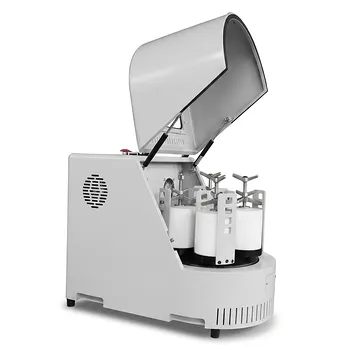
Vertical Semi Circular Planetary Ball Mill for Laboratory Precision Grinding
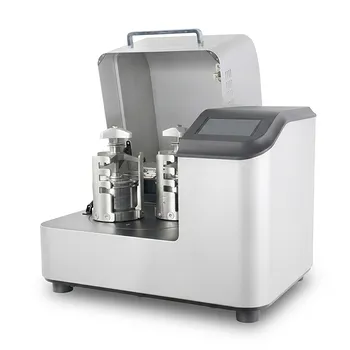
High Energy Planetary Ball Mill for Nano Scale Grinding and Mechanical Alloying
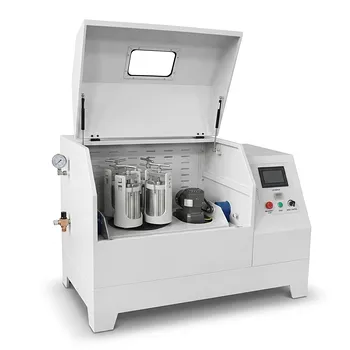
Vertical Production Planetary Ball Mill for High Throughput Powder Processing
Heavy Duty Horizontal Planetary Ball Mill for Efficient Industrial Grinding and Sample Preparation
360° Rotating Omnidirectional Laboratory Planetary Ball Mill for Homogeneous Ultra-Fine Grinding and Mixing
Vertical Square Planetary Ball Mill for Laboratory Sample Preparation and Nanoscale Grinding

Miniature Planetary Ball Mill with Vacuum Grinding and High Efficiency for Laboratory Sample Preparation
High Energy Laboratory Planetary Ball Mill for Nano Grinding and Material Science Sample Preparation
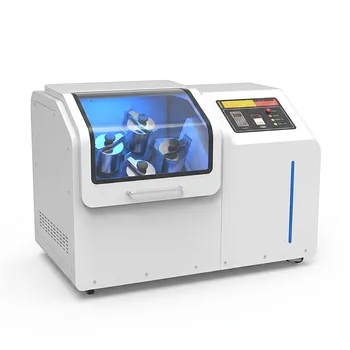
High Energy Omnidirectional Planetary Ball Mill 16L
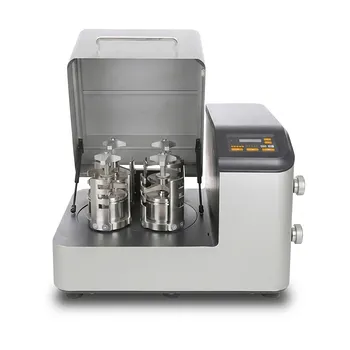
High Energy Planetary Ball Mill for Nano Scale Grinding and Colloidal Mixing in Material Science Research
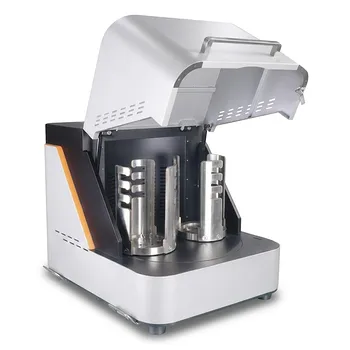
High Energy Laboratory Planetary Ball Mill for Nano Grinding and Colloidal Mixing of Hard and Brittle Materials
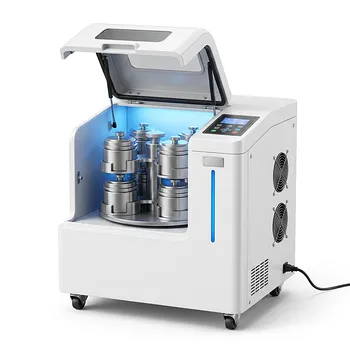
High Energy Omnidirectional Planetary Ball Mill 20L
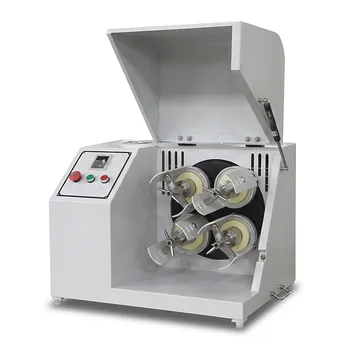
Horizontal Light Duty Planetary Ball Mill for Laboratory Sample Preparation

8L Planetary Ball Mill for Laboratory Grinding and Sample Preparation
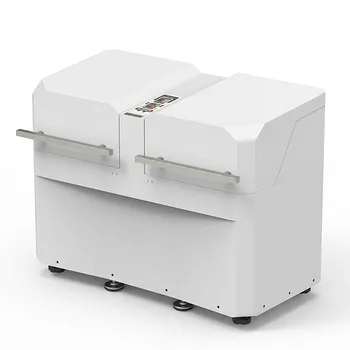
Dual Station Planetary Ball Mill 24L
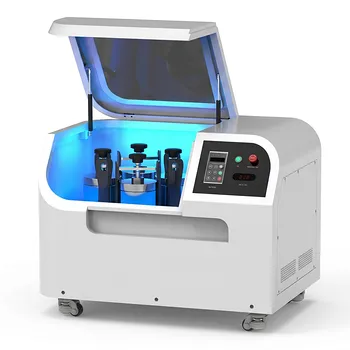
Planetary Ball Mill 12L

Nano High Energy Vibratory Ball Mill for Laboratory Sample Preparation

Multi-Platform Nanoscale High-Energy Vibratory Ball Mill
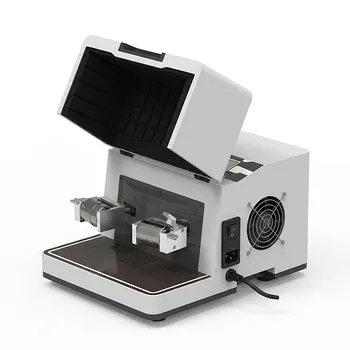
High Energy Hybrid Vibratory Ball Mill for Grinding Mixing and Cell Disruption