What role does a planetary ball mill play in the preparation of Pb(DS)2 nanorods? Master Solvent-Free Synthesis
Updated 5 months ago
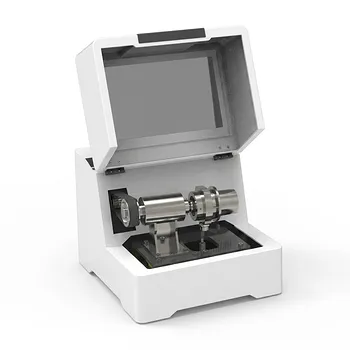
The planetary ball mill functions as the primary solid-state reactor in the synthesis of Lead Dodecyl Sulfate [Pb(DS)2] nanorods. It provides the high-frequency mechanical energy necessary to drive a chemical transformation between lead nitrate and sodium dodecyl sulfate (SDS) without the use of liquid solvents. This mechanical activation facilitates deep atomic-level contact, allowing the raw materials to reorganize into crystalline nanorod structures with specific aspect ratios.
The planetary ball mill serves as both a mixer and a reactor, utilizing mechanical impact to trigger solid-state chemical reactions. This process creates a solvent-free environment where the physical foundation for nanorod growth is established through high-energy particle collisions.
Driving Mechano-chemical Transformation
The Mill as a Primary Reaction Vessel
In this specific synthesis, the ball mill is not merely a grinding tool but the central reaction vessel. It provides a controlled environment where mechanical energy is converted into chemical energy to facilitate the bond-breaking and bond-forming required to create Pb(DS)2.
Mechanical Energy and High-Frequency Impact
The equipment generates intense mechanical energy through high-frequency vibrations and collisions between the grinding media and the precursors. These forces overcome the activation energy barriers of the solid reactants, lead nitrate and SDS, allowing the reaction to proceed at room temperature.
Achieving Atomic-Level Contact
By continuously pulverizing and re-welding particles, the mill ensures deep atomic-level contact between the lead source and the surfactant. This intimacy of contact is crucial in a solvent-free system, as it replaces the role of a liquid medium in transporting ions and molecules.
Establishing the Nanorod Architecture
Templating Specific Aspect Ratios
The milling process provides the physical foundation for the formation of nanorod structures. The energy input and the duration of the milling cycle directly influence the growth kinetics, helping to determine the final aspect ratios of the Pb(DS)2 crystals.
Solvent-Free Synthesis Advantages
Performing this preparation under solvent-free conditions simplifies the purification process and reduces environmental impact. The planetary ball mill enables this "dry" chemistry by using physical force to ensure the reactants are sufficiently mixed and activated to form a homogenous product.
Particle Refinement and Surface Energy
Consistent with high-energy ball milling principles, the process refines the grain structure and increases the surface energy of the material. This increased reactivity is essential for the stabilization of the nanometer-scale dimensions required for high-quality nanorods.
Understanding the Trade-offs
Mechanical Heat and Structural Integrity
While high-energy impacts are necessary for the reaction, they also generate significant localized heat. Excessive thermal energy can lead to the melting or degradation of organic components like SDS, potentially compromising the structural integrity of the resulting nanorods.
Contamination Risks
The intense friction and shear forces within the mill can lead to wear and tear of the grinding jars and balls. This introduces a risk of trace elemental contamination from the grinding media (such as stainless steel or zirconia) into the Pb(DS)2 product.
Scaling and Uniformity
Achieving compositional uniformity in a solid-state reaction can be more challenging than in solution-based chemistry. Variations in milling speed or ball-to-powder ratios can result in a wide distribution of nanorod lengths and diameters, requiring precise calibration of the milling parameters.
How to Apply This to Your Project
Making the Right Choice for Your Goal
- If your primary focus is Environmental Sustainability: Utilize the planetary ball mill to eliminate hazardous liquid solvents, leveraging the mill's ability to drive reactions through pure mechanical activation.
- If your primary focus is Structural Precision: Carefully control the milling duration and energy frequency to manipulate the aspect ratios and ensure the nanorods meet specific dimensional requirements.
- If your primary focus is Material Purity: Select high-purity, wear-resistant grinding media (such as agate or tungsten carbide) to minimize the risk of metallic contamination during the high-energy collision phases.
By treating the planetary ball mill as a precision chemical reactor rather than a simple grinder, you can effectively master the solid-state synthesis of complex nanostructures.
Summary Table:
| Key Function | Impact on Pb(DS)2 Synthesis | Critical Parameter |
|---|---|---|
| Primary Reactor | Drives solid-state chemical transformation | Mechanical Energy Frequency |
| Solvent-Free Medium | Eliminates hazardous waste; simplifies purification | Milling Atmosphere/Temp |
| Structural Control | Dictates nanorod growth and aspect ratios | Milling Duration |
| Atomic Contact | Facilitates ion transport without liquid media | Ball-to-Powder Ratio |
Elevate Your Nanomaterial Synthesis with Precision Equipment
Achieving the perfect aspect ratio in Pb(DS)2 nanorods requires high-energy precision and reliable mechanical activation. At [Company Name], we provide complete laboratory sample preparation solutions tailored for advanced material science.
Our specialized powder processing line includes:
- High-Energy Mills: Planetary ball mills, jet mills, and cryogenic grinders for superior particle refinement.
- Advanced Compaction: A full spectrum of hydraulic presses, including Cold/Warm Isostatic Presses (CIP/WIP), vacuum hot presses, and XRF pellet presses.
- Preparation Tools: High-performance crushers, sieve shakers, and specialized powder or defoaming mixers.
Whether you are a researcher focused on solvent-free green chemistry or a distributor seeking reliable OEM/ODM support, our equipment ensures the consistency and purity your projects demand.
Ready to optimize your lab's workflow? Contact our technical team today for a tailored solution!
References
- Zhiqiang Wu, Pengxi Jiang. Preparation of lead dodecyl sulfate nanorod materials mediated by mechanochemistry and green solvent-free catalytic synthesis of heterocyclic derivatives. DOI: 10.1039/d4mr00123k
Mentioned Products
- Vertical Semi Circular Planetary Ball Mill for Laboratory Precision Grinding
- High Energy Planetary Ball Mill for Nano Scale Grinding and Mechanical Alloying
- Vertical Production Planetary Ball Mill for High Throughput Powder Processing
- Heavy Duty Horizontal Planetary Ball Mill for Efficient Industrial Grinding and Sample Preparation
- 360° Rotating Omnidirectional Laboratory Planetary Ball Mill for Homogeneous Ultra-Fine Grinding and Mixing
People Also Ask
- What role does a planetary ball mill play in the synthesis of Li6PS5Cl (LPSCl)? Unlock High Ionic Conductivity
- Why is a planetary ball mill essential for SiBCN-rGO wet-spinning? Achieve Superior Dispersion and Spinnability
- Why is an intermittent grinding process required for perovskites in a planetary ball mill? Ensure Stability & Purity
- Why is a planetary ball mill required for PET micronization? Ensure Accurate Chemical Analysis of Reprocessed PET
- How does mechanized planetary ball milling compare to manual agate grinding? Optimize sulfide standard material precision.

Tech Team · PowderPreparation
Last updated on May 14, 2026
Related Products
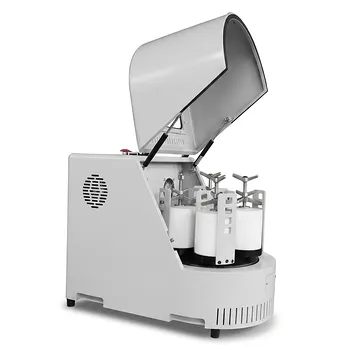
Vertical Semi Circular Planetary Ball Mill for Laboratory Precision Grinding
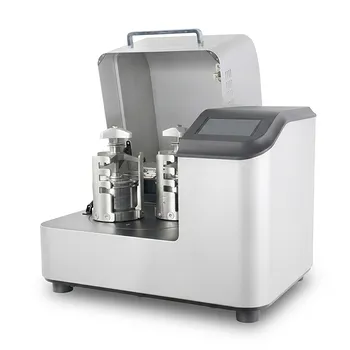
High Energy Planetary Ball Mill for Nano Scale Grinding and Mechanical Alloying

Vertical Production Planetary Ball Mill for High Throughput Powder Processing
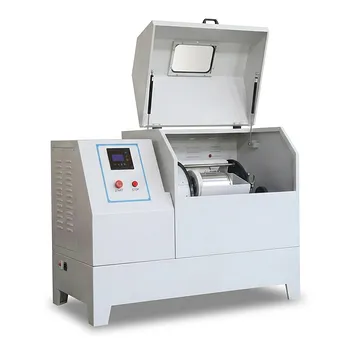
Heavy Duty Horizontal Planetary Ball Mill for Efficient Industrial Grinding and Sample Preparation
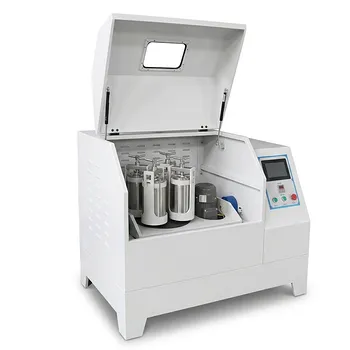
360° Rotating Omnidirectional Laboratory Planetary Ball Mill for Homogeneous Ultra-Fine Grinding and Mixing

Vertical Square Planetary Ball Mill for Laboratory Sample Preparation and Nanoscale Grinding

Miniature Planetary Ball Mill with Vacuum Grinding and High Efficiency for Laboratory Sample Preparation

High Energy Laboratory Planetary Ball Mill for Nano Grinding and Material Science Sample Preparation
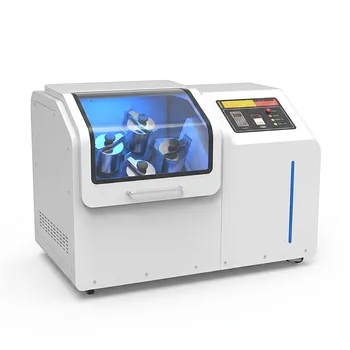
High Energy Omnidirectional Planetary Ball Mill 16L
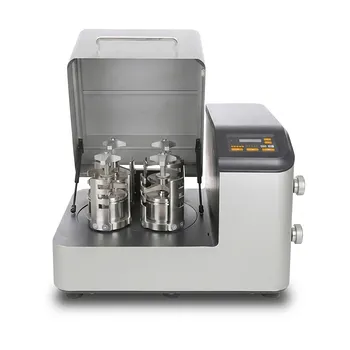
High Energy Planetary Ball Mill for Nano Scale Grinding and Colloidal Mixing in Material Science Research
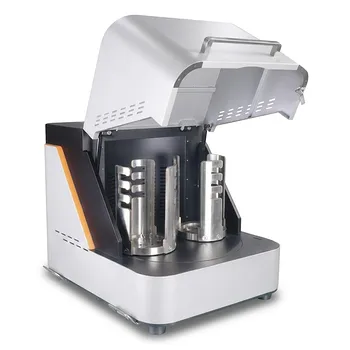
High Energy Laboratory Planetary Ball Mill for Nano Grinding and Colloidal Mixing of Hard and Brittle Materials
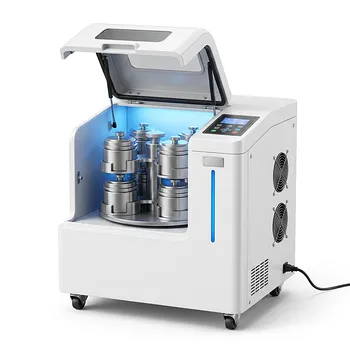
High Energy Omnidirectional Planetary Ball Mill 20L
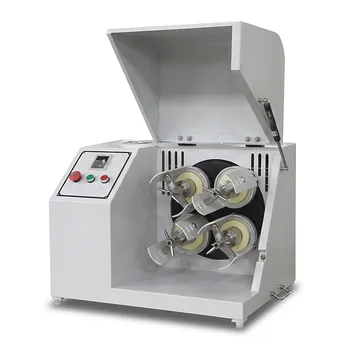
Horizontal Light Duty Planetary Ball Mill for Laboratory Sample Preparation

8L Planetary Ball Mill for Laboratory Grinding and Sample Preparation
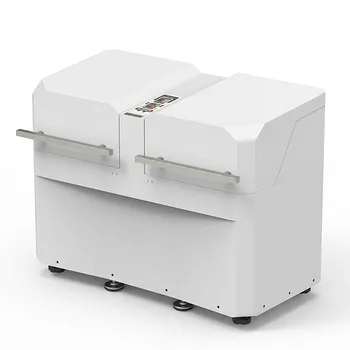
Dual Station Planetary Ball Mill 24L
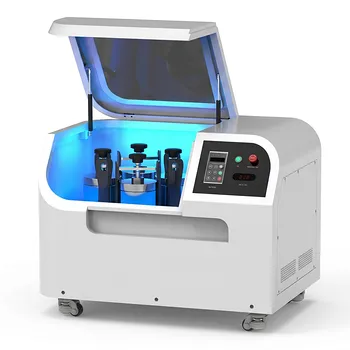
Planetary Ball Mill 12L

Nano High Energy Vibratory Ball Mill for Laboratory Sample Preparation

Multi-Platform Nanoscale High-Energy Vibratory Ball Mill

High Energy Hybrid Vibratory Ball Mill for Grinding Mixing and Cell Disruption