What role does a planetary ball mill play in the preparation of Fe-Cr-Al alloy powder mixtures? Achieve Atomic-Level Mixing
Updated 4 months ago
A planetary ball mill serves as a high-energy mechanical reactor that transforms elemental iron, chromium, and aluminum powders into a chemically uniform precursor. It utilizes intense mechanical impact and shear forces to achieve atomic-level mixing while preventing the macroscopic segregation and premature metallurgical bonding that often plague traditional thermal mixing methods.
The planetary ball mill is the primary tool for achieving atomic-level homogenization and mechanical alloying of Fe-Cr-Al mixtures. By subjecting powders to repeated collision and deformation, it ensures a consistent chemical starting point for subsequent spraying or sintering processes.
The Core Function: Atomic-Level Homogenization
Achieving Physical Mixing Without Bonding
In the preparation of Fe-Cr-Al spraying powders, the mill uses high-speed rotation to generate strong mechanical impacts. This energy forces pure iron, chromium, and aluminum powders to distribute themselves uniformly at an atomic level.
This process is critical because it ensures the mixture is physically consistent throughout. Crucially, it achieves this without causing premature metallurgical bonding during the pretreatment stage, keeping the material stable for later processing.
Prevention of Macroscopic Segregation
One of the primary challenges in mixing elemental powders is the tendency of materials with different densities to separate. The high-energy environment of a planetary ball mill eliminates this macroscopic segregation.
By maintaining a uniform particle distribution, the mill provides a chemically consistent starting material. This consistency is vital for subsequent thermal processes, such as spraying or laser cladding, where local variations in chemistry could ruin the final alloy's properties.
Mechanisms of Powder Transformation
Mechanical Alloying and Cold Welding
Beyond simple mixing, the planetary ball mill facilitates mechanical alloying. The simultaneous rotation and revolution of the grinding jars cause the powders to undergo repeated cycles of deformation, cold welding, and fragmentation.
These intense shear forces break down the crystalline structure of the elemental metals. This process can force the raw powders into a metastable solid solution, often creating a body-centered cubic (BCC) structure that serves as the foundation for dense alloy production.
Particle Refinement and Surface Activity
The high-frequency impact of the grinding media significantly refines the powder particles. In many Fe-Cr systems, this process can reduce micron-scale grains to a nanocrystalline scale of approximately 20 nm.
This refinement increases the surface activity and reactive energy of the powders. High-activity powders are essential for forming stable structures during subsequent thermal processes, such as sintering or laser melting deposition.
Understanding the Trade-offs and Limitations
Heat Generation and Thermal Control
The intense mechanical energy required for alloying generates significant internal heat within the grinding jars. If not managed, this heat can lead to unwanted oxidation of the aluminum or chromium components.
Potential for Media Contamination
Because the process relies on high-energy collisions between the powders and the grinding balls, there is a risk of impurities from the milling media (such as steel or ceramic) leaching into the Fe-Cr-Al mixture. Selecting the correct jar and ball material is a critical technical requirement.
Processing Time vs. Energy Input
Achieving a true nanocrystalline or alloyed state often requires extended milling times, sometimes lasting 15 to 20 hours. Balancing the energy input with the desired degree of chemical disorder is a complex optimization task for the operator.
How to Apply This to Your Project
To maximize the effectiveness of a planetary ball mill in your alloy preparation, you must align your milling parameters with your final manufacturing goals.
- If your primary focus is thermal spraying: Prioritize high-speed mixing that achieves atomic uniformity while strictly avoiding premature bonding to ensure the powder remains flowable.
- If your primary focus is producing dense bulk alloys: Focus on maximizing the milling time and impact energy to achieve a fully alloyed BCC solid solution and nanocrystalline grain refinement.
- If your primary focus is oxidation resistance: Ensure the milling atmosphere is inert (argon) to prevent the high-activity Cr and Al powders from oxidizing during the long refinement cycles.
The planetary ball mill is the definitive tool for bypassing the limitations of traditional melting, providing the microstructural precision necessary for advanced Fe-Cr-Al alloy development.
Summary Table:
| Key Mechanism | Action in Fe-Cr-Al Preparation | Main Benefit |
|---|---|---|
| Atomic Homogenization | Uniformly distributes Fe, Cr, and Al at an atomic level | Prevents macroscopic segregation |
| Mechanical Alloying | Repeated deformation, cold welding, and fragmentation | Creates metastable solid solutions (BCC) |
| Particle Refinement | Reduces micron-scale grains to nanocrystalline (~20 nm) | Increases surface activity & reactivity |
| Atmospheric Control | Milling in inert gas (e.g., Argon) | Prevents oxidation of Cr and Al powders |
Elevate Your Material Science Research with Precision Equipment
Achieving the perfect Fe-Cr-Al alloy mixture requires more than just mixing—it requires high-energy mechanical precision. At our core, we provide complete laboratory sample preparation solutions tailored for advanced material science and powder processing.
Our extensive equipment line is designed to handle every stage of your workflow:
- Powder Processing: High-energy planetary ball mills, jet mills, and cryogenic grinders for nanocrystalline refinement.
- Preparation & Sizing: Jaw/roll crushers, vibratory sieve shakers, and high-efficiency powder mixers.
- Compaction & Sintering: A full spectrum of hydraulic presses, including Cold/Warm Isostatic Presses (CIP/WIP), vacuum hot presses, and XRF pellet presses.
Whether you are focusing on thermal spraying or producing dense bulk alloys, our specialized tools ensure chemical consistency and structural integrity.
Ready to optimize your alloying process? Contact our technical experts today to find the ideal equipment solution for your laboratory.
References
- Aidar Kengesbekov, Sultan Komekov. The Influence of Powder Composition and Hydrogen Consumption on the Structural, Corrosion and Tribological Characteristics of Fe-Cr-Al Coatings Obtained by Air Plasma Spraying. DOI: 10.3390/ma18235395
Mentioned Products
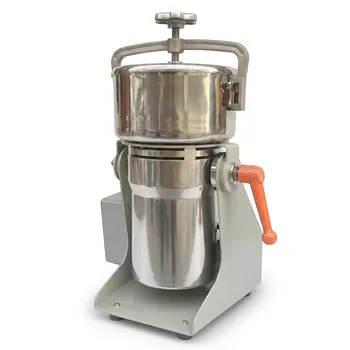
- Vertical Production Planetary Ball Mill for High Throughput Powder Processing
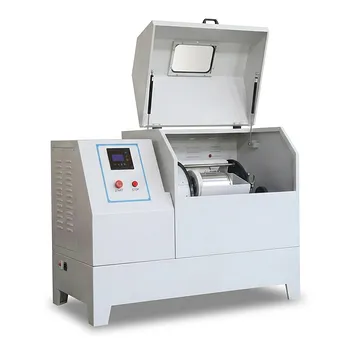
- Heavy Duty Horizontal Planetary Ball Mill for Efficient Industrial Grinding and Sample Preparation
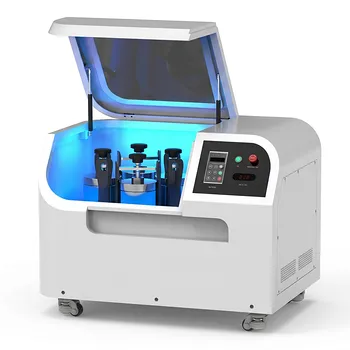
- Planetary Ball Mill 12L
- 360° Rotating Omnidirectional Laboratory Planetary Ball Mill for Homogeneous Ultra-Fine Grinding and Mixing
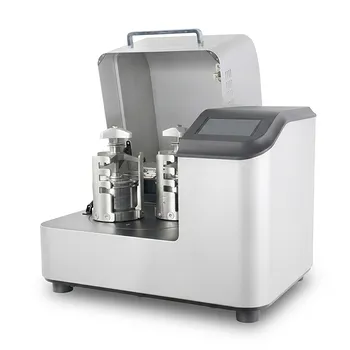
- High Energy Planetary Ball Mill for Nano Scale Grinding and Mechanical Alloying
People Also Ask
- What is the function of a high-performance planetary ball mill in AMZ laminates? Master Ceramic Homogenization.
- What is the role of a planetary ball mill in Al–Si3N4 nanocomposite prep? Achieve Uniform Homogenization
- What is the function of a planetary ball mill in lanthanum hexaaluminate synthesis? Master Micron-Level Homogenization
- What role does a planetary ball mill play in the synthesis of Er-doped PMN-PT ceramics? Enhancing Homogeneity & Purity
- What are the advantages of using a planetary ball mill for the fine grinding of barium silicate glass powder? Peak Results

Tech Team · PowderPreparation
Last updated on May 14, 2026
Related Products

Vertical Production Planetary Ball Mill for High Throughput Powder Processing
Heavy Duty Horizontal Planetary Ball Mill for Efficient Industrial Grinding and Sample Preparation
Planetary Ball Mill 12L

360° Rotating Omnidirectional Laboratory Planetary Ball Mill for Homogeneous Ultra-Fine Grinding and Mixing
High Energy Planetary Ball Mill for Nano Scale Grinding and Mechanical Alloying

8L Planetary Ball Mill for Laboratory Grinding and Sample Preparation
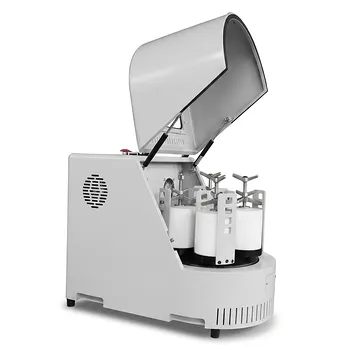
Vertical Semi Circular Planetary Ball Mill for Laboratory Precision Grinding

Vertical Square Planetary Ball Mill for Laboratory Sample Preparation and Nanoscale Grinding
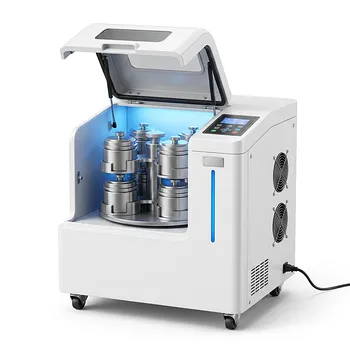
High Energy Omnidirectional Planetary Ball Mill 20L

Miniature Planetary Ball Mill with Vacuum Grinding and High Efficiency for Laboratory Sample Preparation

High Energy Omnidirectional Planetary Ball Mill 16L
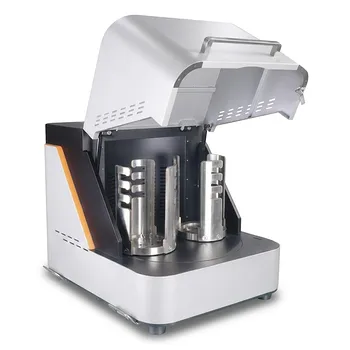
High Energy Laboratory Planetary Ball Mill for Nano Grinding and Colloidal Mixing of Hard and Brittle Materials
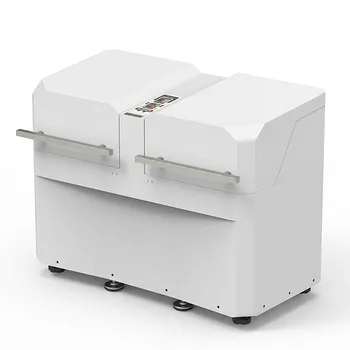
Dual Station Planetary Ball Mill 24L
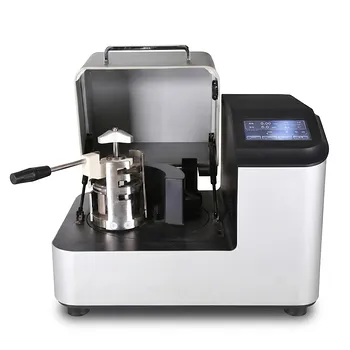
High Energy Laboratory Planetary Ball Mill for Nano Grinding and Material Science Sample Preparation
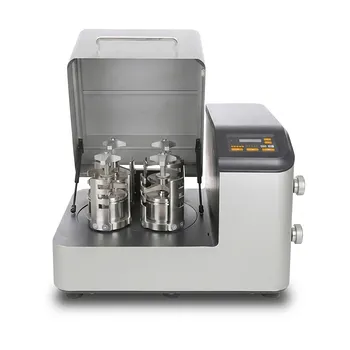
High Energy Planetary Ball Mill for Nano Scale Grinding and Colloidal Mixing in Material Science Research
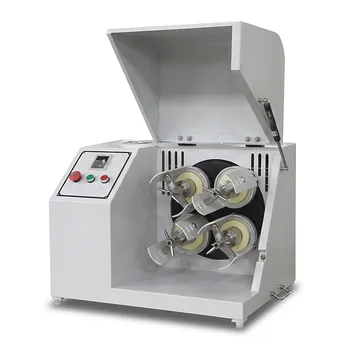
Horizontal Light Duty Planetary Ball Mill for Laboratory Sample Preparation
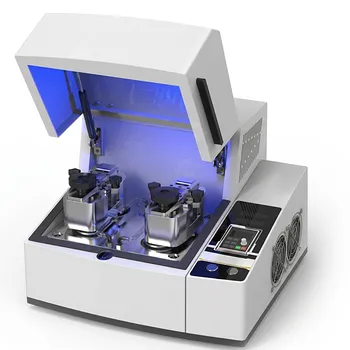
Laboratory Nano High Energy Ball Mill Ultrafine Grinding Mechanical Alloying
Multi-Platform Nanoscale High-Energy Vibratory Ball Mill
Nanoscale High-Energy Vibratory Ball Mill for Laboratory Sample Preparation, Mechanochemistry, and Mechanical Alloying