What role does a planetary ball mill play in the preparation of B@NiF2 composite micro-units? Master Core-Shell Coating
Updated 4 months ago
A planetary ball mill serves as the primary high-energy mechanical processor in the fabrication of B@NiF2 composite micro-units. It utilizes high-speed rotation to generate intense shear and impact forces that uniformly coat nickel fluoride (NiF2) onto boron (B) particles. This process is essential for achieving micro-scale mixing, overcoming particle agglomeration, and penetrating the inherent oxide layer on the boron surface.
The planetary ball mill transforms raw powders into functional core-shell micro-units by leveraging mechanical energy to achieve uniform NiF2 coating and surface activation of boron. This ensures a stable, dense microstructure that is critical for the performance of the resulting composite.
The Mechanics of High-Energy Processing
Generating Shear and Impact Forces
The planetary ball mill operates through high-speed rotation, which creates powerful centrifugal, impact, and shear forces within the grinding jars. These forces result from the motion of the grinding media colliding with the precursor powders at high frequencies. In the context of B@NiF2, these physical forces are the primary driver for mechanical alloying and surface modification.
Achieving Micro-Scale Mixing
Unlike standard mixing methods, the high-energy environment of a ball mill ensures that NiF2 and boron are mixed at a micro-scale level. This prevents component segregation, which is often caused by the density differences between various material phases. By maintaining a homogeneous distribution, the equipment establishes a consistent microstructural foundation for the composite.
Overcoming Particle Agglomeration
Fine powders, particularly boron, have a natural tendency to cluster into large, irregular masses. The mechanical energy provided by the mill effectively breaks down these agglomerates, ensuring that individual particles are available for coating. This breakdown is a prerequisite for creating a uniform final product with predictable properties.
Critical Transformations in B@NiF2 Preparation
Forming the Core-Shell Structure
The primary goal of using a planetary ball mill in this application is to create a dense core-shell architecture. The mechanical impact forces "press" the nickel fluoride onto the surface of the boron particles. This creates a continuous, protective, and functional layer of NiF2 surrounding the boron core.
Penetrating the Boron Oxide Layer
Boron particles typically possess a surface oxide layer that can inhibit reactivity and bonding. The high-energy collisions in the ball mill provide the necessary physical force to break through this oxide layer. This activation of the boron surface is vital for ensuring a tight interfacial contact between the core and the shell.
Enhancing Reactivity and Surface Area
The milling process significantly reduces the average particle size while increasing the specific surface area of the components. This refinement increases the overall reactivity of the powders. Such changes are essential for the efficiency of subsequent sintering or chemical reactions the composite may undergo.
Understanding the Trade-offs and Pitfalls
Energy Management and Material Degradation
While high energy is required to break oxide layers, excessive milling time or speed can lead to unwanted material degradation. Over-processing may introduce impurities from the grinding media or cause the powders to re-agglomerate through a process known as cold welding. Precision in timing and energy input is required to balance coating thickness with material integrity.
Density-Driven Segregation
Materials with significant density disparities can be difficult to mix uniformly. Although the planetary motion helps mitigate this, improper jar loading or rotation speeds can still lead to segregation. This results in an inconsistent coating where some boron particles remain exposed while others are heavily encased.
How to Apply This to Your Preparation Process
Making the Right Choice for Your Goal
- If your primary focus is maximizing core-shell density: Prioritize higher rotation speeds and optimized ball-to-powder ratios to ensure the NiF2 is forcefully embedded onto the boron surface.
- If your primary focus is surface activation: Focus on the initial stages of the milling cycle to ensure the boron oxide layer is sufficiently disrupted without over-milling the core material.
- If your primary focus is preventing component segregation: Utilize high-frequency rotation and consider multi-directional milling paths to maintain a homogeneous mixture of high-density NiF2 and low-density Boron.
By mastering the mechanical forces within the planetary ball mill, researchers can precisely engineer the interface and architecture of B@NiF2 micro-units for high-performance applications.
Summary Table:
| Process Function | Impact on B@NiF2 Composite | Key Technical Benefit |
|---|---|---|
| High-Energy Impact | Embeds NiF2 onto Boron particles | Creates a dense core-shell architecture |
| Mechanical Activation | Disrupts the inherent Boron oxide layer | Ensures strong interfacial bonding |
| Micro-Scale Mixing | Eliminates density-driven segregation | Achieves a perfectly homogeneous mixture |
| Surface Refinement | Reduces particle size & increases area | Enhances overall chemical reactivity |
Elevate Your Material Synthesis with Professional Lab Solutions
At [Company Name], we provide complete laboratory sample preparation solutions for material science, specializing in high-precision powder processing and compaction equipment. Whether you are engineering B@NiF2 micro-units or developing advanced energy materials, our equipment ensures the consistency and quality your research demands.
Our extensive product line includes:
- Powder Processing: High-energy planetary ball mills, jet mills, cryogenic grinders, and vibratory sieve shakers.
- Mixing Technology: Advanced powder mixers and vacuum defoaming mixers for air-free consistency.
- Compaction Solutions: A full spectrum of hydraulic presses, including Cold/Warm Isostatic Presses (CIP/WIP), hot presses, and XRF pellet presses.
Ready to optimize your composite preparation workflow? Contact our technical experts today to find the ideal equipment configuration for your specific application requirements.
References
- Jiaqi Cao, Jie Liu. Preparation and Performance of Core–Shell Structured B@NiF2/AP Composite Micro-Units. DOI: 10.3390/app152312495
Mentioned Products
- Vertical Semi Circular Planetary Ball Mill for Laboratory Precision Grinding
- High Energy Planetary Ball Mill for Nano Scale Grinding and Mechanical Alloying
- Vertical Production Planetary Ball Mill for High Throughput Powder Processing
- Heavy Duty Horizontal Planetary Ball Mill for Efficient Industrial Grinding and Sample Preparation
- 360° Rotating Omnidirectional Laboratory Planetary Ball Mill for Homogeneous Ultra-Fine Grinding and Mixing
People Also Ask
- What role does a planetary ball mill play in the synthesis of Li6PS5Cl (LPSCl)? Unlock High Ionic Conductivity
- Why is a planetary ball mill essential for SiBCN-rGO wet-spinning? Achieve Superior Dispersion and Spinnability
- Why is an intermittent grinding process required for perovskites in a planetary ball mill? Ensure Stability & Purity
- Why is a planetary ball mill required for PET micronization? Ensure Accurate Chemical Analysis of Reprocessed PET
- How does mechanized planetary ball milling compare to manual agate grinding? Optimize sulfide standard material precision.

Tech Team · PowderPreparation
Last updated on Jun 03, 2026
Related Products
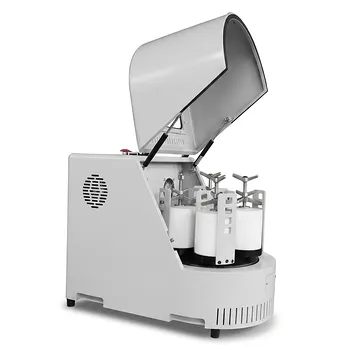
Vertical Semi Circular Planetary Ball Mill for Laboratory Precision Grinding

High Energy Planetary Ball Mill for Nano Scale Grinding and Mechanical Alloying
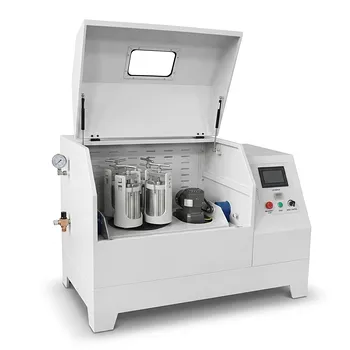
Vertical Production Planetary Ball Mill for High Throughput Powder Processing
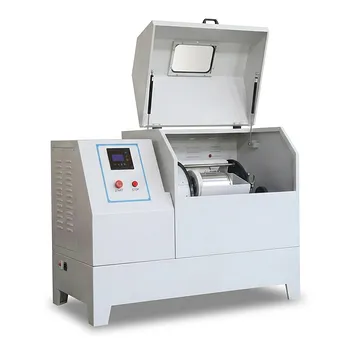
Heavy Duty Horizontal Planetary Ball Mill for Efficient Industrial Grinding and Sample Preparation
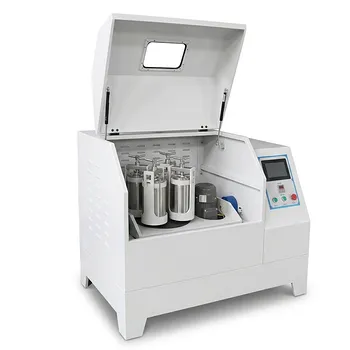
360° Rotating Omnidirectional Laboratory Planetary Ball Mill for Homogeneous Ultra-Fine Grinding and Mixing

Vertical Square Planetary Ball Mill for Laboratory Sample Preparation and Nanoscale Grinding

Miniature Planetary Ball Mill with Vacuum Grinding and High Efficiency for Laboratory Sample Preparation

High Energy Laboratory Planetary Ball Mill for Nano Grinding and Material Science Sample Preparation

High Energy Omnidirectional Planetary Ball Mill 16L
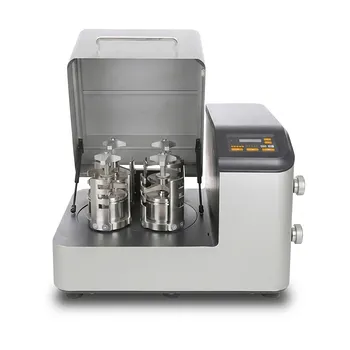
High Energy Planetary Ball Mill for Nano Scale Grinding and Colloidal Mixing in Material Science Research
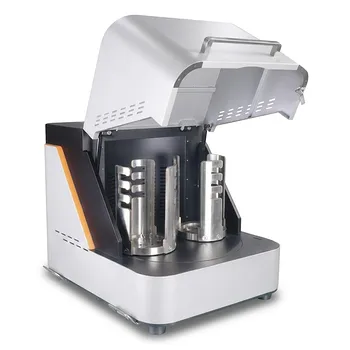
High Energy Laboratory Planetary Ball Mill for Nano Grinding and Colloidal Mixing of Hard and Brittle Materials
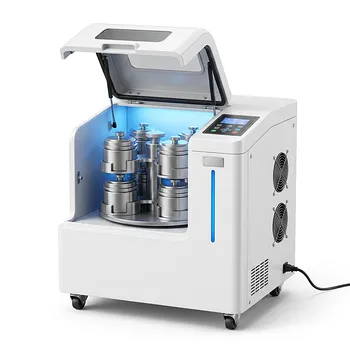
High Energy Omnidirectional Planetary Ball Mill 20L
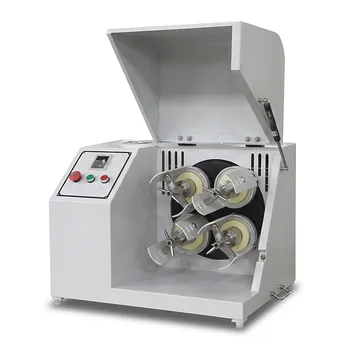
Horizontal Light Duty Planetary Ball Mill for Laboratory Sample Preparation

8L Planetary Ball Mill for Laboratory Grinding and Sample Preparation
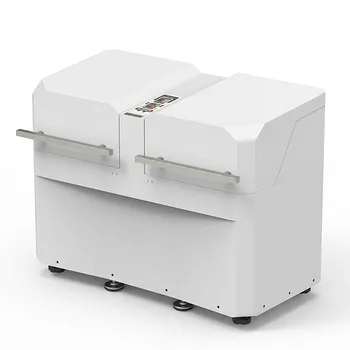
Dual Station Planetary Ball Mill 24L
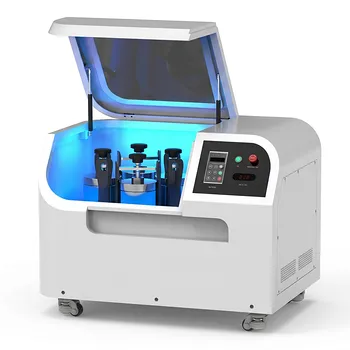
Planetary Ball Mill 12L

Nano High Energy Vibratory Ball Mill for Laboratory Sample Preparation

Multi-Platform Nanoscale High-Energy Vibratory Ball Mill

High Energy Hybrid Vibratory Ball Mill for Grinding Mixing and Cell Disruption
