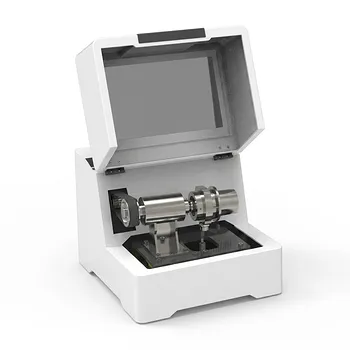
What role does a planetary ball mill play in reaction sintering? Optimize carbide precursor activation & efficiency.
Updated 3 months ago
The planetary ball mill is the engine of "mechanical activation," a process that enables the direct carbonization of tungsten during the sintering phase. By simultaneously homogenizing tungsten, carbon, and cobalt powders while increasing their surface energy, the mill eliminates the need for the traditional, energy-intensive high-temperature carbonization step.
Core Takeaway: In reaction sintering, the planetary ball mill serves as a mechanochemical reactor that prepares the precursor powders to react "in-situ," significantly streamlining the production of cemented carbides by merging chemical synthesis with the final sintering process.
Facilitating Mechanical Activation and Reactivity
Increasing Surface Energy
The high-energy impact and shear forces within the mill do more than just break down particles; they introduce structural defects and increase the specific surface area. This accumulation of mechanical energy translates into higher chemical reactivity, making the powders more prone to bonding and reacting.
Reducing Reaction Barriers
Because the powders are "activated" during milling, the energy barrier for the carbonization reaction is lowered. This allows the tungsten and carbon to form tungsten carbide (WC) directly within the furnace during the sintering stage, rather than requiring a separate, preliminary heat treatment.
Achieving Precision Homogenization
Ensuring Atomic-Level Contact
For reaction sintering to be successful, tungsten and carbon particles must be in intimate contact. The planetary ball mill ensures high-frequency rotation and impact, which forces these components into an atomic-level distribution, preventing "dead zones" where the reaction might fail to occur.
Eliminating Component Segregation
The mill prevents the heavier tungsten and lighter carbon powders from separating during the precursor stage. By achieving a uniform distribution of the cobalt binder, the mill ensures that the final ceramic-metal composite has consistent mechanical properties throughout its structure.
Structural Optimization of the Precursor
Controlling Particle Size Distribution
The milling process effectively eliminates particle agglomeration, ensuring that the precursor powder maintains excellent flow and packing density. This control is vital for reducing internal structural defects and voids during the subsequent sintering phase.
Foundation for Ultrafine Microstructures
By refining the powder to the micron or nanometer scale, the planetary ball mill sets the stage for a fine-grained final product. This precision grinding is the prerequisite for producing high-performance cemented carbides with superior hardness and wear resistance.
Understanding the Trade-offs and Pitfalls
Risk of Media Contamination
The high-energy nature of planetary milling can lead to the wear of the grinding jars and balls. If the milling media is not carefully selected to match the precursor chemistry, impurities can be introduced, which may degrade the mechanical performance of the final carbide.
Management of Thermal Build-up
The intense mechanical energy generates significant heat during the milling cycle. Excessive temperatures can cause premature oxidation of the powders or unwanted phase changes, requiring precise control over milling intervals and cooling periods.
How to Apply This to Your Project
Recommendations Based on Production Goals
- If your primary focus is process efficiency: Utilize the mill to combine mixing and activation into a single step, explicitly targeting the elimination of the separate carbonization furnace cycle.
- If your primary focus is material hardness: Extend milling times to achieve nanometer-scale refinement, which serves as the foundation for an ultrafine-grained microstructure.
- If your primary focus is structural integrity: Prioritize the elimination of agglomerates through wet milling in a medium like ethanol to ensure the precursor achieves maximum homogeneity.
By mastering the mechanical activation provided by the planetary ball mill, you can transform a multi-step chemical synthesis into a streamlined, high-performance manufacturing process.
Summary Table:
| Key Function | Mechanism | Production Benefit |
|---|---|---|
| Mechanical Activation | Increases surface energy & structural defects | Lowers reaction energy barriers; enables in-situ carbonization |
| Homogenization | Atomic-level powder distribution | Prevents component segregation; ensures uniform material properties |
| Size Refinement | Micron to nanometer-scale grinding | Eliminates agglomeration; foundation for ultrafine microstructures |
| Process Integration | Mechanochemical reactor capability | Merges chemical synthesis with sintering; eliminates extra heat steps |
Elevate Your Carbide Synthesis with Precision Equipment
Achieving the perfect precursor for reaction sintering requires high-performance equipment that ensures both mechanical activation and absolute homogeneity. We provide complete laboratory sample preparation solutions for material science, specializing in advanced powder processing and compaction technology.
Our extensive range is designed to support your entire R&D and production workflow:
- Grinding & Milling: High-energy planetary ball mills, jet mills, and liquid nitrogen cryogenic grinders for precise particle size control.
- Mixing: Powder and defoaming mixers to ensure atomic-level distribution of precursors.
- Compaction & Sintering Prep: A full spectrum of hydraulic presses, including Cold/Warm Isostatic Presses (CIP/WIP), vacuum hot presses, and XRF pellet presses.
Ready to streamline your manufacturing process and enhance material hardness? Contact our specialists today to discover how our tailored solutions can optimize your laboratory’s performance!
References
- Victor Ioan Stanciu, Fabienne Delaunois. Reactive Sintering of Cemented Carbides. DOI: 10.3390/alloys4030015
Mentioned Products
- Vertical Semi Circular Planetary Ball Mill for Laboratory Precision Grinding
- High Energy Planetary Ball Mill for Nano Scale Grinding and Mechanical Alloying
- Vertical Production Planetary Ball Mill for High Throughput Powder Processing
- Heavy Duty Horizontal Planetary Ball Mill for Efficient Industrial Grinding and Sample Preparation
- 360° Rotating Omnidirectional Laboratory Planetary Ball Mill for Homogeneous Ultra-Fine Grinding and Mixing
People Also Ask
- What role does a planetary ball mill play in the synthesis of Li6PS5Cl (LPSCl)? Unlock High Ionic Conductivity
- Why is a planetary ball mill essential for SiBCN-rGO wet-spinning? Achieve Superior Dispersion and Spinnability
- Why is an intermittent grinding process required for perovskites in a planetary ball mill? Ensure Stability & Purity
- Why is a planetary ball mill required for PET micronization? Ensure Accurate Chemical Analysis of Reprocessed PET
- How does mechanized planetary ball milling compare to manual agate grinding? Optimize sulfide standard material precision.

Tech Team · PowderPreparation
Last updated on Jun 03, 2026
Related Products
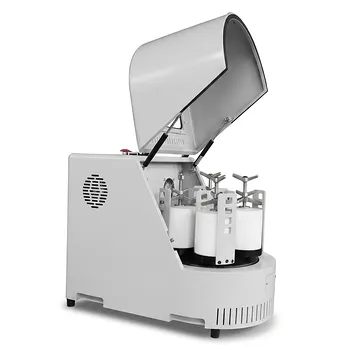
Vertical Semi Circular Planetary Ball Mill for Laboratory Precision Grinding
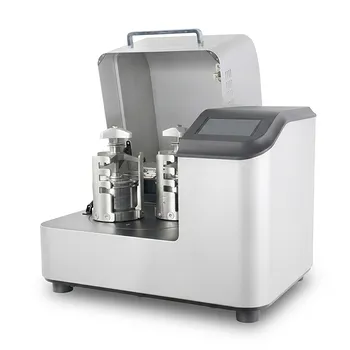
High Energy Planetary Ball Mill for Nano Scale Grinding and Mechanical Alloying
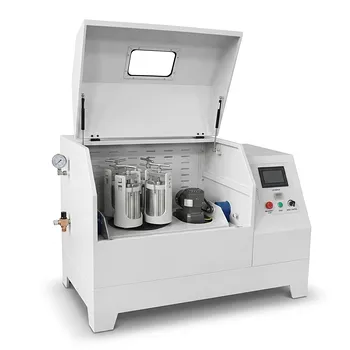
Vertical Production Planetary Ball Mill for High Throughput Powder Processing
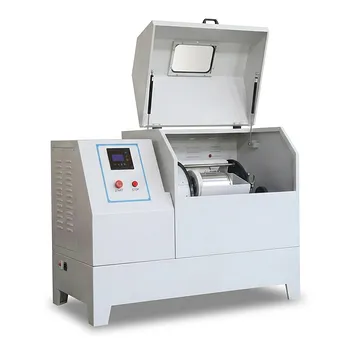
Heavy Duty Horizontal Planetary Ball Mill for Efficient Industrial Grinding and Sample Preparation
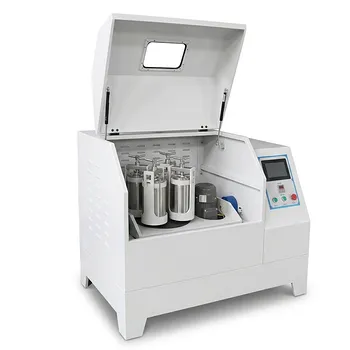
360° Rotating Omnidirectional Laboratory Planetary Ball Mill for Homogeneous Ultra-Fine Grinding and Mixing

Vertical Square Planetary Ball Mill for Laboratory Sample Preparation and Nanoscale Grinding
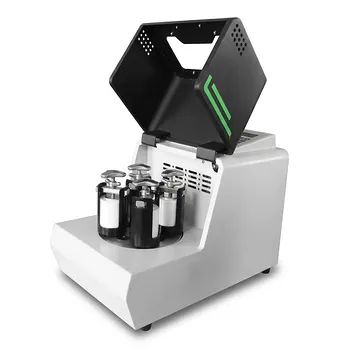
Miniature Planetary Ball Mill with Vacuum Grinding and High Efficiency for Laboratory Sample Preparation
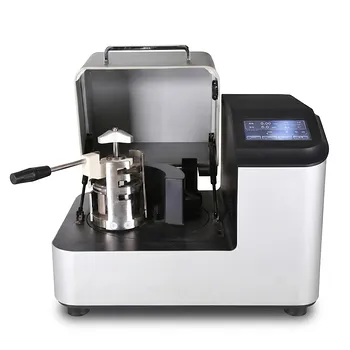
High Energy Laboratory Planetary Ball Mill for Nano Grinding and Material Science Sample Preparation
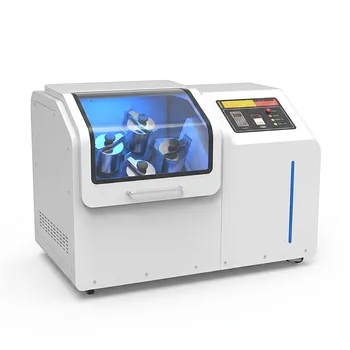
High Energy Omnidirectional Planetary Ball Mill 16L
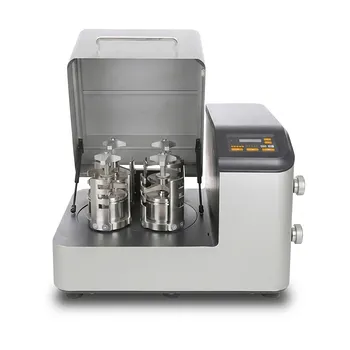
High Energy Planetary Ball Mill for Nano Scale Grinding and Colloidal Mixing in Material Science Research
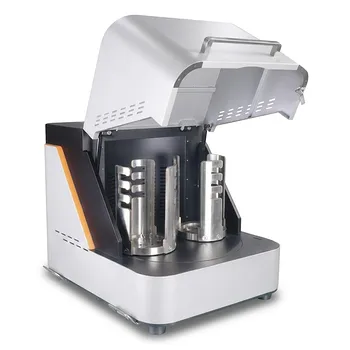
High Energy Laboratory Planetary Ball Mill for Nano Grinding and Colloidal Mixing of Hard and Brittle Materials
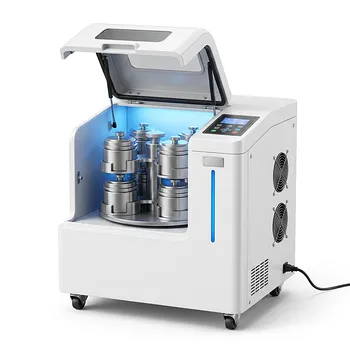
High Energy Omnidirectional Planetary Ball Mill 20L
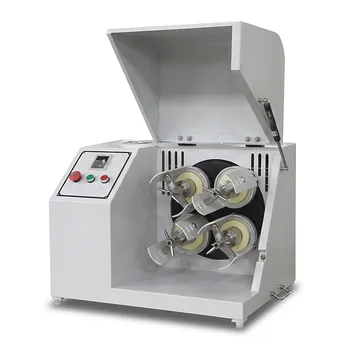
Horizontal Light Duty Planetary Ball Mill for Laboratory Sample Preparation

8L Planetary Ball Mill for Laboratory Grinding and Sample Preparation
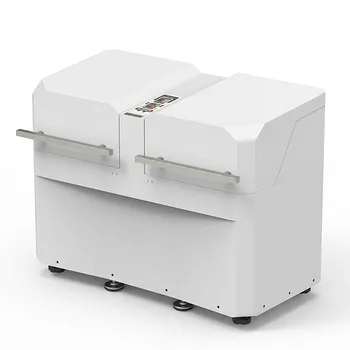
Dual Station Planetary Ball Mill 24L
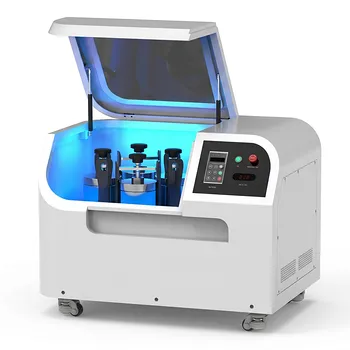
Planetary Ball Mill 12L

Nano High Energy Vibratory Ball Mill for Laboratory Sample Preparation

Multi-Platform Nanoscale High-Energy Vibratory Ball Mill

High Energy Hybrid Vibratory Ball Mill for Grinding Mixing and Cell Disruption