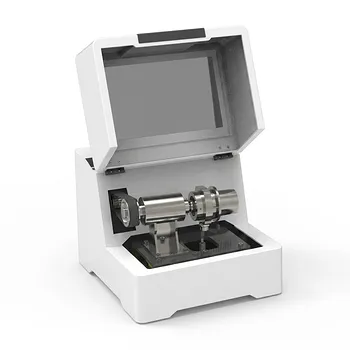
What role does a planetary ball mill play in modifying ZrB2 and SiC? Enhance Particle Reactivity & Homogeneity
Updated 4 months ago
The planetary ball mill acts as a high-energy processor that transforms coarse $ZrB_2$ and $SiC$ powders into highly reactive, sub-micron reinforcements. By utilizing intense centrifugal and impact forces, this equipment reduces original 15-micrometer ceramic powders down to sub-micron or even nanometer scales. This modification is critical for improving the wettability, dispersion, and overall mechanical performance of these particles when integrated into metal or ceramic matrices.
The primary role of a planetary ball mill is to increase the surface energy and chemical reactivity of $ZrB_2$ and $SiC$ particles while ensuring microscopic homogeneity. This mechanical activation is the foundational step required to eliminate particle agglomeration and achieve fully dense, high-performance composite materials.
Mechanical Refinement and Surface Activation
Particle Size Reduction via High-Energy Impact
A planetary ball mill utilizes the combined motion of revolution and rotation to generate massive kinetic energy in the grinding media. This energy produces intense impact, shear, and attrition forces that effectively crush $ZrB_2$ and $SiC$ particles.
While raw materials may start between 3 and 15 micrometers, the milling process can refine them to the 1–3 micrometer range or even to the nanometer scale. This drastic reduction is essential for creating the fine-grained microstructures required in advanced material science.
Increasing Surface Energy and Reactivity
As particles are fractured, their specific surface area increases significantly, which in turn raises their surface energy. This higher energy state improves the wettability of the ceramic particles, allowing them to bond more effectively with metal melts, such as magnesium or copper alloys.
In chemical applications, this increased reactivity is a strategic advantage. It effectively lowers the starting temperature for complex reactions, such as carbothermal and borothermal reductions, by increasing the available contact area between precursors.
Ensuring Microscopic Homogeneity
Eliminating Particle Agglomeration
Ceramic reinforcements like $SiC$ often suffer from "clumping" or agglomeration, which creates weak points in a final material. High-energy milling applies enough force to break up these clusters, ensuring each particle exists as a discrete unit within the matrix.
By eliminating these defects, the milling process ensures that the reinforcement phase is uniformly distributed. This leads to a more consistent microstructure, which is vital for the reliability of components like micro-heat exchangers or sintered billets.
Mechanical Alloying and Multi-Component Mixing
For composite powders involving multiple additives—such as sintering aids or binders—the planetary ball mill provides atomic-level deep mixing. The mechanical alloying effect involves repeated plastic deformation, cold welding, and fracture of the powders.
This process flattens the powder particles and ensures that additives are dispersed evenly at the microscopic scale. Such precision in mixing is the only way to achieve a uniform structure in the final composite during the subsequent sintering phase.
Impact on Material Fabrication and Sintering
Achieving Fully Dense Microstructures
The refinement of $ZrB_2$ and $SiC$ powders directly influences the quality of the final sintered product. Finer particles fill voids more effectively and provide more driving force for diffusion during heat treatment.
This results in a denser microstructure with fewer internal structural defects. For applications like heat exchangers, this density is the primary factor in achieving high thermal conductivity and mechanical strength.
Improving Slurry Fluidity
In processes involving polymer binders or liquid carriers, the mill adjusts the particle size distribution to ensure excellent fluidity. This allows the mixture to fully penetrate dense fiber skeletons or molds, reducing the risk of internal voids in complex ceramic shapes.
Understanding the Trade-offs and Limitations
Potential for Material Contamination
The primary downside of high-energy milling is the potential for contamination from the grinding media (balls and jars). As the media wears down, small amounts of material—such as zirconium oxide or stainless steel—can be introduced into the $ZrB_2$ or $SiC$ powder.
Heat Generation and Oxidation
The intense friction generated during high-speed rotation produces significant heat. If not carefully managed through cooling cycles or inert gas environments, this heat can lead to the unwanted oxidation of the reinforcement particles, potentially degrading their properties.
Structural Damage and Amorphization
Excessive milling energy can sometimes go beyond refinement and cause lattice distortion or amorphization of the crystal structure. While this increases reactivity, it can also alter the fundamental physical properties of the $ZrB_2$ or $SiC$ reinforcement.
Making the Right Choice for Your Goal
To maximize the effectiveness of a planetary ball mill in your material processing, consider the following recommendations:
- If your primary focus is improving mechanical strength in a metal matrix: Prioritize high-speed milling to maximize particle refinement and surface energy for better wettability.
- If your primary focus is chemical synthesis (Carbothermal/Borothermal): Focus on the uniform mixing of precursors to lower reaction temperatures and ensure complete conversion.
- If your primary focus is high-purity applications: Use grinding media and jars made of the same material as your powder (e.g., $ZrB_2$ or $SiC$-lined) to eliminate cross-contamination.
- If your primary focus is complex shaping or casting: Optimize the milling time to achieve a specific particle size distribution that maximizes slurry fluidity and penetration.
By mastering the high-energy dynamics of the planetary ball mill, researchers can transform inert ceramic powders into highly active, precision-engineered reinforcements for the next generation of composite materials.
Summary Table:
| Milling Feature | Role in Modification | Key Benefit to Material |
|---|---|---|
| High-Energy Impact | Reduces particles to sub-micron or nano scale | Increased grain refinement & strength |
| Surface Activation | Increases specific surface area & energy | Improved wettability & bonding with matrices |
| De-agglomeration | Breaks up ceramic clusters/clumping | Uniform distribution & fewer structural defects |
| Mechanical Alloying | Atomic-level deep mixing of additives | Precise homogeneity for high-performance sintering |
| Size Control | Tailors particle size distribution | Enhanced slurry fluidity & mold penetration |
Elevate Your Material Research with Precision Powder Solutions
Achieving the perfect sub-micron reinforcement requires more than just a mill—it requires a complete, integrated workflow. [Brand Name] provides comprehensive laboratory sample preparation solutions tailored for material science. We specialize in high-performance powder processing and compaction equipment designed to help you reach full theoretical density in your composites.
Our Specialized Equipment Lines Include:
- Advanced Milling: High-energy planetary ball mills, jet mills, liquid nitrogen cryogenic grinders, and disc mills.
- Crushing & Sizing: Jaw/roll crushers and vibratory/air-jet sieve shakers with precision test sieves.
- Homogeneous Mixing: Industrial-grade powder mixers and vacuum defoaming mixers.
- Precision Compaction: A full spectrum of hydraulic presses, including Cold/Warm Isostatic Presses (CIP/WIP), standard lab presses, XRF pellet presses, and vacuum hot presses for superior sintering results.
Ready to transform your $ZrB_2$ and $SiC$ processing? Let our experts help you configure the ideal solution for your laboratory.
Contact Our Technical Team Today
References
- hossien salehi vaziri, Seyyed Salman Seyyed Afghahi. Influence of ZrB2/SiC Hybrid Particles on Microstructure and Creep Resistance of AZ31Magnesium Alloy Matrix Composite. DOI: 10.5829/ije.2026.39.02b.01
Mentioned Products
- Vertical Semi Circular Planetary Ball Mill for Laboratory Precision Grinding
- High Energy Planetary Ball Mill for Nano Scale Grinding and Mechanical Alloying
- Vertical Production Planetary Ball Mill for High Throughput Powder Processing
- Heavy Duty Horizontal Planetary Ball Mill for Efficient Industrial Grinding and Sample Preparation
- 360° Rotating Omnidirectional Laboratory Planetary Ball Mill for Homogeneous Ultra-Fine Grinding and Mixing
People Also Ask
- What role does a planetary ball mill play in the synthesis of Li6PS5Cl (LPSCl)? Unlock High Ionic Conductivity
- Why is a planetary ball mill essential for SiBCN-rGO wet-spinning? Achieve Superior Dispersion and Spinnability
- Why is an intermittent grinding process required for perovskites in a planetary ball mill? Ensure Stability & Purity
- Why is a planetary ball mill required for PET micronization? Ensure Accurate Chemical Analysis of Reprocessed PET
- How does mechanized planetary ball milling compare to manual agate grinding? Optimize sulfide standard material precision.

Tech Team · PowderPreparation
Last updated on Jun 03, 2026
Related Products
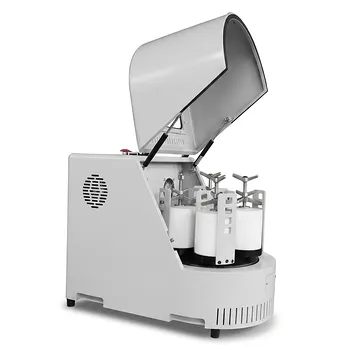
Vertical Semi Circular Planetary Ball Mill for Laboratory Precision Grinding

High Energy Planetary Ball Mill for Nano Scale Grinding and Mechanical Alloying

Vertical Production Planetary Ball Mill for High Throughput Powder Processing
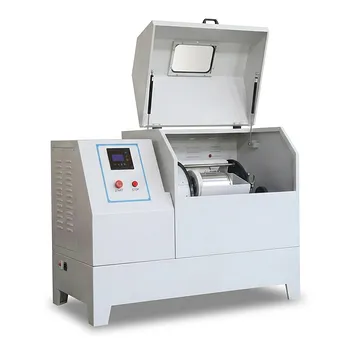
Heavy Duty Horizontal Planetary Ball Mill for Efficient Industrial Grinding and Sample Preparation
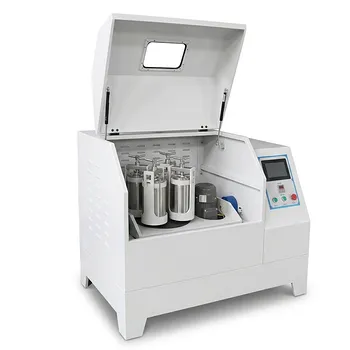
360° Rotating Omnidirectional Laboratory Planetary Ball Mill for Homogeneous Ultra-Fine Grinding and Mixing
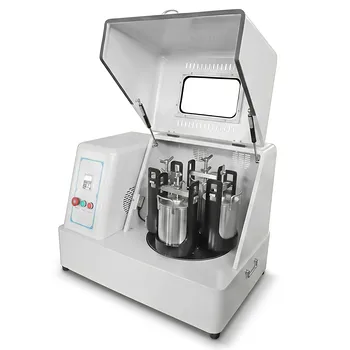
Vertical Square Planetary Ball Mill for Laboratory Sample Preparation and Nanoscale Grinding

Miniature Planetary Ball Mill with Vacuum Grinding and High Efficiency for Laboratory Sample Preparation

High Energy Laboratory Planetary Ball Mill for Nano Grinding and Material Science Sample Preparation

High Energy Omnidirectional Planetary Ball Mill 16L
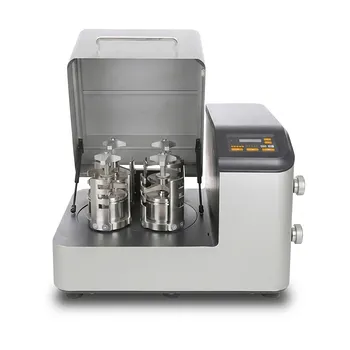
High Energy Planetary Ball Mill for Nano Scale Grinding and Colloidal Mixing in Material Science Research
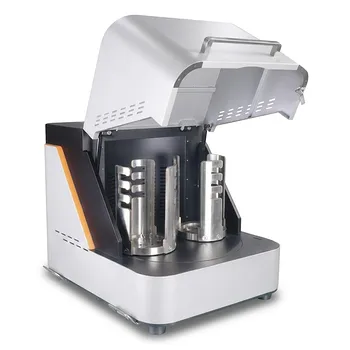
High Energy Laboratory Planetary Ball Mill for Nano Grinding and Colloidal Mixing of Hard and Brittle Materials
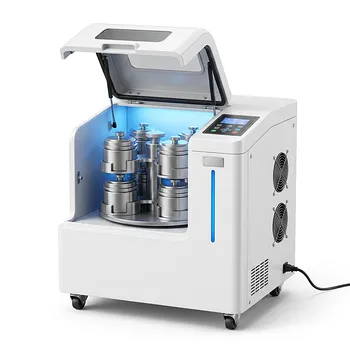
High Energy Omnidirectional Planetary Ball Mill 20L
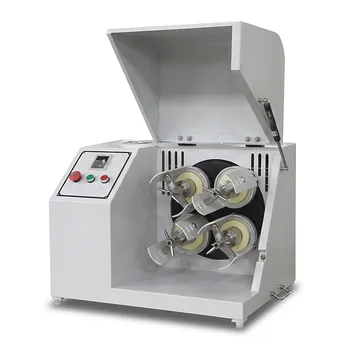
Horizontal Light Duty Planetary Ball Mill for Laboratory Sample Preparation

8L Planetary Ball Mill for Laboratory Grinding and Sample Preparation
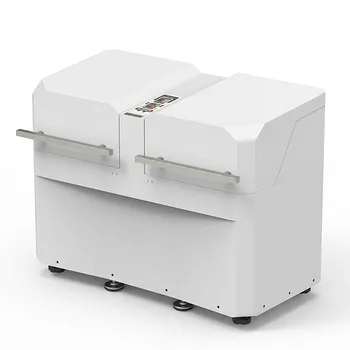
Dual Station Planetary Ball Mill 24L
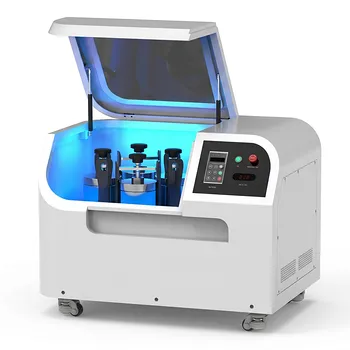
Planetary Ball Mill 12L

Nano High Energy Vibratory Ball Mill for Laboratory Sample Preparation

Multi-Platform Nanoscale High-Energy Vibratory Ball Mill

High Energy Hybrid Vibratory Ball Mill for Grinding Mixing and Cell Disruption