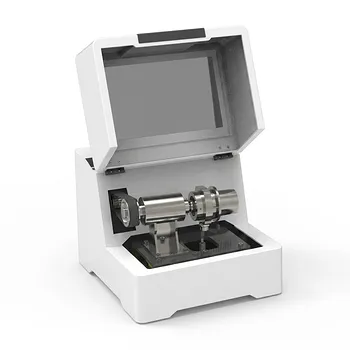
What role does a planetary ball mill play in mixing ZrB2 powders? Achieve Superior Homogeneity & Particle Refinement
Updated 5 months ago
The role of a planetary ball mill in mixing Zirconium Diboride (ZrB2) powders is to achieve microscopic homogenization and particle refinement through high-energy mechanical forces. By utilizing high-speed rotation to generate intense centrifugal, impact, and shear forces, the mill ensures that ZrB2 and additives—such as Silicon Carbide (SiC) or Boron Carbide (B4C)—are uniformly distributed. This process breaks down powder agglomerates and increases the surface area of the reactants, which is critical for successful densification and structural integrity during the subsequent sintering phase.
A planetary ball mill serves as a high-energy reactor that transforms raw powder mixtures into a highly reactive, homogeneous precursor. By refining particle size and inducing mechanical activation, it lowers the energy barriers for subsequent chemical reactions and sintering, ensuring a uniform microstructure in the final ceramic composite.
Mechanical Mechanisms in ZrB2 Powder Processing
Generation of High-Energy Impact and Shear Forces
The planetary ball mill operates by rotating grinding jars on a sun wheel while simultaneously rotating them in the opposite direction. This "planetary" motion creates massive centrifugal forces that launch the grinding media across the jar, resulting in high-intensity impact and shear forces.
Particle Size Reduction and De-agglomeration
ZrB2 powders often contain "soft" agglomerates that can lead to structural defects if not properly dispersed. The mechanical energy within the mill effectively crushes these coarse particles and breaks down clusters, ensuring a reduced and narrow particle size distribution.
Mechanical Activation of Raw Materials
Beyond simple mixing, the high-energy environment induces lattice strain and increases the number of defects within the crystal structure of the ZrB2. This "mechanical activation" increases the stored energy of the powder, which can significantly enhance its reactivity during solid-state reactions.
Achieving Microscopic Homogeneity
Uniform Distribution of Additives
For ZrB2 composites to reach their theoretical performance, additives like SiC must be dispersed perfectly to prevent localized grain growth. The mill ensures that these secondary phases are distributed at the microscopic scale, providing a consistent foundation for a uniform composite structure.
The Role of Wet Milling and Liquid Media
Many processes employ "wet" milling, where powders are mixed within a liquid medium or polymer precursor. This method prevents the re-agglomeration of fine particles and facilitates a more fluid-like mixing environment, ensuring that even small weight-percent additives are evenly coated across the ZrB2 particles.
Increasing Reaction Contact Area
By refining the raw materials—such as zirconium silicate or graphite—the mill maximizes the contact surface area between precursor components. This is particularly vital for carbothermal or borothermal reduction reactions, as it effectively lowers the starting temperature required for the synthesis to begin.
Understanding the Trade-offs and Risks
Managing Material Contamination
The high-energy nature of the process means that the grinding jars and media are subject to wear. If the grinding tools are not made of high-hardness materials like tungsten carbide or zirconia, metallic impurities can leach into the ZrB2 powder, potentially degrading the electrical or mechanical properties of the final ceramic.
Over-milling and Surface Oxidation
While smaller particles generally improve sintering, excessive milling can lead to an over-abundance of surface area that is prone to oxidation. For ZrB2, which is sensitive to oxygen, excessive exposure during the high-energy phase can lead to the formation of unwanted oxide layers that hinder densification.
Temperature Control During Milling
The friction and impact within a high-energy mill generate significant heat. In some cases, this thermal energy can trigger premature chemical reactions or degrade liquid precursors, necessitating the use of intermittent milling cycles or cooling systems to maintain material stability.
How to Optimize Your Mixing Strategy
Successful ZrB2 composite preparation requires balancing homogenization with material purity.
- If your primary focus is maximizing sintering density: Utilize high-energy milling with zirconia or tungsten carbide media to achieve the smallest possible particle size and maximize mechanical activation.
- If your primary focus is high-purity electrical performance: Prioritize the use of high-density, wear-resistant grinding media and consider shorter milling durations to minimize the introduction of metallic impurities.
- If your primary focus is complex precursor synthesis (e.g., Carbothermal Reduction): Focus on wet milling to ensure the highest possible contact area between the different chemical precursors, which will help lower your reaction temperatures.
By precisely controlling the mechanical energy of the planetary ball mill, you create the essential physical and chemical conditions required for high-performance zirconium diboride ceramics.
Summary Table:
| Key Function | Mechanical Mechanism | Impact on ZrB2 Composites |
|---|---|---|
| Homogenization | Microscopic shear & impact | Ensures uniform distribution of additives like SiC or B4C |
| Particle Refinement | High-energy crushing | Increases surface area to enhance densification during sintering |
| Mechanical Activation | Crystal lattice strain | Lowers reaction energy barriers for faster solid-state synthesis |
| De-agglomeration | Breaking powder clusters | Eliminates structural defects and ensures narrow size distribution |
Elevate your material synthesis with precision-engineered equipment. At our core, we provide complete laboratory sample preparation solutions for material science, specializing in high-performance powder processing and compaction. From advanced planetary ball mills, jet mills, and cryogenic grinders to our full spectrum of hydraulic presses—including Cold/Warm Isostatic Presses (CIP/WIP) and vacuum hot presses—we empower researchers to achieve unmatched purity and structural integrity. Whether you are mixing advanced ZrB2 ceramics or developing new alloys, our expertise ensures your lab has the right tools for success. Contact our experts today to find your ideal solution!
References
- Annamária Duszová, Marcin Podsiadło. Selected properties of ZrB2 composites obtained by SPS method for parts of electro-erosion shaping machines. DOI: 10.17814/mechanik.2018.2.32
Mentioned Products
- Vertical Semi Circular Planetary Ball Mill for Laboratory Precision Grinding
- High Energy Planetary Ball Mill for Nano Scale Grinding and Mechanical Alloying
- Vertical Production Planetary Ball Mill for High Throughput Powder Processing
- Heavy Duty Horizontal Planetary Ball Mill for Efficient Industrial Grinding and Sample Preparation
- 360° Rotating Omnidirectional Laboratory Planetary Ball Mill for Homogeneous Ultra-Fine Grinding and Mixing
People Also Ask
- What role does a planetary ball mill play in the synthesis of Li6PS5Cl (LPSCl)? Unlock High Ionic Conductivity
- Why is a planetary ball mill essential for SiBCN-rGO wet-spinning? Achieve Superior Dispersion and Spinnability
- Why is an intermittent grinding process required for perovskites in a planetary ball mill? Ensure Stability & Purity
- Why is a planetary ball mill required for PET micronization? Ensure Accurate Chemical Analysis of Reprocessed PET
- How does mechanized planetary ball milling compare to manual agate grinding? Optimize sulfide standard material precision.

Tech Team · PowderPreparation
Last updated on May 14, 2026
Related Products
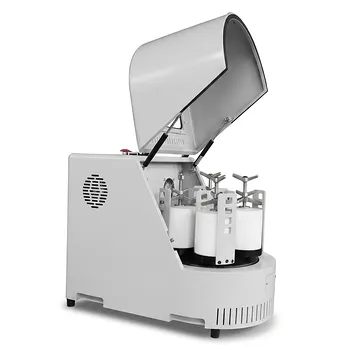
Vertical Semi Circular Planetary Ball Mill for Laboratory Precision Grinding

High Energy Planetary Ball Mill for Nano Scale Grinding and Mechanical Alloying
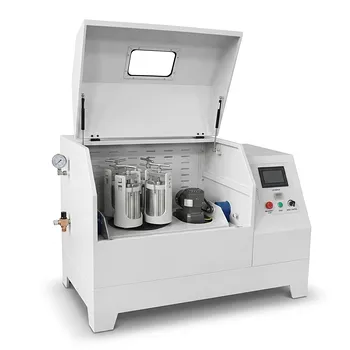
Vertical Production Planetary Ball Mill for High Throughput Powder Processing
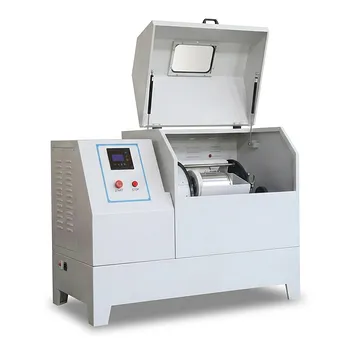
Heavy Duty Horizontal Planetary Ball Mill for Efficient Industrial Grinding and Sample Preparation
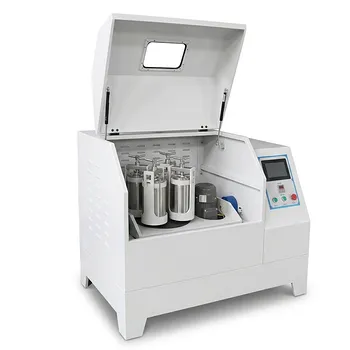
360° Rotating Omnidirectional Laboratory Planetary Ball Mill for Homogeneous Ultra-Fine Grinding and Mixing
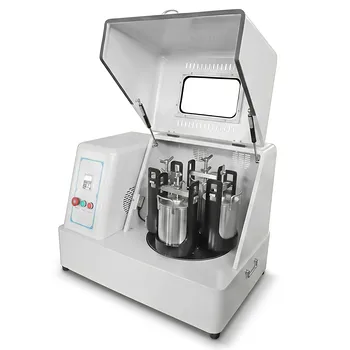
Vertical Square Planetary Ball Mill for Laboratory Sample Preparation and Nanoscale Grinding
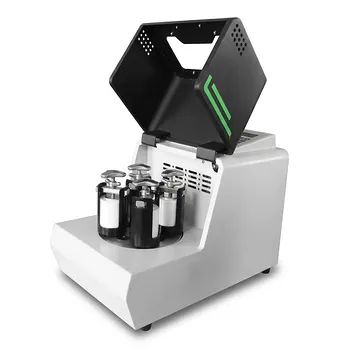
Miniature Planetary Ball Mill with Vacuum Grinding and High Efficiency for Laboratory Sample Preparation

High Energy Laboratory Planetary Ball Mill for Nano Grinding and Material Science Sample Preparation
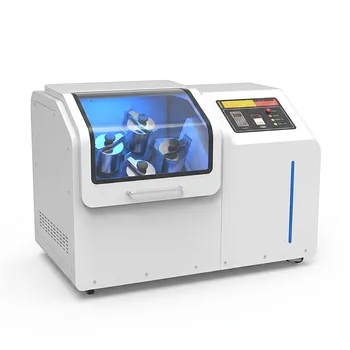
High Energy Omnidirectional Planetary Ball Mill 16L
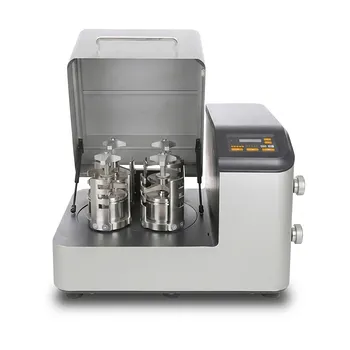
High Energy Planetary Ball Mill for Nano Scale Grinding and Colloidal Mixing in Material Science Research
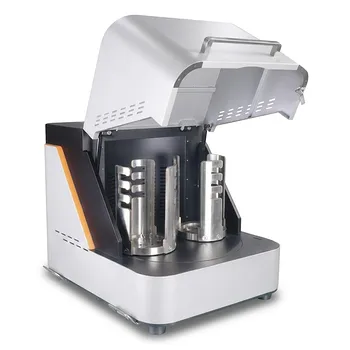
High Energy Laboratory Planetary Ball Mill for Nano Grinding and Colloidal Mixing of Hard and Brittle Materials
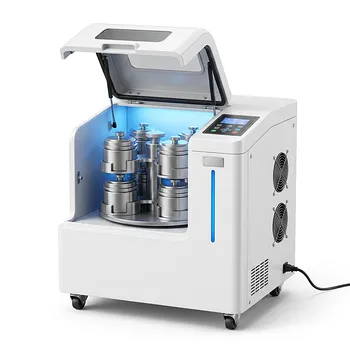
High Energy Omnidirectional Planetary Ball Mill 20L
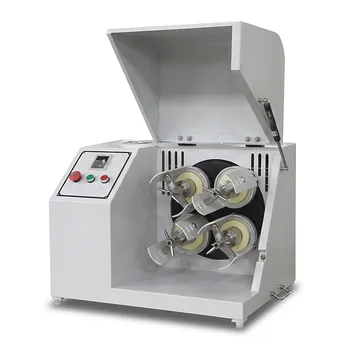
Horizontal Light Duty Planetary Ball Mill for Laboratory Sample Preparation

8L Planetary Ball Mill for Laboratory Grinding and Sample Preparation
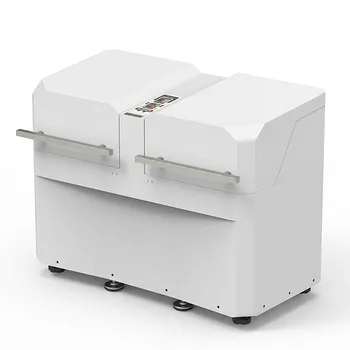
Dual Station Planetary Ball Mill 24L
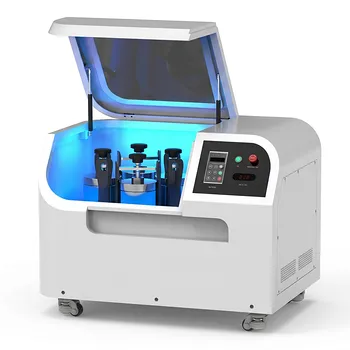
Planetary Ball Mill 12L

Nano High Energy Vibratory Ball Mill for Laboratory Sample Preparation

Multi-Platform Nanoscale High-Energy Vibratory Ball Mill

High Energy Hybrid Vibratory Ball Mill for Grinding Mixing and Cell Disruption