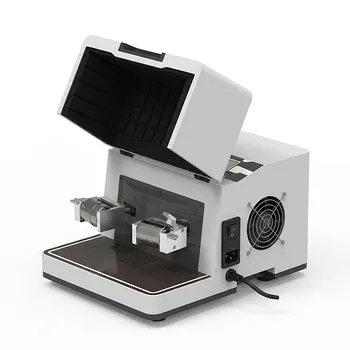
What role does a planetary ball mill play in copper powder mixing? Achieve precise homogenization and surface coating.
Updated 5 months ago
A planetary ball mill acts as a high-energy homogenization reactor that facilitates the uniform distribution of stearic acid binders across the surfaces of copper powder particles. By utilizing synchronized rotation and revolution of the grinding jars, the mill generates the mechanical energy necessary to coat the metal powder without compromising its underlying morphology. This process ensures a consistent mixture that is critical for successful downstream powder metallurgy operations.
Core Takeaway: The planetary ball mill utilizes high-energy impact and shear forces to achieve microscopic homogenization, effectively anchoring stearic acid binders to copper powder surfaces while maintaining the structural integrity of the particles.
Mechanisms of Mechanical Homogenization
High-Energy Ball Milling Dynamics
The planetary ball mill operates through the simultaneous revolution of a supporting disk and the counter-rotation of individual grinding jars. This dual-action movement creates high-energy impact and shear forces between the grinding balls and the material. These forces are the primary drivers for distributing the stearic acid binder evenly across the copper matrix.
Surface Coating and Binder Distribution
Unlike simple tumbling, planetary milling forces the stearic acid to spread into a thin, uniform layer on the metal powder surfaces. This ensures that the binder is not merely mixed in as discrete particles but is physically distributed across the entire surface area of the copper. This surface-level integration is essential for ensuring the homogeneity of the final mixture.
Mechanical De-agglomeration
Initial copper powders often exhibit agglomeration due to van der Waals forces or moisture. The high-energy collisions within the mill effectively break down these clusters, allowing the binder to access and coat individual particles. This leads to a more fluid and predictable powder behavior during subsequent pressing or sintering.
Optimizing Powder Characteristics
Preserving Spherical Morphology
A critical advantage of the planetary ball mill, when configured correctly, is its ability to mix components without damaging the spherical structure of the copper powder. By utilizing a specific ball-to-powder ratio (typically 10:1), the mill provides sufficient energy for mixing while avoiding the excessive force that would lead to particle flattening or fragmentation.
Surface Activation and Reactivity
The mechanical collisions do more than just mix; they also activate the surfaces of the powder particles. This mechanical activation increases the specific surface area and reactivity of the copper. In many applications, this facilitates more rapid diffusion and stronger metallurgical reactions during subsequent processing steps, such as brazing or sintering.
Microscopic Scale Consistency
Planetary milling achieves a level of microscopic homogenization that standard mixing methods cannot reach. It drives the components toward atomic-level mixing, which is vital when adding small percentages of additives or binders. This consistency is the foundation for creating high-performance copper-based composites and alloys.
Understanding the Trade-offs
Impact Force vs. Structural Deformation
The primary challenge in planetary milling is balancing the energy required for mixing with the risk of deforming the powder. If the rotation speed is too high or the milling time too long, spherical powders can become flake-like, which negatively affects flowability and packing density.
Heat Generation and Binder Integrity
High-energy milling generates significant frictional heat within the grinding jars. Because stearic acid has a relatively low melting point, excessive heat can cause the binder to melt prematurely or degrade. Controlling the milling cycles and employing cooling intervals is often necessary to maintain the chemical stability of the binder.
Potential for Media Contamination
The high-energy nature of the process causes wear on the grinding balls and jar linings. This can introduce trace impurities into the copper-stearic acid mixture. Selecting grinding media that is chemically compatible or wear-resistant (such as hardened steel or zirconia) is crucial for maintaining material purity.
How to Apply This to Your Project
Recommendations Based on Project Goals
To achieve the best results with copper and stearic acid mixtures, tailor your milling parameters to your specific outcome:
- If your primary focus is Binder Homogeneity: Utilize a 10:1 ball-to-powder ratio and moderate speeds to ensure the stearic acid is fully distributed without flattening the copper particles.
- If your primary focus is Surface Activation: Increase the milling duration at lower speeds to maximize mechanical contact time, which enhances the powder's reactivity for subsequent sintering.
- If your primary focus is Preserving Flowability: Use shorter milling intervals with frequent "rest" periods to prevent heat buildup and maintain the original spherical shape of the copper powder.
Properly calibrated planetary ball milling transforms a simple mixture into a technically superior precursor material ready for high-precision manufacturing.
Summary Table:
| Key Role | Mechanism | Primary Benefit |
|---|---|---|
| Homogenization | High-energy impact & shear forces | Uniformly distributes binder at a microscopic scale |
| Surface Coating | Mechanical spreading | Creates a thin, integrated layer of stearic acid |
| De-agglomeration | Collision-driven breakdown | Eliminates clusters for predictable powder behavior |
| Morphology Control | Optimized ball-to-powder ratio | Preserves spherical shape while mixing components |
| Surface Activation | Mechanical energy input | Increases reactivity for faster sintering and diffusion |
Elevate Your Material Research with Precision Powder Solutions
Achieving the perfect blend of copper powder and binders requires equipment that balances energy with precision. At [Company Name], we provide complete laboratory sample preparation solutions for material science, specializing in high-performance powder processing and compaction equipment.
Whether you are focusing on microscopic homogenization or preserving particle morphology, our extensive product lines are designed to meet your exact specifications:
- Advanced Milling: Planetary ball mills, jet mills, and liquid nitrogen cryogenic grinders for superior particle refinement.
- Mixing & Sieving: Powder and defoaming mixers, plus vibratory/air-jet sieve shakers for consistent quality control.
- Compaction Excellence: A full spectrum of hydraulic presses, including Cold/Warm Isostatic Presses (CIP/WIP), vacuum hot presses, and XRF pellet presses.
Ready to optimize your powder metallurgy workflow? Contact our experts today to find the ideal equipment configuration for your lab!
References
- Jun Hong Chong, T. Joseph Sahaya Anand. Development and Characterization of Electrical Discharge Coating Electrode Through Powder Metallurgy Process. DOI: 10.37934/armne.29.1.104113
Mentioned Products
- Vertical Semi Circular Planetary Ball Mill for Laboratory Precision Grinding
- High Energy Planetary Ball Mill for Nano Scale Grinding and Mechanical Alloying
- Vertical Production Planetary Ball Mill for High Throughput Powder Processing
- Heavy Duty Horizontal Planetary Ball Mill for Efficient Industrial Grinding and Sample Preparation
- 360° Rotating Omnidirectional Laboratory Planetary Ball Mill for Homogeneous Ultra-Fine Grinding and Mixing
People Also Ask
- What role does a planetary ball mill play in the synthesis of Li6PS5Cl (LPSCl)? Unlock High Ionic Conductivity
- Why is a planetary ball mill essential for SiBCN-rGO wet-spinning? Achieve Superior Dispersion and Spinnability
- Why is an intermittent grinding process required for perovskites in a planetary ball mill? Ensure Stability & Purity
- Why is a planetary ball mill required for PET micronization? Ensure Accurate Chemical Analysis of Reprocessed PET
- How does mechanized planetary ball milling compare to manual agate grinding? Optimize sulfide standard material precision.

Tech Team · PowderPreparation
Last updated on May 14, 2026
Related Products
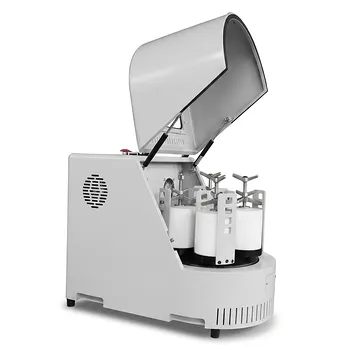
Vertical Semi Circular Planetary Ball Mill for Laboratory Precision Grinding
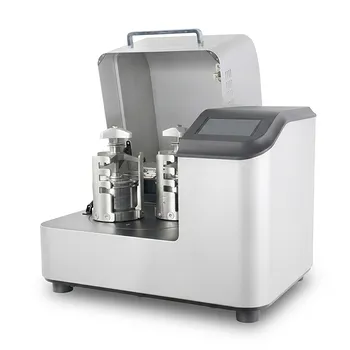
High Energy Planetary Ball Mill for Nano Scale Grinding and Mechanical Alloying

Vertical Production Planetary Ball Mill for High Throughput Powder Processing
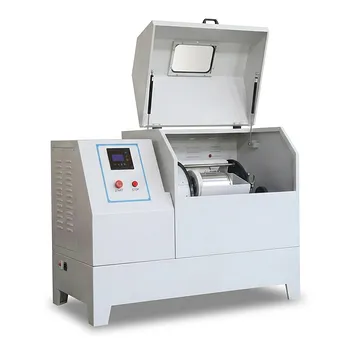
Heavy Duty Horizontal Planetary Ball Mill for Efficient Industrial Grinding and Sample Preparation
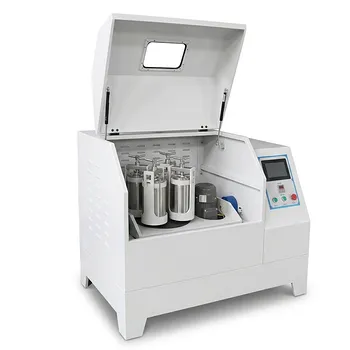
360° Rotating Omnidirectional Laboratory Planetary Ball Mill for Homogeneous Ultra-Fine Grinding and Mixing

Vertical Square Planetary Ball Mill for Laboratory Sample Preparation and Nanoscale Grinding

Miniature Planetary Ball Mill with Vacuum Grinding and High Efficiency for Laboratory Sample Preparation
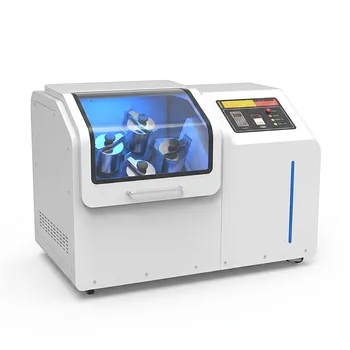
High Energy Omnidirectional Planetary Ball Mill 16L

High Energy Laboratory Planetary Ball Mill for Nano Grinding and Material Science Sample Preparation
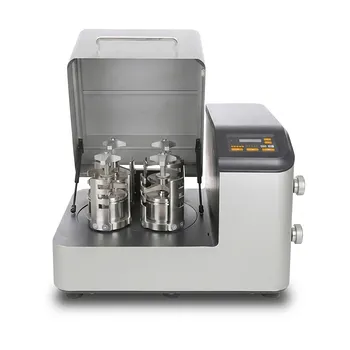
High Energy Planetary Ball Mill for Nano Scale Grinding and Colloidal Mixing in Material Science Research
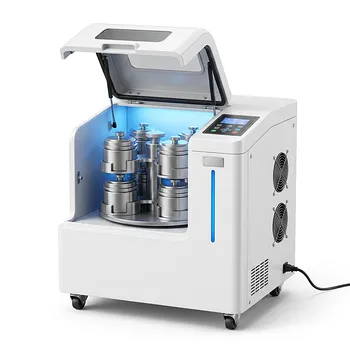
High Energy Omnidirectional Planetary Ball Mill 20L
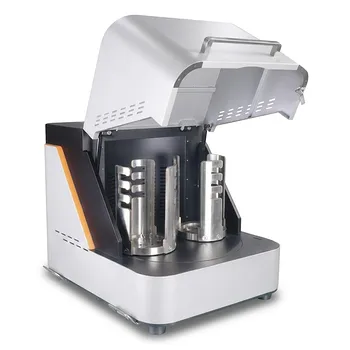
High Energy Laboratory Planetary Ball Mill for Nano Grinding and Colloidal Mixing of Hard and Brittle Materials
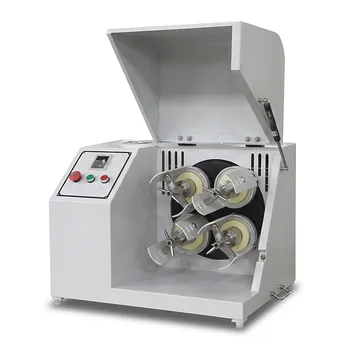
Horizontal Light Duty Planetary Ball Mill for Laboratory Sample Preparation

8L Planetary Ball Mill for Laboratory Grinding and Sample Preparation
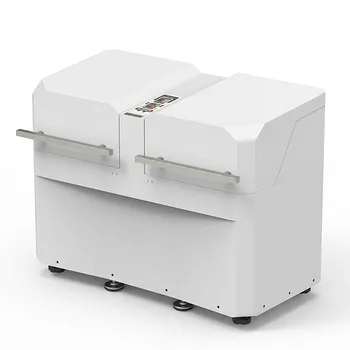
Dual Station Planetary Ball Mill 24L
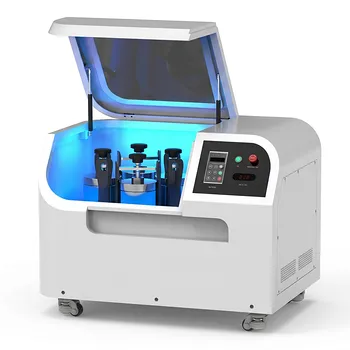
Planetary Ball Mill 12L
Multi-Platform Nanoscale High-Energy Vibratory Ball Mill

Nano High Energy Vibratory Ball Mill for Laboratory Sample Preparation
Nanoscale High-Energy Vibratory Ball Mill for Laboratory Sample Preparation, Mechanochemistry, and Mechanical Alloying