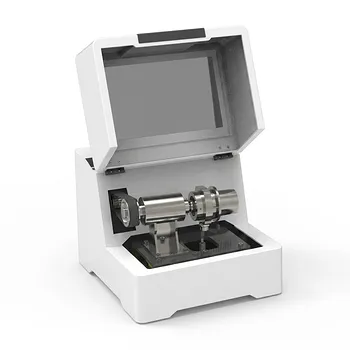
What role does a planetary ball mill play in the mechanical alloying of AlxCrCuFeNiTi? Achieve Superior HEA Homogeneity
Updated 4 months ago
The planetary ball mill serves as a high-energy solid-state reactor that transforms elemental metallic powders into a single-phase or multi-phase solid solution. By utilizing high-speed planetary motion, it imparts intense kinetic energy to grinding balls, triggering repeated cycles of cold welding and fracturing in the AlxCrCuFeNiTi mixture. This mechanical action facilitates atomic diffusion in the solid state, ensuring the chemical homogeneity required for high-entropy alloys (HEAs).
The planetary ball mill is the critical tool for overcoming the elemental segregation and microstructural non-uniformity inherent in traditional melting. It forces a random atomic distribution—or chemical disorder—to create a nanocrystalline, supersaturated solid solution with consistent composition and high reactivity.
The Mechanics of Mechanical Alloying
The Cycle of Cold Welding and Fracturing
During operation, the mill generates intense impact and shear forces through high-frequency rotation. These forces cause the elemental powders to undergo severe plastic deformation, leading to a continuous cycle where particles are flattened, fractured, and then cold-welded together.
Facilitating Solid-State Atomic Diffusion
This repeated mechanical energy breaks down the atomic bonds of the individual elements (Al, Cr, Cu, Fe, Ni, Ti). As the particles weld and re-fracture, the elements are forced into contact at the atomic level, allowing for diffusion that would typically require high thermal energy in a liquid state.
Achieving Microstructural Homogeneity
Overcoming Elemental Segregation
In traditional melting methods, heavy elements often settle or segregate, leading to an inconsistent alloy. The planetary ball mill maintains the mixture in a solid state, ensuring that the high-entropy alloy achieves a uniform distribution of all five or six elements without macroscopic segregation.
Extension of Solid Solution Limits
The high-energy environment can induce a supersaturated solid solution, where solute atoms (like Zr or Ti) are forced into the solvent matrix beyond their standard equilibrium limits. This results in a chemically disordered state that is a hallmark of high-performance AlxCrCuFeNiTi alloys.
Refining Physical Characteristics
Nanocrystalline Grain Refinement
Mechanical alloying significantly reduces the grain size of the powders, often reaching the nanocrystalline scale (e.g., approximately 70 nm). This refinement, combined with a reduction in average particle size to around 20 μm, enhances the mechanical properties of the final alloy.
Increasing Powder Reactivity
The milling process increases the surface energy and reactivity of the powder particles. This high reactivity is a critical prerequisite for subsequent thermal processes, such as laser cladding or sintering, as it promotes better bonding and a more stable microstructure.
Understanding the Trade-offs and Pitfalls
Balancing Energy and Contamination
While high rotation speeds are necessary for alloying, excessive energy can lead to powder oxidation or contamination from the grinding media. Precision in setting rotation speeds and ball-to-material ratios is essential to maintain purity while ensuring complete homogenization.
Impact on Powder Flowability
The goal is to achieve atomic mixing without causing excessive fracturing that leads to ultra-fine, non-spherical particles. If the milling parameters are not optimized, the resulting powder may have poor flowability, which complicates downstream applications like laser melting deposition or automatic pressing.
How to Apply This to Your Project
Making the Right Choice for Your Goal
To achieve the best results with AlxCrCuFeNiTi powders, tailor your milling parameters to your final manufacturing stage:
- If your primary focus is laser cladding or additive manufacturing: Optimize for a balance of atomic mixing and flowability to ensure consistent composition in the laser-melted track.
- If your primary focus is maximum mechanical strength: Prioritize high-energy settings that maximize nanocrystalline grain refinement and supersaturated solid solution formation.
- If your primary focus is material purity: Use lower energy settings over a longer duration and consider inert gas environments to prevent the oxidation of reactive elements like Titanium and Aluminum.
Selecting the correct milling parameters transforms simple elemental powders into a sophisticated, high-reactivity precursor ready for high-performance engineering.
Summary Table:
| Mechanism | Description | Primary Benefit |
|---|---|---|
| Cold Welding & Fracturing | Repeated cycles of impact and shear forces | Homogeneous atomic-level mixing |
| Solid-State Diffusion | Mechanical energy triggers atomic migration | Formation of supersaturated solutions |
| Grain Refinement | Reduction to nanocrystalline scale (~70 nm) | Enhanced mechanical strength and hardness |
| Surface Activation | Increased surface energy and reactivity | Improved bonding during sintering/cladding |
Elevate Your Material Science Research with Precision Powder Processing
At our core, we provide complete laboratory sample preparation solutions specifically designed for material science and advanced metallurgy. If you are developing AlxCrCuFeNiTi high-entropy alloys or specialized nanocrystalline materials, our high-performance planetary ball mills, jet mills, and cryogenic grinders are engineered to deliver the precise energy required for optimal mechanical alloying and solid-state diffusion.
To complement your powder synthesis, we manufacture a full spectrum of compaction equipment, including:
- Isostatic Presses: Cold and Warm Isostatic Presses (CIP/WIP) for uniform density.
- Lab Presses: Standard, XRF pellet, and vacuum hot presses for advanced sintering.
- Processing Tools: Precision crushers, sieve shakers, and high-efficiency powder mixers.
Why choose our solutions? We specialize in the equipment needed to overcome elemental segregation and achieve the chemical homogeneity vital for HEAs. Our tools ensure your powders reach the necessary reactivity and nanocrystalline structure for successful downstream applications.
Ready to optimize your alloying parameters and achieve superior material performance? Contact our technical experts today for a tailored equipment recommendation!
References
- Enrique Rocha‐Rangel, Eddie N. Armendáriz-Mireles. Manufactura y caracterización de aleaciones de alta entropía. DOI: 10.18779/ingenio.v5i2.519
Mentioned Products
- Vertical Semi Circular Planetary Ball Mill for Laboratory Precision Grinding
- High Energy Planetary Ball Mill for Nano Scale Grinding and Mechanical Alloying
- Vertical Production Planetary Ball Mill for High Throughput Powder Processing
- Heavy Duty Horizontal Planetary Ball Mill for Efficient Industrial Grinding and Sample Preparation
- 360° Rotating Omnidirectional Laboratory Planetary Ball Mill for Homogeneous Ultra-Fine Grinding and Mixing
People Also Ask
- What role does a planetary ball mill play in the synthesis of Li6PS5Cl (LPSCl)? Unlock High Ionic Conductivity
- Why is a planetary ball mill essential for SiBCN-rGO wet-spinning? Achieve Superior Dispersion and Spinnability
- Why is an intermittent grinding process required for perovskites in a planetary ball mill? Ensure Stability & Purity
- Why is a planetary ball mill required for PET micronization? Ensure Accurate Chemical Analysis of Reprocessed PET
- How does mechanized planetary ball milling compare to manual agate grinding? Optimize sulfide standard material precision.

Tech Team · PowderPreparation
Last updated on Jun 03, 2026
Related Products
Vertical Semi Circular Planetary Ball Mill for Laboratory Precision Grinding
High Energy Planetary Ball Mill for Nano Scale Grinding and Mechanical Alloying
Vertical Production Planetary Ball Mill for High Throughput Powder Processing
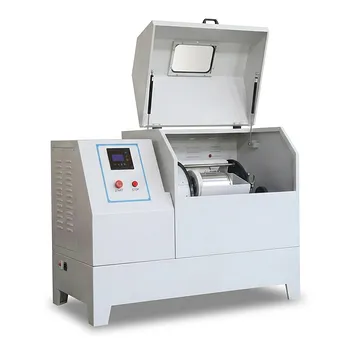
Heavy Duty Horizontal Planetary Ball Mill for Efficient Industrial Grinding and Sample Preparation
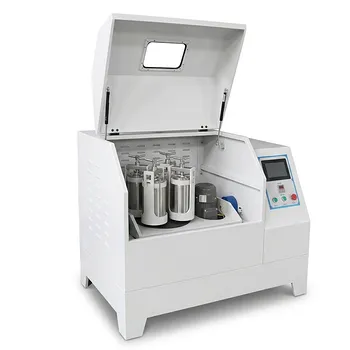
360° Rotating Omnidirectional Laboratory Planetary Ball Mill for Homogeneous Ultra-Fine Grinding and Mixing
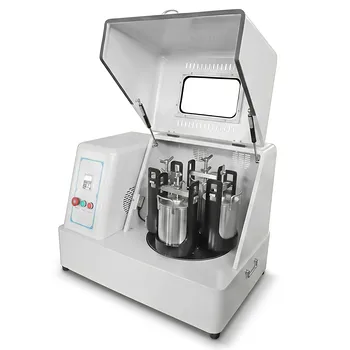
Vertical Square Planetary Ball Mill for Laboratory Sample Preparation and Nanoscale Grinding
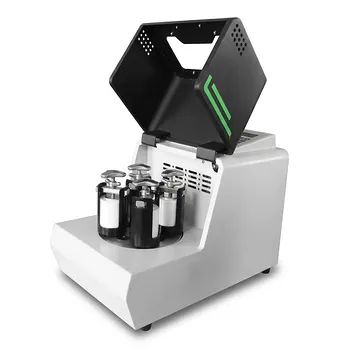
Miniature Planetary Ball Mill with Vacuum Grinding and High Efficiency for Laboratory Sample Preparation
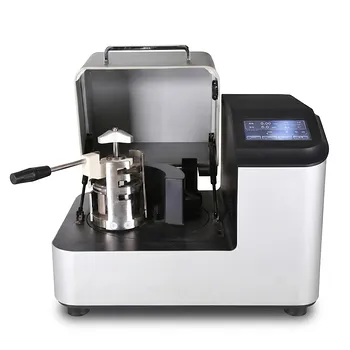
High Energy Laboratory Planetary Ball Mill for Nano Grinding and Material Science Sample Preparation
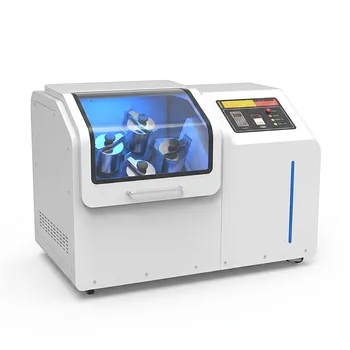
High Energy Omnidirectional Planetary Ball Mill 16L
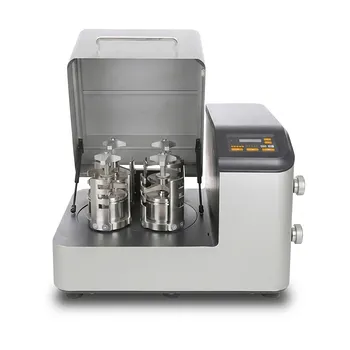
High Energy Planetary Ball Mill for Nano Scale Grinding and Colloidal Mixing in Material Science Research
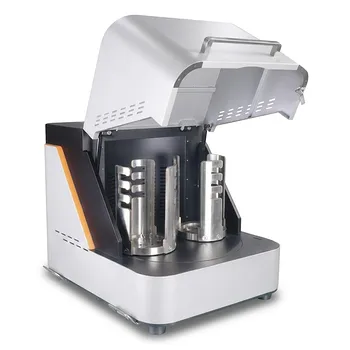
High Energy Laboratory Planetary Ball Mill for Nano Grinding and Colloidal Mixing of Hard and Brittle Materials
High Energy Omnidirectional Planetary Ball Mill 20L
Horizontal Light Duty Planetary Ball Mill for Laboratory Sample Preparation

8L Planetary Ball Mill for Laboratory Grinding and Sample Preparation
Dual Station Planetary Ball Mill 24L
Planetary Ball Mill 12L

Nano High Energy Vibratory Ball Mill for Laboratory Sample Preparation

Multi-Platform Nanoscale High-Energy Vibratory Ball Mill

High Energy Hybrid Vibratory Ball Mill for Grinding Mixing and Cell Disruption