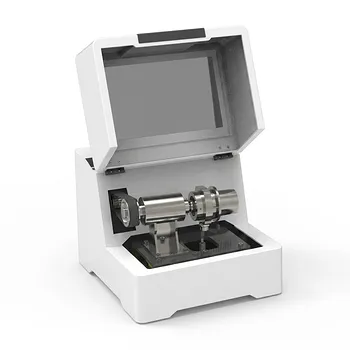
What role does a planetary ball mill play in Al2O3-Ni/Mo composite prep? Master High-Energy Homogenization
Updated 5 months ago
The planetary ball mill serves as the primary high-energy homogenization tool during the initial preparation of Al2O3-Ni and Al2O3-Mo composites. It is specifically utilized to perform high-energy mixing of organic monomers and photoinitiators, using intense mechanical shear forces to achieve molecular-level dispersion. This process establishes a stable, homogeneous photosensitive resin base, which is essential before the subsequent addition of ceramic and metal powders to form a functional 3D printing slurry.
The core role of a planetary ball mill is to transition raw chemical components into a perfectly dispersed matrix. By providing the mechanical energy necessary for molecular-level uniformity, it ensures the resulting composite has the structural integrity required for advanced manufacturing processes like 3D printing or gel-casting.
Achieving Molecular Homogeneity
Dispersion of Organic Components
The initial stage of composite preparation focuses on creating the carrier medium, often a photosensitive resin. The planetary ball mill applies high-energy shear forces that force organic monomers and photoinitiators into a state of molecular-level dispersion.
Establishing a Stable Base
Without this high-energy mixing, the organic components may remain localized, leading to uneven curing during the 3D printing process. A homogeneous base ensures that when Al2O3 and Ni or Mo powders are added later, they are suspended in a medium with consistent chemical and physical properties.
Mechanical Action and Powder Evolution
De-agglomeration of Ceramic and Metal Powders
Beyond the organic phase, the planetary ball mill is critical for breaking down powder agglomerates. Nano-scale alumina and micro-scale metallic powders (Ni or Mo) naturally clump together; the mill's high-speed rotation generates the impact energy needed to separate these particles for a uniform distribution.
Inducing Plastic Deformation and Activation
For metallic components like nickel, the high-energy environment causes significant plastic deformation and dislocation generation. This mechanical activation of the powder surfaces can enhance the bonding between the ceramic matrix and the metal reinforcement during subsequent thermal treatments.
Achieving High Solid Content
The intense impact and friction enable the creation of slurries with high solid content and excellent fluidity. This is vital for processes like gel-casting or slip casting, where a dense but flowable suspension is required to achieve high-quality final parts.
Understanding the Trade-offs
Contamination Risks
The high-energy nature of planetary ball milling can lead to media wear, where small amounts of the grinding balls or the jar material contaminate the composite. It is essential to select milling media (such as alumina or zirconia) that are chemically compatible with the Al2O3 matrix to minimize the impact on material purity.
Thermal Management Challenges
The mechanical energy generated by high-speed rotation often converts into excessive heat. If not managed through timed intervals or cooling cycles, this heat can trigger premature polymerization of organic monomers or alter the characteristics of the photoinitiators, potentially ruining the batch.
How to Apply This to Your Process
Implementation Guidelines
Successful preparation depends on aligning the milling parameters with the specific requirements of your final production method.
- If your primary focus is 3D printing (SLA/DLP): Prioritize the molecular dispersion of the resin components first to ensure consistent light-curing properties across the entire slurry.
- If your primary focus is gel-casting or slip casting: Focus on the de-agglomeration phase and the use of dispersants during milling to maximize slurry fluidity and solid loading.
- If your primary focus is microstructural evolution study: Utilize shorter, high-intensity milling bursts to induce plastic deformation in the metal phase without excessive grain growth.
By treating the planetary ball mill as a precision energy-transfer tool rather than a simple mixer, you ensure the foundational uniformity required for high-performance Al2O3-metal composites.
Summary Table:
| Function | Key Process | Benefit |
|---|---|---|
| Molecular Dispersion | Mixing organic monomers & photoinitiators | Creates a stable, uniform photosensitive resin base |
| De-agglomeration | Breaking down Al2O3, Ni, and Mo clusters | Ensures uniform particle distribution in 3D printing slurries |
| Mechanical Activation | Inducing plastic deformation in metal powders | Enhances bonding between ceramic matrix and metal reinforcements |
| Slurry Optimization | High-energy impact and friction | Achieves high solid content with excellent fluidity for casting |
Elevate Your Material Science Research with Expert Sample Prep
Achieving perfect molecular homogeneity in Al2O3-Ni and Al2O3-Mo composites requires precision equipment. At [Brand Name], we provide complete laboratory sample preparation solutions tailored for advanced material development.
Our specialized powder processing line includes high-energy planetary ball mills, jet mills, and mixers designed to eliminate agglomeration and ensure molecular-level dispersion. To complete your workflow, we offer a full spectrum of compaction equipment, from Cold/Warm Isostatic Presses (CIP/WIP) and vacuum hot presses to XRF pellet presses.
Whether you are refining 3D printing slurries or studying microstructural evolution, our tools provide the reliability and performance your lab demands.
Ready to optimize your composite preparation?
Contact our technical team today to find the right solution!
References
- Joanna Tańska, Paulina Wiecińska. Thermal analysis of the components used in the fabrication of Al2O3–Ni and Al2O3–Mo composites via vat photopolymerization followed by spark plasma sintering. DOI: 10.1007/s10973-025-14596-9
Mentioned Products
- Vertical Semi Circular Planetary Ball Mill for Laboratory Precision Grinding
- High Energy Planetary Ball Mill for Nano Scale Grinding and Mechanical Alloying
- Vertical Production Planetary Ball Mill for High Throughput Powder Processing
- Heavy Duty Horizontal Planetary Ball Mill for Efficient Industrial Grinding and Sample Preparation
- 360° Rotating Omnidirectional Laboratory Planetary Ball Mill for Homogeneous Ultra-Fine Grinding and Mixing
People Also Ask
- What role does a planetary ball mill play in the synthesis of Li6PS5Cl (LPSCl)? Unlock High Ionic Conductivity
- Why is a planetary ball mill essential for SiBCN-rGO wet-spinning? Achieve Superior Dispersion and Spinnability
- Why is an intermittent grinding process required for perovskites in a planetary ball mill? Ensure Stability & Purity
- Why is a planetary ball mill required for PET micronization? Ensure Accurate Chemical Analysis of Reprocessed PET
- How does mechanized planetary ball milling compare to manual agate grinding? Optimize sulfide standard material precision.

Tech Team · PowderPreparation
Last updated on May 14, 2026
Related Products
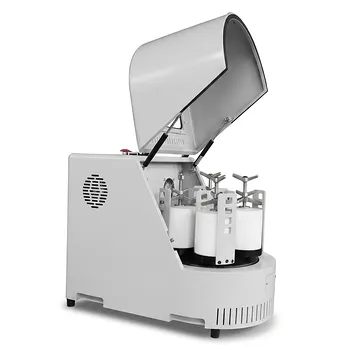
Vertical Semi Circular Planetary Ball Mill for Laboratory Precision Grinding

High Energy Planetary Ball Mill for Nano Scale Grinding and Mechanical Alloying
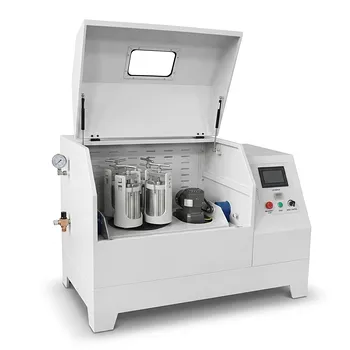
Vertical Production Planetary Ball Mill for High Throughput Powder Processing
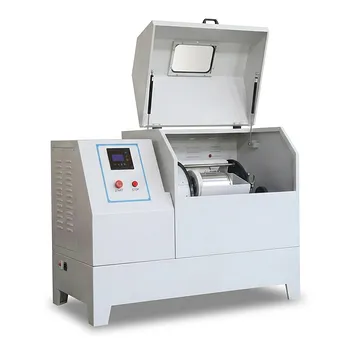
Heavy Duty Horizontal Planetary Ball Mill for Efficient Industrial Grinding and Sample Preparation
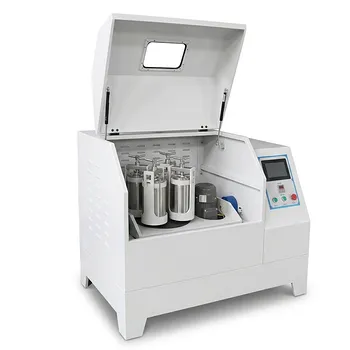
360° Rotating Omnidirectional Laboratory Planetary Ball Mill for Homogeneous Ultra-Fine Grinding and Mixing
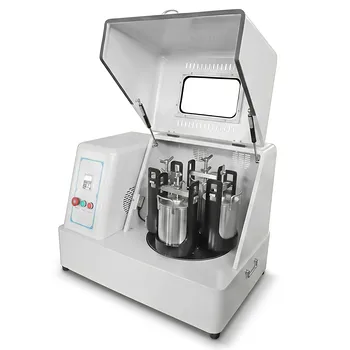
Vertical Square Planetary Ball Mill for Laboratory Sample Preparation and Nanoscale Grinding

Miniature Planetary Ball Mill with Vacuum Grinding and High Efficiency for Laboratory Sample Preparation

High Energy Laboratory Planetary Ball Mill for Nano Grinding and Material Science Sample Preparation
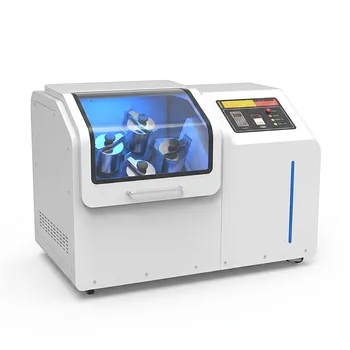
High Energy Omnidirectional Planetary Ball Mill 16L
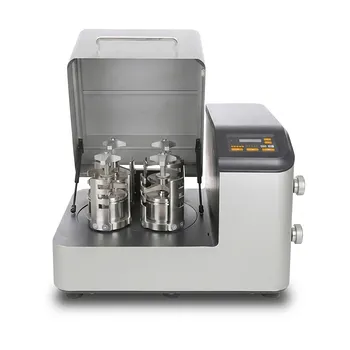
High Energy Planetary Ball Mill for Nano Scale Grinding and Colloidal Mixing in Material Science Research

High Energy Laboratory Planetary Ball Mill for Nano Grinding and Colloidal Mixing of Hard and Brittle Materials
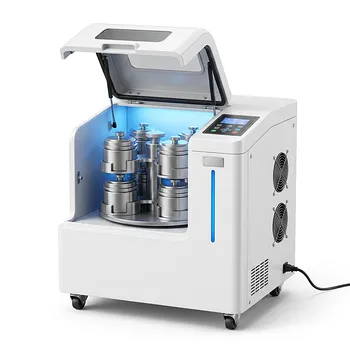
High Energy Omnidirectional Planetary Ball Mill 20L
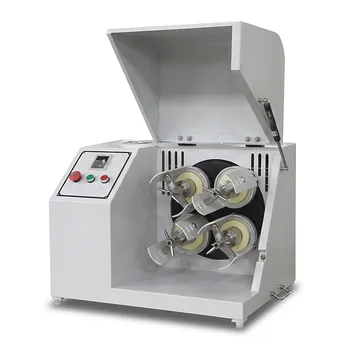
Horizontal Light Duty Planetary Ball Mill for Laboratory Sample Preparation

8L Planetary Ball Mill for Laboratory Grinding and Sample Preparation
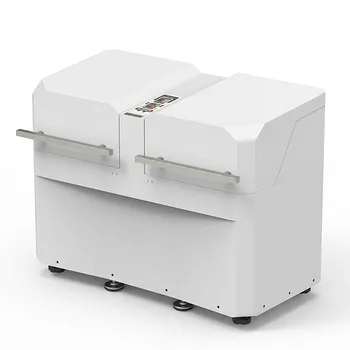
Dual Station Planetary Ball Mill 24L
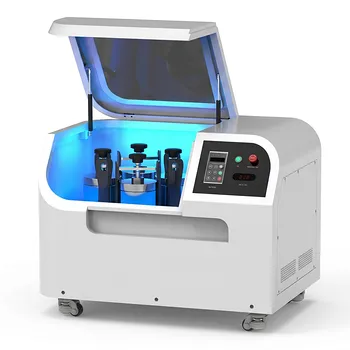
Planetary Ball Mill 12L

Nano High Energy Vibratory Ball Mill for Laboratory Sample Preparation

Multi-Platform Nanoscale High-Energy Vibratory Ball Mill

High Energy Hybrid Vibratory Ball Mill for Grinding Mixing and Cell Disruption