What role does a planetary ball mill play in the initial mixing stage of high-entropy oxide ceramic powders? Key Benefits
Updated 4 months ago
The planetary ball mill acts as the primary engine for high-energy homogenization and particle refinement in high-entropy oxide (HEO) synthesis. It utilizes high-speed rotation to generate intense impact, shear, and centrifugal forces that force five or more disparate oxide components into a uniform stoichiometric distribution. This process typically lasts 4 to 6 hours, ensuring that transition metal oxides and rare earth oxides are mixed at the microscopic level to facilitate subsequent solid-state reactions.
Core Takeaway: The planetary ball mill is essential for transforming separate raw oxide powders into a sub-micron, atomically mixed precursor. This high-energy preparation is the critical prerequisite for achieving a single-phase high-entropy structure during final sintering.
Achieving Atomic-Level Homogenization
In HEO ceramics, the goal is to integrate multiple cations into a single crystal lattice. The planetary ball mill achieves this by providing the mechanical energy necessary for "forced mixing" of components like Hafnium Oxide (HfO2), Zirconium Oxide (ZrO2), and various rare earth oxides.
Mechanical Force Dynamics
The equipment utilizes high-speed revolution and rotation to drive high-frequency impacts between grinding balls and the material. These centrifugal and frictional forces ensure that even components with different chemical characteristics are distributed uniformly across the entire volume.
Microscopic Uniformity
This stage ensures a highly uniform stoichiometric distribution of all components. Without this microscopic precision, the final ceramic would likely suffer from phase separation or the formation of undesirable secondary phases during high-temperature processing.
Enhancing Reaction Kinetics
Beyond simple mixing, the planetary ball mill fundamentally alters the physical state of the raw materials to favor rapid chemical reactions.
Particle Size Reduction and Micronization
The intense mechanical action reduces initial oxide powders to sub-micron levels (typically less than 1 micron). By breaking down large aggregates, the mill dramatically increases the contact surface area between different chemical species.
Increasing Surface Activity
High-energy milling increases the surface activity and internal energy of the powder. This lowers the energy barrier for subsequent solid-phase reactions, providing a favorable kinetic foundation for processes like flash sintering or rapid melting under electron beams.
Shortening Diffusion Paths
By refining particles to nanometer or sub-micron scales, the mill shortens the diffusion paths that atoms must travel during sintering. This efficiency is critical for the formation of complex structures like single-phase bixbyite, rocksalt, or fluorite.
Understanding the Trade-offs
While planetary ball milling is powerful, it introduces specific challenges that must be managed to ensure material purity.
Potential for Contamination
The high-energy impacts that refine the powder also cause wear on the grinding balls and the mill jar. To mitigate heterogeneous impurity contamination, technical advisors recommend using grinding media that match the material being processed, such as Silicon Carbide (SiC) or Zirconia.
Temperature and Energy Control
Long-duration milling (6+ hours) can generate significant heat within the jars, which may lead to unintended phase changes or oxidation in sensitive materials. Wet mixing in distilled water or alcohol is often employed to manage temperature and improve the fluidity of the slurry.
How to Apply This to Your Project
To optimize your initial mixing stage, your milling parameters must align with your specific material requirements and sintering methods.
- If your primary focus is phase purity: Utilize high-energy wet milling for at least 4 to 6 hours to ensure atomic-level cation distribution before reactive sintering.
- If your primary focus is minimizing impurities: Select grinding media and jar linings that are chemically identical or compatible with your primary oxide components to prevent cross-contamination.
- If your primary focus is rapid sintering (e.g., Flash Sintering): Prioritize maximizing surface activity by extending milling time until sub-micron particle sizes are consistently achieved.
Proper planetary ball milling transforms a simple mixture of oxides into a high-reactivity precursor, making the synthesis of stable high-entropy phases possible.
Summary Table:
| Key Milling Factor | Action & Mechanism | Impact on HEO Synthesis |
|---|---|---|
| Homogenization | High-speed impact and shear forces | Atomic-level distribution of multiple cations |
| Particle Refinement | Reduction to sub-micron levels (< 1 µm) | Shortened diffusion paths & increased surface area |
| Kinetics Activation | Increased surface and internal energy | Lowered energy barriers for solid-phase reactions |
| Phase Stability | 4 to 6 hours of high-energy mixing | Prevents phase separation during final sintering |
| Purity Management | Selection of matching grinding media | Minimizes contamination from SiC or Zirconia wear |
Achieve Superior Precision in Your Material Synthesis
High-entropy oxide research demands absolute stoichiometric precision and microscopic uniformity. At [Brand Name], we specialize in providing complete laboratory sample preparation solutions tailored for advanced material science. From our high-energy planetary ball mills, jet mills, and cryogenic grinders to our precision sieve shakers, we ensure your precursors reach the perfect sub-micron state.
To complete your workflow, we offer a full spectrum of compaction equipment, including:
- Isostatic Presses: Cold/Warm Isostatic Presses (CIP/WIP) for uniform density.
- Hydraulic Presses: Standard lab presses, XRF pellet presses, and vacuum hot presses.
- Advanced Mixing: Powder and defoaming mixers for air-free slurry preparation.
Ready to elevate your lab's efficiency? Contact our technical experts today for a customized equipment solution that guarantees purity and performance.
References
- Lingxiang Guo, Jia Sun. Ablation Resistance of High-entropy Oxide Coatings on C/C Composites. DOI: 10.15541/jim20230370
Mentioned Products
- Vertical Production Planetary Ball Mill for High Throughput Powder Processing
- 8L Planetary Ball Mill for Laboratory Grinding and Sample Preparation
- Vertical Square Planetary Ball Mill for Laboratory Sample Preparation and Nanoscale Grinding
- Planetary Ball Mill 12L
- High Energy Omnidirectional Planetary Ball Mill 16L
People Also Ask
- What is the function of a high-performance planetary ball mill in AMZ laminates? Master Ceramic Homogenization.
- What is the role of a planetary ball mill in Al–Si3N4 nanocomposite prep? Achieve Uniform Homogenization
- What is the function of a planetary ball mill in lanthanum hexaaluminate synthesis? Master Micron-Level Homogenization
- What role does a planetary ball mill play in the synthesis of Er-doped PMN-PT ceramics? Enhancing Homogeneity & Purity
- What are the advantages of using a planetary ball mill for the fine grinding of barium silicate glass powder? Peak Results

Tech Team · PowderPreparation
Last updated on Jun 03, 2026
Related Products
Vertical Production Planetary Ball Mill for High Throughput Powder Processing

8L Planetary Ball Mill for Laboratory Grinding and Sample Preparation
Vertical Square Planetary Ball Mill for Laboratory Sample Preparation and Nanoscale Grinding
Planetary Ball Mill 12L
High Energy Omnidirectional Planetary Ball Mill 16L
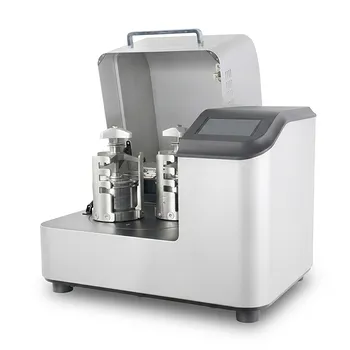
High Energy Planetary Ball Mill for Nano Scale Grinding and Mechanical Alloying
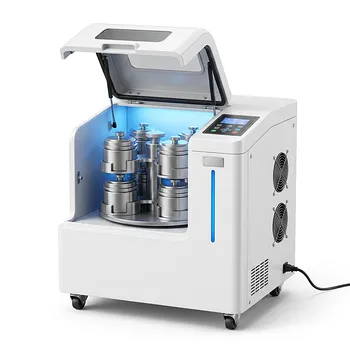
High Energy Omnidirectional Planetary Ball Mill 20L
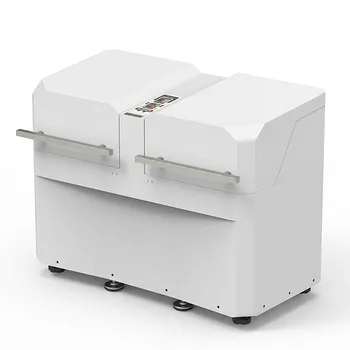
Dual Station Planetary Ball Mill 24L
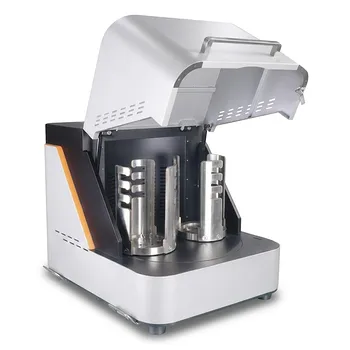
High Energy Laboratory Planetary Ball Mill for Nano Grinding and Colloidal Mixing of Hard and Brittle Materials
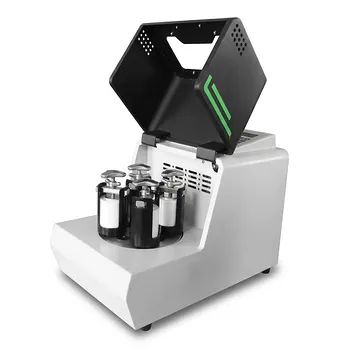
Miniature Planetary Ball Mill with Vacuum Grinding and High Efficiency for Laboratory Sample Preparation
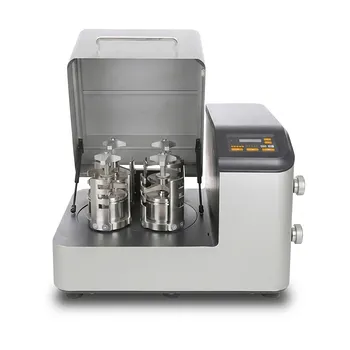
High Energy Planetary Ball Mill for Nano Scale Grinding and Colloidal Mixing in Material Science Research
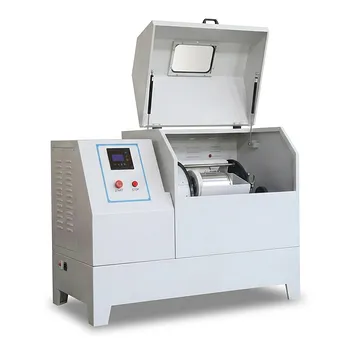
Heavy Duty Horizontal Planetary Ball Mill for Efficient Industrial Grinding and Sample Preparation
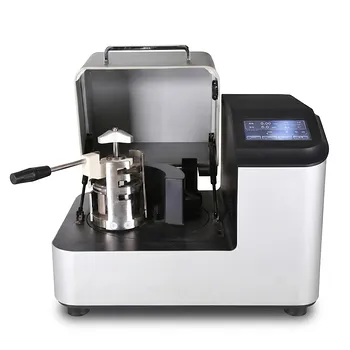
High Energy Laboratory Planetary Ball Mill for Nano Grinding and Material Science Sample Preparation
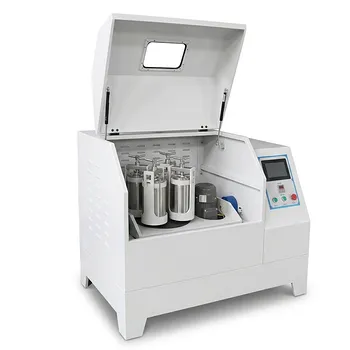
360° Rotating Omnidirectional Laboratory Planetary Ball Mill for Homogeneous Ultra-Fine Grinding and Mixing
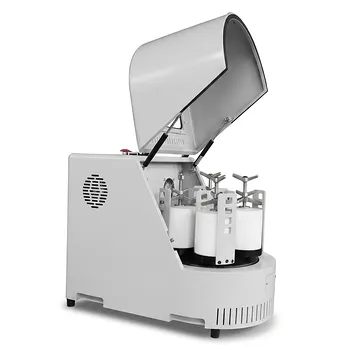
Vertical Semi Circular Planetary Ball Mill for Laboratory Precision Grinding
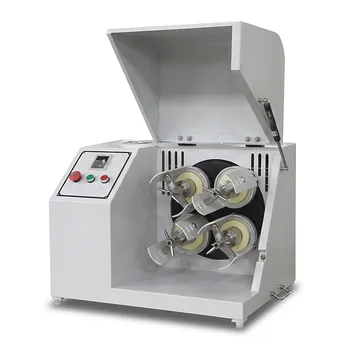
Horizontal Light Duty Planetary Ball Mill for Laboratory Sample Preparation
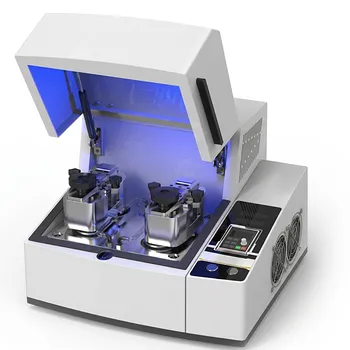
Laboratory Nano High Energy Ball Mill Ultrafine Grinding Mechanical Alloying
Single Tank High Energy Vibratory Ball Mill for Laboratory Grinding and Mixing
High Energy Hybrid Vibratory Ball Mill for Grinding Mixing and Cell Disruption