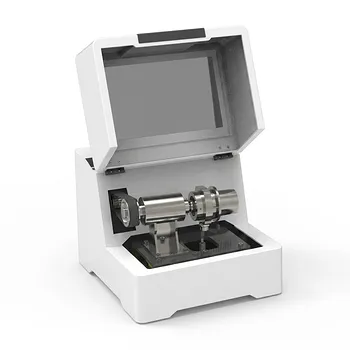
What role does a planetary ball mill play in the conversion of orange peel bio-waste into reinforcement fillers?
Updated 3 months ago
In the conversion of orange peel bio-waste into reinforcement fillers, the planetary ball mill acts as the primary mechanical catalyst for high-energy refinement. It utilizes intense impact and shear forces to transform coarse organic fragments into a fine powder, significantly increasing the material's specific surface area and disrupting its internal lignocellulosic structure to ensure superior chemical reactivity and physical bonding.
Core Takeaway: The planetary ball mill is essential for achieving the micron-scale particle size and high surface area required to optimize pyrolysis efficiency and ensure strong interfacial bonding between bio-char fillers and polymer matrices.
Refining Particle Morphology for Advanced Composites
Maximizing Specific Surface Area
The high-energy grinding action of a planetary ball mill is critical for reducing crushed orange peel to a fine, uniform powder. By increasing the specific surface area, the mill ensures that the material is prepared for maximum exposure during subsequent chemical or thermal treatments.
Enhancing Interfacial Bonding
A smaller particle size allows for more intimate contact between the bio-char filler and the epoxy resin matrix. This enhanced contact improves the interfacial bonding, which is the primary factor determining the mechanical strength and durability of the resulting composite material.
Achieving Uniform Dispersion
For bio-waste fillers to provide a true reinforcing effect, they must be distributed evenly throughout the host material. The micron-level refinement provided by the mill prevents agglomeration, allowing for uniform dispersion within the matrix and eliminating weak points in the final product.
Optimizing Structural and Chemical Properties
Improving Carbonization Efficiency
During the pyrolysis phase, the high surface area-to-volume ratio of milled orange peel allows for more efficient heat transfer. This leads to more uniform carbonization, ensuring that the resulting bio-char has consistent properties throughout the batch.
Disrupting Lignocellulosic Structures
The intense centrifugal and impact forces generated by the mill serve to break down the dense lignocellulosic structure of the orange peel. This mechanical "opening" of the material exposes oxygen-rich functional groups and micropores that would otherwise remain encapsulated and inaccessible.
Eliminating Pore Blockages
Deep grinding effectively removes the "bottleneck effect" caused by ash or volatile matter that can clog the material’s natural pores. By clearing these pathways, the planetary ball mill fully exposes the micropores and mesopores, which are vital for the filler's performance in specialized applications like adsorption or catalysis.
Understanding the Trade-offs
Thermal Degradation Risk
While high-energy milling is effective, the intense friction can generate significant heat within the milling jars. If not carefully monitored, this heat can cause unintended thermal degradation or oxidation of the bio-waste before it even reaches the pyrolysis stage.
Energy Consumption and Scalability
Planetary ball mills are highly effective at a laboratory or pilot scale but are known for high energy consumption. Translating these results to industrial-scale production requires a careful balance between the required particle fineness and the operational costs of the equipment.
Parameter Sensitivity
The quality of the final filler is highly dependent on specific milling parameters, such as rotational speed, ball-to-powder ratio, and milling time. Small deviations in these settings can lead to inconsistent particle sizes, which directly impacts the reinforcing capabilities of the filler.
How to Apply This to Your Project
When integrating a planetary ball mill into your bio-waste conversion process, your approach should vary based on your specific performance requirements:
- If your primary focus is mechanical strength: Prioritize achieving a sub-micron particle size to maximize the interfacial surface area for bonding with the polymer matrix.
- If your primary focus is chemical reactivity: Focus on longer milling times at moderate speeds to fully disrupt the lignocellulosic structure and expose oxygen-rich functional groups.
- If your primary focus is process efficiency: Optimize the ball-to-powder ratio to achieve the necessary surface area increase with the minimum possible milling time to reduce energy costs.
By precisely controlling the mechanical energy of the planetary ball mill, you can transform low-value orange peel waste into a high-performance, engineered reinforcement filler.
Summary Table:
| Key Mechanism | Impact on Bio-Waste | Benefit to Final Composite |
|---|---|---|
| High-Energy Grinding | Micron-scale particle size reduction | Ensures uniform dispersion & prevents weak points |
| Surface Expansion | Maximizes specific surface area | Enhances interfacial bonding with polymer matrices |
| Structural Disruption | Breaks down lignocellulosic structures | Increases chemical reactivity & pyrolysis efficiency |
| Pore Optimization | Eliminates blockages (ash/volatiles) | Exposes micropores for catalysis or adsorption |
Elevate Your Material Research with Precision Powder Solutions
Ready to transform bio-waste into high-performance engineered fillers? At KINTEK SOLUTION, we provide complete laboratory sample preparation solutions specifically designed for material science. Our expertise in powder processing and compaction equipment ensures you achieve the precise particle morphology required for superior composite performance.
Our extensive product range includes:
- Advanced Mills: Planetary ball, jet, and cryogenic grinders for micron-level refinement.
- Compaction Equipment: A full spectrum of hydraulic presses, including Cold/Warm Isostatic Presses (CIP/WIP), hot presses, and XRF pellet presses.
- Processing Essentials: Specialized powder mixers, defoaming mixers, and vibratory sieve shakers.
Whether you are optimizing interfacial bonding in bio-char composites or scaling up pyrolysis efficiency, our tools provide the reliability and precision your research demands. Contact us today to find the ideal equipment for your laboratory and take the next step in sustainable material innovation!
References
- Erosive Wear Behavior of Carbon Black/Bio-char Bio-waste (Orange Peel) Reinforced Composites. DOI: 10.33263/briac136.512
Mentioned Products
- Vertical Semi Circular Planetary Ball Mill for Laboratory Precision Grinding
- High Energy Planetary Ball Mill for Nano Scale Grinding and Mechanical Alloying
- Vertical Production Planetary Ball Mill for High Throughput Powder Processing
- Heavy Duty Horizontal Planetary Ball Mill for Efficient Industrial Grinding and Sample Preparation
- 360° Rotating Omnidirectional Laboratory Planetary Ball Mill for Homogeneous Ultra-Fine Grinding and Mixing
People Also Ask
- What role does a planetary ball mill play in the synthesis of Li6PS5Cl (LPSCl)? Unlock High Ionic Conductivity
- Why is a planetary ball mill essential for SiBCN-rGO wet-spinning? Achieve Superior Dispersion and Spinnability
- Why is an intermittent grinding process required for perovskites in a planetary ball mill? Ensure Stability & Purity
- Why is a planetary ball mill required for PET micronization? Ensure Accurate Chemical Analysis of Reprocessed PET
- How does mechanized planetary ball milling compare to manual agate grinding? Optimize sulfide standard material precision.

Tech Team · PowderPreparation
Last updated on Jun 03, 2026
Related Products
Vertical Semi Circular Planetary Ball Mill for Laboratory Precision Grinding
High Energy Planetary Ball Mill for Nano Scale Grinding and Mechanical Alloying
Vertical Production Planetary Ball Mill for High Throughput Powder Processing
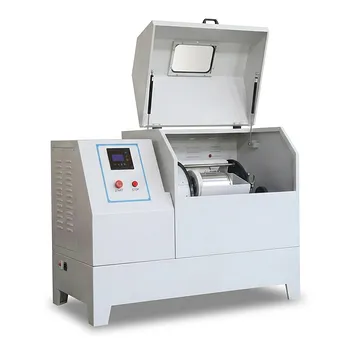
Heavy Duty Horizontal Planetary Ball Mill for Efficient Industrial Grinding and Sample Preparation
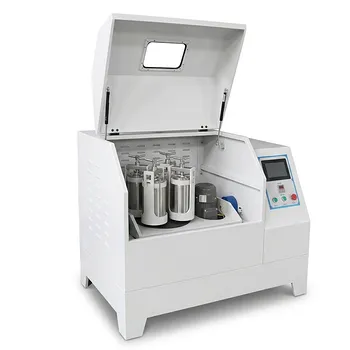
360° Rotating Omnidirectional Laboratory Planetary Ball Mill for Homogeneous Ultra-Fine Grinding and Mixing

Vertical Square Planetary Ball Mill for Laboratory Sample Preparation and Nanoscale Grinding
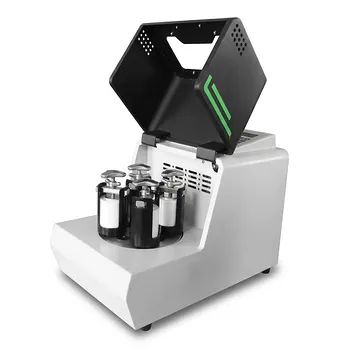
Miniature Planetary Ball Mill with Vacuum Grinding and High Efficiency for Laboratory Sample Preparation
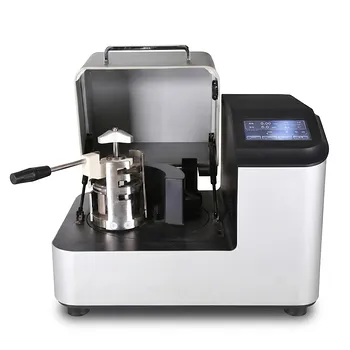
High Energy Laboratory Planetary Ball Mill for Nano Grinding and Material Science Sample Preparation
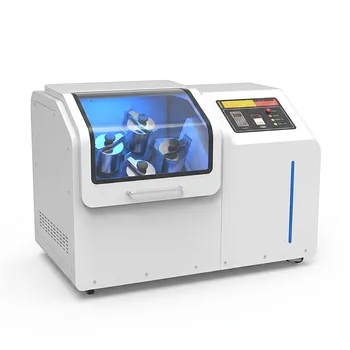
High Energy Omnidirectional Planetary Ball Mill 16L
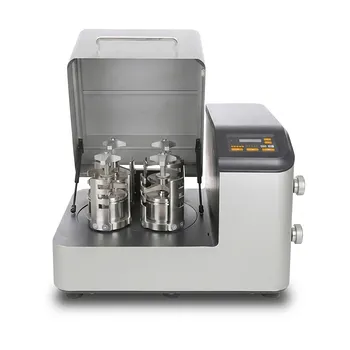
High Energy Planetary Ball Mill for Nano Scale Grinding and Colloidal Mixing in Material Science Research
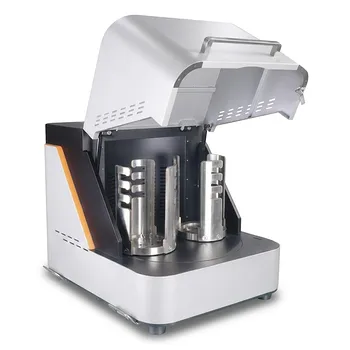
High Energy Laboratory Planetary Ball Mill for Nano Grinding and Colloidal Mixing of Hard and Brittle Materials
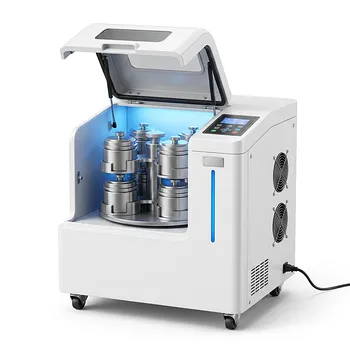
High Energy Omnidirectional Planetary Ball Mill 20L
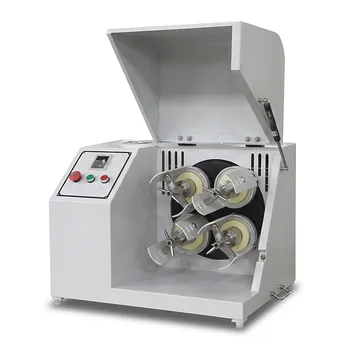
Horizontal Light Duty Planetary Ball Mill for Laboratory Sample Preparation
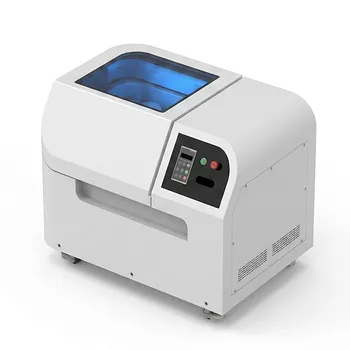
8L Planetary Ball Mill for Laboratory Grinding and Sample Preparation
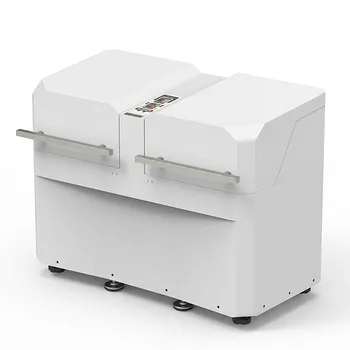
Dual Station Planetary Ball Mill 24L
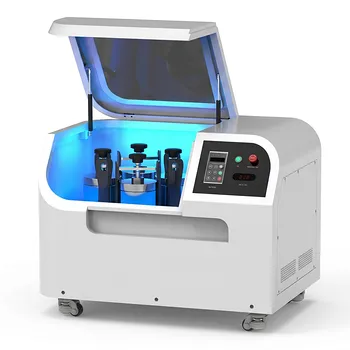
Planetary Ball Mill 12L

Nano High Energy Vibratory Ball Mill for Laboratory Sample Preparation
Multi-Platform Nanoscale High-Energy Vibratory Ball Mill
High Energy Hybrid Vibratory Ball Mill for Grinding Mixing and Cell Disruption