What role does a mechanical vibratory sieve shaker play in eggshell media classification? Ensure Precise Porosity
Updated 5 months ago
Precise particle classification via a mechanical vibratory sieve shaker is the technical foundation for ensuring the structural integrity and filtration efficiency of eggshell filter media. This equipment utilizes high-frequency mechanical vibrations to grade eggshell particles into specific ranges—typically 20 to 50 mesh—to maintain a target size like 0.5 mm. By automating this process, the shaker ensures the filter bed achieves uniform porosity, which is essential for preventing clogging and maintaining consistent effluent quality.
Core Takeaway: The mechanical vibratory sieve shaker transforms raw, crushed eggshells into a standardized technical medium by providing the repeatable mechanical force necessary to eliminate human error and ensure optimal particle distribution for stable filtration.
The Mechanism of Mechanical Classification
High-Frequency Vibration and Stratification
A mechanical vibratory sieve shaker applies continuous and regular mechanical vibration to a stack of nested sieves. This motion causes particles to tumble and reorient across the mesh surface, maximizing the opportunity for each particle to pass through the specific apertures.
This process induces particle stratification, where materials are physically separated based on their geometric size. Unlike manual sieving, the automated nature of the shaker ensures that even coarse particles with diameters larger than 50 μm are accurately sorted into their respective fractions.
The Role of Nested Sieve Stacks
The equipment utilizes a series of standard test sieves stacked in descending order of mesh size. This allows for the simultaneous separation of eggshell media into multiple grain sizes in a single operation.
By operating the shaker for a set duration—typically 5 to 10 minutes—operators can ensure the sample mass on each sieve reaches a constant state. This allows for the precise calculation of mass percentages, which validates that the majority of the media falls within the required technical specifications.
Optimizing Filter Bed Performance
Balancing Porosity and Contact Area
The primary goal of using a sieve shaker for eggshell media is to control particle size distribution. If particles are too large, the filter lacks sufficient contact area for effective adsorption or chemical reaction.
Conversely, if the particles are too small or non-uniform, the filter bed becomes overly dense. Precise grading ensures the media provides an ideal balance, allowing for stable filtration efficiency without sacrificing the flow rate.
Preventing Clogging and Head Loss
Fine particles, often referred to as "fines," are a primary cause of filter clogging and excessive head loss. A mechanical shaker effectively removes these sub-standard particles during the classification phase.
By maintaining a consistent size, such as the recommended 0.5 mm, the shaker ensures that the resulting filter bed has uniform porosity. This uniformity allows water to pass through the media at a predictable rate, extending the operational life of the filter.
Understanding the Trade-offs and Limitations
Mechanical Limits and Particle Size
While highly effective for coarse and medium particles, mechanical vibratory shakers are generally limited to particles larger than 50 μm. For extremely fine powders, mechanical vibration alone may not be sufficient to overcome inter-particle forces, potentially leading to mesh blinding.
Duration and Amplitude Settings
Consistency is the shaker's greatest strength, but it requires careful calibration. Applying excessive vibration duration can cause particle attrition, where the eggshell media breaks down into smaller fragments during the test itself, leading to inaccurate grading results.
Automated vs. Manual Sieving
Manual sieving is prone to human operational error and lacks the repeatability required for industrial or laboratory standards. While the initial investment in a mechanical shaker is higher, it is the only way to guarantee the repeatability of results and the thoroughness of the classification process.
How to Apply This to Your Project
To achieve the best results when classifying eggshell filter media, your approach should vary based on your specific operational goals.
- If your primary focus is filtration longevity: Prioritize the removal of fines by using a finer bottom sieve in the stack to ensure no particles smaller than your target range enter the filter bed.
- If your primary focus is effluent quality: Focus on achieving a tight particle size distribution around the 0.5 mm mark to maximize the available surface area for contaminant contact.
- If your primary focus is process repeatability: Standardize your vibration amplitude and set a fixed timer for every batch to ensure that mass percentage calculations remain consistent across different production runs.
Proper mechanical classification ensures that eggshell waste is effectively repurposed into a high-performance, predictable filtration component.
Summary Table:
| Key Feature | Benefit for Eggshell Media | Operational Outcome |
|---|---|---|
| High-Frequency Vibration | Rapid particle stratification | Uniform 0.5 mm target size |
| Nested Sieve Stacks | Simultaneous multi-size grading | Accurate mass percentage data |
| Automated Timing | Eliminates manual variability | Repeatable filtration standards |
| Fine Removal | Eliminates sub-standard particles | Reduced clogging & head loss |
Elevate Your Material Preparation with Expert Solutions
Achieving the perfect particle size distribution is critical for high-performance filtration and material science research. At KinTek, we provide complete laboratory sample preparation solutions tailored to your specific needs.
We specialize in high-precision powder processing and compaction equipment, including:
- Sizing & Classification: Vibratory and air-jet sieve shakers with a full range of test sieves.
- Milling & Grinding: Planetary ball mills, jet mills, and liquid nitrogen cryogenic grinders.
- Crushing: Industrial-grade jaw and roll crushers.
- Compaction: A full spectrum of hydraulic presses, including Cold/Warm Isostatic Presses (CIP/WIP), vacuum hot presses, and XRF pellet presses.
Whether you are repurposing waste into filter media or developing advanced powders, our equipment ensures the repeatability and accuracy your project demands.
Ready to optimize your laboratory workflow?
Contact our technical team today to find the perfect equipment solution for your application.
References
- Novianti Novianti, Ulli Kadaria. Potensi Cangkang Telur Ayam sebagai Media Filter untuk Meningkatkan pH pada Pengolahan Air Gambut (The Potential of Chicken Eggshells as a Filter Media to Increase pH for Peat Water Treatment). DOI: 10.26418/jtllb.v7i2.37234
Mentioned Products
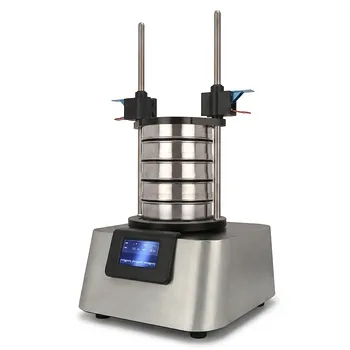
- Vibratory Sieve Shaker Electromagnetic 3D Motion Powder Particle Size Analyzer for Dry and Wet Sieving
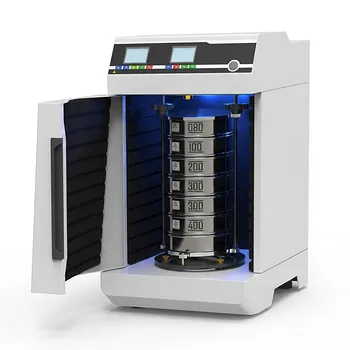
- Laboratory Dry and Wet Three Dimensional Vibratory Sieve Shaker for Particle Analysis
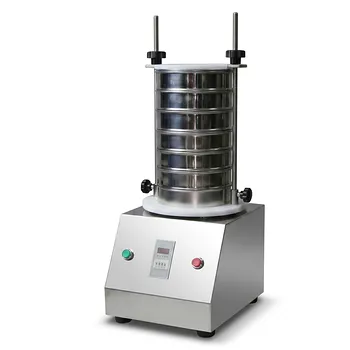
- Small Laboratory Vibratory Sieve Shaker for Powder Gradation and Particle Size Analysis
- Heavy Duty Dry Three Dimensional Vibratory Sieve Shaker for Particle Separation
- Stainless Steel Laboratory Vibratory Test Sieve Shaker
People Also Ask
- How does a vibratory sieve shaker contribute to optimizing the performance of activated carbon? Enhance Adsorption Precision
- Why is a laboratory vibratory sieve shaker necessary for processing magnesium-based borate precursor powders? Boost Activity
- Why use a vibratory sieve shaker to verify coarse aggregate grading in rubberized concrete? Ensure Structural Integrity
- What function do vibratory sieve shakers and standard test sieves serve in the preparation of adsorbents? Key Guide
- What role does a vibratory sieve shaker play in the particle size analysis of ground corn products? Enhance QC Precision

Tech Team · PowderPreparation
Last updated on May 14, 2026
Related Products
Vibratory Sieve Shaker Electromagnetic 3D Motion Powder Particle Size Analyzer for Dry and Wet Sieving
Laboratory Dry and Wet Three Dimensional Vibratory Sieve Shaker for Particle Analysis
Small Laboratory Vibratory Sieve Shaker for Powder Gradation and Particle Size Analysis
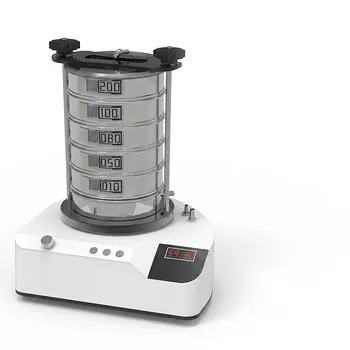
Heavy Duty Dry Three Dimensional Vibratory Sieve Shaker for Particle Separation
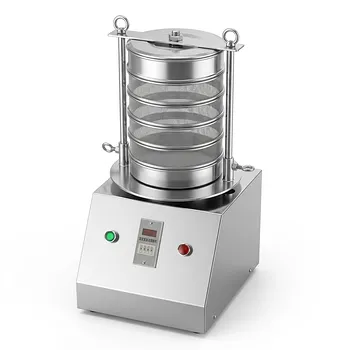
Stainless Steel Laboratory Vibratory Test Sieve Shaker
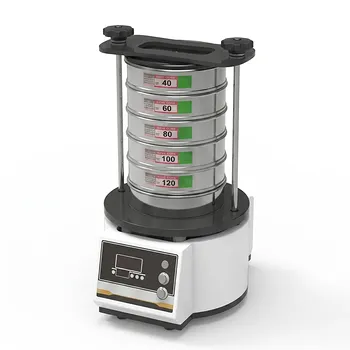
Dry Three Dimensional Vibratory Sieve Shaker
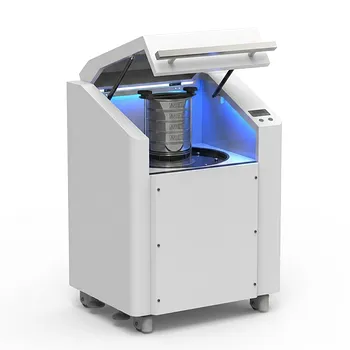
High Frequency Cabinet Type Three-Dimensional Rotary Vibrating Sieve Shaker for Dry Sieving and Particle Classification
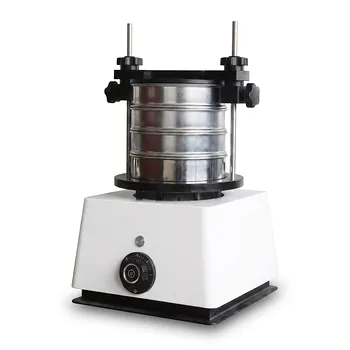
Small Laboratory Vibrating Sieve Shaker for Precise Particle Size Analysis
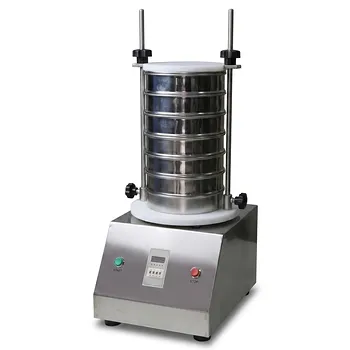
Laboratory Vibratory Test Sieve Shaker for Precision Particle Size Analysis and Powder Grading
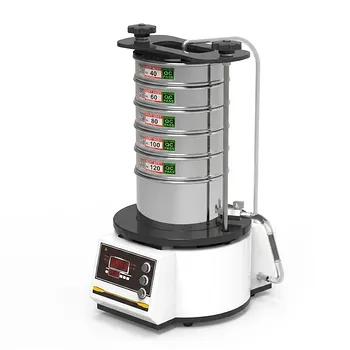
High Frequency Wet Three-Dimensional Vibrating Sieve Shaker for Dry and Wet Particle Size Analysis
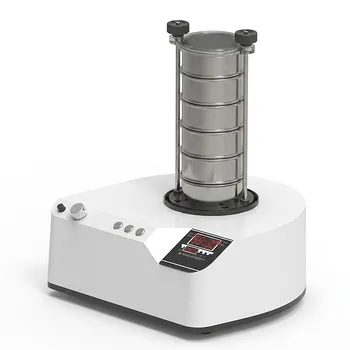
三维电磁微量振动筛分仪
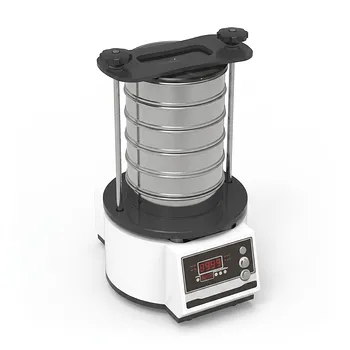
Tapping Oscillating Sieve Shaker for Dry and Wet Particle Size Analysis
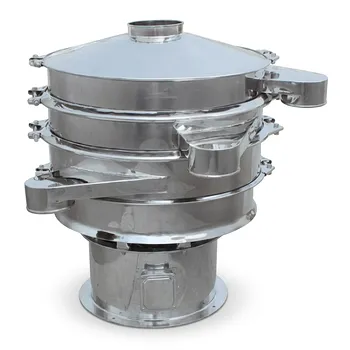
Stainless Steel Rotary Vibrating Sieve High Precision Circular Vibratory Separator Industrial Powder Grading Machine Multi Layer Sifting Equipment
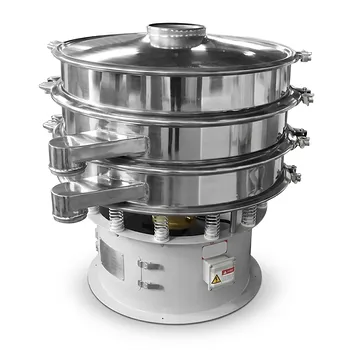
Three Dimensional Rotary Vibrating Sieve
Vibratory Superfine Grinder for Ultra Fine Laboratory Powder Milling
Small Vibrating Ultrafine Grinder for Traditional Chinese Medicine
Automatic Vibrating Powder Feeder for Laboratory Material Processing Precision Vibratory Hopper Feeder for Granular and Powder Material Handling Industrial Grade Vibrating Tray Feeder for Consistent Material Sample Preparation