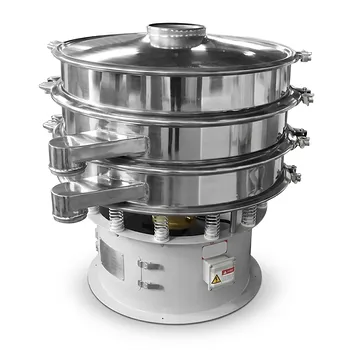
What role does a mechanical sieve shaker play in quartz sand prep? Achieve precise classification and S/V ratios.
Updated 5 months ago
Mechanical sieve shakers are the definitive tool for the precise classification and grading of natural quartz sand into specific particle size fractions. By applying high-frequency, standardized vibrations to a stack of graduated test sieves, these machines ensure that bulk samples are accurately separated according to their diameter. This level of precision is essential for establishing the surface-area-to-volume (S/V) ratios required for advanced mathematical modeling and NMR relaxation analysis.
The primary role of a mechanical sieve shaker is to provide a standardized, repeatable method for separating natural quartz sand into distinct size ranges. This allows researchers to isolate particle size as a variable when analyzing how geometric dimensions influence physical and chemical properties.
The Mechanism of Mechanical Classification
Standardized Vibration and Force
The shaker utilizes high-frequency mechanical vibration to drive particles through a stack of test sieves. This continuous and uniform force ensures that every sand grain has multiple opportunities to pass through the appropriate mesh size within a set timeframe.
Precise Particle Fractioning
By using standardized sieves—often ranging from 90 to 500 µm—the system partitions bulk sand into highly uniform diameter ranges. This classification is vital for controlling sample consistency, ensuring that grains from different geographic origins can be compared objectively.
Impact on Scientific Modeling and NMR Analysis
Establishing S/V Ratios
Accurate grading is the prerequisite for establishing mathematical models between particle size and the pore surface-area-to-volume (S/V) ratio. This ratio is a critical parameter in understanding how the geometry of the sand impacts physical phenomena like fluid flow and relaxation.
Enabling Independent Geometric Analysis
Precise screening allows for the independent analysis of how geometric dimensions impact relaxation rates. By isolating specific particle sizes, researchers can determine surface relaxivity without the "noise" of a wide, uncontrolled grain size distribution.
Advantages Over Manual Methods
Elimination of Human Error
Manual sieving is inherently inconsistent, as the force and duration vary between operators. A mechanical shaker provides a standardized vibration frequency, which ensures that fine particles (even those as small as 0.075mm) accurately pass through the corresponding mesh.
Enhanced Repeatability and Efficiency
Automated screening produces objective and repeatable particle size distribution curves (PSDC). This reliability is essential for calculating complex metrics, such as soil erodibility factors or the breakage parameters of ore and minerals.
Understanding the Trade-offs
Risk of Particle Attrition
High-frequency vibrations, while efficient, can occasionally cause fragile grains to collide and break. This mechanical wear can slightly alter the particle size distribution if the vibration intensity is not calibrated to the hardness of the quartz.
Sieve Loading Limits
Overloading a sieve can lead to "blinding," where too many particles attempt to pass through the mesh simultaneously. This restricts the passage of fine debris, leading to inaccurate mass fraction data and requiring longer processing times.
How to Apply This to Your Project
When utilizing a mechanical sieve shaker for quartz sand preparation, align your methodology with your specific analytical goals:
- If your primary focus is NMR Relaxation Analysis: Prioritize a narrow sieve range to ensure a uniform S/V ratio across your entire sample batch.
- If your primary focus is Mathematical Modeling: Use a full stack of standardized sieves to capture the complete particle size distribution curve for more robust data inputs.
- If your primary focus is Consistency and Repeatability: Implement a strict 10-minute mechanical shaking protocol to eliminate the variability associated with manual grading.
By utilizing mechanical sieving, you transform a bulk raw material into a standardized technical sample capable of yielding precise, high-fidelity data.
Summary Table:
| Feature | Mechanical Sieve Shaking | Manual Sieving |
|---|---|---|
| Consistency | High (Standardized vibration) | Low (Operator dependent) |
| Precision | Captures fractions down to 0.075mm | Prone to human error |
| Primary Output | Accurate S/V ratios & PSDC curves | Variable particle distribution |
| Efficiency | Automated, multi-stack processing | Time-consuming & labor-intensive |
| Main Risks | Minimal particle attrition | Incomplete separation (blinding) |
Elevate Your Material Analysis with Precision Sample Prep
To achieve high-fidelity data in material science, your sample preparation must be flawless. [Company Name] provides complete laboratory solutions, specializing in advanced powder processing and compaction equipment.
Our extensive product range includes:
- Sieve Analysis: Vibratory and air-jet sieve shakers with high-precision test sieves and meshes.
- Size Reduction: Jaw/roll crushers, liquid nitrogen cryogenic grinders, and various mills (planetary ball, jet, sand/bead, disc, rotor).
- Mixing & Homogenization: Powder mixers and vacuum defoaming mixers.
- Compaction & Pressing: A full spectrum of hydraulic presses, including Cold/Warm Isostatic Presses (CIP/WIP), standard lab presses, and vacuum hot presses.
Whether you are grading quartz sand for NMR relaxation analysis or developing complex mathematical models, our equipment ensures the repeatability and precision your research demands.
Ready to optimize your lab's workflow? Contact us today to discuss your specific application!
References
- Christina L. Bray, Joseph P. Hornack. proton Nuclear Magnetic Resonance spin-lattice relaxation rate of some hydrated synthetic and natural sands. DOI: 10.62721/diffusion-fundamentals.10.428
Mentioned Products
- Vibratory Sieve Shaker Electromagnetic 3D Motion Powder Particle Size Analyzer for Dry and Wet Sieving
- 三维电磁微量振动筛分仪
- Small Laboratory Vibrating Sieve Shaker for Precise Particle Size Analysis
- Stainless Steel Laboratory Vibratory Test Sieve Shaker
- Laboratory Dry and Wet Three Dimensional Vibratory Sieve Shaker for Particle Analysis
People Also Ask
- How does a vibratory sieve shaker contribute to optimizing the performance of activated carbon? Enhance Adsorption Precision
- Why is a laboratory vibratory sieve shaker necessary for processing magnesium-based borate precursor powders? Boost Activity
- Why use a vibratory sieve shaker to verify coarse aggregate grading in rubberized concrete? Ensure Structural Integrity
- What function do vibratory sieve shakers and standard test sieves serve in the preparation of adsorbents? Key Guide
- What role does a vibratory sieve shaker play in the particle size analysis of ground corn products? Enhance QC Precision

Tech Team · PowderPreparation
Last updated on May 14, 2026
Related Products
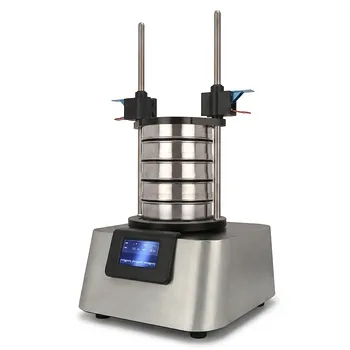
Vibratory Sieve Shaker Electromagnetic 3D Motion Powder Particle Size Analyzer for Dry and Wet Sieving
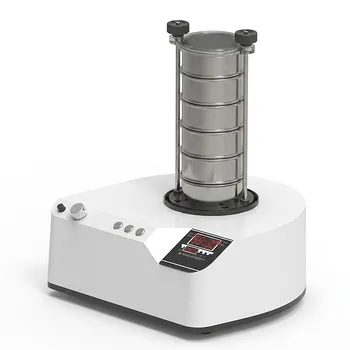
三维电磁微量振动筛分仪

Small Laboratory Vibrating Sieve Shaker for Precise Particle Size Analysis
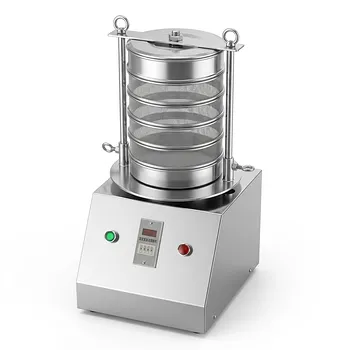
Stainless Steel Laboratory Vibratory Test Sieve Shaker
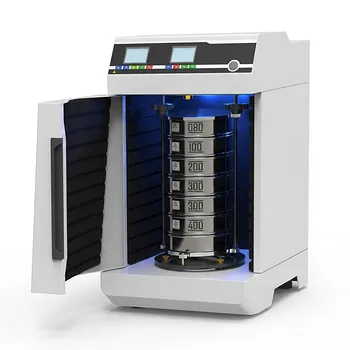
Laboratory Dry and Wet Three Dimensional Vibratory Sieve Shaker for Particle Analysis
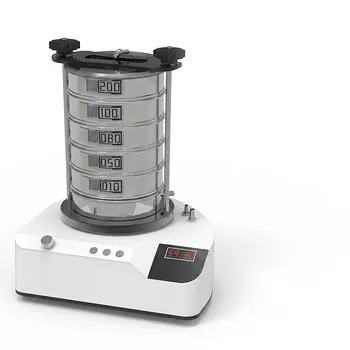
Heavy Duty Dry Three Dimensional Vibratory Sieve Shaker for Particle Separation
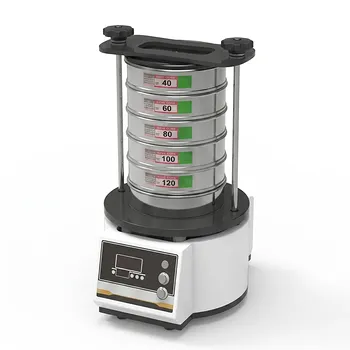
Dry Three Dimensional Vibratory Sieve Shaker
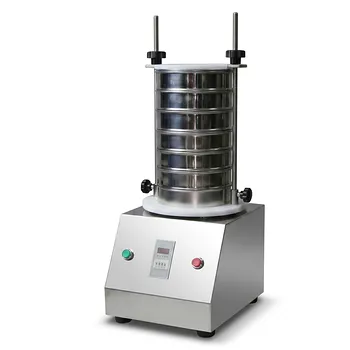
Small Laboratory Vibratory Sieve Shaker for Powder Gradation and Particle Size Analysis

Laboratory Vibratory Test Sieve Shaker for Precision Particle Size Analysis and Powder Grading
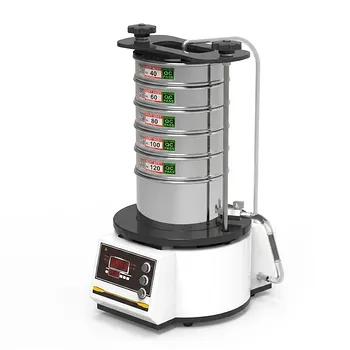
High Frequency Wet Three-Dimensional Vibrating Sieve Shaker for Dry and Wet Particle Size Analysis
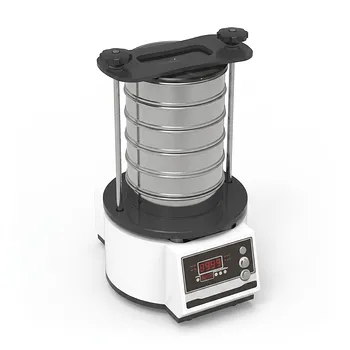
Tapping Oscillating Sieve Shaker for Dry and Wet Particle Size Analysis
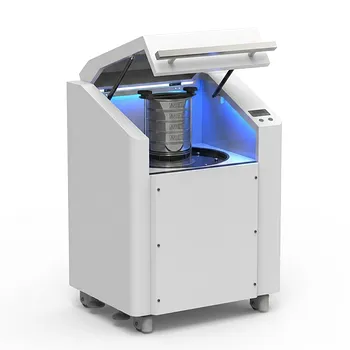
High Frequency Cabinet Type Three-Dimensional Rotary Vibrating Sieve Shaker for Dry Sieving and Particle Classification

Stainless Steel Rotary Vibrating Sieve High Precision Circular Vibratory Separator Industrial Powder Grading Machine Multi Layer Sifting Equipment
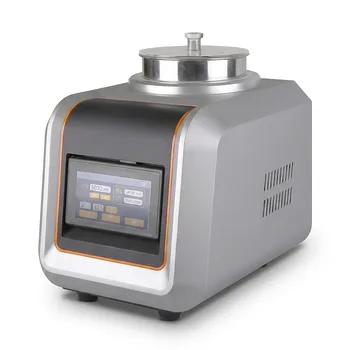
Laboratory Air Jet Sieving Machine for Fine Powder Particle Size Analysis and Deagglomeration