What role does a laboratory vibratory sieve shaker play in WPC 3D printing filament QC? Ensure Printability & Quality
Updated 5 months ago
The laboratory vibratory sieve shaker serves as the critical gatekeeper for the printability and structural integrity of Wood-Plastic Composite (WPC) filaments. By strictly grading wood particles—often to sizes below 237μm—the shaker ensures that the organic filler is small enough to pass through a 3D printer nozzle without clogging while maintaining the consistency required for stable extrusion.
Core Takeaway: In WPC filament production, the vibratory sieve shaker translates raw wood waste into a precision engineering material. Its primary role is to eliminate oversized particles that cause catastrophic nozzle failure and to normalize particle distribution to ensure predictable mechanical strength and surface quality.
Preventing Nozzle Failure and Printing Instability
Maintaining the Critical Particle-to-Nozzle Ratio
The most immediate role of the sieve shaker is ensuring that the maximum wood particle size remains significantly smaller than the 3D printing nozzle diameter. If particles exceed a specific ratio of the nozzle opening, they create structural bridges that lead to nozzle clogging and immediate print failure.
Ensuring Continuous Extrusion Flow
A vibratory sieve shaker allows manufacturers to extract specific fiber fractions, typically ranging from 150 to 710 micrometers. This precision ensures a steady flow of material through the extruder, preventing the "surging" or "starvation" effects that occur when inconsistent particle sizes disrupt the melt pressure.
Removing Agglomerates and Contaminants
Raw ground wood often contains irregular "frass" or clumps that do not melt like the plastic matrix. The shaking process uses multi-layered standard test sieves to mechanically isolate these anomalies, ensuring that only pure, size-standardized wood flour enters the filament production line.
Enhancing the Mechanical Integrity of WPC Filaments
Optimizing Interfacial Bonding Strength
The specific surface area of wood fibers determines how well they bond with the polymer matrix (such as polypropylene or PET). By using a sieve shaker to control particle size, producers can optimize this surface area, leading to stronger interfacial bonding and better stress transfer between the wood and plastic.
Guaranteeing Result Repeatability
In a laboratory setting, experimental consistency is paramount. Precisely grading wood fibers eliminates variables caused by fluctuating particle sizes, ensuring that any measured improvements in tensile strength or impact resistance are due to the formulation rather than random material distribution.
Stabilizing the Composite Microstructure
Consistent particle sizing, such as a uniform 420 μm distribution, leads to a more homogeneous internal microstructure. This uniformity prevents weak points within the printed part, ensuring that the mechanical properties remain stable across the entire geometry of the 3D-printed object.
Improving Surface Finish and Dimensional Accuracy
Reducing Surface Roughness
Large wood particles tend to protrude from the surface of the filament, leading to a "fuzzy" or sandpaper-like texture on the final printed part. Fine sieving—often down to 100 micrometers—is essential for achieving a smooth surface finish and high aesthetic quality in consumer-grade WPC prints.
Enhancing Layering Uniformity and Packing Density
In processes like binder jetting or high-detail FDM, the flowability of the raw material is critical. Vibratory sieving creates a narrow size distribution that increases the packing density of the filler, which directly improves the interlayer bonding strength and the dimensional precision of the part.
Understanding the Trade-offs
Particle Size vs. Material Yield
While finer particles (e.g., <45μm) improve surface finish and printability, over-sieving can lead to a significant loss of raw material yield. Manufacturers must balance the need for high-precision particles with the economic reality of discarding a large percentage of ground wood that falls outside the "perfect" range.
Sieve Blinding and Maintenance
Extended use of vibratory shakers with resinous wood types can lead to sieve blinding, where the mesh holes become blocked. This requires regular maintenance and precise amplitude settings to ensure that the grading remains accurate over long production runs.
How to Apply This to Your WPC Project
Making the Right Choice for Your Goal
- If your primary focus is operational reliability: Use a multi-layer sieve stack to strictly cap particle size at 1/5th of your nozzle diameter to eliminate all risks of clogging.
- If your primary focus is mechanical performance: Target a narrow particle size range (e.g., 150μm–250μm) to maximize the interfacial bonding area without sacrificing the structural reinforcement that larger fibers provide.
- If your primary focus is surface aesthetics: Utilize high-mesh sieves (100 mesh or higher) to isolate the finest wood flour, ensuring the printed layers are visually indistinguishable and smooth to the touch.
By treating the vibratory sieve shaker as a precision calibration tool rather than a simple filter, you ensure that your WPC filament meets the rigorous standards required for industrial-grade 3D printing.
Summary Table:
| Quality Factor | Role of Vibratory Sieving | Performance Benefit |
|---|---|---|
| Nozzle Reliability | Maintains particle-to-nozzle size ratio | Eliminates clogging and print failure |
| Mechanical Strength | Optimizes interfacial bonding area | Enhances tensile and impact resistance |
| Flow Consistency | Normalizes particle size distribution | Prevents surging during extrusion |
| Surface Quality | Filters out oversized fibers and frass | Ensures smooth, high-aesthetic finish |
| Repeatability | Stabilizes composite microstructure | Guarantees consistent experimental results |
Elevate Your WPC Material Research with Precision Engineering
Achieving industrial-grade quality in Wood-Plastic Composite (WPC) filaments requires absolute control over particle morphology. At Our Laboratory Solutions, we specialize in providing complete sample preparation equipment tailored for material science and advanced manufacturing.
Whether you are refining wood flour for 3D printing or developing new polymer composites, our specialized equipment ensures your success:
- Precise Grading: Vibratory and air-jet sieve shakers with high-accuracy test sieves to eliminate nozzle-clogging particles.
- Size Reduction: Heavy-duty jaw/roll crushers and high-energy planetary ball, jet, or cryogenic grinders for fine wood processing.
- Advanced Mixing: Powder and defoaming mixers to guarantee a homogeneous composite matrix.
- Material Compaction: A full spectrum of hydraulic presses, including Cold/Warm Isostatic Presses (CIP/WIP), vacuum hot presses, and XRF pellet presses for structural testing.
Maximize your material performance and minimize production downtime.
Contact Our Technical Experts Today to discuss your specific WPC processing needs and discover how our solutions can enhance your laboratory’s efficiency!
References
- Daša Krapež Tomec, Mirko Kariž. Effect of thermal modification of wood particles for wood-PLA composites on properties of filaments, 3D-printed parts and injection moulded parts. DOI: 10.1007/s00107-023-02018-2
Mentioned Products
- Vibratory Sieve Shaker Electromagnetic 3D Motion Powder Particle Size Analyzer for Dry and Wet Sieving
- Laboratory Dry and Wet Three Dimensional Vibratory Sieve Shaker for Particle Analysis
- Stainless Steel Laboratory Vibratory Test Sieve Shaker
- Heavy Duty Dry Three Dimensional Vibratory Sieve Shaker for Particle Separation
- Dry Three Dimensional Vibratory Sieve Shaker
People Also Ask
- How does a vibratory sieve shaker contribute to optimizing the performance of activated carbon? Enhance Adsorption Precision
- Why is a laboratory vibratory sieve shaker necessary for processing magnesium-based borate precursor powders? Boost Activity
- Why use a vibratory sieve shaker to verify coarse aggregate grading in rubberized concrete? Ensure Structural Integrity
- What function do vibratory sieve shakers and standard test sieves serve in the preparation of adsorbents? Key Guide
- What role does a vibratory sieve shaker play in the particle size analysis of ground corn products? Enhance QC Precision

Tech Team · PowderPreparation
Last updated on May 14, 2026
Related Products
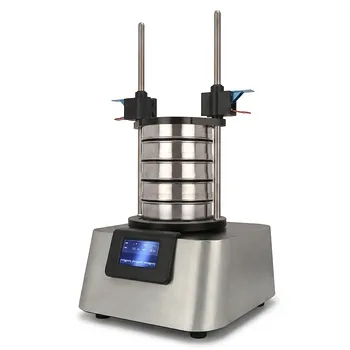
Vibratory Sieve Shaker Electromagnetic 3D Motion Powder Particle Size Analyzer for Dry and Wet Sieving
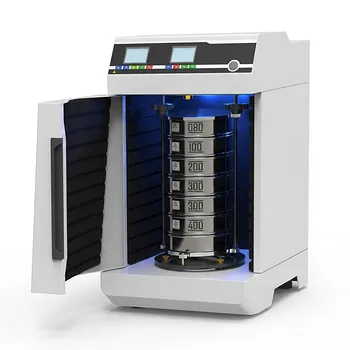
Laboratory Dry and Wet Three Dimensional Vibratory Sieve Shaker for Particle Analysis
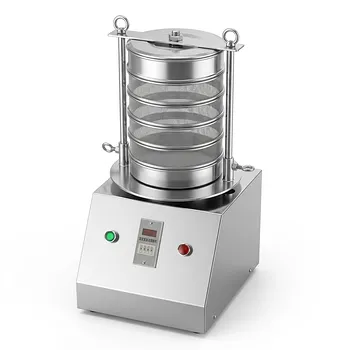
Stainless Steel Laboratory Vibratory Test Sieve Shaker
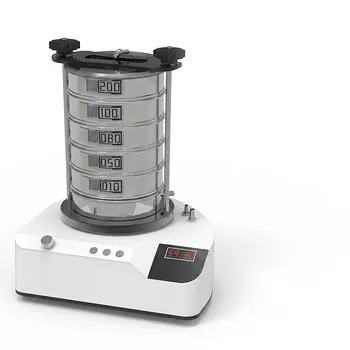
Heavy Duty Dry Three Dimensional Vibratory Sieve Shaker for Particle Separation
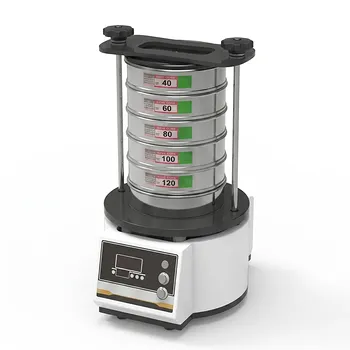
Dry Three Dimensional Vibratory Sieve Shaker
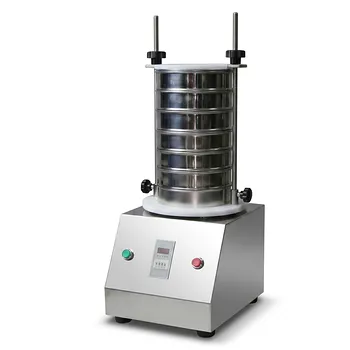
Small Laboratory Vibratory Sieve Shaker for Powder Gradation and Particle Size Analysis
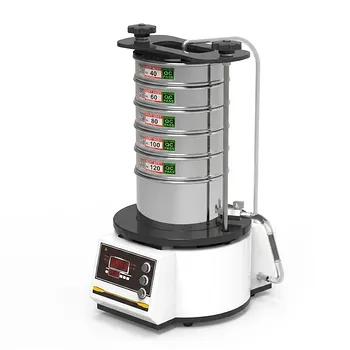
High Frequency Wet Three-Dimensional Vibrating Sieve Shaker for Dry and Wet Particle Size Analysis
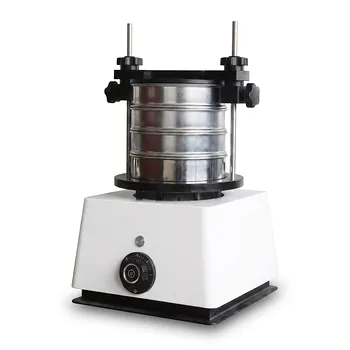
Small Laboratory Vibrating Sieve Shaker for Precise Particle Size Analysis
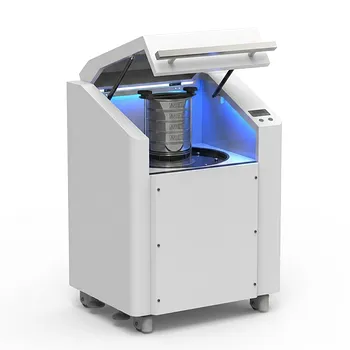
High Frequency Cabinet Type Three-Dimensional Rotary Vibrating Sieve Shaker for Dry Sieving and Particle Classification
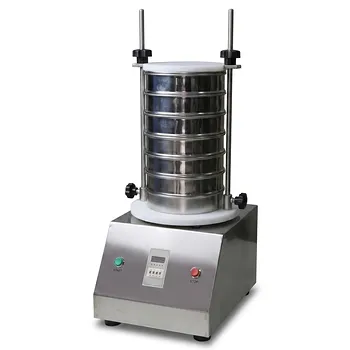
Laboratory Vibratory Test Sieve Shaker for Precision Particle Size Analysis and Powder Grading
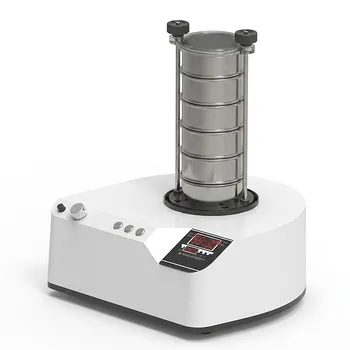
三维电磁微量振动筛分仪
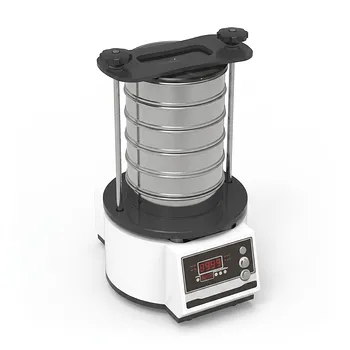
Tapping Oscillating Sieve Shaker for Dry and Wet Particle Size Analysis
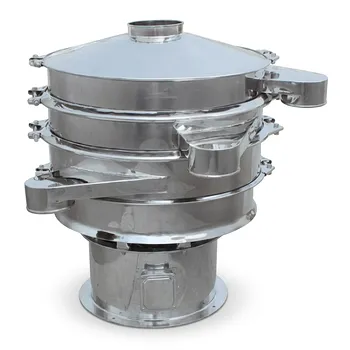
Stainless Steel Rotary Vibrating Sieve High Precision Circular Vibratory Separator Industrial Powder Grading Machine Multi Layer Sifting Equipment
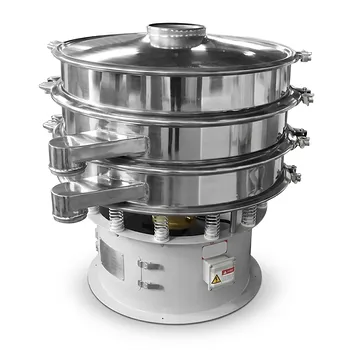
Three Dimensional Rotary Vibrating Sieve
Small Vibrating Ultrafine Grinder for Traditional Chinese Medicine
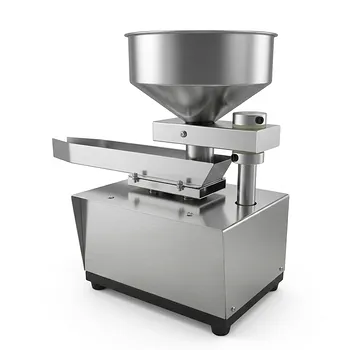
Automatic Vibrating Powder Feeder for Laboratory Material Processing Precision Vibratory Hopper Feeder for Granular and Powder Material Handling Industrial Grade Vibrating Tray Feeder for Consistent Material Sample Preparation
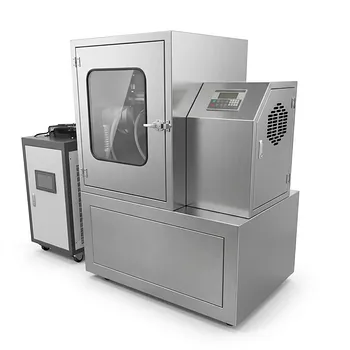
Vibratory Superfine Grinder for Ultra Fine Laboratory Powder Milling
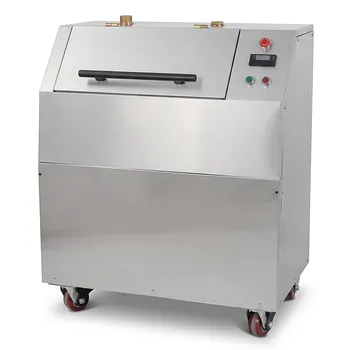
Vibratory Disc Mill for Rapid Fine Grinding and High Throughput Sample Preparation of Hard and Brittle Materials