What role does a laboratory hydraulic press play in the solvent-free preparation of perovskite photodetectors? Key Facts
Updated 4 months ago
In the solvent-free preparation of perovskite photodetectors, the laboratory hydraulic press serves as the primary tool for mechanical cold-pressing. It applies high static pressure—often reaching 10,000 kg—to transform synthesized perovskite powders into high-density, solid pellets or disks without the use of chemical solvents. This process is critical for maintaining material purity and protecting sensitive chemical phases that would otherwise degrade under traditional solution-based processing or high-temperature annealing.
The laboratory hydraulic press replaces chemical dissolution with physical force, enabling the creation of all-solid-state perovskite devices that are more stable, environmentally friendly, and free from solvent-induced defects.
The Mechanical Conversion of Powder to Solid
Particle Rearrangement and Plastic Deformation
The hydraulic press uses specialized molds to apply uniform pressure to loose perovskite powders, forcing particles to rearrange into a more compact structure. As pressure increases, these particles undergo plastic deformation, which binds them into a "green body" pellet with a specific geometric shape and structural strength.
Elimination of Internal Porosity
High-precision pressure control is essential for removing air trapped between powder particles. By eliminating internal pores, the press ensures that the resulting pellet reaches a high relative density, often between 95% and 97% of the material's theoretical maximum.
Surface Uniformity and Dimensional Stability
The press produces pellets with fixed thicknesses (typically around 2 mm) and exceptionally flat surfaces. This consistency is vital for subsequent analysis and device integration, as it ensures uniform performance across the entire photodetector surface.
Optimizing Device Performance Without Solvents
Avoiding Solvent Residue and Phase Damage
Traditional fabrication relies on solvents that can leave behind residues or require high-temperature annealing to remove. The hydraulic press allows for all-solid-state fabrication, which preserves metastable phases in the perovskite that might be destroyed by heat.
Enhancing Electrical and Thermal Conductivity
By compressing the powder into a dense mass, the press increases the physical contact points between nanocrystals. This tighter contact significantly improves macroscopic electrical conductivity and thermal dissipation, both of which are critical for the responsiveness and longevity of a photodetector.
Improving Signal-to-Noise Ratios
The elimination of internal voids and surface irregularities minimizes light scattering during operation. This leads to a higher signal-to-noise ratio, allowing the perovskite material to detect low levels of light with greater quantitative accuracy.
Understanding the Trade-offs
Pressure Limits and Material Cracking
While high pressure is necessary for density, excessive force can lead to internal stress concentrations. If the pressure is released too quickly or exceeds the material's limits, the pellet may suffer from micro-cracking or catastrophic deformation.
Uniformity of Internal Density
In thick samples, pressure may not distribute perfectly evenly from the top to the bottom of the mold. This can result in gradient density, where the center of the pellet is less dense than the surfaces, potentially leading to uneven electrical performance.
Limitations of "Cold" Pressing
Because this method avoids high-temperature sintering, it relies entirely on mechanical bonding. While this protects sensitive phases, the resulting pellets may lack the extreme mechanical durability of traditional ceramics that have been fired in a kiln.
How to Apply This to Your Project
Making the Right Choice for Your Goal
To achieve the best results with a laboratory hydraulic press, you must align your pressure settings with your specific device requirements.
- If your primary focus is Phase Stability: Use the hydraulic press at room temperature (cold-pressing) to avoid the thermal degradation associated with traditional annealing.
- If your primary focus is Maximum Sensitivity: Prioritize high-precision pressure control to eliminate pores and minimize light scattering, which improves the signal-to-noise ratio.
- If your primary focus is Scalable Manufacturing: Utilize standardized molds to ensure consistent pellet thickness and density across multiple production batches.
The laboratory hydraulic press is the foundational technology that makes high-performance, solvent-free perovskite electronics a physical reality.
Summary Table:
| Feature | Impact on Perovskite | Performance Benefit |
|---|---|---|
| High Static Pressure | Eliminates internal porosity (95-97% density) | Higher electrical conductivity |
| Solvent-Free Process | Avoids chemical residue/degradation | Preserves sensitive material phases |
| Cold Pressing | Prevents thermal damage to metastable phases | Enhanced device stability |
| Precision Molds | Uniform thickness & flat surface finish | Optimized signal-to-noise ratio |
Elevate Your Material Research with Precision Compaction
Achieve superior material purity and device performance with our professional laboratory solutions. We specialize in providing complete sample preparation equipment for material science, focusing on advanced powder processing and compaction.
Our extensive range includes:
- Hydraulic Presses: Cold/Warm Isostatic Presses (CIP/WIP), standard lab presses, XRF pellet presses, and vacuum hot presses.
- Grinding & Milling: Crushers, liquid nitrogen cryogenic grinders, and planetary, jet, or rotor mills.
- Sieving & Mixing: Sieve shakers, powder mixers, and defoaming mixers.
Whether you are developing next-generation photodetectors or processing advanced ceramics, our equipment ensures the density and consistency your research demands.
Contact our technical team today for a tailored solution!
References
- Zonghan Hong, Han Sen Soo. Completely Solvent-free Protocols to Access Phase-Pure, Metastable Metal Halide Perovskites and Functional Photodetectors from the Precursor Salts. DOI: 10.1016/j.isci.2019.05.042
Mentioned Products
- 6-Ton Small Single-Punch Tablet Press — Laboratory Powder & Granule Tableting Equipment / Tablet Forming Machine
- 5 Ton Single Punch Tablet Press Laboratory Small Batch Production
- Manual Tablet Press with Dual Scale Pressure Gauge for Pharmaceutical Food Chemical Laboratory Sample Preparation
- 6 Ton Variable Frequency Single Punch Tablet Press
- High Shear Laboratory Emulsifier for Mixing and Homogenization
People Also Ask
- What is the function of a laboratory press in Cr-Ti alloy evaluation? Quantify Fracture Stress & Strength
- What is the function of a laboratory press in assessing the hydrophobic performance of modified vermiculite fillers?
- What is the core function of a laboratory press in the forming of ceramic filter element green bodies? Maximize Density.
- What is the function of a laboratory press in the preparation of ceramic feed rods? Master Density and Precision
- Why is vacuum sealing and flexible packaging necessary for Aluminum Titanate powders during CIP? Ensure Peak Density

Tech Team · PowderPreparation
Last updated on Jun 03, 2026
Related Products
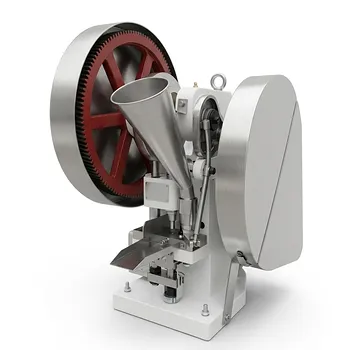
6-Ton Small Single-Punch Tablet Press — Laboratory Powder & Granule Tableting Equipment / Tablet Forming Machine
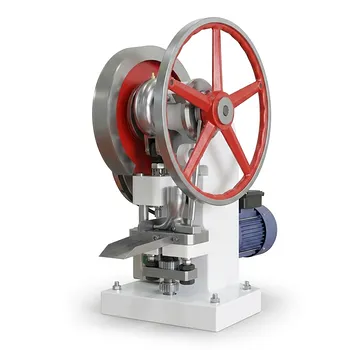
5 Ton Single Punch Tablet Press Laboratory Small Batch Production
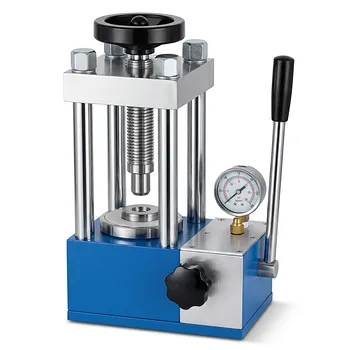
Manual Tablet Press with Dual Scale Pressure Gauge for Pharmaceutical Food Chemical Laboratory Sample Preparation
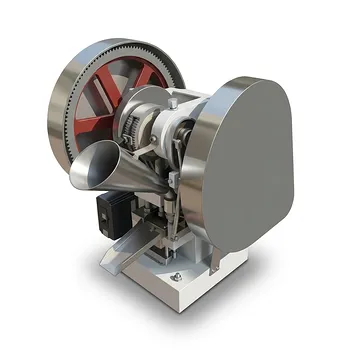
6 Ton Variable Frequency Single Punch Tablet Press
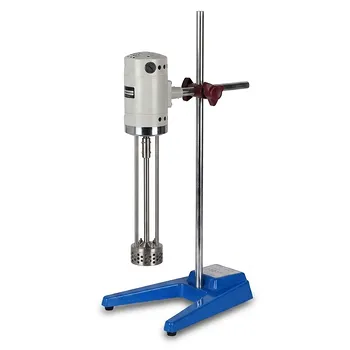
High Shear Laboratory Emulsifier for Mixing and Homogenization
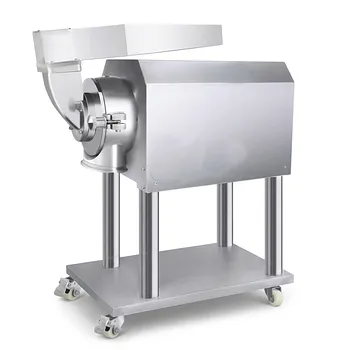
High Speed Small Laboratory Crusher for Dry Material Sample Preparation
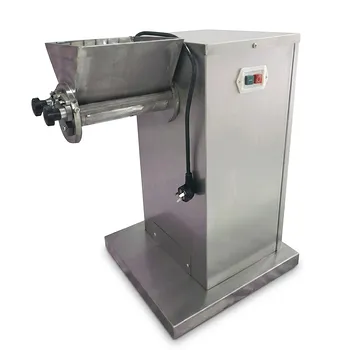
Small Laboratory Oscillating Granulator for Wet and Dry Granulation Processing
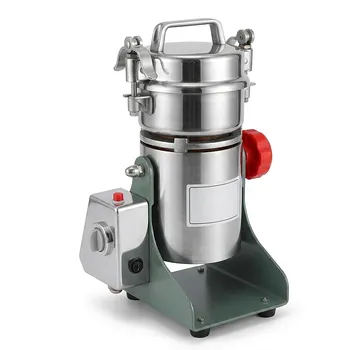
High Speed Swing Type Laboratory Pulverizer for Fine Powder Grinding and Sample Preparation