What role does a lab hydraulic press play in Zinc Aluminate green body prep? Ensure high-density ceramic pellets.
Updated 4 months ago
The laboratory hydraulic press is the critical instrument used to transform loose Zinc Aluminate (ZnAl2O4) powder into a "green body"—a compacted, solid preform with a defined shape and structural integrity. By applying precise uniaxial pressure, the press forces individual powder particles to rearrange, deform, and mechanically interlock, effectively expelling trapped air and maximizing particle-to-particle contact.
The primary role of the hydraulic press is to establish the initial density and geometric foundation of the ceramic. This high-pressure compaction is essential because the quality of the green body directly dictates the success of the subsequent sintering process, influencing the final material’s density, strength, and dimensional accuracy.
The Mechanics of Green Body Formation
Particle Rearrangement and Air Expulsion
During the pressing process, the hydraulic press applies constant axial force to the Zinc Aluminate powder housed within a precision mold. This force allows the particles to overcome internal friction, causing them to slide into a tighter configuration that fills macroscopic voids and expels internal air.
Reducing these voids is essential for creating a dense structure. Without this initial compaction, the ceramic would remain too porous, leading to excessive shrinkage or structural failure during high-temperature treatments.
Mechanical Interlocking and Binder Activation
The high pressure—often ranging from 30 MPa to 300 MPa depending on the specific application—forces the edges of the particles to bond. In many Zinc Aluminate formulations, organic binders are added to assist this process.
The hydraulic press ensures these binders are evenly compressed between particles. This creates a "bridge" that provides the green body with enough mechanical strength to be handled or machined before it is fired in a kiln.
Achieving Geometric Precision
Laboratory presses use specialized stainless steel molds to produce specific shapes, such as 10 mm diameter pellets, cylinders, or bars. The press ensures that the mass of the powder is distributed into a precise volume, resulting in a predictable and repeatable geometric form.
Impact on Sintering and Final Properties
Enhancing Atomic Diffusion
A high-quality green body produced by a hydraulic press provides superior conditions for atomic diffusion. Because the particles are packed so tightly, the energy required for them to fuse during sintering is lower.
This proximity is what allows the ceramic to reach high relative densities, often exceeding 85% or more of its theoretical maximum. A well-pressed sample ensures a more uniform final microstructure, which is vital for the functional performance of Zinc Aluminate.
Controlling Volume Shrinkage
One of the most significant challenges in ceramic engineering is volume shrinkage during firing. By using a hydraulic press to achieve a high initial green density, the amount of contraction that occurs in the furnace is significantly reduced.
Minimizing this shrinkage helps prevent the formation of internal cracks and ensures the finished component stays within its required dimensional tolerances. This predictability is crucial for both research consistency and industrial manufacturing.
Understanding the Trade-offs and Pitfalls
Pressure Gradients and Inhomogeneity
While high pressure is beneficial, applying it unevenly can lead to density gradients within the green body. If one part of the pellet is more compacted than another, it will shrink at a different rate during sintering, leading to warping or "warping" of the final sample.
The Risk of Over-Pressing (Capping)
There is a limit to how much pressure a powder can withstand. If the pressure is too high, or released too quickly, stored elastic energy can cause the green body to delaminate or "cap," where the top layers of the pellet separate from the base.
Mold Friction and Lubrication
The friction between the Zinc Aluminate powder and the walls of the precision mold can hinder uniform compaction. Technical advisors often recommend using small amounts of die-wall lubricants to ensure the pressure is transmitted effectively throughout the entire depth of the powder bed.
Optimizing Your Zinc Aluminate Preparation
How to Apply This to Your Project
To achieve the best results with your laboratory hydraulic press, you must align your pressure settings with your specific material goals.
- If your primary focus is maximizing final density: Use higher compaction pressures (e.g., 200–300 MPa) to eliminate the maximum number of voids before sintering.
- If your primary focus is preventing structural cracks: Utilize a slower pressure release (dwell time) and ensure your powder contains a well-distributed organic binder to improve green strength.
- If your primary focus is dimensional accuracy: Maintain a strict, consistent mass-to-volume ratio and use precision-ground molds to minimize geometric deviations.
Properly calibrated hydraulic pressing is the foundational step that ensures your Zinc Aluminate ceramics transition from a fragile powder to a high-performance technical material.
Summary Table:
| Stage | Action/Mechanism | Key Benefit |
|---|---|---|
| Compaction | High Pressure (30-300 MPa) | Expels air and maximizes particle density |
| Formation | Precision Steel Molds | Achieves repeatable geometric shapes (pellets/bars) |
| Stabilization | Mechanical Interlocking | Provides green strength for safe handling/machining |
| Sintering Prep | Enhanced Atomic Diffusion | Reduces volume shrinkage and prevents cracking |
Optimize Your Material Preparation with KinTek
Achieving high-density Zinc Aluminate green bodies requires precision and reliability. KinTek provides complete laboratory sample preparation solutions for material science, specializing in advanced powder processing and compaction equipment.
Our extensive product lines include:
- Compaction: A full spectrum of hydraulic presses, including Cold/Warm Isostatic Presses (CIP/WIP), standard lab presses, XRF pellet presses, and vacuum hot presses.
- Powder Processing: Crushers (jaw/roll), liquid nitrogen cryogenic grinders, and various mills (planetary ball, jet, rotor).
- Analysis & Mixing: Sieve shakers, powder mixers, and defoaming mixers to ensure material homogeneity.
Whether you are aiming for maximum final density or strict dimensional accuracy, our technical experts are ready to help you select the right equipment to enhance your lab's efficiency.
Contact KinTek Today for a Professional Solution
References
- Yan YANG, Zhifu LIU. Low Temperature Sintering of ZnAl2O4 Ceramics with CuO-TiO2-Nb2O5 Composite Oxide Sintering Aid. DOI: 10.15541/jim20240517
Mentioned Products
- 6-Ton Small Single-Punch Tablet Press — Laboratory Powder & Granule Tableting Equipment / Tablet Forming Machine
- 5 Ton Single Punch Tablet Press Laboratory Small Batch Production
- Manual Tablet Press with Dual Scale Pressure Gauge for Pharmaceutical Food Chemical Laboratory Sample Preparation
- 6 Ton Variable Frequency Single Punch Tablet Press
- High Shear Laboratory Emulsifier for Mixing and Homogenization
People Also Ask
- What is the function of a laboratory press in Cr-Ti alloy evaluation? Quantify Fracture Stress & Strength
- What is the function of a laboratory press in assessing the hydrophobic performance of modified vermiculite fillers?
- What is the core function of a laboratory press in the forming of ceramic filter element green bodies? Maximize Density.
- What is the function of a laboratory press in the preparation of ceramic feed rods? Master Density and Precision
- Why is vacuum sealing and flexible packaging necessary for Aluminum Titanate powders during CIP? Ensure Peak Density

Tech Team · PowderPreparation
Last updated on Jun 03, 2026
Related Products
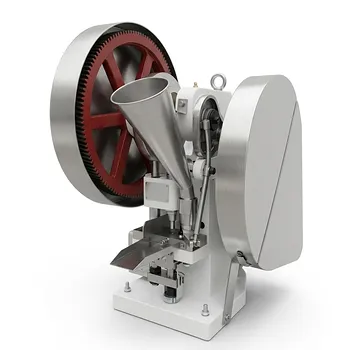
6-Ton Small Single-Punch Tablet Press — Laboratory Powder & Granule Tableting Equipment / Tablet Forming Machine
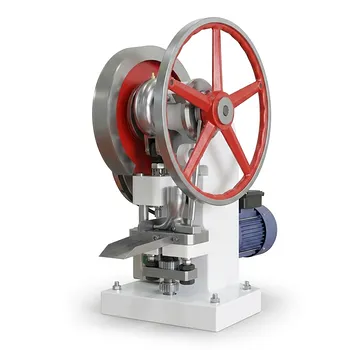
5 Ton Single Punch Tablet Press Laboratory Small Batch Production
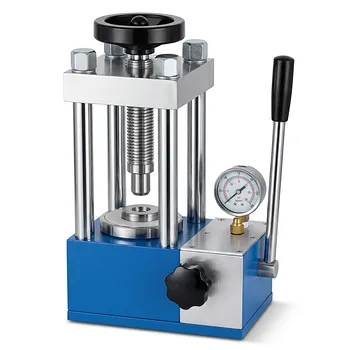
Manual Tablet Press with Dual Scale Pressure Gauge for Pharmaceutical Food Chemical Laboratory Sample Preparation
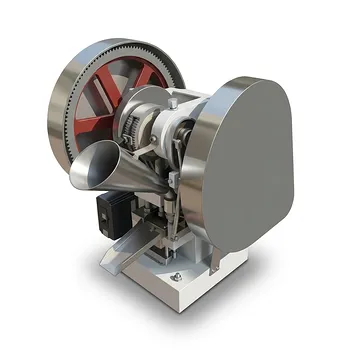
6 Ton Variable Frequency Single Punch Tablet Press
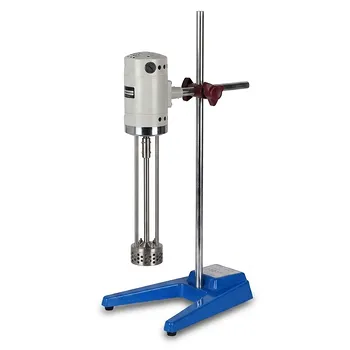
High Shear Laboratory Emulsifier for Mixing and Homogenization
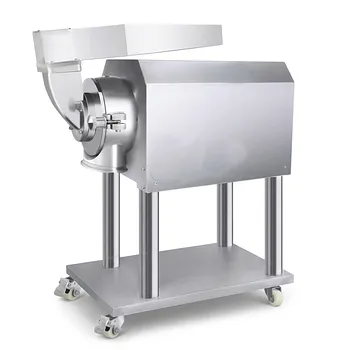
High Speed Small Laboratory Crusher for Dry Material Sample Preparation
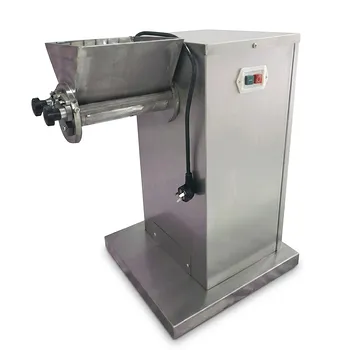
Small Laboratory Oscillating Granulator for Wet and Dry Granulation Processing
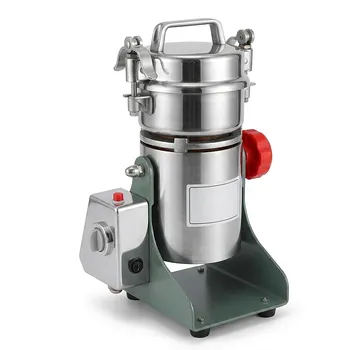
High Speed Swing Type Laboratory Pulverizer for Fine Powder Grinding and Sample Preparation
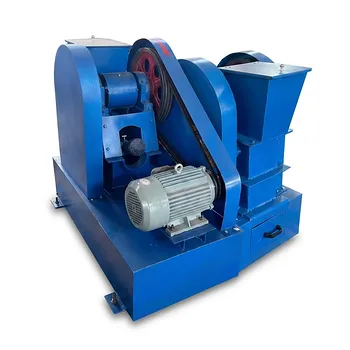
Horizontal Jaw Crusher Medium Hard Material Crushing Laboratory Sample Preparation Equipment