What role does a laboratory hydraulic press play in the preparation of silicate ceramic green bodies? Key Compaction Roles
Updated 4 months ago
The laboratory hydraulic press is the primary tool for dry pressing silicate ceramic powders into dense, cohesive "green bodies." By applying precise, uniaxial pressure through a mold, the press forces loose powder particles to overcome friction, rearrange, and pack into a specific geometric shape. This process provides the initial mechanical strength and density required for the ceramic to survive handling and the intense thermal stress of sintering.
The core role of a hydraulic press is to transform loose silicate powder into a structurally sound green body by eliminating large pores and maximizing particle contact points. This ensures uniform shrinkage and prevents structural failure, such as cracking or warping, during the subsequent firing process.
The Mechanics of Powder Compaction
Overcoming Internal Friction
Ceramic powder particles naturally resist movement due to surface friction and air pockets. The hydraulic press applies axial pressure (often reaching 35 MPa to 100 MPa) to force these particles to slide past one another.
Particle Rearrangement and Interlocking
As pressure increases, particles undergo mechanical interlocking and minor deformation. This rearrangement fills voids and creates a solid-state bond that gives the green body its defined shape, such as pellets or prismatic blocks.
Eliminating Trapped Air
High-pressure molding effectively expels air trapped between particles. Removing these macropores is essential, as trapped gases can expand during heating, leading to internal fractures or "bloating" in the final ceramic.
Ensuring Structural Integrity and Strength
Achieving High Green Density
The "green density" refers to the density of the compact before it is fired. A laboratory press ensures the green body reaches a high initial density, which is a prerequisite for preventing severe deformation during high-temperature solid-phase reactions.
Providing Mechanical Strength
A well-pressed green body must be robust enough to be removed from the mold and handled. The press provides the necessary mechanical strength to allow for minor machining or transport to the furnace without the sample crumbling.
Stabilizing Particle Contact
By increasing the number of contact points between powder particles, the press facilitates faster grain growth and densification. In specialized applications like Field-Assisted Sintering (FAST), this compaction establishes the stable conductive pathways necessary for the process.
Impact on Sintering Quality
Minimizing Density Gradients
Precise pressure control and pressure-holding functions are critical for ensuring the internal density is uniform throughout the sample. Inconsistent density leads to differential shrinkage, where one part of the ceramic contracts more than another, causing the piece to warp.
Ensuring Geometric Accuracy
Silicate ceramics must often meet strict dimensional tolerances. The use of precision stainless steel molds in conjunction with controlled hydraulic pressure ensures the final sintered disk or bar achieves the correct geometric shape.
Improving Breakdown Strength
For technical ceramics, the elimination of internal irregularities directly improves the dielectric and breakdown strength. A uniform internal structure, facilitated by the press, reduces the likelihood of electrical or structural failure under stress.
Understanding the Trade-offs and Pitfalls
The Risk of Density Gradients
In uniaxial pressing, pressure is not always distributed perfectly. Friction between the powder and the mold walls can lead to higher density at the top of the sample and lower density at the bottom, potentially causing "hourglass" warping during sintering.
Elastic Recovery and Spring-back
When pressure is released too quickly, the green body may experience "spring-back," where the particles elastically recover their shape. This can cause "capping" or laminations—thin horizontal cracks that compromise the entire sample.
Pressure Limits and Over-Compaction
Applying excessive pressure can lead to over-compaction, where particles are crushed rather than rearranged. This can create internal stresses that manifest as cracks only after the sample has been placed in the sintering furnace.
How to Apply This to Your Project
Making the Right Choice for Your Goal
- If your primary focus is maximizing densification: Utilize a press with a high pressure-holding time to allow particles sufficient time to settle and eliminate microscopic air pockets.
- If your primary focus is preventing sintering cracks: Ensure your hydraulic press offers precise control over the decompression rate to mitigate the effects of elastic spring-back.
- If your primary focus is electrical performance: Focus on achieving the highest possible green density to establish superior particle contact for solid-phase reactions.
By mastering the precise application of pressure, you establish the structural foundation necessary for high-performance silicate ceramics.
Summary Table:
| Function | Mechanism | Benefit to Final Ceramic |
|---|---|---|
| Compaction | Overcomes internal friction via axial pressure | Eliminates macropores and prevents bloating |
| Densification | Increases particle contact points | Minimizes shrinkage and prevents deformation |
| Bonding | Mechanical interlocking of particles | Provides the green strength needed for handling |
| Uniformity | Precise pressure-holding control | Reduces density gradients to prevent warping |
Optimize Your Material Preparation with Precision Engineering
Achieving the perfect green body is the foundation of high-performance ceramics. At our company, we specialize in providing complete laboratory sample preparation solutions for material science, focusing on advanced powder processing and compaction equipment.
Our extensive product line includes:
- Hydraulic Presses: Standard lab presses, XRF pellet presses, and high-performance Cold/Warm Isostatic Presses (CIP/WIP).
- Thermal Processing: Hot presses and vacuum hot presses for specialized sintering.
- Sample Milling: Planetary ball mills, jet mills, and cryogenic grinders for ultra-fine powder preparation.
- Preparation Tools: Jaw/roll crushers and vibratory sieve shakers to ensure particle size consistency.
Ready to enhance your lab's efficiency and sample quality? Contact us today to find the ideal equipment for your silicate ceramic research and industrial applications.
References
- Liao Shu. ULTRASOUND-ASSISTED CONVENTIONAL SINTERING OF SILICATE CERAMICS. DOI: 10.13168/cs.2022.0053
Mentioned Products
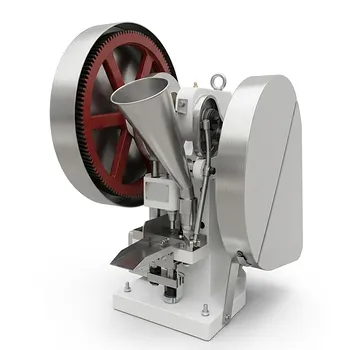
- 6-Ton Small Single-Punch Tablet Press — Laboratory Powder & Granule Tableting Equipment / Tablet Forming Machine
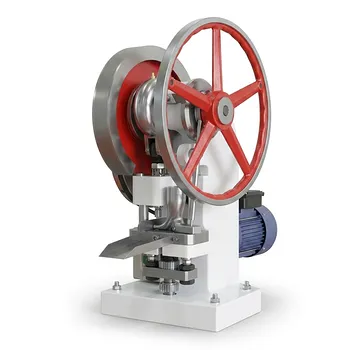
- 5 Ton Single Punch Tablet Press Laboratory Small Batch Production
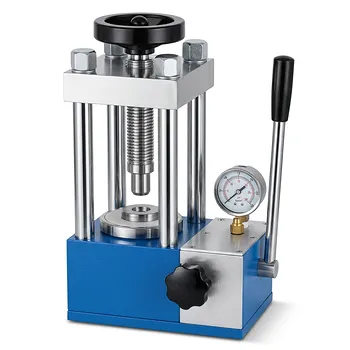
- Manual Tablet Press with Dual Scale Pressure Gauge for Pharmaceutical Food Chemical Laboratory Sample Preparation
- 6 Ton Variable Frequency Single Punch Tablet Press
- High Shear Laboratory Emulsifier for Mixing and Homogenization
People Also Ask
- What is the function of a laboratory press in Cr-Ti alloy evaluation? Quantify Fracture Stress & Strength
- What is the function of a laboratory press in assessing the hydrophobic performance of modified vermiculite fillers?
- What is the core function of a laboratory press in the forming of ceramic filter element green bodies? Maximize Density.
- What is the function of a laboratory press in the preparation of ceramic feed rods? Master Density and Precision
- Why is vacuum sealing and flexible packaging necessary for Aluminum Titanate powders during CIP? Ensure Peak Density

Tech Team · PowderPreparation
Last updated on Jun 03, 2026
Related Products
6-Ton Small Single-Punch Tablet Press — Laboratory Powder & Granule Tableting Equipment / Tablet Forming Machine
5 Ton Single Punch Tablet Press Laboratory Small Batch Production
Manual Tablet Press with Dual Scale Pressure Gauge for Pharmaceutical Food Chemical Laboratory Sample Preparation
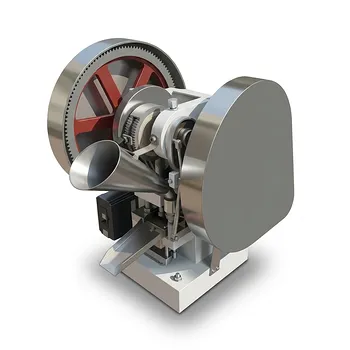
6 Ton Variable Frequency Single Punch Tablet Press
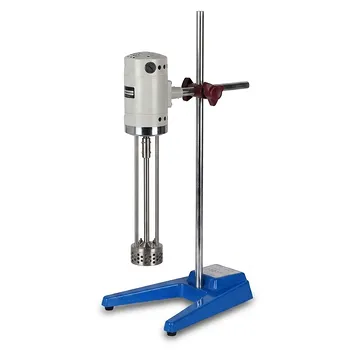
High Shear Laboratory Emulsifier for Mixing and Homogenization
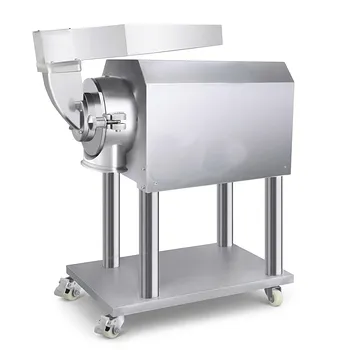
High Speed Small Laboratory Crusher for Dry Material Sample Preparation
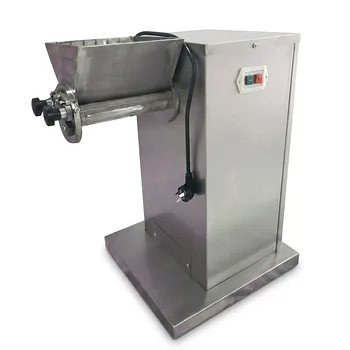
Small Laboratory Oscillating Granulator for Wet and Dry Granulation Processing
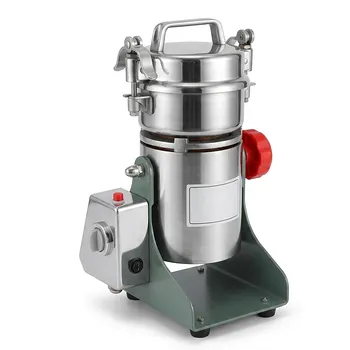
High Speed Swing Type Laboratory Pulverizer for Fine Powder Grinding and Sample Preparation