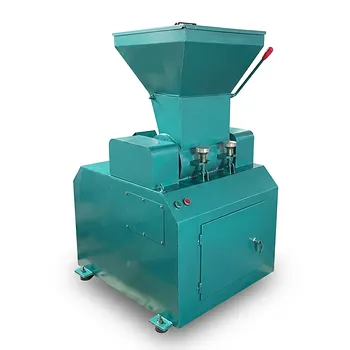
What role does a laboratory hydraulic press play in LSM ceramic precursors? Master dense green body formation & sintering
Updated 5 months ago
The laboratory hydraulic press is the critical bridge between raw precursor powder and a high-quality bulk ceramic. It applies uni-axial pressure to transform La0.7Sr0.3MnO3 (LSM) powders into dense, cohesive "green bodies" that are structurally prepared for the high-temperature sintering process. This compaction ensures the particle-to-particle contact required for grain growth and final material integrity.
Core Takeaway: By applying precise uni-axial pressure, a laboratory hydraulic press creates high-density LSM green bodies with minimal internal porosity. This physical foundation is essential for successful sintering at 1400 °C and the eventual production of sub-micron particle powders.
The Transformation from Powder to Green Body
Creating Structural Integrity
In the preparation of LSM ceramics, the hydraulic press converts loose, heat-treated powders into a standardized solid known as a green body. This step provides the necessary structural strength to handle the material before it is fired in a kiln. Without this initial compaction, the precursor would remain a loose powder, making it impossible to form stable bulk materials.
Facilitating Particle Contact
The primary role of the press is to ensure close contact between individual powder particles. In LSM preparation, this proximity is vital because it allows for efficient atomic diffusion during the subsequent sintering stage at 1400 °C. When particles are tightly packed, grain growth occurs more uniformly, resulting in a high-quality bulk material.
Achieving Geometric Precision
Laboratory presses allow researchers to mold LSM into specific geometries, such as discs, cylinders, or bars, using precision steel molds. This standardized shaping is necessary for consistent heat distribution during sintering and ensures the final product meets the dimensions required for testing or further mechanical processing.
Enhancing Material Properties through Pressure
Increasing Packing Density
By applying stable and constant pressure, the hydraulic press significantly increases the packing density of the LSM precursor. This reduction in volume eliminates large macroscopic defects and air pockets that could cause the ceramic to crack or fail during high-temperature cycles.
Minimizing Internal Porosity
High-pressure molding is essential for reducing internal porosity and micro-defects within the green bulk. For LSM ceramics, minimizing these pores is a prerequisite for achieving a dense microstructure, which is critical if the material is later intended for applications requiring high electrical or ionic conductivity.
Preparing for Sub-Micron Grinding
The bulk LSM material produced after pressing and sintering is often intended to be mechanically ground into sub-micron particle sizes. A properly pressed green body ensures the resulting ceramic is dense and uniform enough to withstand this grinding process without unpredictable fracturing, allowing for precise control over the final powder's size.
Understanding the Trade-offs and Limitations
Uniaxial Pressure Constraints
A standard laboratory hydraulic press typically applies uniaxial pressure, meaning the force comes from one direction. This can sometimes lead to density gradients within the sample, where the center of the green body is less dense than the surfaces near the plunger.
Risk of Micro-Cracking
If pressure is applied or released too rapidly, internal stresses can cause delamination or micro-cracks within the LSM green body. This is a common pitfall that can lead to structural failure during the 1400 °C sintering process, necessitating a slow and controlled application of force.
Optimizing the Pressing Stage for Your Goal
How to Apply This to Your Project
To achieve the best results with LSM ceramic precursors, your approach to using the hydraulic press should align with your final material requirements:
- If your primary focus is high-density bulk samples: Use maximum rated pressure (often 35 MPa or higher) to minimize porosity and maximize particle contact before sintering.
- If your primary focus is producing fine sub-micron powders: Ensure the green body is pressed uniformly to facilitate consistent grain growth, which makes post-sintering mechanical grinding more predictable.
- If your primary focus is preventing structural failure: Apply and release pressure slowly to avoid internal stress fractures, and ensure the powder is granulated or pre-treated to avoid air entrapment.
The hydraulic press is not merely a molding tool, but a precision instrument that dictates the microstructural success and physical viability of the final LSM ceramic.
Summary Table:
| Key Role | Impact on LSM Precursors | Primary Benefit |
|---|---|---|
| Compaction | Transforms loose powder into a cohesive "green body" | Enhances structural integrity for handling |
| Particle Contact | Facilitates atomic diffusion at 1400 °C | Promotes uniform grain growth and density |
| Pressure Control | Eliminates air pockets and macroscopic defects | Minimizes internal porosity and cracking |
| Geometric Molding | Shapes powder into precise discs or cylinders | Ensures consistent heat distribution during sintering |
Elevate Your Material Research with Precision Engineering
High-quality La0.7Sr0.3MnO3 (LSM) ceramics demand perfect compaction before they ever hit the furnace. At our core, we provide complete laboratory sample preparation solutions designed specifically for the rigorous demands of material science.
From achieving sub-micron particle sizes with our planetary ball mills and jet mills to forming flawless green bodies with our industry-leading hydraulic presses, we empower your lab with the tools needed for excellence. Our extensive lineup includes:
- Hydraulic Presses: Standard lab presses, XRF pellet presses, Hot Presses, and Vacuum Hot Presses.
- Isostatic Pressing: Cold (CIP) and Warm (WIP) Isostatic Presses for uniform density.
- Powder Processing: Jaw/roll crushers, cryogenic grinders, and high-energy mills.
- Mixing & Sieving: Powder mixers, defoaming mixers, and vibratory sieve shakers.
Whether you are a researcher developing advanced oxides or a distributor looking for reliable OEM/ODM support, we deliver the reliability and performance your project deserves.
Ready to optimize your sample preparation? Contact our technical experts today to find the perfect solution for your powder processing needs!
References
- 直登 染谷. CeO 2 /La 0.7 Sr 0.3 MnO 3 ヘテロ凝集体からの多孔質電極の作製と YSZ 電解質/電極界面抵抗に及ぼす熱処理の影響. DOI: 10.15002/00013661
Mentioned Products
- 6-Ton Small Single-Punch Tablet Press — Laboratory Powder & Granule Tableting Equipment / Tablet Forming Machine
- 5 Ton Single Punch Tablet Press Laboratory Small Batch Production
- Manual Tablet Press with Dual Scale Pressure Gauge for Pharmaceutical Food Chemical Laboratory Sample Preparation
- 6 Ton Variable Frequency Single Punch Tablet Press
- High Speed Small Laboratory Crusher for Dry Material Sample Preparation
People Also Ask
- What is the function of a laboratory press in Cr-Ti alloy evaluation? Quantify Fracture Stress & Strength
- What is the function of a laboratory press in assessing the hydrophobic performance of modified vermiculite fillers?
- What is the core function of a laboratory press in the forming of ceramic filter element green bodies? Maximize Density.
- What is the function of a laboratory press in the preparation of ceramic feed rods? Master Density and Precision
- Why is vacuum sealing and flexible packaging necessary for Aluminum Titanate powders during CIP? Ensure Peak Density

Tech Team · PowderPreparation
Last updated on May 14, 2026
Related Products
6-Ton Small Single-Punch Tablet Press — Laboratory Powder & Granule Tableting Equipment / Tablet Forming Machine
5 Ton Single Punch Tablet Press Laboratory Small Batch Production
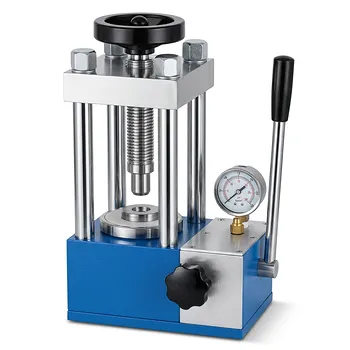
Manual Tablet Press with Dual Scale Pressure Gauge for Pharmaceutical Food Chemical Laboratory Sample Preparation
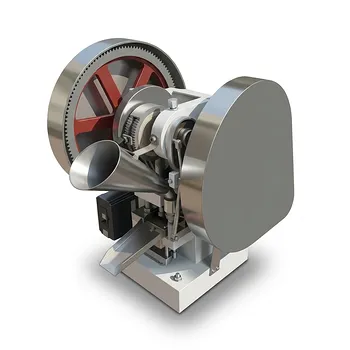
6 Ton Variable Frequency Single Punch Tablet Press
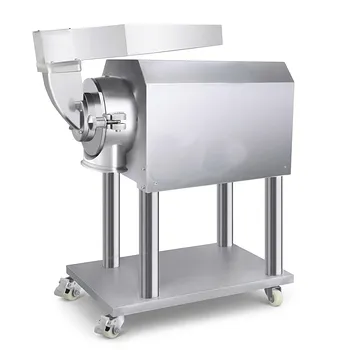
High Speed Small Laboratory Crusher for Dry Material Sample Preparation
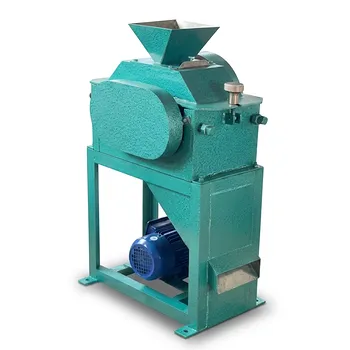
Laboratory Double Roll Crusher for Medium Hardness Materials Coal Ore Sample Preparation
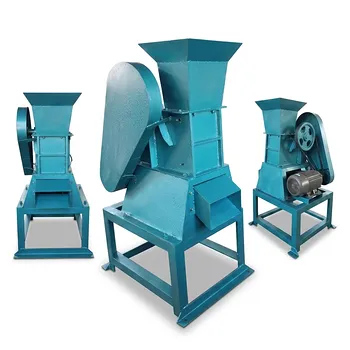
Custom Raised Height Laboratory Jaw Crusher for Precision Sample Preparation in Material Science
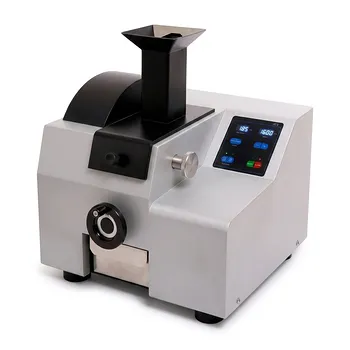
Laboratory Benchtop Jaw Crusher for Hard Brittle Materials Primary Size Reduction and Sample Preparation
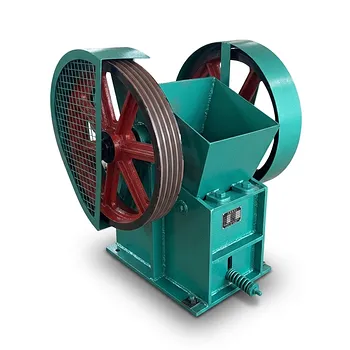
150x250mm Laboratory Jaw Crusher for Medium Hard Material Crushing and Sample Preparation
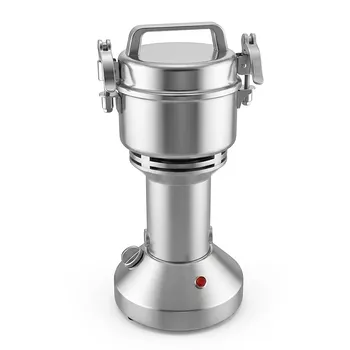
Small High Speed Upright Grinder for Laboratory Sample Preparation
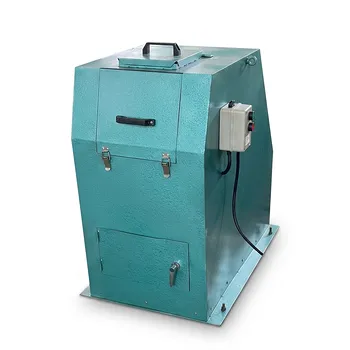
Environmentally Friendly Sealed Laboratory Jaw Crusher for Sample Preparation
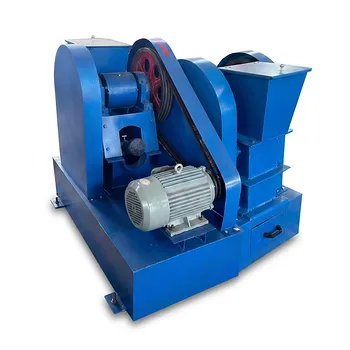
Horizontal Jaw Crusher Medium Hard Material Crushing Laboratory Sample Preparation Equipment
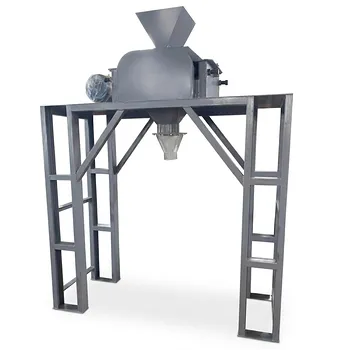
Heightened Customized Laboratory Double Roll Crusher for Coal Ore Rock Crushing
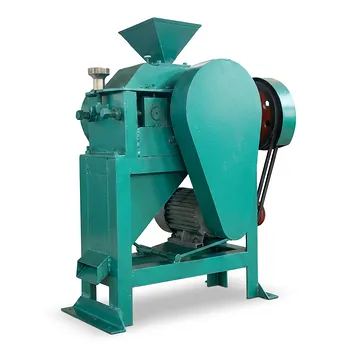
Laboratory Sealed Double Roll Crusher for Coal Ore Rock and Medium Hardness Materials Sample Preparation
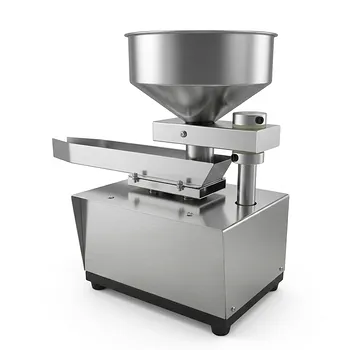
Automatic Vibrating Powder Feeder for Laboratory Material Processing Precision Vibratory Hopper Feeder for Granular and Powder Material Handling Industrial Grade Vibrating Tray Feeder for Consistent Material Sample Preparation
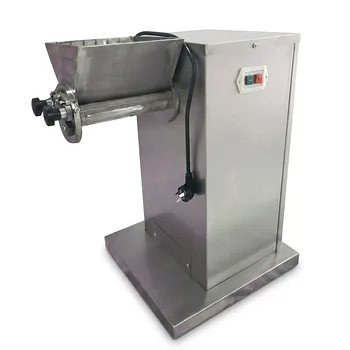
Small Laboratory Oscillating Granulator for Wet and Dry Granulation Processing
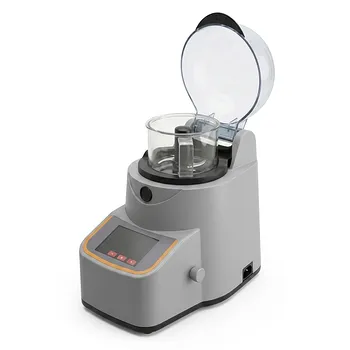
Industrial Knife Mill for Food and Biological Sample Preparation High Speed Laboratory Homogenizer
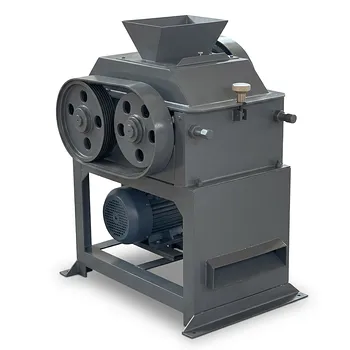
Sealed Laboratory Double Roll Crusher for Coal, Mineral, Ore Sample Preparation
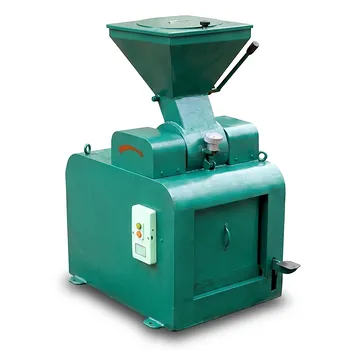
Laboratory Sealed Hammer Crushers for Coal Sample Preparation and Medium Strength Material Crushing