What role does a laboratory hydraulic press play in the forming process of bimodal nanostructured metal billets?
Updated 4 months ago
The laboratory hydraulic press serves as the primary consolidation mechanism for transforming loose bimodal nanostructured powders into solid, high-density metal billets. By applying precise, high-static pressure, the press induces plastic deformation and particle rearrangement, creating a "green body" with the structural integrity necessary for subsequent thermal and mechanical processing.
The core role of the laboratory hydraulic press is to establish a uniform preliminary density while minimizing internal porosity. This consolidation provides the vital physical foundation required for the material to survive downstream processes like degassing and hot extrusion without structural failure.
Establishing Structural Integrity through Consolidation
Achieving Preliminary Density
The press applies axial force to mixed bimodal powders within high-precision dies to force particles into closer contact. This process causes plastic deformation, reducing the volume of the powder mass and increasing its density to a level suitable for industrial handling.
Creating a Robust Green Body
By compacting refined powders into predetermined bulk shapes, the press gives the material enough mechanical strength to undergo further processing. Without this step, the loose nanostructured particles would remain a powder, making it impossible to perform specialized metallurgical tasks like vacuum degassing.
Controlling Microstructure and Defect Minimization
Eliminating Internal Porosity
Precise pressure control is essential to minimize internal pores and voids that could lead to crack defects in the final material. A high-precision press ensures that the "green compact" is as dense as possible, which is a prerequisite for achieving full densification during final sintering or extrusion.
Ensuring Uniform Particle Distribution
In bimodal systems, where different grain sizes or phases are mixed, the hydraulic press ensures a consistent distribution of particles. Uniformity at this stage prevents density gradients, which are critical for maintaining the specific mechanical properties associated with nanostructured metals.
Preventing Abnormal Grain Growth
A laboratory hydraulic press provides the constant, uniform pressure needed to ensure even densification across the entire billet. Proper compaction prevents abnormal grain growth during subsequent heat treatments, a common failure point caused by uneven density distribution within the metal matrix.
Understanding the Trade-offs and Limitations
Pressure Distribution Gradients
While the hydraulic press is effective, it often creates density gradients where the material closest to the ram is denser than the material at the bottom of the die. This non-uniformity can lead to warping or internal stresses if the height-to-diameter ratio of the billet is not carefully managed.
Risk of Delamination and Cracking
Applying too much pressure too quickly—or releasing it abruptly—can cause elastic recovery issues, where the metal "springs back" and develops horizontal cracks. Operators must balance the need for high density with the physical limits of the powder's compressibility and the die's strength.
How to Apply This to Your Project
Optimizing the Forming Process
- If your primary focus is maximizing mechanical strength: Use the highest possible constant pressure (often 600 MPa or more) to ensure maximum particle contact and minimize voids before sintering.
- If your primary focus is microstructure stability: Prioritize the uniformity and consistency of the axial pressure over raw force to prevent localized density variations that trigger grain growth.
- If your primary focus is preventing structural defects: Implement a slow pressure release (decompression) cycle to allow the green billet to stabilize and avoid internal delamination.
By mastering the precise control of the laboratory hydraulic press, researchers can ensure their nanostructured billets possess the internal consistency required for superior final performance.
Summary Table:
| Key Role | Mechanical Action | Impact on Material Quality |
|---|---|---|
| Consolidation | Axial force application | Transforms loose powder into a robust, handleable 'green body' |
| Porosity Control | Plastic deformation | Eliminates internal voids to prevent cracks during final sintering |
| Microstructure | Uniform particle distribution | Prevents density gradients and localized abnormal grain growth |
| Stability | Controlled decompression | Minimizes elastic recovery to prevent delamination and warping |
Elevate Your Material Research with Precision Compaction Solutions
Achieving the perfect density and microstructure in bimodal nanostructured metals requires more than just force—it requires precision. At KinTek, we provide complete laboratory sample preparation solutions specifically designed for the rigorous demands of material science and powder metallurgy.
Our extensive range of equipment empowers researchers to achieve consistent, defect-free results:
- Advanced Hydraulic Presses: A full spectrum including standard lab presses, XRF pellet presses, and high-performance Cold/Warm Isostatic Presses (CIP/WIP).
- Thermal Processing: Specialized hot presses and vacuum hot presses for advanced densification.
- Powder Preparation: Comprehensive lines of crushers, cryogenic grinders, and mills (planetary, jet, and rotor) to achieve ideal particle sizes.
- Mixing & Analysis: Powder/defoaming mixers and vibratory sieve shakers for uniform material distribution.
Don't let density gradients or internal defects compromise your research. Contact our technical specialists today to discuss how our powder processing and compaction equipment can optimize your forming process!
References
- Xiang Guo, George J. Weng. Ballistic Performance of Nanostructured Metals Toughened by Elliptical Coarse-Grained Inclusions: A Finite Element Study with Failure Analysis. DOI: 10.3390/ma11060977
Mentioned Products
- 6-Ton Small Single-Punch Tablet Press — Laboratory Powder & Granule Tableting Equipment / Tablet Forming Machine
- 5 Ton Single Punch Tablet Press Laboratory Small Batch Production
- Manual Tablet Press with Dual Scale Pressure Gauge for Pharmaceutical Food Chemical Laboratory Sample Preparation
- 6 Ton Variable Frequency Single Punch Tablet Press
- High Shear Laboratory Emulsifier for Mixing and Homogenization
People Also Ask
- What is the function of a laboratory press in Cr-Ti alloy evaluation? Quantify Fracture Stress & Strength
- What is the function of a laboratory press in assessing the hydrophobic performance of modified vermiculite fillers?
- What is the core function of a laboratory press in the forming of ceramic filter element green bodies? Maximize Density.
- What is the function of a laboratory press in the preparation of ceramic feed rods? Master Density and Precision
- Why is vacuum sealing and flexible packaging necessary for Aluminum Titanate powders during CIP? Ensure Peak Density

Tech Team · PowderPreparation
Last updated on Jun 03, 2026
Related Products
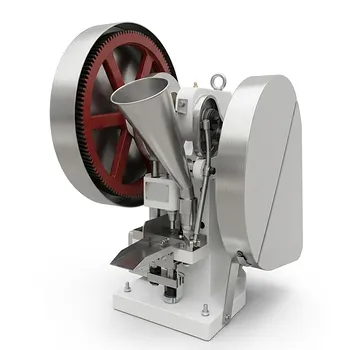
6-Ton Small Single-Punch Tablet Press — Laboratory Powder & Granule Tableting Equipment / Tablet Forming Machine
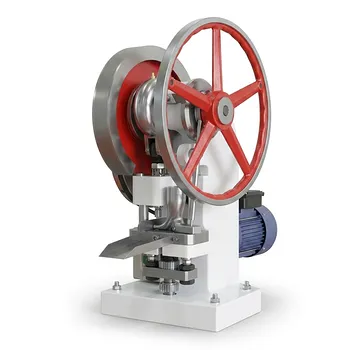
5 Ton Single Punch Tablet Press Laboratory Small Batch Production
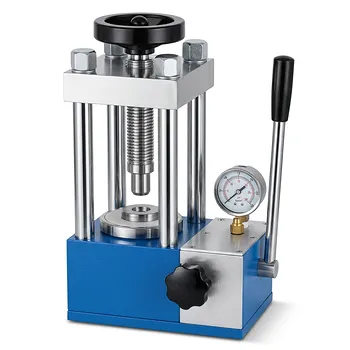
Manual Tablet Press with Dual Scale Pressure Gauge for Pharmaceutical Food Chemical Laboratory Sample Preparation
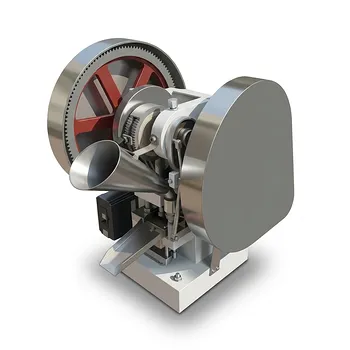
6 Ton Variable Frequency Single Punch Tablet Press
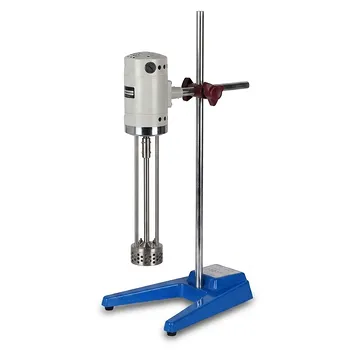
High Shear Laboratory Emulsifier for Mixing and Homogenization
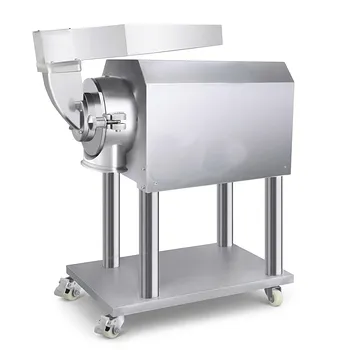
High Speed Small Laboratory Crusher for Dry Material Sample Preparation
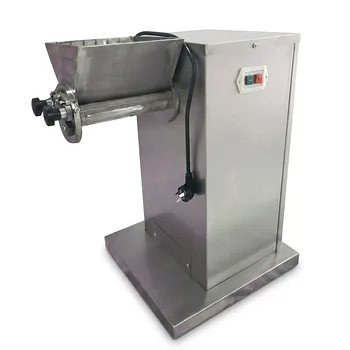
Small Laboratory Oscillating Granulator for Wet and Dry Granulation Processing
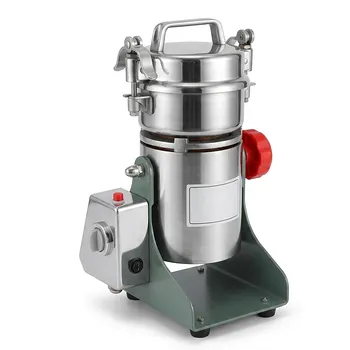
High Speed Swing Type Laboratory Pulverizer for Fine Powder Grinding and Sample Preparation
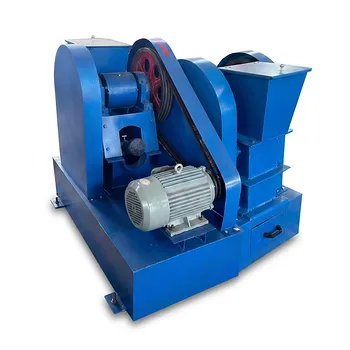
Horizontal Jaw Crusher Medium Hard Material Crushing Laboratory Sample Preparation Equipment