What role does a laboratory hydraulic press play in the assembly of all-solid-state batteries? Boost ASSB Performance
Updated 5 months ago
The laboratory hydraulic press is the foundational tool for densifying solid-state components into a functional battery. It applies ultra-high axial pressure—often ranging from 200 to 500 MPa—to compress composite electrode and electrolyte powders into a monolithic, integrated structure. This process is essential for eliminating internal porosity and establishing the low-resistance physical contact necessary for efficient ion transport.
The core role of a hydraulic press is to transform loose powders into dense layers through plastic deformation. This eliminates internal voids and creates stable solid-solid interfaces, which are the primary drivers of electrochemical performance in all-solid-state batteries.
Achieving Material Densification and Conductivity
Eliminating Internal Porosity
High axial pressure forces powder particles to rearrange and undergo plastic deformation. This process fills the internal voids and air gaps within the electrode and electrolyte layers, resulting in a dense pellet or sheet.
Establishing Ion Transport Paths
By removing the gaps between individual particles, the press creates a continuous pathway for ion movement. Without this high-degree densification, ionic conductivity would be insufficient for the battery to function under load.
Cold-Pressing Advantages
Modern solid-state chemistries, such as chlorides, utilize the press for cold-pressing to establish contact without high-temperature sintering. This simplifies the manufacturing workflow and prevents detrimental chemical side reactions that often occur at high heat.
Optimizing the Solid-Solid Interface
Reducing Interfacial Impedance
Unlike liquid electrolytes that naturally wet surfaces, solid layers only touch at specific "point-contacts." The hydraulic press flattens these points into broad surface contacts, which drastically lowers the internal interfacial impedance of the battery.
Integrating Multilayer Structures
The press is used to laminate the cathode, electrolyte, and anode layers into a unified structure. Applying precise pressure (often around 360 MPa to 405 MPa) ensures these layers remain integrated and reduces the physical contact resistance at the electrode-electrolyte interface.
Promoting Rate Performance
Effective compression ensures that active material particles are in constant contact with the electrolyte. This intimate contact is vital for the battery’s rate performance, allowing it to charge and discharge efficiently at higher currents.
Ensuring Structural and Cycling Integrity
Preventing Delamination
The press creates a mechanical bond between current collectors and the active material layers. This mechanical strength is critical to prevent the layers from peeling apart or "delaminating" during the physical stresses of battery cycling.
Managing Volume Expansion
In addition to initial assembly, hydraulic presses provide stable stack pressure (e.g., 9 MPa) to simulate real-world physical constraints. This pressure helps suppress the volume expansion of lithium metal during deposition, maintaining stable contact throughout the battery's life.
Enhancing Cycling Stability
Consistent pressure control ensures that the solid-solid interfaces remain stable over hundreds of charge cycles. This prevents the formation of new voids that would otherwise lead to a rapid decay in cycling stability.
Understanding the Trade-offs
The Risk of Short Circuits
While high pressure is necessary for density, exceeding a material's mechanical limits can lead to internal short circuits. Excessive force may cause lithium dendrites to bridge the electrolyte or lead to the mechanical failure of brittle ceramic separators.
Material-Specific Pressure Requirements
Not all materials respond to pressure in the same way; sulfides are highly deformable, while oxides often require much higher pressures or supplemental heat. Using a "one-size-fits-all" pressure setting can result in under-densification or cracked components.
How to Apply This to Your Project
Recommendations for Assembly Goals
- If your primary focus is maximizing ionic conductivity: Apply ultra-high pressures (350–500 MPa) during the initial pelletizing phase to ensure maximum particle-to-particle contact.
- If your primary focus is preventing lithium dendrites: Utilize a press that can provide a lower, constant "stack pressure" (around 5–15 MPa) during electrochemical testing to simulate practical housing constraints.
- If your primary focus is avoiding interfacial side reactions: Opt for cold-pressing with a hydraulic press rather than high-temperature sintering to maintain the chemical purity of the interfaces.
By mastering precise pressure control, you ensure the structural and electrochemical foundations necessary for high-performance solid-state energy storage.
Summary Table:
| Key Role | Physical Mechanism | Impact on Battery Performance |
|---|---|---|
| Densification | Plastic deformation of powders | Eliminates internal porosity and air gaps |
| Interface Bonding | Broadening surface contacts | Reduces interfacial impedance & resistance |
| Multilayer Lamination | High-pressure integration | Ensures stable adhesion of cathode/electrolyte/anode |
| Ion Transport | Creating continuous pathways | Maximizes ionic conductivity and rate performance |
| Structural Integrity | Stable stack pressure application | Prevents delamination and manages volume expansion |
Elevate Your Battery Research with Precision Pressure Solutions
Achieving the perfect solid-solid interface requires more than just force—it requires precision and reliability. KINTEK provides complete laboratory sample preparation solutions for material science, specializing in advanced powder processing and compaction equipment tailored for the next generation of energy storage.
Our extensive line supports every stage of your ASSB workflow:
- Powder Preparation: Achieve ideal particle sizes with our planetary ball mills, jet mills, and vibratory sieve shakers.
- Advanced Compaction: Ensure maximum density with our Cold/Warm Isostatic Presses (CIP/WIP) and standard hydraulic lab presses.
- Thermal Integration: Master complex interfaces using our Hot Presses and Vacuum Hot Presses.
Whether you are working with sulfides, oxides, or chlorides, our equipment delivers the exact pressure control (200–500+ MPa) needed to eliminate voids and boost conductivity. Contact us today to optimize your lab's performance!
References
- Kazuto Fujiwara, Hiroshi Inoue. Unveiling the Capacity Boosting Mechanism of the MoS<sub>2</sub> Electrode by Focusing on the Under Potential Deposition in All‐Solid‐State Batteries Prepared by One‐Pot One‐Step Liquid Phase Mixing. DOI: 10.1002/adsu.202500426
Mentioned Products
- 6-Ton Small Single-Punch Tablet Press — Laboratory Powder & Granule Tableting Equipment / Tablet Forming Machine
- 5 Ton Single Punch Tablet Press Laboratory Small Batch Production
- Manual Tablet Press with Dual Scale Pressure Gauge for Pharmaceutical Food Chemical Laboratory Sample Preparation
- 6 Ton Variable Frequency Single Punch Tablet Press
- High Shear Laboratory Emulsifier for Mixing and Homogenization
People Also Ask
- What is the function of a laboratory press in Cr-Ti alloy evaluation? Quantify Fracture Stress & Strength
- What is the function of a laboratory press in assessing the hydrophobic performance of modified vermiculite fillers?
- What is the core function of a laboratory press in the forming of ceramic filter element green bodies? Maximize Density.
- What is the function of a laboratory press in the preparation of ceramic feed rods? Master Density and Precision
- Why is vacuum sealing and flexible packaging necessary for Aluminum Titanate powders during CIP? Ensure Peak Density

Tech Team · PowderPreparation
Last updated on May 14, 2026
Related Products
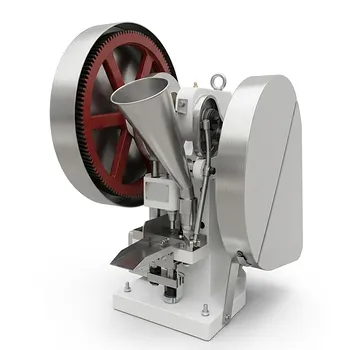
6-Ton Small Single-Punch Tablet Press — Laboratory Powder & Granule Tableting Equipment / Tablet Forming Machine
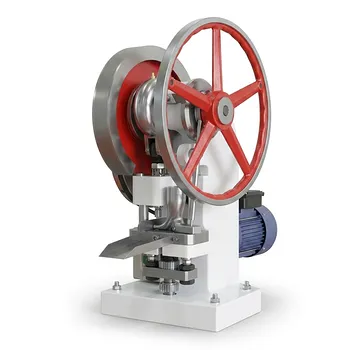
5 Ton Single Punch Tablet Press Laboratory Small Batch Production
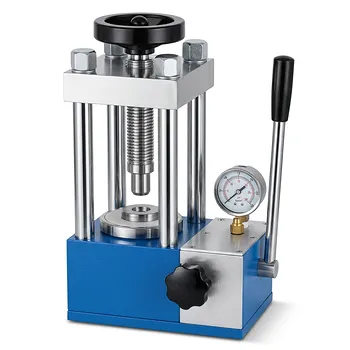
Manual Tablet Press with Dual Scale Pressure Gauge for Pharmaceutical Food Chemical Laboratory Sample Preparation
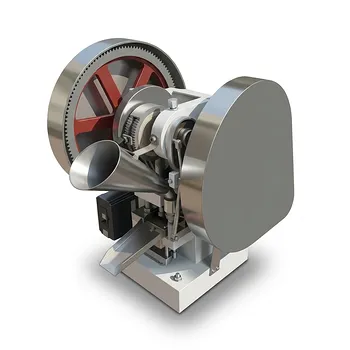
6 Ton Variable Frequency Single Punch Tablet Press
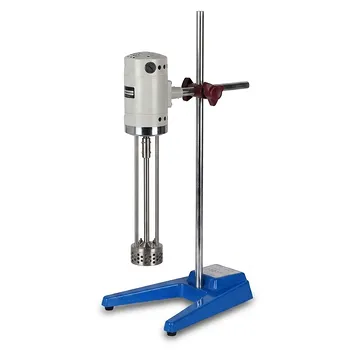
High Shear Laboratory Emulsifier for Mixing and Homogenization
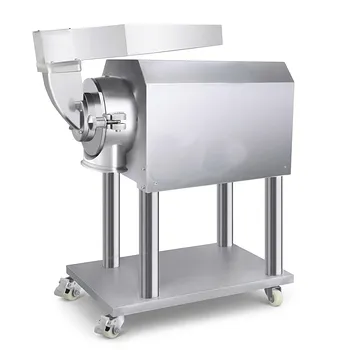
High Speed Small Laboratory Crusher for Dry Material Sample Preparation
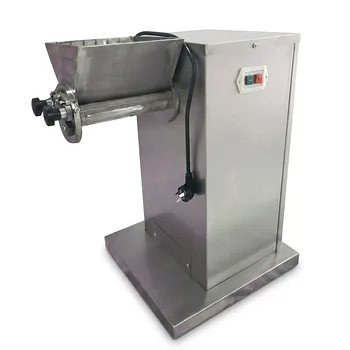
Small Laboratory Oscillating Granulator for Wet and Dry Granulation Processing
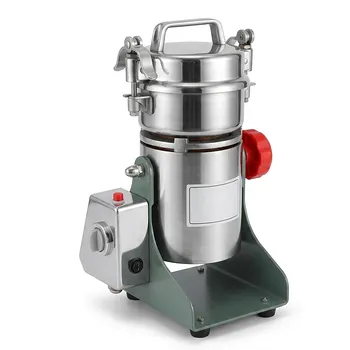
High Speed Swing Type Laboratory Pulverizer for Fine Powder Grinding and Sample Preparation