What is the role of a laboratory hydraulic press in preparing specimens for coating bond strength testing? Ensure Accuracy
Updated 5 months ago
Ensuring the integrity of bond strength testing begins with the precise application of force during specimen preparation. A laboratory hydraulic press is used to apply constant, controlled pressure to bond a spray-coated specimen to a loading block using high-strength adhesive, typically in accordance with standards like ASTM C633. This process ensures a uniform adhesive thickness and eliminates air bubbles, which are critical factors for achieving repeatable and accurate results during subsequent tensile testing.
The laboratory hydraulic press serves as the foundation for experimental accuracy by standardizing the interface between the coating and the testing apparatus. By eliminating physical variables like voids and uneven adhesive layers, the press ensures that the measured failure point represents the actual strength of the coating bond rather than a flaw in specimen assembly.
Establishing Interface Uniformity
The Role of Controlled Compression
A hydraulic press provides the precise tonnage necessary to squeeze the adhesive layer to a consistent, microscopic thickness. This uniformity is vital because an uneven adhesive layer can introduce eccentric loading or stress concentrations during a tensile test. By maintaining a flat, parallel bond, the press ensures that the force applied by a universal testing machine is distributed evenly across the entire interface.
Elimination of Internal Voids
Air bubbles trapped within the adhesive act as structural defects that significantly weaken the bond. The high-pressure environment of the hydraulic press forces these micro-voids out of the interface before the adhesive cures. This results in a fully dense "green" bond that can withstand the high forces required to test modern thermal spray coatings.
Maximizing Data Repeatability
Standardization of Specimen Geometry
Beyond simple bonding, the press ensures that the loading block and the specimen are perfectly aligned. Precise alignment prevents the introduction of bending moments during the pull test, which would otherwise lead to artificially low strength readings. Consistent geometry is the key to comparing data across different batches or material formulations.
Structural Integrity of the Bond
The press facilitates maximum dry density and particle packing at the interface, similar to how it consolidates powders into pellets. This ensures that the structural strength of the adhesive-specimen unit is sufficient to withstand the rigors of handling and testing. Without this consolidation, the specimen might fail prematurely at the adhesive layer rather than the coating-substrate interface.
Understanding the Trade-offs
Balancing Pressure and Adhesive Integrity
Applying too much pressure can lead to "starved joints," where the adhesive is squeezed out entirely, leaving insufficient material to hold the specimen. Conversely, inadequate pressure fails to eliminate voids or achieve the necessary thickness, leading to high data scatter. The operator must strictly adhere to the pressure specifications defined in the testing standard to avoid these pitfalls.
Temperature and Cure Considerations
While pressure is the primary focus, many hydraulic presses also incorporate heated platens. High temperatures can accelerate the curing of specialized adhesives but may also introduce internal stress concentrations if the cooling process is not controlled. Ensuring the press maintains a stable environment is essential for preventing microscopic defects that could compromise the final test results.
How to Apply This to Your Testing Protocol
Selecting the Right Press for Your Goal
To achieve the most reliable bond strength data, your specimen preparation must be as rigorous as the test itself.
- If your primary focus is ASTM C633 compliance: Utilize a press with a digital pressure gauge to ensure the adhesive layer is compressed under the exact tonnage required by the standard.
- If your primary focus is high-throughput testing: Invest in a press with programmable cycles and heated platens to standardize and accelerate the adhesive curing process.
- If your primary focus is researching new coating materials: Prioritize a press with high-precision control to eliminate density gradients and internal voids that could mask the material's true performance.
By treating the pressing stage as a critical variable in the experimental chain, you ensure that your data is a true reflection of material performance.
Summary Table:
| Key Role | Technical Impact | Testing Benefit |
|---|---|---|
| Controlled Compression | Achieves uniform, microscopic adhesive thickness | Prevents eccentric loading and stress concentrations |
| Void Elimination | Removes air bubbles and internal defects | Ensures failure occurs at the coating interface, not the bond |
| Geometric Alignment | Maintains flat, parallel specimen-to-block interfaces | Eliminates bending moments for pure tensile data |
| Thermal Management | Standardizes adhesive curing via heated platens | Accelerates throughput and reduces internal residual stress |
Elevate Your Material Testing Precision
Achieving reliable results in ASTM C633 coating bond strength testing starts with flawless specimen preparation. We provide complete laboratory sample preparation solutions tailored for material science. Our extensive line of hydraulic presses—including standard lab presses, Cold/Warm Isostatic Presses (CIP/WIP), XRF pellet presses, and vacuum hot presses—ensures the constant, controlled pressure and temperature needed for superior specimen integrity.
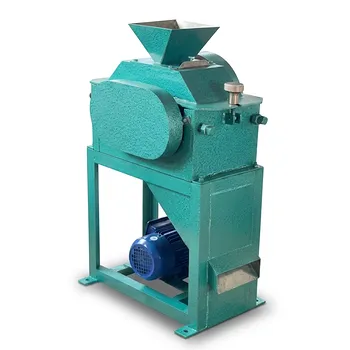
Beyond compaction, we specialize in a full range of powder processing equipment, including crushers (jaw/roll), liquid nitrogen cryogenic grinders, planetary ball mills, and sieve shakers. Whether you are optimizing thermal spray coatings or researching new composites, our equipment eliminates physical variables and maximizes data repeatability.
Ready to standardize your testing protocol and ensure experimental accuracy?
Contact our experts today to find the perfect solution for your lab!
References
- Tristan W. Bacha, Joseph F. Stanzione. Multipurpose Additives Toward Improving the Polymer Cold Spray Process. DOI: 10.1007/s11666-024-01745-z
Mentioned Products
- 6-Ton Small Single-Punch Tablet Press — Laboratory Powder & Granule Tableting Equipment / Tablet Forming Machine
- 5 Ton Single Punch Tablet Press Laboratory Small Batch Production
- Manual Tablet Press with Dual Scale Pressure Gauge for Pharmaceutical Food Chemical Laboratory Sample Preparation
- 6 Ton Variable Frequency Single Punch Tablet Press
- High Shear Laboratory Emulsifier for Mixing and Homogenization
People Also Ask
- What is the function of a laboratory press in Cr-Ti alloy evaluation? Quantify Fracture Stress & Strength
- What is the function of a laboratory press in assessing the hydrophobic performance of modified vermiculite fillers?
- What is the core function of a laboratory press in the forming of ceramic filter element green bodies? Maximize Density.
- What is the function of a laboratory press in the preparation of ceramic feed rods? Master Density and Precision
- Why is vacuum sealing and flexible packaging necessary for Aluminum Titanate powders during CIP? Ensure Peak Density

Tech Team · PowderPreparation
Last updated on May 14, 2026
Related Products
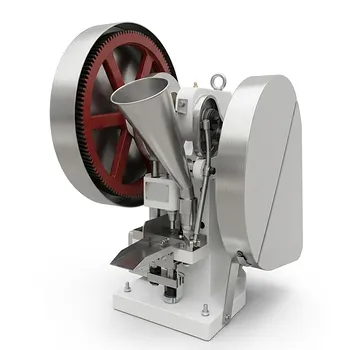
6-Ton Small Single-Punch Tablet Press — Laboratory Powder & Granule Tableting Equipment / Tablet Forming Machine
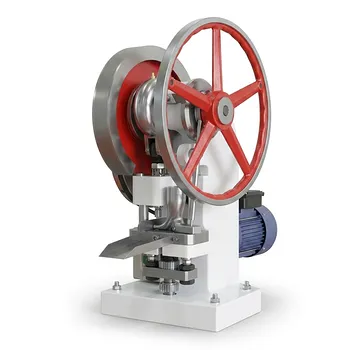
5 Ton Single Punch Tablet Press Laboratory Small Batch Production
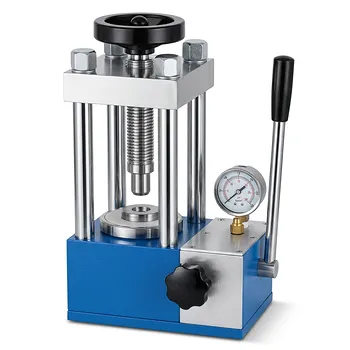
Manual Tablet Press with Dual Scale Pressure Gauge for Pharmaceutical Food Chemical Laboratory Sample Preparation
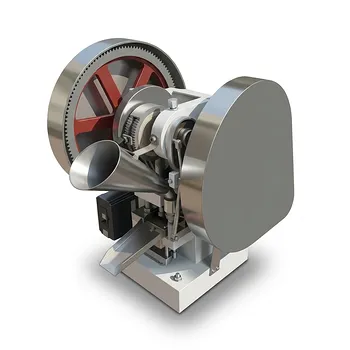
6 Ton Variable Frequency Single Punch Tablet Press
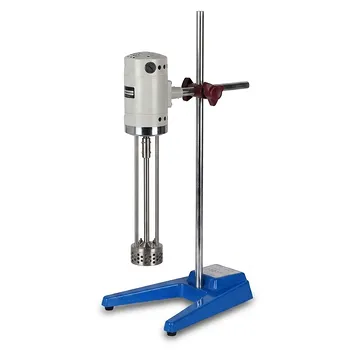
High Shear Laboratory Emulsifier for Mixing and Homogenization
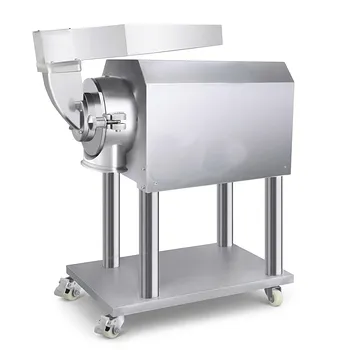
High Speed Small Laboratory Crusher for Dry Material Sample Preparation
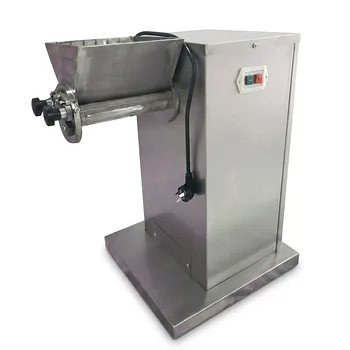
Small Laboratory Oscillating Granulator for Wet and Dry Granulation Processing
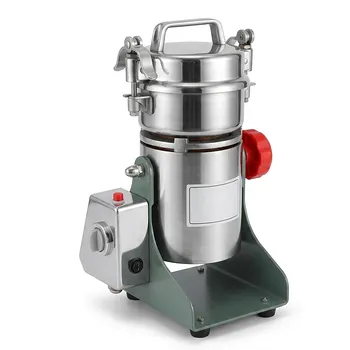
High Speed Swing Type Laboratory Pulverizer for Fine Powder Grinding and Sample Preparation
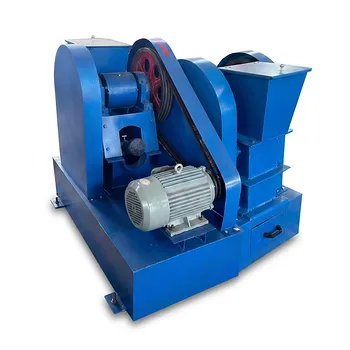
Horizontal Jaw Crusher Medium Hard Material Crushing Laboratory Sample Preparation Equipment