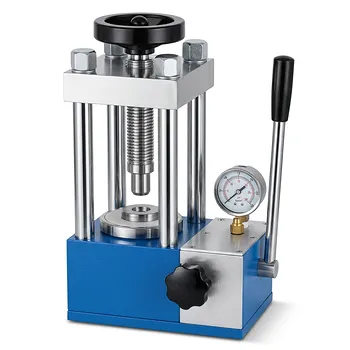
How do industrial hydraulic presses ensure the quality of green bodies? Mastering Zirconia Density and Stability.
Updated 5 months ago
Industrial hydraulic presses achieve high-quality green bodies by applying massive, controlled axial pressure to zirconia powder to induce particle rearrangement and plastic deformation. This mechanical force expels air and bonds grains into a dense, cohesive shape with specific structural integrity. By maintaining precise pressure levels, the equipment ensures the green body has the necessary strength and density uniformity to survive sintering without cracking or deforming.
The primary role of the hydraulic press is to establish a high-density foundation with minimal internal gradients. This uniformity is critical to preventing catastrophic failure during the significant volume shrinkage that occurs during high-temperature sintering.
The Mechanics of Powder Densification
Industrial presses go beyond simple crushing; they facilitate a complex physical transformation of the zirconia powder.
Mechanical Particle Rearrangement
As the press applies axial pressure—often reaching 1 ton/cm² or 80 kN—the powder particles are forced to slide and fill internal voids. This rearrangement is the first stage of densification, significantly increasing the green density and reducing the volume of air trapped between grains.
Plastic Deformation and Bonding
Under high-pressure compaction, zirconia particles undergo plastic deformation, creating tight mechanical bonds at their contact points. This gives the green body the "green strength" required to maintain its shape during handling, machining, or glazing before it ever enters a kiln.
Elimination of Internal Voids
By forcing particles into the tightest possible packing, the press eliminates large internal pores. This is a vital quality control step, as internal voids often serve as the initiation points for cracks during the final sintering process.
Ensuring Dimensional Stability and Precision
The quality of a refractory component is often defined by its ability to maintain its shape under extreme heat.
Mitigation of Density Gradients
Precise pressure control is used to ensure that the density is as uniform as possible throughout the entire volume of the green body. If one area is denser than another, the parts will shrink at different rates during sintering, leading to warping, bowing, or internal stress fractures.
Foundation for Uniform Shrinkage
Because zirconia-based refractories undergo significant volume shrinkage during sintering, the press must provide a consistent "starting point." A uniform green body ensures that shrinkage occurs predictably and evenly, allowing for high-precision final dimensions.
Support for Advanced Sintering
In laboratory and specialized industrial settings, precise pressure control is essential for field-assisted sintering (such as flash or microwave sintering). Uniform internal density ensures an even distribution of current and thermal energy, preventing localized "hot spots" or thermal runaway.
Understanding the Trade-offs and Pitfalls
While high pressure is beneficial, the process involves technical trade-offs that must be managed to ensure quality.
Uniaxial Pressure Limitations
Most industrial hydraulic presses apply pressure uniaxially (from one or two directions). This inherently creates a pressure gradient where the powder closest to the punch is more compacted than the powder in the center, which can lead to "hourglass" shaped density profiles if not carefully managed.
The Risk of Over-Compaction
Applying excessive pressure can lead to "capping" or laminations, where the green body splits into layers upon being ejected from the mold. This occurs when the stored elastic energy in the compacted powder exceeds the strength of the mechanical bonds between particles.
Dwell Time vs. Throughput
Maintaining pressure for a specific duration (dwell time) allows for better air expulsion and more stable particle bonding. However, increasing dwell time reduces the production rate, forcing manufacturers to balance cycle speed with the structural integrity of the green body.
How to Apply This to Your Production
Achieving the best results with zirconia-based refractories depends on aligning your pressing parameters with your final performance requirements.
- If your primary focus is maximum structural density: Utilize higher axial pressures (near 1 ton/cm²) and ensure consistent powder granulation to eliminate all internal voids.
- If your primary focus is dimensional precision: Prioritize equipment with high-precision pressure control and "pressure-holding" functions to minimize density gradients.
- If your primary focus is high-throughput manufacturing: Optimize the mold lubrication and ejection speed to prevent surface defects while maintaining the minimum necessary dwell time for bonding.
Ultimately, the industrial hydraulic press serves as the physical architect of the refractory, dictating the component's final performance through the precise application of mechanical force.
Summary Table:
| Key Factor | Mechanism | Benefit to Zirconia Green Body |
|---|---|---|
| Axial Pressure | 1 ton/cm² (80 kN) force | High density and eliminated internal air voids |
| Rearrangement | Particle sliding & packing | Reduced internal gradients and uniform structure |
| Deformation | Plastic mechanical bonding | Superior green strength for handling and machining |
| Precision Control | Uniform shrinkage management | Prevents warping, bowing, and cracks during sintering |
Optimize Your Material Science Workflow with Precision Compaction
Achieving structural integrity in zirconia-based refractories requires the right balance of pressure and precision. At Our Laboratory Solutions, we provide complete sample preparation systems designed to meet the rigorous demands of material science research and industrial production.
We specialize in high-performance powder processing and compaction equipment, including:
- Advanced Hydraulic Presses: A full spectrum featuring Cold/Warm Isostatic Presses (CIP/WIP), standard lab presses, XRF pellet presses, hot presses, and vacuum hot presses.
- Precision Milling & Grinding: Crushers (jaw/roll), liquid nitrogen cryogenic grinders, and mills (planetary ball, jet, sand, disc, rotor).
- Sieving & Mixing: Vibratory/air-jet sieve shakers with various meshes, alongside high-efficiency powder and defoaming mixers.
Ready to eliminate density gradients and enhance your production quality? Contact us today to discuss your specific application and find the perfect equipment solution for your lab!
References
- Cristian Perez Velasquez, John C. Mauro. Corrosion of zirconium‐based refractories in glass‐contact areas: Mechanisms and challenges. DOI: 10.1111/ijac.15064
Mentioned Products
- Ordinary Type Rotary Tablet Press for Pharmaceutical Chemical Food Electronic Industries
- Hydraulic Double Shaft Disperser for High Viscosity Liquid Mixing and Dispersion
- 6-Ton Small Single-Punch Tablet Press — Laboratory Powder & Granule Tableting Equipment / Tablet Forming Machine
- Enhanced 9 Punch Rotary Tablet Press for Powder Compaction
- 6 Ton Variable Frequency Single Punch Tablet Press
People Also Ask
- Why is a laboratory hydraulic press required for FT-IR KBr pellets? Achieve Precise Sample Clarity for ZrC–SiC Analysis
- Why is a laboratory hydraulic press required to compress oyster shell powder before XRF analysis? Improve Data Accuracy.
- Why is vacuum sealing and flexible packaging necessary for Aluminum Titanate powders during CIP? Ensure Peak Density
- What are the advantages of using hardened steel molds and graphite spray for titanium powder? Ensure structural integrity
- What role does a high-strength stainless steel mold kit play in the uniaxial die compaction process? Ensuring Precision

Tech Team · PowderPreparation
Last updated on May 14, 2026
Related Products
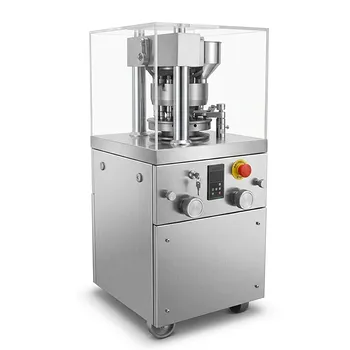
Ordinary Type Rotary Tablet Press for Pharmaceutical Chemical Food Electronic Industries
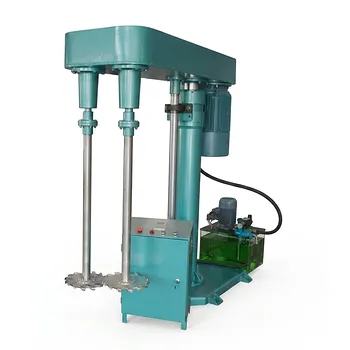
Hydraulic Double Shaft Disperser for High Viscosity Liquid Mixing and Dispersion
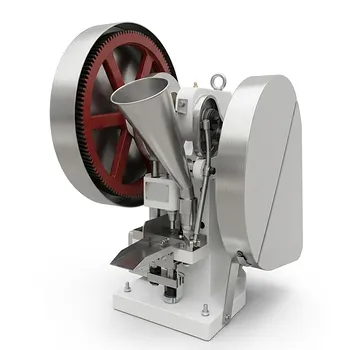
6-Ton Small Single-Punch Tablet Press — Laboratory Powder & Granule Tableting Equipment / Tablet Forming Machine
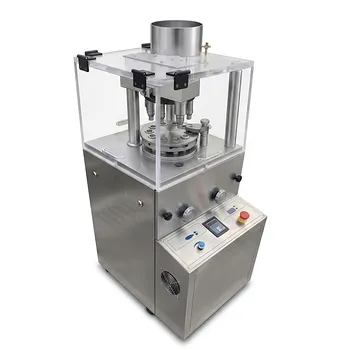
Enhanced 9 Punch Rotary Tablet Press for Powder Compaction
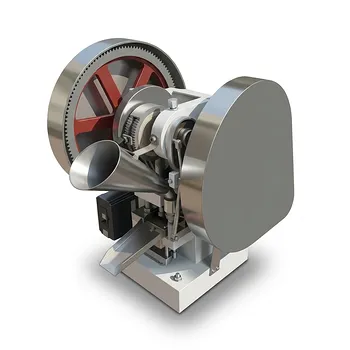
6 Ton Variable Frequency Single Punch Tablet Press
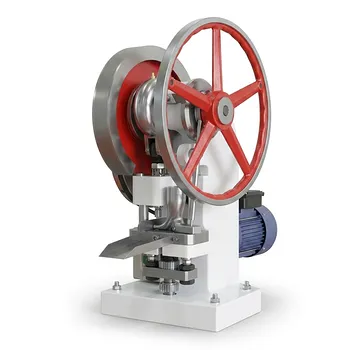
5 Ton Single Punch Tablet Press Laboratory Small Batch Production