Why is a laboratory manual hydraulic press essential for sample preparation? Ensure Precise Conductivity Measurements
Updated 5 months ago
A laboratory manual hydraulic press is the critical link between raw composite powders and accurate analytical data. It is essential because it transforms loose particles into dense, uniform pellets, eliminating the air gaps and contact resistance that would otherwise mask the material's true electronic transport properties. By applying constant, high-axial pressure, the press ensures that four-probe conductivity measurements reflect the actual electron transport capability of the composite network rather than the inconsistencies of a loose powder.
To achieve reliable conductivity data, a laboratory manual hydraulic press must be used to eliminate contact resistance and internal porosity. This process creates a dense, cohesive "green body" where particles are sufficiently bonded to allow for accurate electron and ion transport evaluation.
Overcoming the Barrier of Contact Resistance
The Impact of Particle-to-Particle Gaps
In its raw powder form, a composite material is full of air pockets and high-resistance junctions between individual grains. These gaps act as insulators, preventing the smooth flow of electrons even if the material itself is highly conductive.
Achieving True Bulk Conductivity
The hydraulic press applies significant force to compress these powders into a dense cylindrical pellet. This compaction forces the particles into intimate contact, allowing researchers to measure the intrinsic bulk conductivity of the combined material network, such as PEDOT and activated carbon.
Precision in Four-Probe Measurements
Accurate data collection, particularly when using four-probe conductivity setups, depends on a sample with uniform density. Without the high-pressure molding provided by the press, the measured resistance would be dominated by surface-level contact issues rather than the material’s actual performance.
Establishing Material Structural Integrity
Van der Waals Forces and Bonding
Under high axial pressure, such as 10 kN or higher, powder particles rearrange and begin to bond through Van der Waals forces. This transformation creates a "green body" that is structurally sound enough for handling and testing without falling back into powder form.
Eliminating Internal Pores and Density Gradients
Precise pressure control is vital for removing internal pores and density gradients within the sample. Eliminating these defects ensures that the electrical current flows through a consistent medium, preventing localized "hot spots" or measurement errors caused by structural voids.
Simulating Real-World Conditions
In applications like battery assembly, materials are often subjected to high mechanical stress. Using a hydraulic press to reach specific pressures (e.g., 380 MPa) allows researchers to simulate industrial molding processes and evaluate how porosity and bulk density will affect final kinetic performance.
Understanding the Trade-offs and Pitfalls
The Risk of Over-Compaction
While high pressure is necessary for densification, excessive force can lead to macroscopic defects. If the pressure is too high for the specific material chemistry, the pellet may experience internal stress, leading to cracking or deforming once the pressure is released.
Density Gradients and Friction
Friction between the powder and the mold walls can sometimes cause non-uniform density throughout the pellet. This gradient can lead to inconsistent conductivity readings if the sample is not pressed with high-quality, precision-ground steel molds.
Material Deformation and Heat
Some composite materials may undergo phase changes or deformation if the pressing process generates too much localized heat or exceeds the material's elastic limit. It is critical to balance the applied axial force with the specific mechanical properties of the composite components.
How to Apply This to Your Research
Effective sample preparation requires matching your pressing parameters to your specific material goals.
- If your primary focus is intrinsic electron transport: Use the hydraulic press to reach maximum density and eliminate contact resistance for precise four-probe measurement.
- If your primary focus is battery electrode performance: Apply pressures that simulate the actual calendering or molding process used in cell manufacturing to accurately measure porosity and ionic conductivity.
- If your primary focus is mechanical and electrical synergy: Ensure the press is used with standardized molds to create geometries that allow for both conductivity and Young's modulus testing on the same sample batch.
Properly calibrated hydraulic pressing is the only way to ensure that your conductivity data represents the true potential of your composite material.
Summary Table:
| Key Feature | Benefit for Conductivity Analysis |
|---|---|
| High-Pressure Compaction | Eliminates insulating air gaps and contact resistance between particles |
| Bulk Densification | Allows for the measurement of intrinsic material electronic transport |
| Structural Integrity | Creates a solid "green body" suitable for four-probe measurement setups |
| Porosity Control | Simulates real-world industrial stress and battery electrode conditions |
Optimize Your Sample Preparation with Precision Equipment
Achieving accurate analytical data starts with perfect sample preparation. We provide complete laboratory sample preparation solutions for material science, specializing in powder processing and compaction equipment designed to eliminate measurement inconsistencies.
Our extensive product lines include:
- Hydraulic Presses: A full spectrum including standard lab presses, XRF pellet presses, Hot presses, and Cold/Warm Isostatic Presses (CIP/WIP).
- Grinding & Milling: Jaw/roll crushers, liquid nitrogen cryogenic grinders, and planetary ball, jet, or rotor mills.
- Sieving & Mixing: Vibratory/air-jet sieve shakers, powder mixers, and defoaming mixers.
Ready to elevate your research accuracy? Contact our experts today to find the ideal pressing and processing solution for your specific composite materials!
References
- Francisco Javier Fernández González, Mario Hoyos. ‘In-Situ’ Preparation of Carbonaceous Conductive Composite Materials Based on PEDOT and Biowaste for Flexible Pseudocapacitor Application. DOI: 10.3390/jcs4030087
Mentioned Products
- Manual Tablet Press with Dual Scale Pressure Gauge for Pharmaceutical Food Chemical Laboratory Sample Preparation
- 5 Ton Single Punch Tablet Press Laboratory Small Batch Production
- 6-Ton Small Single-Punch Tablet Press — Laboratory Powder & Granule Tableting Equipment / Tablet Forming Machine
- Enhanced 9 Punch Rotary Tablet Press for Powder Compaction
- 6 Ton Variable Frequency Single Punch Tablet Press
People Also Ask
- What is the function of a laboratory press in Cr-Ti alloy evaluation? Quantify Fracture Stress & Strength
- What is the function of a laboratory press in assessing the hydrophobic performance of modified vermiculite fillers?
- What is the core function of a laboratory press in the forming of ceramic filter element green bodies? Maximize Density.
- What is the function of a laboratory press in the preparation of ceramic feed rods? Master Density and Precision
- Why is vacuum sealing and flexible packaging necessary for Aluminum Titanate powders during CIP? Ensure Peak Density

Tech Team · PowderPreparation
Last updated on May 14, 2026
Related Products
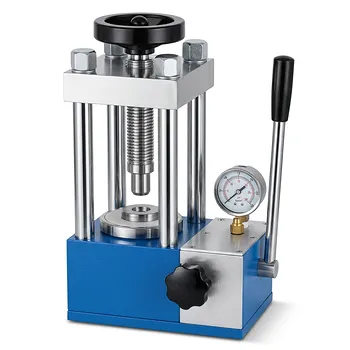
Manual Tablet Press with Dual Scale Pressure Gauge for Pharmaceutical Food Chemical Laboratory Sample Preparation
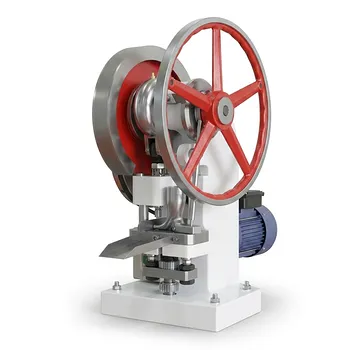
5 Ton Single Punch Tablet Press Laboratory Small Batch Production
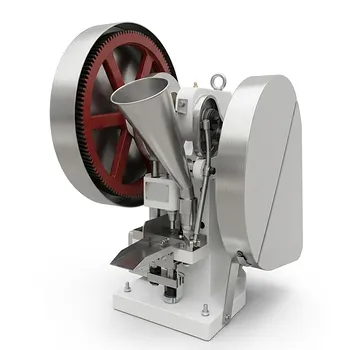
6-Ton Small Single-Punch Tablet Press — Laboratory Powder & Granule Tableting Equipment / Tablet Forming Machine
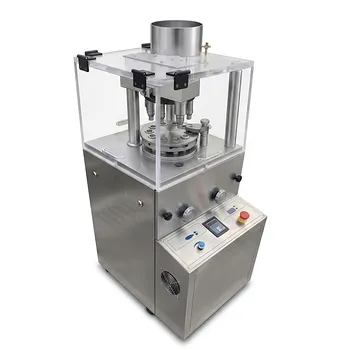
Enhanced 9 Punch Rotary Tablet Press for Powder Compaction
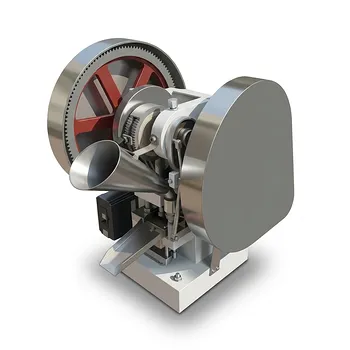
6 Ton Variable Frequency Single Punch Tablet Press
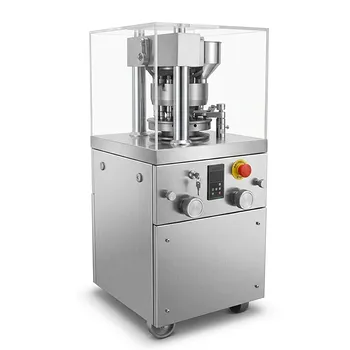
Ordinary Type Rotary Tablet Press for Pharmaceutical Chemical Food Electronic Industries